Buying Olive Oil Is a Question About Freshness, Not About Grade
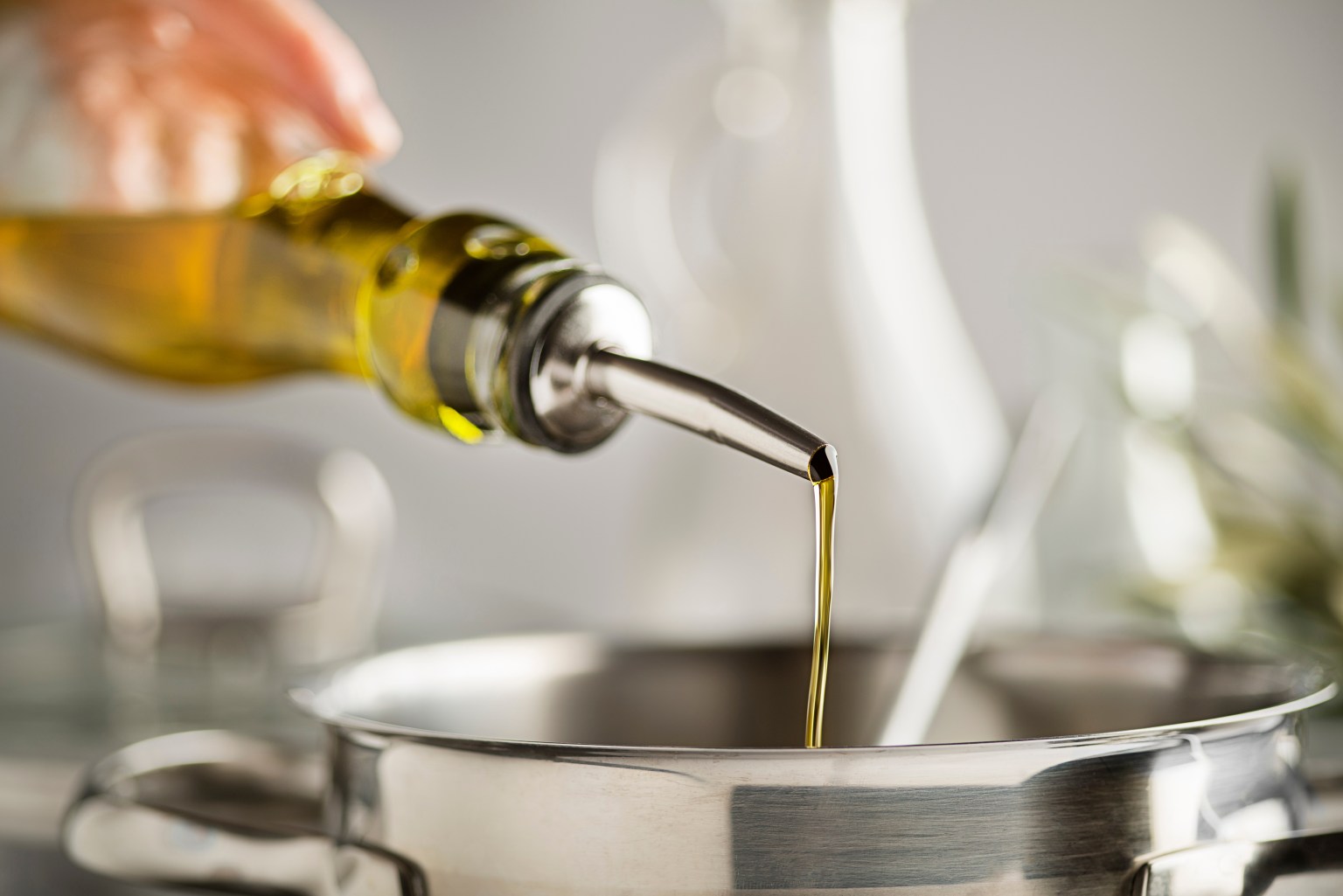
Extra virgin. Cold pressed. First press. Single estate. Robust. The label carries five reassuring phrases and not one of them answers the question that decides whether the oil in the bottle tastes of anything: how long ago were the olives picked.
Olive oil is a fruit juice. It is at its best immediately and it declines from there, and almost everything people believe about buying it is organized around the wrong variable.
It does not improve, and the decline is faster than anyone expects
Unlike wine, there is no maturation. The aromatic compounds that make a good oil taste green, peppery and alive begin degrading the moment it is pressed, and oxidation runs the whole time.
An oil is at its best within the first several months and is genuinely good for about a year from harvest. Past eighteen months to two years it is flat, and past that it slides into rancid.
Which means a bottle that has been on a shop shelf for a year and in your cupboard for another is not a lesser version of the same thing. It is a different substance.
Look for a harvest date, and treat a best-before as no information
A best-before is typically set eighteen months to two years from bottling, and bottling can happen long after pressing. It tells you when somebody decided to stop guaranteeing it, not when the fruit came off the tree.
A harvest date tells you what you actually need. Producers who print one are generally the ones confident about the answer, which makes its presence useful in itself.
Northern hemisphere harvest runs in autumn, so the freshest oil on a shelf in spring is from the previous autumn. Southern hemisphere oils are harvested six months out of phase, which is worth knowing when the northern stock is old.
What extra virgin actually certifies
It is a real standard rather than marketing: limits on free acidity and other chemical markers, plus a sensory panel finding no defects. An oil that fails becomes virgin, or gets refined.
But it is a floor tested at a point in time, not a promise about the bottle in your hand a year later. An oil can be legitimately extra virgin at bottling and thoroughly tired by the time it is opened, and enforcement varies by market.
So the grade is worth having and it is not the variable to shop on. Cold pressed and first press are largely redundant for modern production and carry very little information at all.
Most people have never tasted fresh oil, which is the real problem
Good fresh olive oil is grassy or green or fruity, distinctly bitter, and peppery enough to catch at the back of the throat — a genuine cough, caused by a compound that is a marker of quality rather than a fault.
Rancid oil tastes of crayon, putty or stale nuts, and it is flat and greasy rather than bitter. It is so common on shelves that a great many people believe that taste is what olive oil is, and find the fresh version aggressive.
Taste it from a spoon before it goes anywhere near food. Thirty seconds settles what a label cannot.
Four things destroy it and three of them are in your kitchen
Light, heat, oxygen and time. The same four that empty a spice jar, and the same ones that turn nuts rancid months before anyone notices.
So: dark glass or tin rather than clear, never a decorative bottle on a sunlit shelf, and never the spot beside the stove, which is where most people keep it because it is convenient.
Once opened, oxygen is the clock. A large tin decanted into a small dark bottle, refilled as it empties, keeps far better than the same tin opened and closed thirty times.
Refrigeration is unnecessary and makes it cloudy and solid; the cloudiness is harmless and reverses at room temperature.
Buy two oils, because they are doing different jobs
A finishing oil: fresh, good, bought in a size you will finish in a couple of months, used raw — over vegetables, into a dressing, on soup, on bread.
A cooking oil: cheaper, milder, bought in quantity, used in the pan.
The reason is simply that heat destroys the volatile compounds you paid for. Sauteing in an expensive oil converts it into an ordinary one at the moment it hits the pan.
But you can cook with it, and the smoke point argument is overstated
Extra virgin olive oil is more stable against oxidation than its smoke point suggests, because the same antioxidants and polyphenols that make it taste of something also protect it, and its smoke point is comfortably adequate for sauteing and roasting.
The smoke point is the least interesting property of a cooking fat in most situations. What rules out the good bottle for everyday frying is economics and flavor loss, not safety.
For genuinely high-heat work — deep frying, a hard sear — a refined oil is the sensible choice, and the good oil goes on afterward.
Buying, in one line
A tin or dark bottle, a harvest date inside the last year, a size you will finish in three months, and a spoonful tasted before anything else happens.
The date on most food is an opinion about quality rather than a limit, and this is the clearest case where that opinion is worth ignoring in the strict direction: an oil well inside its best-before can already be past the point of being worth buying.
And the other oils on the shelf
Nut and seed oils — walnut, hazelnut, sesame, flax — are far more fragile than olive oil and go rancid quickly at room temperature. Buy small bottles, keep them in the refrigerator, and smell them before use.
Neutral refined oils last longest and taste of nothing, which is the point of them.
Which leaves a shelf of three: one good oil that gets tasted and finished, one cheap one that gets cooked with, and one neutral one for heat. Everything else is a label doing work that a harvest date would do better.
Part of Kitchen Systems.


