Cook the Extra Rice on Purpose
Cold rice is not a lesser version of dinner-one rice. It is a different ingredient with better jobs waiting for it — provided you cool it promptly and stop treating the refrigerator as a time machine.
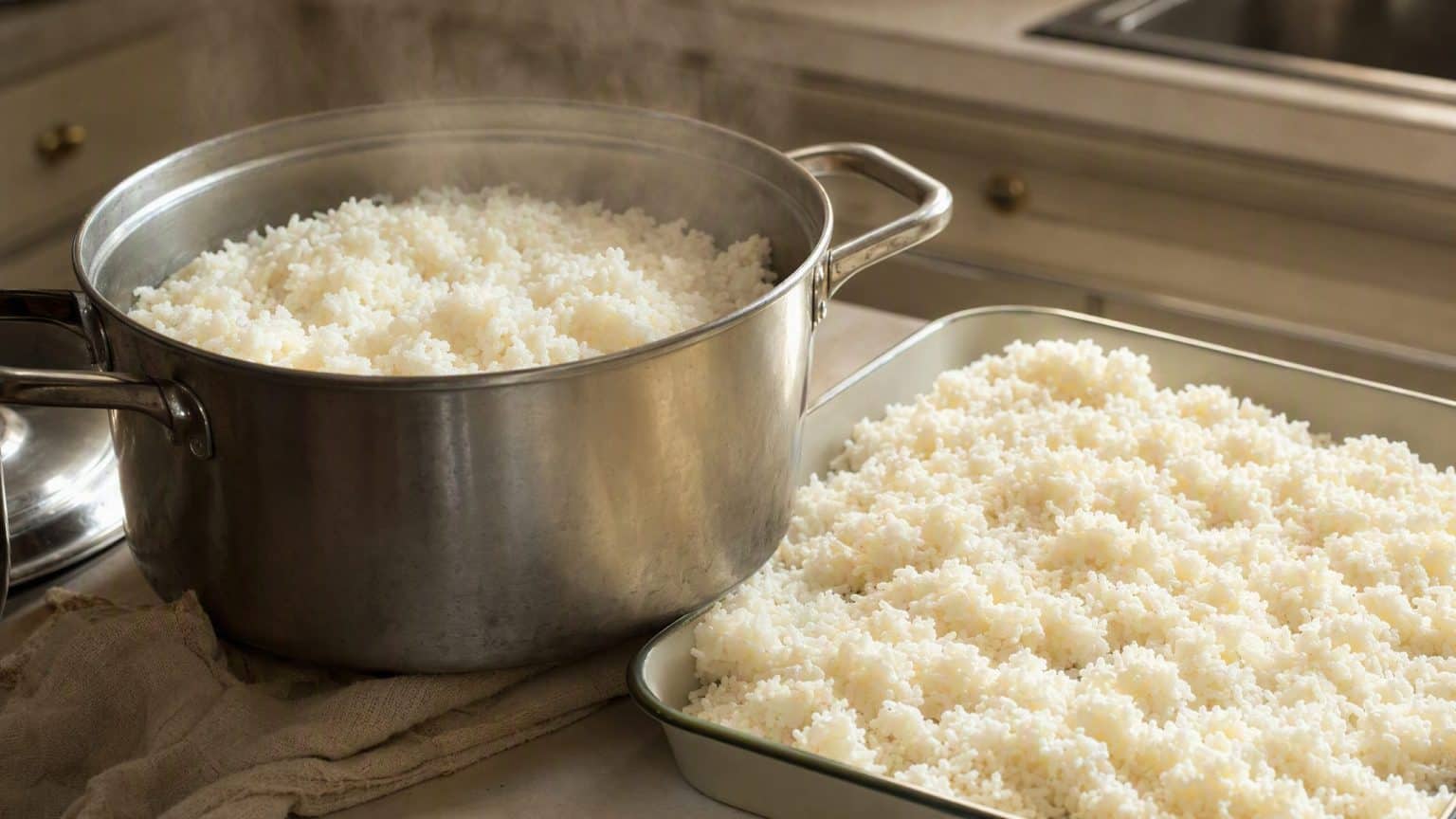
THE EIGHT-CUP PLAN
Cook once. Change the rice every time.
3 cups cooked rice
Scallion-herb rice with dinner.
3 cups cooked rice
Egg fried rice with peas and chile crisp.
2 cups cooked rice
Crispy tomato-chickpea rice skillet.
Eight cups is an example cooked checkpoint for four people across three meals. Measure what your pot actually made and move the allocations from there.
I do not understand why leftover rice gets spoken about as if it is evidence that someone failed to plan. Cold rice is one of the few leftovers that may actually be more useful on day two than it was on day one.
Fresh rice wants to be soft, steamy, and left alone. Cold rice has dried slightly, firms up, separates more easily, and is much better prepared for hot oil, crisp edges, eggs, sauce, and anything else that would turn a fresh pot into paste.
That is not a consolation prize. It is a second technique.
The only part I do not improvise is the storage. Cooked rice is a perishable food, and the FDA specifically identifies rice among foods in which Bacillus cereus can be a concern when time and temperature are mishandled. USDA guidance says cooked leftovers should be refrigerated within two hours, divided into shallow containers for faster cooling, used within three to four days, and reheated to 165°F. USDA’s current leftovers guidance is here. FDA’s Bad Bug Book is the deeper source if you want to understand the organism rather than merely obey the rule.
That means the useful rice plan begins before the pot cools into a countertop centerpiece.
Make enough to matter, not enough to become a project
For this example, I am starting with eight cups of cooked long-grain rice. That is the number after cooking. I am deliberately not pretending every cup of dry rice becomes the same exact cooked volume, because rice variety, rinsing, absorption, and method all move it.
Cook the rice the way you normally do. Once it is done, fluff it, serve the portion for dinner one, and measure the remainder while the number is still obvious.
For four people, the working split is:
3 cups tonight. Enough for roughly three-quarters of a cup per person alongside a main and vegetables.
3 cups for dinner two. Fried rice wants enough rice to be the body of the meal, not decorative grain under a pile of vegetables.
2 cups for dinner three. Here the rice shares the work with chickpeas and tomatoes, so it does not need to remain the majority ingredient.
If you cooked six cups instead of eight, do not scale every meal into sadness. Keep two strong meals and drop the third. Planned leftovers are useful precisely because reality is allowed to interrupt them.
Dinner one: scallion-herb rice that does not sabotage tomorrow
I want dinner-one rice to taste finished without committing the entire batch to one loud flavor profile.
For four people, take 3 cups hot cooked rice and fold in 3 sliced scallions, 2 tablespoons chopped parsley or cilantro, 1 tablespoon olive oil or butter, the zest of half a lemon, and enough salt to make the rice taste like itself rather than packing material.
That is it.
Serve it under roast chicken, fish, vegetables, braised meat, or whatever else dinner is actually about. The point is that the remaining rice stays plain enough to become something else. Do not pour the pan sauce over the entire pot because it looked efficient. Efficiency is not the same thing as giving tomorrow options.
This is the same component logic already running through The Leftover Plan Starts Before Dinner: finish the portion you are eating. Preserve flexibility in the portion you are not.
The cooling step is the part that gets no personality
As soon as you know the remaining five cups are not being served, move them toward cold storage. Do not leave the rice in a deep, lidded pot on the stove to “cool first.” USDA advises dividing large quantities of leftovers into shallow containers so they cool rapidly.
I use two shallow containers here: one with three cups labeled for fried rice, one with two cups labeled for the third dinner. That is not because my refrigerator needs to look professionally organized. It is because the quantity already has a job, and smaller amounts cool faster than one deep mass.
There is a specific reason rice gets extra attention. FDA notes that Bacillus cereus spores can be found in rice and other foods, and that toxin can be produced when food is stored improperly. Some toxin is heat resistant. Reheating is therefore not a magical reset button for rice that spent too long warm.
The practical translation is blessedly boring: get it cold promptly. Keep it cold. Use it inside the safe window.
Dinner two: fried rice should be fried, not warmed while stirring
Cold rice earns dinner two because it wants a hot pan.
For four people: 3 cups cold cooked rice; 2 tablespoons neutral oil; 4 eggs, beaten; 1 cup frozen peas, thawed; 4 scallions, sliced with whites and greens separated; 2 tablespoons soy sauce; 1 tablespoon rice vinegar; 1 to 2 tablespoons chile crisp; 1 teaspoon toasted sesame oil; and black pepper.
If you have leftover chicken, pork, mushrooms, or vegetables that make sense here, add up to 2 cups total. Do not turn the pan into a refrigerator clearance sale. One or two additions are dinner. Seven additions are evidence.
Heat a wide skillet or wok until properly hot. Add half the neutral oil and scramble the eggs just until set; move them to a plate. Add the remaining oil and scallion whites, then the rice. Press it out into a broad layer and give it a minute before you start tossing.
This is the part people rush. Rice cannot brown if it is being lovingly rearranged every three seconds.
Once some grains have crisped and the rice is hot, add peas and any cooked additions. Stir in soy, vinegar, chile crisp, and sesame oil. Return the eggs. Finish with scallion greens and black pepper.
If the pan is too small to hold the rice in a reasonably thin layer, cook in two batches. A crowded pan gives you warm seasoned rice. That is edible. It is also not what we came here for.
Why fried rice works as dinner two
The texture changes from soft to crisp-chewy. The flavor moves from quiet to soy, vinegar, sesame, and chile. Eggs add protein without requiring another raw-meat project. Peas come from the freezer, which means dinner two does not need a special grocery run to justify its existence.
This is what I mean by a planned leftover being different from meal prep. Meal prep often asks you to enjoy repetition because repetition is efficient. I am much more interested in using the same cooked ingredient to remove work while changing the experience.
The rice is repeated. The dinner is not.
Dinner three: crispy tomato-chickpea rice skillet
By dinner three, I do not want another bowl of loose rice. Two cups are enough to create a crisp base while chickpeas and tomatoes carry the rest.
For four people: 2 cups cold cooked rice; 2 tablespoons olive oil; 1 can chickpeas, drained and dried; 1 pint cherry tomatoes, halved; 2 garlic cloves, thinly sliced; 1 teaspoon smoked paprika; 1/2 teaspoon ground cumin; 1 tablespoon tomato paste; 1/2 cup water or stock; 1 tablespoon lemon juice; 1/2 cup plain yogurt; and a handful of parsley or cilantro.
Heat one tablespoon olive oil in a large skillet. Add the chickpeas and cook until they pick up some color. Add tomatoes, garlic, paprika, cumin, and tomato paste. Cook until the tomatoes begin to collapse, then add the water or stock and simmer briefly until saucy. Scrape the mixture into a bowl.
Wipe the skillet, add the remaining oil, and press the cold rice into an even layer. Let it cook over medium-high heat until the bottom develops a real crust. Do not stir it into submission.
Spoon the tomato-chickpea mixture over part of the rice, leaving enough crisp surface exposed that you can still hear why this meal exists. Finish with lemon, yogurt, and herbs.
The third dinner is not pretending the rice is new. It is simply using the rice differently: first soft, then tossed and fried, now compressed and crisped under something saucy.
There is already a fourth route on Salty
If you have three cups of cold rice rather than two, the site already has Crispy Rice Pilaf Cakes with Leek and Parmesan. That recipe uses exactly three cups cooked rice and turns it into sixteen crisp-edged cakes with leek, Parmesan, herbs, and lemon.
I would not squeeze that recipe into this three-dinner arc merely because the math is convenient. It is a fuller project, with shaping and chilling, and it belongs on a night when that sounds appealing. A leftover route still has to respect your actual willingness to cook.
What not to do with the extra rice
Do not season all eight cups for the first meal. Do not store five cups in one deep hot container because separating it feels fussy. Do not leave it on the counter while dinner happens and assume tomorrow’s reheating will erase the evening. Do not build a second meal so elaborate that cooking fresh rice would have been easier.
And do not save rice you do not have a credible plan to eat simply because throwing it away feels like bad household management.
The useful quantity is the quantity with a job.
Cold rice is inventory with an advantage
There are ingredients I tolerate as leftovers and ingredients I actively want to have left over. Rice belongs in the second group.
Fresh rice does dinner one beautifully. Cold rice is better at dinner two. A smaller amount can still give dinner three crisp structure without pretending it is another full pot.
That is exactly the kind of handoff this Planned Leftovers collection is supposed to make visible: the first meal does not have to carry the whole value of the cooking event.
Cook enough to matter. Portion the future rice before the present meal gets hungry. Cool it properly. Then use the fact that yesterday already did the boiling.
For the broader mechanics, use The Big-Cut Economics for cooked-yield thinking, The Leftover Plan Starts Before Dinner for storage, and The Flavor Ladder when dinner three tastes technically finished and emotionally beige.
Part of Kitchen Systems.
Where this goes next

