The One Drink and the No-Drink
Cube Size Is a Dilution Setting, and Your Freezer Ice Tastes Like Last Week’s Dinner
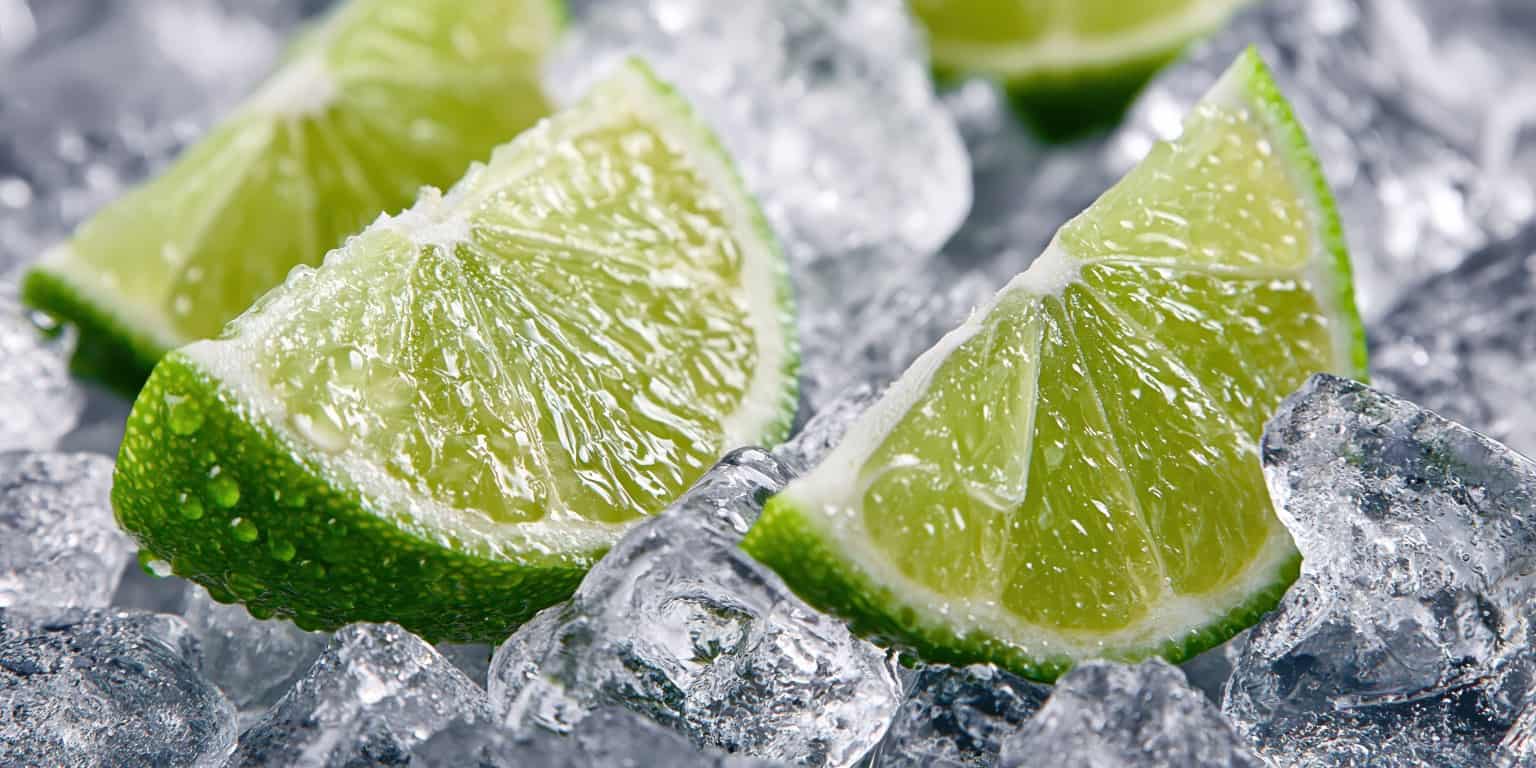
Ice is the only ingredient in a drink that you manufacture yourself, at home, in a machine you never clean, next to a bag of frozen shrimp. Everything else arrived in a sealed bottle made by someone whose job it was. And then people spend forty dollars on a bottle of gin and put it on top of something that tastes faintly of freezer.
Two separate problems live here. One is that the ice smells wrong. The other is that the size and shape of the cube is a dilution control that almost nobody is deliberately setting.
Why old home ice tastes of the freezer, and why a frost-free one is worse
Ice is porous at the surface and it sits in moving air for weeks. Volatile compounds in that air, which is to say everything in your freezer that is not sealed properly, condense onto it and stay.
A frost-free freezer makes this materially worse, and the reason is the feature itself. To stay frost-free the appliance periodically warms up just enough to sublimate the frost off its coils, then refreezes. Your ice is going through that cycle too. Its surface partially sublimates and recondenses, over and over, which concentrates whatever it has absorbed and rounds the cubes off until they are small, dense, and thoroughly flavored by the room they live in.
Ice made two weeks ago and left uncovered is not neutral. It is an ingredient with a flavor, and the flavor is your freezer.
The fix is boring and total. Make ice and bag it. A zip bag with the air pressed out, or a sealed container, and it will be fine for weeks. Make it fresh in the day or two before anything that matters. And if the only ice in the house has been in an open bin since spring, throw it out and buy a bag, because bagged ice from a shop is sealed, uniform and completely inoffensive, and it is the cheapest upgrade available to any drink.
Cloudy ice is trapped air, and directional freezing is why bar ice is clear
Water in a tray freezes from the outside in, because that is where the cold is. As the outer shell forms, the dissolved gases and any minerals get pushed ahead of the freezing front toward the middle, where they end up trapped as a white core of microbubbles.
That cloudy center is not dirt and it will not hurt you. It does two things you might care about. It scatters light, so the cube looks matte instead of glassy. And it is structurally weaker, so it cracks and fractures more readily, which increases surface area at exactly the moment the drink is in the glass.
Clear ice is made by controlling the direction. Freeze from the top down in an insulated container, so the freezing front travels one way and pushes everything ahead of it downward. A small cooler with the lid off, sitting in the freezer, does this well enough that the top two thirds comes out perfectly clear and you cut the murky bottom off and throw it away. Boiling the water first does almost nothing, despite being the most repeated tip on the internet.
Whether this is worth doing depends entirely on whether the glass is transparent and whether anyone is looking at it. For a rocks drink in a heavy tumbler, yes. For a highball full of tonic, absolutely not.
The part that changes the drink: surface area is the whole story
Melting happens at the surface, so the amount of water a piece of ice donates per second is a function of the area in contact with liquid, not of how much ice you put in.
Run the numbers on cubes. A one-inch cube has six square inches of surface for one cubic inch of volume, a ratio of six to one. A two-inch cube has twenty-four square inches for eight cubic inches, a ratio of three to one. Double the edge length and you have halved the melting rate per unit of ice. Crushed ice, with its enormous area, is at the far end: it chills faster than anything else and dilutes correspondingly fast.
So the choice of format is a setting, and it has a correct answer per drink. Something spirit-forward, served on the rocks, meant to be nursed for half an hour, wants one large cube so the drink is roughly the same at minute twenty as it was at minute two. Something long and bubbly wants the glass packed with standard cubes, which sounds like it would dilute more and does the opposite, because a full glass melts slower than a half-empty one. Ice sitting in liquid melts far faster than ice sitting against other ice. Something meant to be very cold and finished quickly wants crushed, and it wants to be built strong, because the dilution is going to arrive fast.
The most common home mistake is three cubes in a tall glass. That is the maximum-dilution configuration: small pieces, all of them fully surrounded by liquid, nothing insulating anything else. Fill the glass.
Cold ice and warm ice are different ingredients
Ice does not have one temperature. Straight out of a domestic freezer at 0°F it is much colder than the ice in a bar well, which has been sitting out and is sitting right at the melting point with a wet surface.
Very cold, dry ice from the freezer chills more per gram melted, which means less dilution for the same drop in temperature. It also cracks loudly when warm liquid hits it, and if it is very cold it will grab and fuse to itself in the shaker. Bar ice with a wet surface gives up water immediately and is more forgiving to work with.
This is a real part of why a measured stir in your kitchen and the same measured stir in a bar produce different drinks, and it is why the published dilution numbers never quite transfer. If you want yours to be repeatable, let the ice sit out for two minutes before you use it, every time.
Three rules that cover almost everything
Make it fresh and keep it sealed, because otherwise it has a flavor and the flavor is not yours. Match the format to the drink’s intended lifespan, big for slow and crushed for fast. And fill the glass rather than putting a polite amount in, because a full glass is the slow option even though it looks like the opposite.
How much of it to buy for a party is a separate calculation and a larger one than people expect, and it belongs in the menu rather than in the last errand of the day. That plan is part of the menu.
Part of Drinks & Zero-Proof.
Where this goes next
