The One Drink and the No-Drink
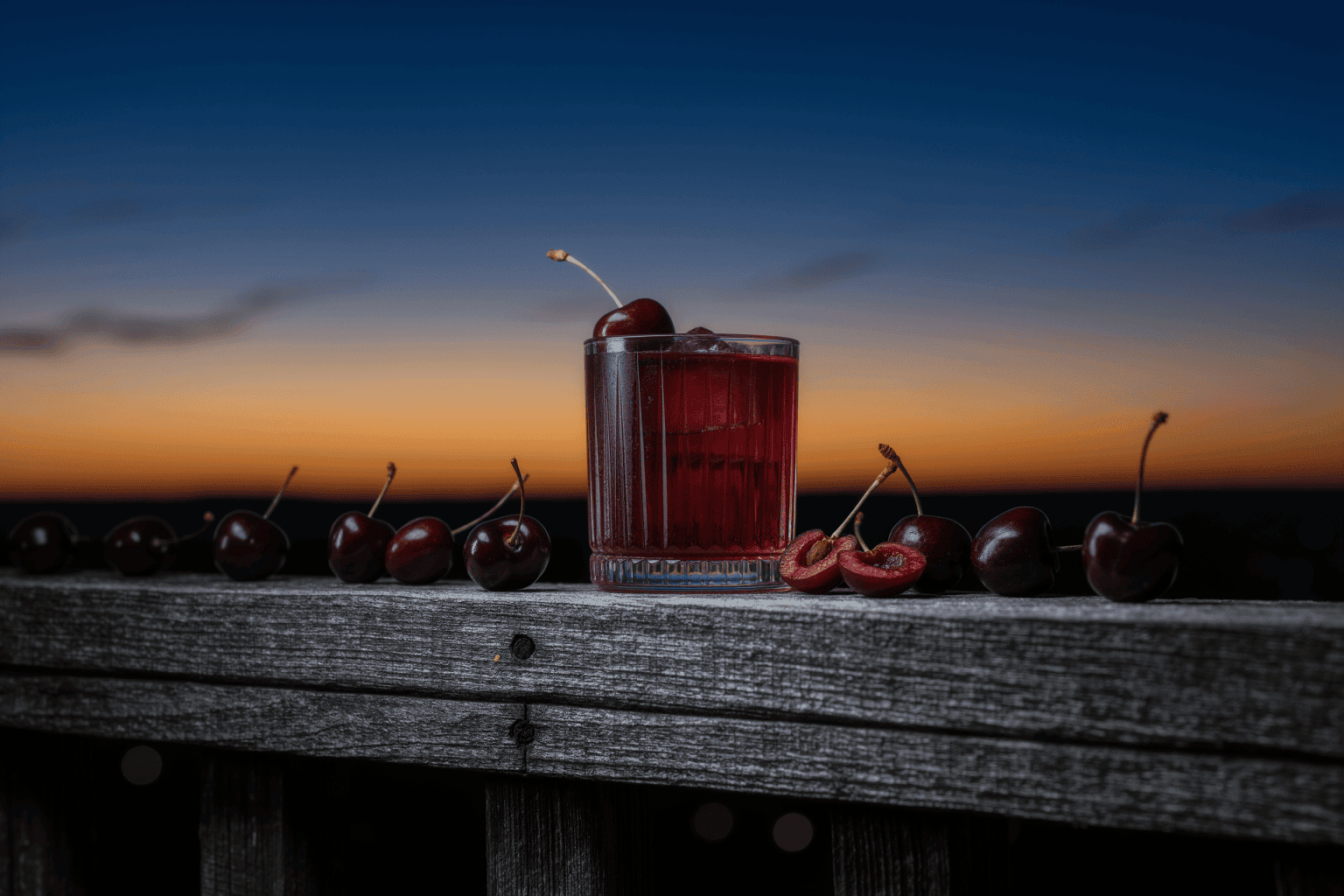
Fence Line at Dusk: Bourbon, Chokecherry, Amontillado, and Coffee
Chokecherry is a fruit with plenty of tannin and almost no acid, which is why every chokecherry cordial ever made tastes like a jar of jelly that learned to pour.
Serve alongside
Salted pecans and dark chocolate, or a slice of cured ham. Chokecherry is tart and astringent, coffee is bitter, amontillado is dry — every component of this drink is asking for salt and fat.
Tools
A 750 ml bottle with a cap for the batch, a funnel, a jigger, a large-cube mold, and a jelly bag or a doubled square of cheesecloth for the cordial. A clean pillowcase works and I am aware of how that sounds.
Ingredients · swaps in parentheses
Bourbon, amontillado sherry (dry oloroso), chokecherry cordial (sour cherry or aronia), coffee bitters, aromatic bitters, orange, and malic acid powder (from a homebrew shop or the canning aisle)
Magic
Put the acid back into the chokecherry. Stir 1/8 tsp of malic acid into every cup of finished cordial. Malic is the acid stone fruit is supposed to have and chokecherry barely does — it is a fruit that went all in on tannin — and adding it back is the difference between a cordial that reads as fresh fruit and one that reads as something opened with a butter knife. It also stops the drink from going flabby against the sherry. Not feeling brave? A bar spoon of lemon juice per cup of cordial does about half the job and fades in a week.
Gotcha
Two. Cook chokecherries whole and strain them — never blend, never crush the pits, which are not something you want in your syrup. And stay at 1/8 tsp of malic per cup: at 1/2 tsp the cordial swings past bright into a hard green-apple sourness that tastes synthetic, and there is no unmixing it.
Chokecherry is a fruit with a great deal of tannin and almost no acid. That is the whole problem with it, and it explains why every chokecherry cordial anybody has ever handed you tastes like a jar of jelly that learned to pour. The astringency reads as depth, the sugar reads as body, and nothing in it is bright, so it slumps into whatever it is mixed with. Bourbon does not rescue it. Bourbon has the same problem.
The cordial is most of the work
Chokecherries grow along fence lines and creek bottoms and in the brush at the edge of a hayfield, which means picking them costs an afternoon and a certain tolerance for being in the same thicket as the birds who got there first. They are the size of a pea, they stain, and eaten raw they turn the inside of your mouth to felt.
Cook them whole with just enough water to cover, mash gently against the side of the pot with a wooden spoon, and strain through a bag overnight without squeezing. Squeezing gives you a cloudy syrup with more tannin in it, and this fruit does not need more tannin. Sweeten the juice one to one by weight, cool, then stir in the malic acid from the Magic row. Taste it before and after. The change is not subtle and it is the whole reason this post exists.
Make eight, not one
This drink is easier to justify at volume, because a batch takes four minutes and the alternative is standing at a counter with a bar spoon while everyone else is outside.
Multiply the liquid ingredients by eight. Add 20 percent chilled water when batching and refrigerate up to one day. Bottle it, cap it, and put it in the door of the fridge behind the milk where nobody will move it. Bitters go in the batch — this is a robust drink and a night of settling does it no harm. Ice and orange peel happen at the glass.
Set out the bottle, a bowl of large cubes, and one orange with a peeler next to it. People will pour their own and every single one of them will pour more than 2 3/4 oz, which is fine, and is the actual reason to add the water.
One glass, if it is just you
- 1 1/2 oz bourbon
- 3/4 oz amontillado sherry
- 1/2 oz chokecherry cordial
- 2 dashes coffee bitters
- 1 dash aromatic bitters
- Orange peel
The pour, drawn to scale
- bourbon1 1/2 oz55%
- amontillado sherry3/4 oz27%
- chokecherry cordial1/2 oz18%
Stir all liquid ingredients with ice for 25 seconds.
Strain over a large cube.
Express the orange peel over the drink. Coffee bitters and orange oil together do something that neither does alone, and it happens above the glass rather than in it, so do this at arm’s length and inhale like a person with no shame.
Ice
One cube, two inches if your mold makes them. The sherry drops this drink to something under 25 percent alcohol, and at that strength a glass full of small ice is a countdown. A single cube gives you the long, slow dilution that suits a drink you are holding while looking at something.
Jelly jars are acceptable glassware and I will not be arguing about it. A rocks glass is better only because it is heavier.
Zero-proof
The bourbon can go and the drink survives, because the sherry and the cordial were carrying the flavor anyway. Use 1 1/2 oz of strong cold-steeped black tea in place of the bourbon and 3/4 oz of a dry nonalcoholic aperitif or a verjus-and-water mix in place of the sherry, keep the cordial and both bitters exactly as written, stir 15 seconds instead of 25. It comes out leaner and slightly more sour, and the malic acid matters more here than it does in the original, because there is no barrel warmth to lean on.
Something grilled, salted, and eaten standing up. It is that kind of drink and that kind of hour.
Part of Drinks & Zero-Proof.
Where this goes next
