The One Drink and the No-Drink
Glassware Parity Is the Cheapest Thing a Host Can Fix and Almost Nobody Fixes It
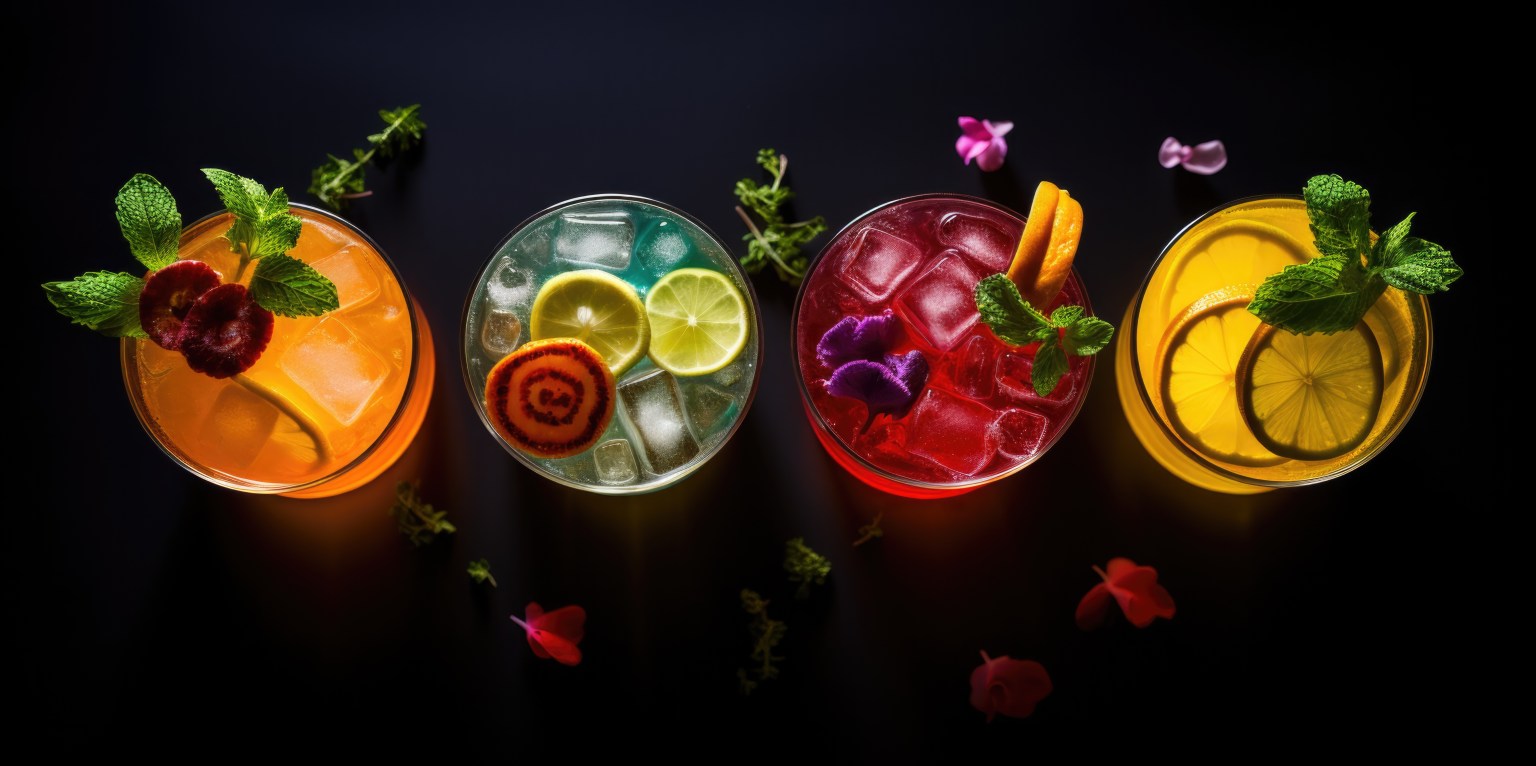
Pour a careful zero-proof drink, put it in a water tumbler, and hand it to a guest holding it next to six people with stemmed glasses. You have just labeled it. Not with a word. With a shape.
Everyone in the room can read glassware from across a room without looking directly at it, which is the entire reason bars own eleven kinds. A coupe means something. A rocks glass means something else. A tumbler with a straw in it means this is not one of the drinks, and the person holding it knows that, and so does everyone talking to them.
This is the cheapest fix in hosting and it does not require buying anything, because the correct move is usually to use fewer kinds of glass, not more.
The parity is not about fairness, it is about the volume
Start with the practical half, because it is the half people skip.
A coupe holds five and a half ounces. A highball holds twelve. If the cocktails are going into coupes and the zero-proof drink is going into a highball, the two glasses do not empty at the same rate, and now you have two clocks running in one room. The guest with the twelve-ounce glass is either drinking twice as much liquid as everyone else or standing there for an hour with a half-full glass that is slowly going warm and flat. Neither of those is the experience you were trying to build.
Same glass, same volume, same ice, and the two drinks track each other for the whole evening. That synchronization is doing more work than the recipe is, and it is the part hosts never think about, because it is invisible when it is working.
The zero-proof drink needs more thermal protection, not less
Here is where it stops being manners and starts being chemistry.
Sweetness perception rises as a drink warms. Bitterness perception falls. A drink that tasted balanced at forty degrees will taste noticeably sweeter and flabbier at sixty, and it gets there faster than you think in a warm room in a hand.
Zero-proof drinks tend to carry more sugar than their alcoholic counterparts, because sugar is one of the few ways to put body back after the alcohol is gone. That means they have further to fall. The same twenty-degree rise that makes a gin drink taste merely soft makes a zero-proof drink taste like squash. So the glass that most needs a stem, a thick base, or a large clear cube is the one hosts most often put in a thin-walled tumbler with three ice cubes and a straw.
Stemware exists so that a hand does not touch the bowl. It is not decorative. If you have twelve stems and eighteen guests, put the zero-proof drinks in the stems, not the other way around.
Garnish parity is the other half, and it costs four seconds
A cocktail gets a peel expressed over it, twisted, and dropped in. The zero-proof drink gets a straw. This is not a small difference, because aroma is the job alcohol was doing and now nothing is doing it. The garnish on a no-alcohol drink is not decoration, it is the entire delivery mechanism for smell, and skipping it degrades the drink materially in a way that skipping it on a Negroni does not.
So: express the oil, wipe the rim, slap the herb. Four seconds. And if the cocktail is getting a cocktail cherry and the zero-proof drink is getting nothing, someone is going to notice, and it will be the person holding the nothing.
What to do when you genuinely do not have matching glasses
Most people do not own sixteen of anything, and the answer is not to go buy them.
Pick one glass and commit to it for the night. If you have eight of one shape and six of another, serve the whole party out of the eight until they run out and then serve the whole party out of the six, so the divide falls by arrival time rather than by what is in the glass. Nobody reads a mixed set as a hierarchy. Everybody reads a consistent set as a category.
If you are short, a plain wine glass is the most forgiving vessel in the house. It holds the right volume, it has a stem, it concentrates aroma, and it does not signal anything about its contents. A room where everyone is holding a wine glass and half of them contain something else is a room where the question never comes up.
And if you own a set of cheap tall tumblers and nothing else, use those for everything, including the wine. A deliberate house style reads as a decision. An improvised hierarchy reads as an accident, and guests are very good at telling the difference.
The whole thing takes one decision the day before
Decide what the drinks are going in. Not what they are. What they are going in. Count them, wash them, put them out in one place, and make sure the number of that one glass is larger than the number of guests.
The glass has three jobs and the third one, the social one, is the only one that cannot be fixed after the pour. You cannot upgrade someone’s glass mid-party without announcing that the first one was wrong.
Part of Drinks & Zero-Proof.


