The One Drink and the No-Drink
Hugo Spritz: The 2005 South Tyrol Drink Behind the Modern Elderflower Version
The Hugo is younger than most of the people ordering it, and it did not originally contain elderflower at all.
Serve alongside
Speck, rye bread, and a hard alpine cheese. The Hugo is from South Tyrol and so is that plate; elderflower is soft enough that anything sharper would simply run it over.
Tools
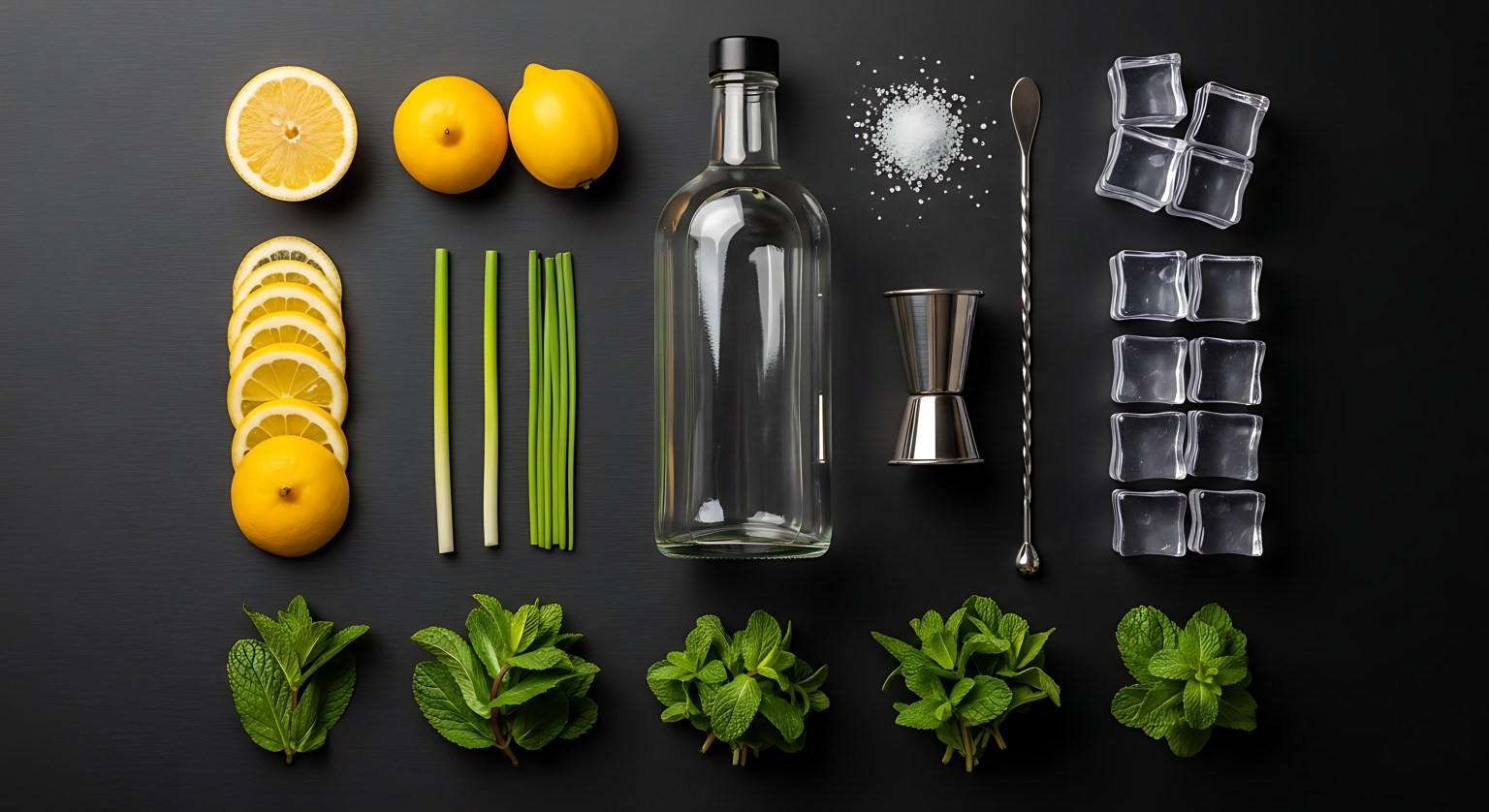
A large wine glass per person. A jigger, because eyeballing syrup is how this drink goes wrong. Large ice cubes, as many as you can freeze. No shaker, no strainer, nothing to wash.
Ingredients · swaps in parentheses
Dry prosecco (any brut sparkler), elderflower syrup or elderflower liqueur, soda water, fresh mint, lime.
Magic
Put the mint on the ice, not in the drink. Fill the glass, clap the sprigs once, and lay them across the top of the ice so they sit above the liquid line. Mint submerged in a cold sweet drink turns dark and contributes almost nothing; mint sitting dry at the top of the glass is directly under the nose for every sip, which is the only place it was ever doing any work. Not feeling brave? One sprig laid across the rim gets you most of it.
Gotcha
Small or wet ice kills this drink in about ten minutes. There are only four ounces of actual liquid in a full wine glass, so the ice is structural, and a scoop of half-melted cubes from a bag in the door of the freezer will take it to sweet water before the second sip. Big cubes, hard-frozen, glass filled to the top.
The Hugo dates to 2005, and the elderflower version most people recognize today is not the formulation most origin accounts attribute to its creator. Both facts are worth knowing before you build one, because they explain why so many Hugos taste like floral soda.
The drink was created in 2005 by Roland Gruber, a bartender in Naturns, in South Tyrol, as a lighter alternative to the Aperol Spritz. The original used lemon balm syrup, not elderflower. Elderflower came in a little later, partly because commercial lemon balm syrup was hard to get hold of, and it stuck so thoroughly that the earlier version has been almost entirely forgotten. Many modern English-language recipes use elderflower liqueur instead of syrup. That changes both sweetness and alcohol, so it should be treated as a different formulation rather than as a one-for-one historical substitution. That is the drift: from a herbal, barely sweet, faintly lemony spritz to something that can read as perfume.
Nothing here is a purity argument. The liqueur version is genuinely good. It just has to be built as if it were the liqueur version, which means less of it and more soda.
Original-style Hugo, with syrup
For 1 drink
- 2 ounces dry Prosecco
- 2 ounces chilled soda water
- 2/3 ounce elderflower syrup
- 6 to 8 mint leaves
- 1 thin lime wheel
- Plenty of ice
The pour, drawn to scale
- dry Prosecco2 ounces43%
- chilled soda water2 ounces43%
- elderflower syrup2/3 ounce14%
Fill a large wine glass with ice. Add the elderflower syrup, Prosecco, and soda water. Stir gently once or twice, enough to integrate, not enough to beat out the bubbles. Clap the mint lightly between your hands, lay it on the ice, and finish with lime.
If your syrup is very concentrated, start at 1/2 ounce. The drink should smell floral before it tastes sweet. If you can find lemon-balm syrup, or make it, you are closer to the flavor family reported for the 2005 original. Do not call these exact house proportions the historical recipe unless the ratios also match the documented source.
Modern Hugo, with liqueur
For 1 drink
- 3 ounces dry Prosecco
- 1 ounce elderflower liqueur
- 1 ounce chilled soda water
- Mint, and lime that is not optional here
- Ice
Build directly in an ice-filled wine glass, Prosecco, liqueur, then soda, and stir once. Taste before you add more liqueur. If the Prosecco is on the sweeter side, add soda rather than sugar. The lime is not optional in this version; a full ounce of liqueur needs the acid or the whole thing sits heavy.
Zero-proof, and equal
For 1 drink
- 2 ounces nonalcoholic sparkling wine, or dry sparkling tea
- 2 ounces soda water
- 1/2 to 2/3 ounce elderflower cordial
- 1/4 ounce fresh lime juice
- Mint and a lime wheel
- Ice
Build over ice and stir gently. If the sparkling base is sweet, cut the cordial. If it is austere, keep the full measure. This one converts better than almost any classic spritz, because the alcohol in a Hugo was never carrying the flavor, only a little of the weight. Dry sparkling tea is the better base of the two if you can get it; the tannin does the job the wine was doing.
Batching for six
Do not batch the carbonation. Chill 18 ounces prosecco, 6 ounces elderflower liqueur and 6 ounces soda separately, and put the mint and lime on the table. When people arrive, fill glasses with ice, divide the liqueur, add prosecco, top with soda, garnish. For the syrup version, 12 ounces prosecco, 12 ounces soda and 4 ounces elderflower syrup, adjusted to your syrup.
The real batching job is ice. Six full wine glasses want more ice than most home freezers hold, and running out halfway through is the failure mode nobody plans for. Start freezing two days ahead, or buy a bag and keep it in a cooler.
Serve it with salty, sharp things that want lift rather than more sweetness: olives, cured fish, fried snacks, a tomato-heavy first course. Heavy smoke or serious chile heat will erase the mint entirely.
The original used lemon balm rather than mint, and it was built to be lighter than an Aperol spritz rather than sweeter. Most bars have quietly reversed both of those decisions, which is why the version you are usually handed tastes like a soft drink with a job.
For the wider drinks lane, including ice, glassware and pacing, see Drinks & Zero-Proof; for serving a crowd, Hosting & Service. The 2005 origin and Roland Gruber’s authorship are documented by the Consorzio Tutela Prosecco DOC.
Part of Drinks & Zero-Proof.


