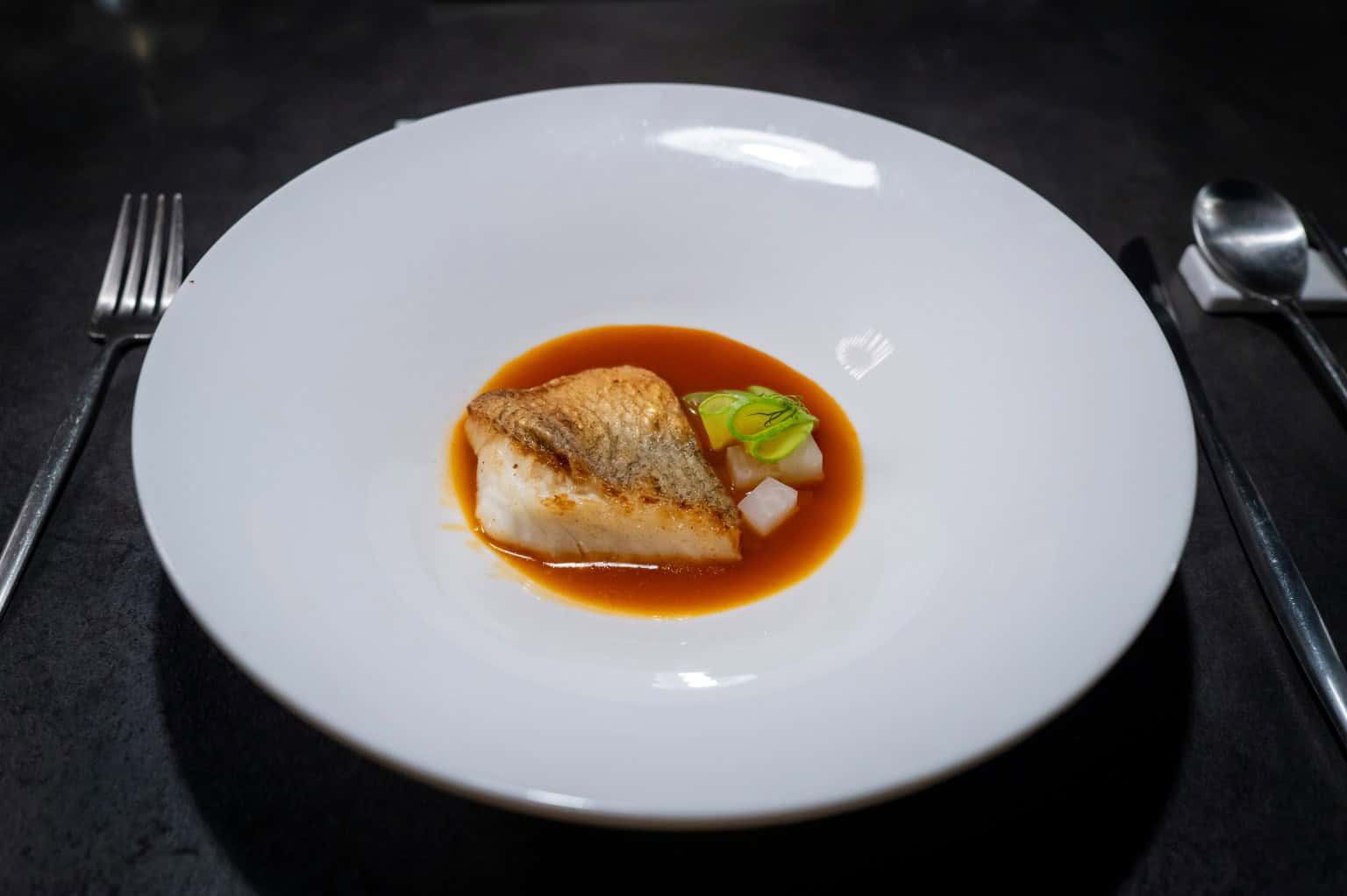
Black Cod with Miso, Pear, and Mustard Greens
Rich black cod with a miso-pear glaze and bitter mustard greens for balance.
Pairing
Wine — Junmai sake, slightly chilled, or a quiet Chenin. Miso and pear will bully a thin Pinot Grigio. Mixed drink — Yuzu whisky sour, dry. Citrus and a little silk, no egg-white circus unless you want one. Teetotaler — Warm pear and ginger tea over ice with lemon. It follows the plate without becoming dessert.
Tools
Foil-lined rimmed sheet pan, microplane or fine grater, a covered container that holds the fillets in one layer, an oven rack set about six inches under the broiler, a wide skillet, a fish spatula, tongs, and warm shallow plates
Ingredients · swaps in parentheses
Four 5- to 6-ounce black cod fillets (salmon or arctic char, or a firm white fish with a shorter marinade), white miso, one ripe Bartlett or Anjou pear, mirin, rice vinegar, fresh ginger, one large bunch of mustard greens (broccoli rabe with the stems started first, or thinly sliced kale cooked longer), toasted sesame oil, soy sauce, neutral oil for the tray and the skillet, and steamed short-grain rice with scallions and toasted sesame seeds
Magic
Save the pear peel and core after you grate the pear, warm the tablespoon of rice vinegar just to a simmer, steep the trimmings in it for 10 minutes, then strain that pear vinegar and use it to finish the mustard greens. The acid that cuts the glaze now carries the same fruit as the glaze, so the plate reads as one idea instead of rich fish sitting next to bitter greens. If you would rather not bother, dress the greens with plain rice vinegar and drop a wide strip of lemon zest into the skillet for the last 30 seconds.
Before you begin
Coat the fillets and refrigerate them for at least two hours and no more than eight, then wash and thoroughly dry the mustard greens, mix the soy sauce, rice vinegar, and sesame oil in a small bowl and set it within arm's reach of the stovetop, position the rack six inches under the broiler and let it preheat fully, and wipe the thick clumps of marinade off the fish so only a thin even coat goes under the heat.
The parts that change whether this works tonight.
These fields come from the published recipe itself. If a recipe has not separately declared an operating fact, the gap stays visible instead of being filled with a guess.
- Servings
- Serves 4
- Timing
- Cook 12 to 15 minutes
- Equipment
- Not separately declared
- Make-ahead
- Not separately declared
- Holding
- Not separately declared
- Leftovers
- Refrigerate leftovers promptly. Reheat gently, preferably in a low oven, just until warmed. The fish is also useful cold or at room temperature in a rice bowl, where…
- Dietary notes
- Not separately declared
- Method map
- 17 ingredient lines · 6 method steps
Black cod arrives with enough richness to finance its own evening. The useful move is not adding more weight; it is giving that richness somewhere sharp and green to go. White miso and ripe pear form a glossy, deeply savory glaze, while mustard greens bring bitterness and a little friction. The result tastes composed rather than merely expensive.
The fish needs a short, controlled marinade and a fast finish under the broiler. The greens need heat, acid, and permission to remain bitter. The dish fails when the glaze becomes too thick, the fish waits after cooking, or the greens are sweetened until they stop doing their job.
What the plate is designed to accomplish
This is a four-person dinner with restaurant-like contrast and a manageable home-kitchen sequence. The fish marinates early. The greens can be washed and cut ahead. The final cooking takes roughly 15 minutes, which makes the dish practical for company only when the table, starch, and drinks are already handled.
Host difficulty: Moderate.
Make-ahead rating: High before cooking, low afterward.
Kitchen intensity: Briefly high during broiling and greens.
Yield and timing
- Yield: Serves 4
- Active time: About 25 minutes
- Marinating: 2 to 8 hours
- Cook: 12 to 15 minutes
- Total elapsed time: About 3 hours minimum, mostly unattended
- Best service window: Immediately after cooking
Ingredients
For the black cod
- 4 black cod fillets, 5 to 6 ounces each
- 1/3 cup white miso
- 1/4 cup finely grated ripe pear
- 2 tablespoons mirin
- 1 tablespoon rice vinegar
- 1 teaspoon finely grated fresh ginger
- 1 tablespoon neutral oil for the tray
For the mustard greens
- 1 large bunch mustard greens, stems removed and leaves roughly chopped
- 1 tablespoon neutral oil
- 1 teaspoon toasted sesame oil
- 1 tablespoon soy sauce
- 1 teaspoon rice vinegar, plus more if needed
- Freshly ground black pepper
Optional supporting elements
- Steamed short-grain rice
- Sliced scallions
- Toasted sesame seeds
- A cold cucumber salad
Choose pear for body, not obvious fruit flavor
Use a ripe pear that grates easily and smells sweet but is not collapsing. Bartlett, Anjou, or another juicy variety can work. The grated pear should disappear into the marinade, contributing moisture and quiet sweetness rather than visible shreds.
If the pear is very firm, grate it on the finest holes and let the mixture stand for 10 minutes. If it is extremely juicy, measure the grated pulp rather than pouring all collected liquid into the miso. The marinade should be spreadable, not watery.
Build a thin glaze rather than a paste jacket
Stir the white miso, grated pear, mirin, rice vinegar, and ginger until smooth. Taste a tiny amount. It should be salty, sweet, aromatic, and lightly sharp. The fish will soften the intensity.
Pat the fillets dry and coat them evenly with the marinade. Use enough to cover the surfaces without packing a thick layer around the fish. Cover and refrigerate for at least two hours and no more than eight.
A very long marinade can make the surface overly salty and soft. This is not a recipe where more time automatically demonstrates commitment.
Prepare the greens before the broiler turns the kitchen urgent
Remove thick stems from the mustard greens and chop the leaves into broad pieces. Wash them thoroughly, then dry well. Water clinging to the leaves lowers the pan temperature and encourages steaming.
Mix the soy sauce, rice vinegar, and sesame oil in a small bowl. Keep it beside the stove. Once the fish is under the broiler, the greens need to move quickly enough that searching for vinegar becomes an avoidable plot development.
Set the broiler and tray deliberately
Position an oven rack about six inches from the broiler element, adjusting for the power and layout of the oven. Line a rimmed sheet pan with foil and brush it lightly with neutral oil.
Remove the fish from the marinade and wipe away thick clumps, leaving a thin even coating. Excess marinade burns before the fish cooks and can make the surface taste bitter rather than lacquered.
Place the fillets skin-side down with space between them. Let them lose the deepest refrigerator chill while the broiler heats fully, but do not leave them standing at room temperature longer than the normal preparation sequence requires.
Broil for lacquer and broad moist flakes
Broil the fish for 7 to 10 minutes, rotating the tray if one side colors faster. Watch the surface rather than treating the timer as a binding agreement.
The glaze should bubble, darken, and form a glossy crust. The fish should separate into broad, moist flakes when gently pressed. Thin fillets cook faster; thick center-cut pieces take longer.
If the top colors too quickly, lower the rack or loosely shield the darkest area while cooking continues. If the surface remains pale, move the tray closer only after confirming the fish is not already nearly done.
Cook the greens while the fish finishes
Heat the neutral oil in a wide skillet over medium-high heat. Add the dry mustard greens and toss until wilted but still bright, about 3 to 5 minutes.
Add the soy-vinegar-sesame mixture and toss briefly. Taste. The greens should be savory, bitter, and distinctly lively. Add another small splash of rice vinegar if they seem flat or oily.
Do not sweeten the greens merely because bitterness is noticeable. The bitterness is the counterweight. Remove it and the fish has nothing to push against.
Plate for contrast, not decoration
Divide the mustard greens among warm shallow plates. Place one fillet over or beside each portion, keeping the lacquered surface visible.
Add rice in a restrained mound if serving it. Finish with scallions or sesame seeds only if they improve texture and aroma. The plate does not need a fan of pear slices to prove the marinade existed.
The complete bite
The fish should be buttery and savory, with a caramelized miso surface and no obvious raw pear texture. The greens should remain a little chewy and bitter. Rice, if present, should absorb the glaze and pan juices without turning the plate sweet or heavy.
If the first bite tastes rich but the second feels tiring, the greens need more acid or the portion needs more rice and less glaze. If the plate tastes severe, check whether the greens were oversalted or the fish carried too much marinade.
A make-ahead plan that respects the short finish
Morning or early afternoon: Mix the marinade and coat the fish within the 2-to-8-hour window.
Up to one day ahead: Wash, stem, chop, and dry the greens. Store them chilled with a clean towel.
One hour before dinner: Prepare rice or another starch, set the table, and mix the greens seasoning.
Fifteen minutes before service: Heat the broiler and skillet, wipe the fish, and begin cooking.
At service: Plate immediately. Cooked black cod does not improve while waiting around for someone to find the good napkins.
Scaling the dinner
For six people, use six fillets and one and a half times the marinade. Use two sheet pans only if both can sit under the broiler effectively; otherwise, cook in two rounds and keep the first round warm only briefly.
For eight people, consider a different cooking format or a second oven. Broiler capacity is the real limit, not ingredient arithmetic. A crowded tray cooks unevenly and makes precise service difficult.
The greens scale more easily. Cook them in two batches so they wilt rather than steam.
Substitutions and what changes
- Salmon: Rich but firmer and less buttery. It works, though timing and flavor differ.
- Arctic char: A good alternative with a delicate texture and rich flavor.
- Firm white fish: Leaner and less forgiving. Use a shorter marinade and watch cooking closely.
- Kale for mustard greens: Milder and sturdier. Slice thinly and cook longer.
- Broccoli rabe: Bitter and excellent, though the stems need a head start.
- Apple for pear: Sharper and less juicy. Grate finely and add a teaspoon of water only if the marinade is too stiff.
- No mirin: Use a small amount of water plus sugar, adjusting carefully. The flavor will be less complex.
Failure points
The glaze burns: Too much marinade remained on the fish, the rack was too close, or the broiler was unusually intense.
The fish is salty: The marinade was too thick or the fish stayed in it too long.
The fish is dry: It overcooked or waited too long after cooking.
The greens are watery: They were not dried or the pan was crowded.
The plate feels heavy: Increase vinegar and greens, reduce glaze, or add plain rice.
The pear is obvious and chunky: It was grated too coarsely or the marinade was not mixed well.
Drinks and the surrounding menu
A dry mineral white wine, sake-style pairing, or crisp lager can handle miso, pear, and rich fish. The teetotaler pairing should be equally structured: chilled green tea with pear peel, sparkling cucumber water with rice vinegar, or a dry ginger-and-lime soda.
Begin the meal with something cold and sharp rather than another rich fish course. Finish with citrus, fruit, or a modest dessert with bitterness or acid.
Kitchen Kit
Pairing: Junmai ginjo sake or Alsace Pinot Gris. Teetotaler: pear-ginger shrub with soda. The miso-pear glaze is sweet-savory; the glass should echo the pear and stay dry enough that the fish does not taste candied.
Goods: Black cod, white miso, ripe pear, mirin, rice vinegar, ginger, mustard greens, sesame oil, soy sauce, and a restrained starch.
Gear: Fine grater, covered marinating container, foil-lined sheet pan, broiler, wide skillet, tongs, and warm plates.
Magic: Use a thin marinade, remove excess before broiling, cook the fish late, and let the greens remain bitter enough to hold the plate upright.
Storage and the balance to keep
Refrigerate leftovers promptly. Reheat gently, preferably in a low oven, just until warmed. The fish is also useful cold or at room temperature in a rice bowl, where reheating is unnecessary.
The dish succeeds when the glaze is caramelized, the fish remains moist, and the greens retain enough bitterness to push back. Do not bury that bitterness. It is not a flaw to correct; it is the structural beam holding the plate together.
An original Salty & Clever recipe concept, developed for experimentation. How we write and check recipes
Part of Recipes & Technique.


