Limoncello Spritz with Brut Prosecco and Lemon Peel
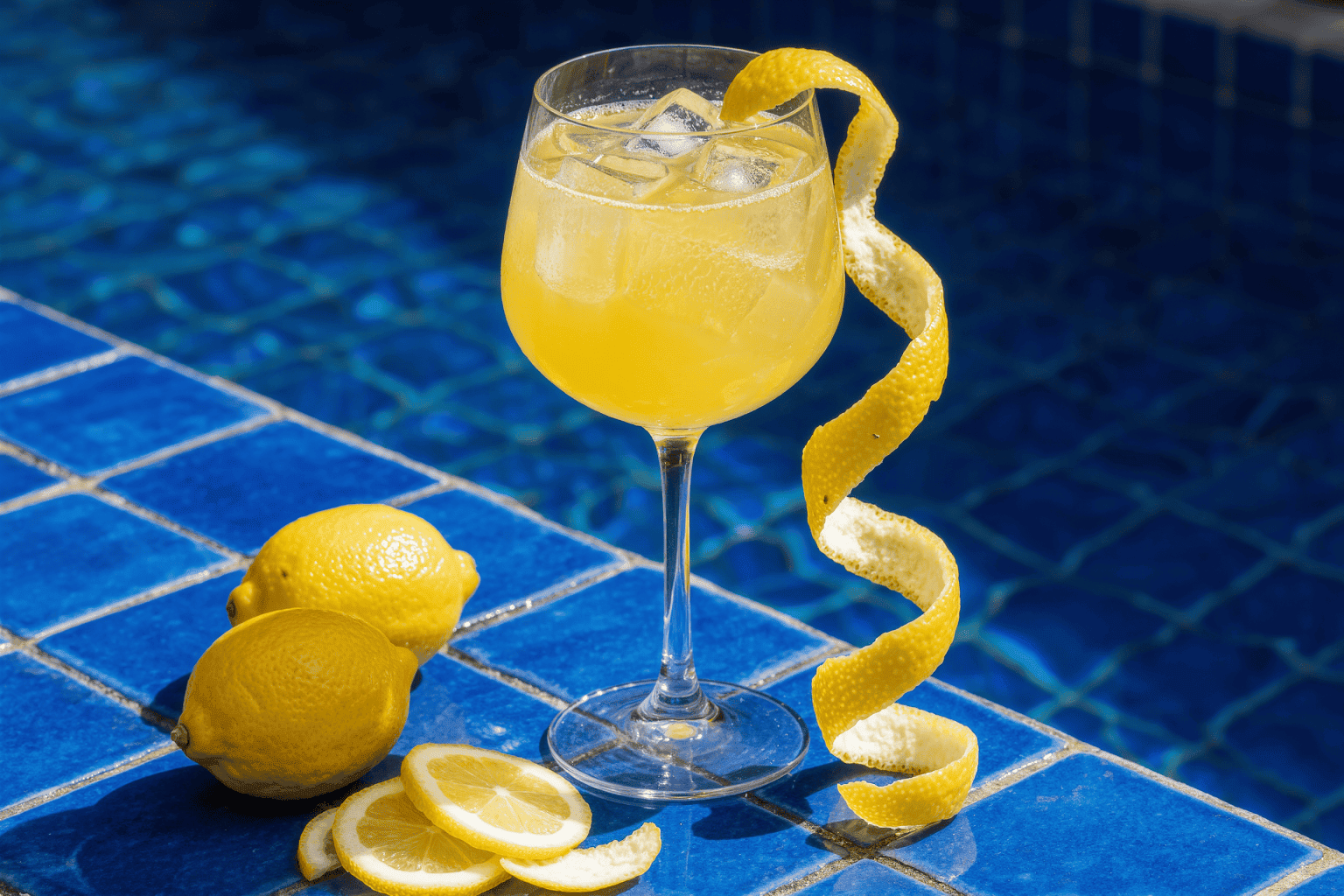
The Amalfi photo never mentions that most of these drink like melted lemon candy. Brut Prosecco, a jigger, and a wide strip of peel put the lemon back in charge.
The parts that change whether this works tonight.
- Yield
- 1 drink
- Time
- 5 minutes
- Equipment
- A large wine glass, a jigger because free-pouring limoncello is how spritzes go to seed, a bar spoon for exactly one gentle lift, and…
- The method
- 6 ingredients · 5 steps
From this recipe’s own recipe card. Nothing here is a guess.
Serve alongside
Fried calamari, or olives with salted almonds. Limoncello is sweet and the prosecco is dry, and salt on the plate is what tips the balance toward the prosecco where it belongs.
Tools
A large wine glass, a jigger because free-pouring limoncello is how spritzes go to seed, a bar spoon for exactly one gentle lift, and a peeler that can take a wide strip of lemon without harvesting the pith.
Ingredients · swaps in parentheses
Brut Prosecco (any dry sparkling wine you would drink on its own), limoncello, soda water, a wide strip of lemon peel, ice, a small basil leaf or mint sprig if you want greenery.
Magic
Make the herb a fresh bay leaf, clapped once between your palms. Bay and lemon grew up together on the Amalfi coast, and it gives the spritz a quiet, resinous spine that basil cannot manage. Not feeling brave? Mint, clapped the same way, keeps things clean and familiar.
Gotcha
Taste your limoncello cold before building the first glass. Bottles vary from bracing to syrup, and the difference decides whether you pour the smaller or larger measure — guess wrong and the drink turns into lemon candy with bubbles.
Somewhere on your feed right now, a limoncello spritz is glowing above the Amalfi coast, looking like sunshine you can bill to a credit card. What the photo declines to mention is that most of them drink like melted lemon candy. The liqueur is sweet, the wrong Prosecco is sweeter, somebody free-poured, and now a lemon wheel is floating in the middle of it all, trying to look innocent.
The rescue takes three decisions, none difficult. Brut Prosecco, because the glass already owns all the sugar it needs. A jigger, because limoncello punishes optimism. And soda water doing honest work at the end, lengthening the drink so the finish stays clean and the peel’s faint bitterness keeps a second sip interesting. Built this way, it also scales calmly to a full table — everything is measured, and the ice is not carrying the dilution alone.
The ratio argument
Aperol drinkers arrive knowing 3-2-1. Limoncello wants drier math, because the liqueur itself can run substantially sweeter than Aperol: three parts sparkling wine to roughly one-and-a-half parts limoncello to one part soda, which keeps lemon at the center of the drink without turning it sticky. Then adjust for your actual bottle, tasted cold. Nearly syrup on its own? Pour 1 ounce instead of 1 1/2. Dry, sharp, intensely lemony? The full measure earns its place.
Ingredients
Makes: 1 drink
Time: 5 minutes
- 3 ounces brut Prosecco or other dry sparkling wine, very cold
- 1 to 1 1/2 ounces limoncello, very cold
- 1 ounce cold soda water
- 1 wide strip lemon peel
- Ice
- Optional: 1 small basil leaf or mint sprig
The pour, drawn to scale
- brut Prosecco3 ounces57%
- limoncello1 to 1 1/2 ounces24%
- cold soda water1 ounce19%
Method
- Fill a large wine glass with solid ice.
- Pour in the limoncello, then the Prosecco. Add the soda water last.
- Give the drink one gentle lift with a bar spoon. Do not churn out the bubbles.
- Express and add the lemon peel: Express the lemon peel over the surface, rub it once around the rim, and drop it into the glass.
- Add one small herb garnish if using. Serve immediately. For the magic version, make that herb a fresh bay leaf, clapped once between your palms, here.
The wine cannot be the weak link
A dry sparkling wine brings acid, bubbles, and fruit without stacking another layer of obvious sweetness onto a drink that has plenty. This does not require the expensive bottle; it requires one you would willingly drink by itself. If the wine tastes flat, candied, or aggressively fruity before it meets the limoncello, the finished spritz will not suddenly develop discipline.
Cold is a load-bearing ingredient
Room-temperature limoncello and warmish Prosecco melt ice fast, and the melt rewrites your careful ratio before the glass reaches the table. So the limoncello lives in the refrigerator or freezer, whichever its producer and proof suggest, the Prosecco chills fully, and the soda comes out cold. The ice is there to finish the job, not to begin it.
Peel beats wheel, and herbs stay small
A lemon wheel is decoration that slowly leaks watery juice into the drink. A wide strip of peel puts volatile citrus oils exactly where your nose meets the glass, which makes the spritz taste more lemony without becoming more sour or more sweet — the best kind of arithmetic. Cut it with as little pith as practical, twist it over the surface, one pass around the rim, done. One drink does not need the entire produce department. If greenery calls to you, the rule is one small basil leaf or mint sprig, clapped gently between your palms, never pulverized — basil especially, since a heavy hand steers the glass somewhere pesto-adjacent.
Six at once
Chill 18 ounces brut Prosecco, 6 to 9 ounces limoncello, and 6 ounces soda water, and refuse to combine any of it in advance. Line up six glasses with ice and peel, then build the drinks assembly-line fast. A pitcher is a last resort: limoncello and Prosecco together at the final moment, soda at the last second, straight over ice. A spritz that sits assembled for 30 minutes is a cordial with memories of bubbles.
Drier, and zero-proof
Before dinner, go leaner — 1 ounce limoncello, 3 1/2 ounces brut sparkling wine, 1 ounce soda, and a squeeze of lemon only if the liqueur itself is short on acidity. It finishes cleaner and leaves the palate alone. For the no-alcohol chair at the table: 1 1/2 ounces tart lemon cordial, 3 ounces dry nonalcoholic sparkling wine, 1 1/2 ounces soda, same peel ritual. Nobody is impersonating limoncello here. The architecture is the thing worth keeping — citrus, bubbles, acid, cold, and enough restraint that a second glass still sounds like a good idea.
Feed it salt: olives, potato chips, fried zucchini, marinated cheese, anchovy toast, a plate of cured meat. Grilled shrimp, charred corn, and tomato-heavy appetizers all get along with it too — just keep sweet glazes away unless the whole table has agreed to taste like lemon candy. And when a glass goes wrong, work backward through the build: too sweet means less limoncello before more soda, weak means something went in warm, flat means the bottle opened too early or the spoon got ambitious, and not-lemony-enough wants fresh peel expressed over the top, not another pour of liqueur.
Part of Recipes & Technique.
Recipe provenance: Salty & Clever editorial formulation, built from established culinary technique and the traditions identified in the article. No chef, restaurant, family, or firsthand cultural provenance is claimed unless it is explicitly named and sourced. How we write and check recipes
Where this goes next
