Muscadine at Dusk: A Blackberry-and-Brass Garden Supper
A garden supper using muscadine, blackberry, herbs, browned meat or mushrooms, and enough acid to keep the dark-fruit palette from becoming syrupy.
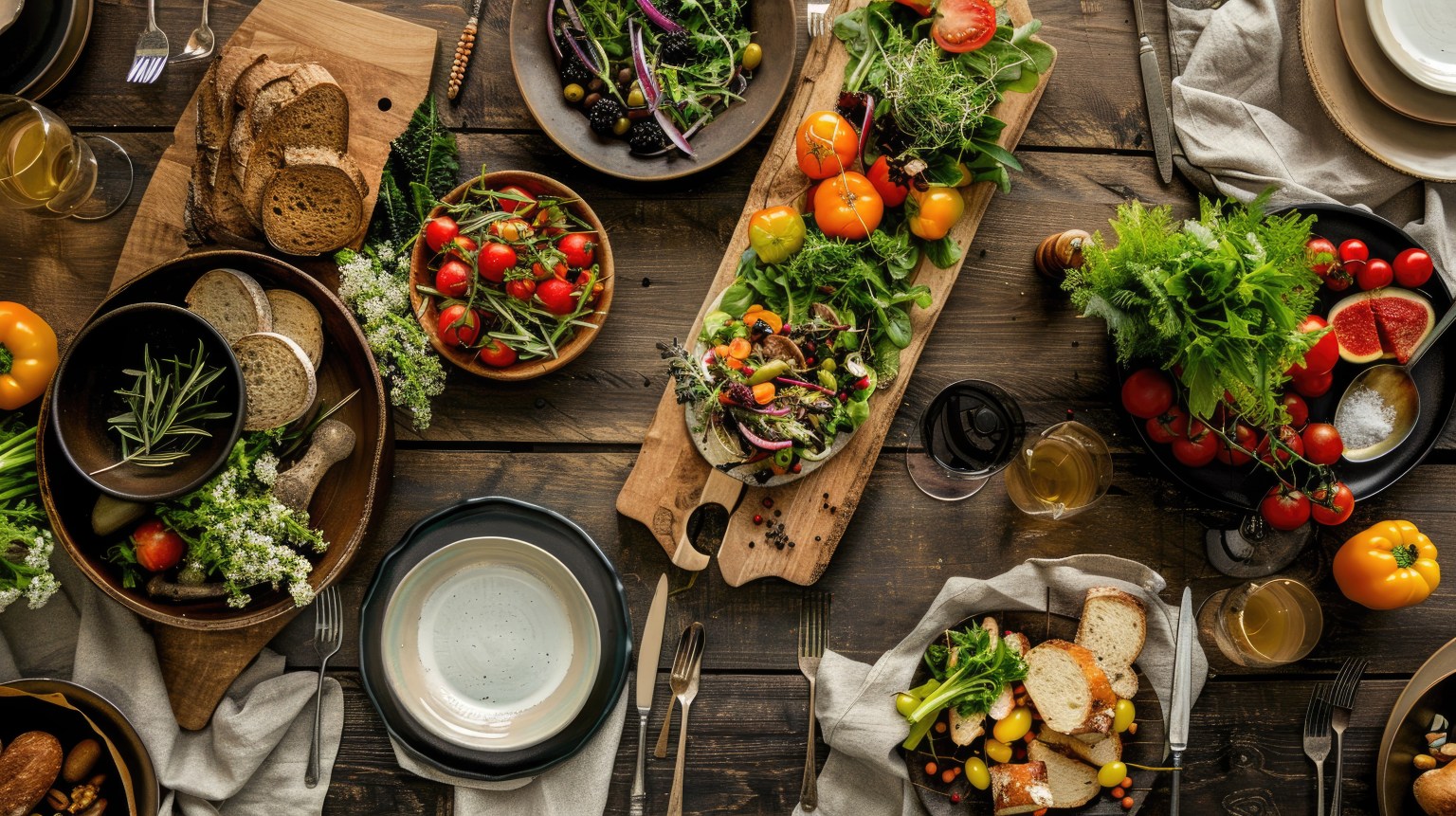
Muscadine and blackberry are beautiful enough to make a menu reckless. Put both in the drink, the sauce, the salad, and dessert and the entire evening turns into jam with furniture.
The better version lets dusk do some of the drama. The food stays savory underneath it: bitter greens, hard browning, vinegar, black pepper, smoke, and enough salt that the fruit reads as contrast instead of theme-park signage.
Plan this one by the light, not by the courses
For eight people, I would start outside or near the best window while there is still real daylight, move to the table as the light softens, and let dessert arrive after the room has gone properly dark. The menu follows that shift instead of trying to announce “garden supper” on every plate.
6:00 — cold, bitter, and very little fruit
Put out a small arrival plate: bitter greens or endive leaves, a sharp soft cheese, toasted pecans, and a few halved muscadines dressed with vinegar and black pepper. The muscadines are there as a bright interruption, not the bulk of the bite.
If you are serving a drink, make it dry. Muscadine wine or juice can work in a spritz only if lemon, soda, and bitterness keep it from becoming a second fruit course. A zero-proof version with black tea, a restrained measure of grape juice, lemon, and soda belongs on the same tray.
Do not serve a blackberry cocktail with it. We have all understood the color scheme.
7:00 — the browned thing arrives
The main course needs to look and taste as though heat happened to it. Roast chicken with crisp skin, pork shoulder with real dark edges, seared duck breast, or mushrooms roasted until the tray looks slightly alarming all work.
For eight, choose one anchor and give it a blackberry pan sauce that is mostly stock, vinegar, black pepper, and browned fond with fruit folded in—not a pot of sweetened berries poured over the top. The sauce should taste too sharp on a spoon and correct against the meat or mushrooms.
Alongside: mustard greens or radicchio, a plain starch that does not need another flavor idea, and something crisp. Cornbread can work if it is not sweet enough to compete with the fruit. Roasted potatoes work because they mind their own business.
8:15 — dessert deliberately changes the subject
Buttermilk panna cotta, a lightly sweet pound cake with cultured cream, or a simple lemon custard. If fresh blackberries are spectacular, put a few beside it. Do not cook them into another sauce.
Dessert is where this dinner proves it is a menu rather than a mood board.
The shopping list for eight
Start with about 2 cups muscadines, 2 pints blackberries, one large head or two small heads of bitter greens, 1 cup pecans, and enough main-course protein or mushrooms for eight actual dinner portions. Add roughly 2 pounds of potatoes or another neutral starch, a second green vegetable if the group eats generously, and eight individual desserts or one dessert that portions cleanly.
Buy more ice than the visual concept appears to require. Dusk is still warm in a lot of places, and a garden supper with a gorgeous brass bucket containing four tired cubes is not romantic.
What can be finished before noon
Dessert. Toasted nuts. Vinaigrette. The base of the pan sauce. The table. The playlist. The serving pieces, including the one you always realize you need after the food is already hot.
Wash the greens and dry them properly, but do not dress them. If the anchor is a braise or roast that improves with a head start, use that advantage. If it is duck or another last-minute sear, keep every side forgiving enough that the protein owns the pan and your attention for those few minutes.
The last hour should contain one irreversible thing
This is the rule that keeps the host out of trouble.
If the main needs a hard sear, nothing else should be reaching a crispness deadline at the same time. If the cornbread has to come out hot, the protein needs to be resting. If the salad is delicate, it gets dressed after the hot work ends.
Pick the one action that cannot wait and build backward from it. Everything else gets made ahead, held, or served at room temperature on purpose.
The whole menu becomes much calmer when only one thing can truly betray you at 6:55.
Use the garden, not garden props
Brass, warm glass, linen, maybe a few dark flowers or actual branches clipped from something legal to clip. No tiny baskets of berries at every place setting. No grapevine wrapped around a chandelier. The fruit is already doing its work in the meal.
Put light where people need it: the path, the food, the table. String lights can give the room shape, but a candle directly in someone’s sightline is still a candle directly in someone’s sightline.
If the party is outside, plan the temperature drop. A stack of clean throws or a later move indoors is more hospitable than pretending everyone is delighted to be cold because the photographs look good.
If the weather turns
This dinner survives indoors because the food does not depend on the garden. Keep one clear surface ready for the arrival plate and drinks, move the main to the dining table, and let the brass and dark fruit carry the atmosphere. Do not rebuild the party in the living room while guests watch.
For the oven and service map, use Menus & Kitchen Systems. For the whole sequence, carry it into Menu Builder.
Dusk can be dramatic. Dinner still needs enough vinegar to keep its feet on the ground.
Part of Hosting & Service.


