Trailhead Maple-Miso Breakfast Rice Jars
Warm rice, maple-miso butter, toasted seeds, and dried fruit make a compact breakfast for cold trailheads, cabins, and early launches.
Tools
Shallow cooling tray, leakproof containers, topping jar, saucepan with lid, silicone spatula, insulated food jars or heat-safe bowls, instant-read thermometer, cooler, ice packs
Ingredients · swaps in parentheses
Cooked rice, butter, white miso, maple syrup, cinnamon, dried fruit, pumpkin seeds, sesame seeds, reheating liquid, optional eggs and scallions
Magic
Reheat rice in a saucepan to 165°F keep toppings dry use insulated vessels add soft egg only with reliable cold storage.
Before you begin
Cool rice quickly, mix maple-miso butter, toast seeds, portion jars, pack toppings separately, and chill rice and eggs thoroughly.
The parts that change whether this works tonight.
These fields come from the published recipe itself. If a recipe has not separately declared an operating fact, the gap stays visible instead of being filled with a guess.
- Servings
- 4 breakfast jars
- Timing
- about 40 minutes
- Equipment
- Not separately declared
- Make-ahead
- Not separately declared
- Holding
- Not separately declared
- Leftovers
- Cooked rice must be cooled quickly and kept at 40°F or colder. Refrigerate prepared jars for up to three days. Reheat to 165°F and serve promptly. Do not…
- Dietary notes
- Not separately declared
- Method map
- 10 ingredient lines · 12 method steps
Cold trailheads have a way of making breakfast negotiations unnecessarily dramatic. These jars solve the problem with warm rice, maple-miso butter, toasted seeds, dried fruit, and—when a cooler and careful timing are part of the plan—a soft egg. The sweet-savory balance is deliberate: enough maple to make breakfast feel generous, enough miso to keep it from becoming rice pudding in hiking boots.
Use the cooler version for cabin mornings and early launches. A shelf-stable variation is included for trips where refrigeration is not reliable. Broader field planning belongs at Hook the Horizon.
Yield and timing
Yield: 4 breakfast jars. Prep: about 20 minutes. Cook and reheat: 15 to 20 minutes. Total: about 40 minutes. Best service window: immediately after reheating and topping.
Ingredients
For the rice jars
- 3 cups cooked short-grain or jasmine rice, cooled quickly
- 3 tablespoons unsalted butter, softened
- 1 tablespoon white miso
- 2 tablespoons pure maple syrup
- 1/2 teaspoon ground cinnamon
- Pinch of kosher salt
- 1/3 cup dried cherries or cranberries
- 1/3 cup toasted pumpkin seeds
- 2 tablespoons sesame seeds, toasted
- 1 to 1 1/2 cups hot water, milk, or unsweetened coconut milk for reheating
Optional soft-egg topping
For the cooler version, add 4 large eggs, a pinch of flaky salt, and additional sesame seeds or sliced scallions for finishing.
Prepare at home
- Cool the rice promptly: Spread freshly cooked rice on a shallow tray and refrigerate as soon as steam subsides. Do not leave cooked rice at room temperature to cool slowly.
- Make the maple-miso butter: Stir softened butter, miso, maple syrup, cinnamon, and salt until smooth.
- Portion: Divide rice among four wide, heat-safe containers with lids. Add equal spoonfuls of maple-miso butter and dried fruit. Pack the pumpkin and sesame seeds separately so they remain crisp.
- Chill: Cover and refrigerate immediately. Transport at 40°F or colder.
Reheat at camp or the cabin
- Use a saucepan: Empty the four rice portions into a saucepan. Add 1 cup water, milk, or coconut milk and set over medium-low heat.
- Heat thoroughly: Stir frequently for 6 to 10 minutes, adding more liquid as needed, until the rice is steaming hot throughout and reaches 165°F.
- Return to jars: Divide the hot rice among pre-warmed insulated jars or heat-safe bowls. Do not pour boiling liquid into cold ordinary glass jars.
- Finish: Top with pumpkin seeds, sesame seeds, and optional soft eggs.
Soft eggs for the cooler version
- Bring a small saucepan of water to a gentle boil.
- Lower in cold eggs and cook for 7 minutes for set whites and soft centers.
- Transfer to cold water for 2 minutes, peel, and halve immediately before serving.
- Keep uncooked and cooked eggs properly chilled until use and do not hold soft eggs warm for extended periods.
Shelf-stable no-cooler variation
Replace cooked rice and butter with 2 cups commercially dehydrated instant rice, 4 tablespoons powdered whole milk or coconut milk powder, 1 tablespoon white miso powder or four sealed miso packets, and 2 tablespoons maple sugar. Divide the dry mixture among insulated food jars. At service, add the amount of boiling water specified for the rice, stir, cover for 8 to 10 minutes, then finish with dried fruit and seeds. Omit the soft eggs unless cold storage is available.
Serving
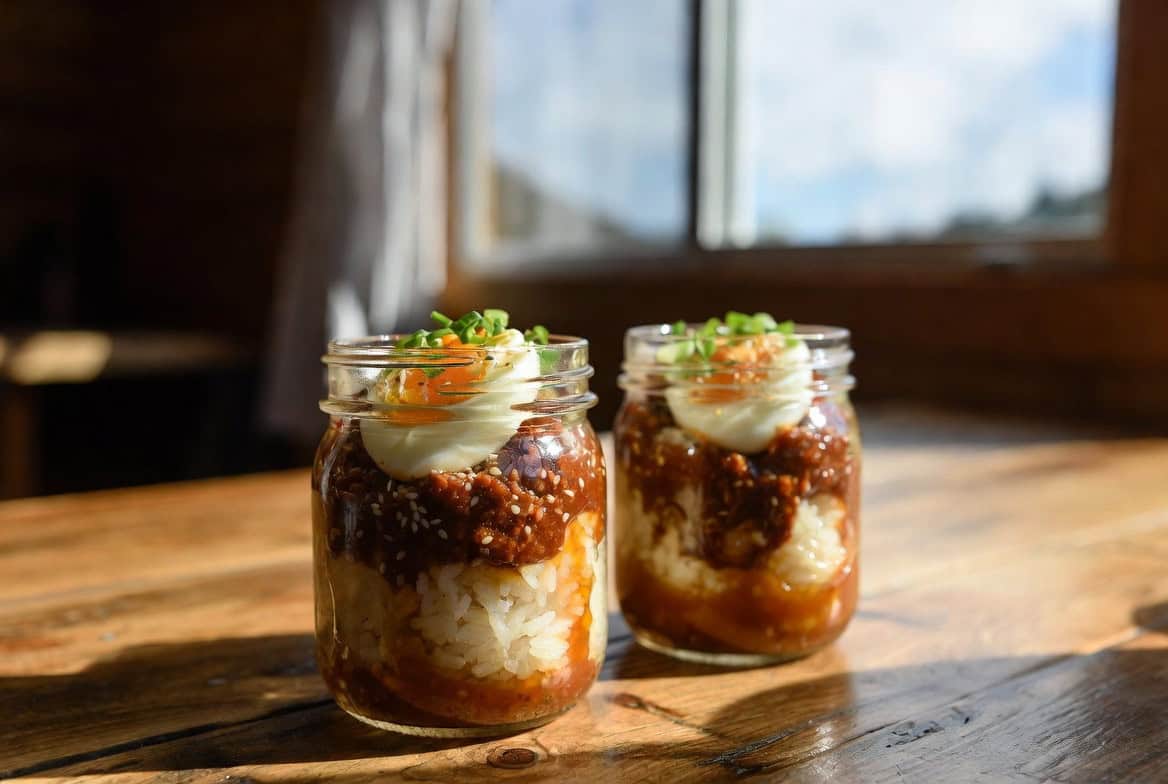
Use wide-mouth insulated jars or low bowls so the rice, soft egg, pumpkin seeds, sesame, and dried fruit remain visible. The rice should stay creamy and spoonable rather than dry or flooded. If you are using the shelf-stable variation, skip the egg rather than letting the garnish outrun the storage plan.
Pack-ahead system
At home: Cool and portion the rice, mix the butter, toast the seeds, and pack toppings separately.
Transport: Keep the rice and eggs at 40°F or colder in a well-iced cooler. Pack the reheating liquid separately.
At service: Reheat the rice in a saucepan rather than relying on hot water poured into cold rice. Add crisp toppings only after the rice is hot.
Substitutions that work
Brown rice adds chew but needs more reheating liquid. Sunflower-seed butter can replace dairy butter; dried apricots or dates can replace the cherries or cranberries; roasted peanuts or almonds can replace pumpkin seeds when allergies permit. For a fully savory version, omit maple and cinnamon and add scallions, sesame, roasted seaweed, and a soft egg. A poached egg only makes sense when the setup allows immediate cooking and serving.
Likely failure points
The rice remains cold in the center: It was reheated in the jar rather than a saucepan or too little liquid was used. Transfer to a pan and heat to 165°F.
The rice is gluey: It was stirred aggressively or cooked with too little liquid. Fold gently and loosen with hot water or milk.
The flavor is too salty: Miso quantity was generous or the butter was salted. Add plain rice and maple before adding more liquid.
The breakfast tastes too sweet: Add miso, sesame, or a pinch of salt rather than more cinnamon.
The seeds soften: They were packed with moist rice. Keep them separate until service.
The jar cracks: Boiling liquid met cold ordinary glass. Use insulated food jars or reheat in a saucepan and transfer to warmed vessels.
Storage and food-safety limits
Cooked rice must be cooled quickly and kept at 40°F or colder. Refrigerate prepared jars for up to three days. Reheat to 165°F and serve promptly. Do not cool and reheat the same rice repeatedly. Discard rice or eggs that have remained above 40°F for more than two hours, or one hour in temperatures above 90°F.
Kitchen Kit
Goods: Cooked rice, butter, white miso, maple syrup, cinnamon, dried fruit, pumpkin seeds, sesame seeds, reheating liquid, and optional eggs and scallions.
Gear: Shallow cooling tray, four leakproof containers, separate topping jar, saucepan with lid, silicone spatula, insulated food jars or heat-safe bowls, instant-read thermometer, cooler, and ice packs.
Before: Cool rice quickly, mix the maple-miso butter, toast seeds, portion the jars, pack toppings separately, and chill rice and eggs thoroughly.
Magic: Reheat in a saucepan to 165°F, keep crisp toppings dry, use insulated rather than cold glass jars, and add the soft egg only when the cooler plan is sound.
The finished breakfast should be warm, creamy, lightly sweet, and savory enough to make a cold start feel planned rather than merely survived.
Part of Recipes & Technique.
Recipe provenance: Salty & Clever editorial formulation, built from established culinary technique and the traditions identified in the article. No chef, restaurant, family, or firsthand cultural provenance is claimed unless it is explicitly named and sourced. How we write and check recipes


