The One Drink and the No-Drink
Velvet Rope Problem: Blackberry, Cognac, and Port Sour
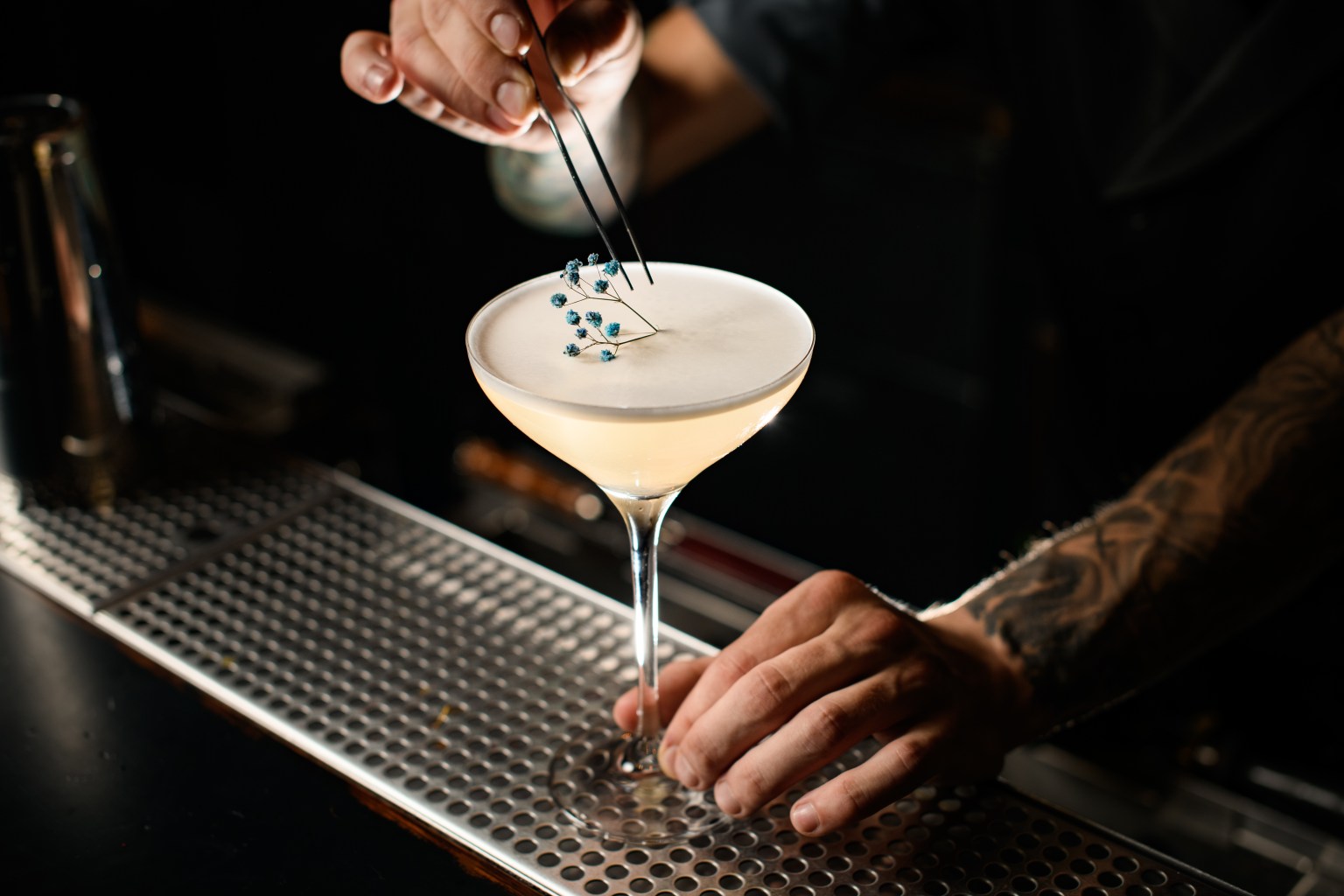
A dark blackberry, cognac, and ruby-port sour with a pale cap on top. The foam is the whole look, and it is also the reason you will wash the tin twice per drink.
Serve alongside
Aged cheddar and dark chocolate, or a handful of salted pecans. Port and cognac put weight and sweetness on the table already; the food's job is salt and bitterness, not more fruit.
Tools
A shaker that seals properly, since this one gets shaken twice and a loose tin will redecorate the ceiling. Jigger. Hawthorne plus fine mesh, or just a small sieve held over the glass. Saucepan and a jar for the syrup.
Ingredients · swaps in parentheses
Cognac (high-rye bourbon). Ruby port. Lemon. Blackberries and sugar for the syrup (raspberries). Aromatic bitters. Egg white or aquafaba. One blackberry for the top.
Magic
Reverse the order of the shakes. Shake cold with ice first, strain the ice out, then shake the strained liquid again in an empty tin. The protein sets on a liquid that is already cold, and the cap comes out denser and holds its edge much longer. Not feeling brave? Dry shake first and add ice second, exactly as the method below has it.
Gotcha
Any trace of fat kills the foam. A tin that held a cream drink, an oily thumbprint inside the rim, a fleck of yolk in the white. One of those and you get a thin gray collar instead of a cap, and no amount of extra shaking brings it back.
Decide about the foam before you decide anything else, because the foam is what sets the labor. Every drink gets its own two shakes and its own wash. Six of these on a Saturday is a pleasure. Twenty of them is a shift, and you will spend it at the sink with your back to the room you invited people into.
What the foam buys is real. Dark fruit sits under a pale cap, the first sip arrives softer than the color promises, and the aromatics ride on top instead of dissolving. Cognac supplies dried fruit, oak, and warmth. Ruby port runs alongside and extends them. Lemon puts the structure back, and the bitters keep it from settling into jam.
The particulars
Prep time: 10 minutes, plus syrup cooling
Makes: 1 drink
Glassware: chilled coupe
Equipment: shaker, jigger, fine strainer
Ingredients
- 1 1/2 ounces cognac
- 1/2 ounce ruby port
- 3/4 ounce fresh lemon juice
- 1/2 ounce blackberry syrup
- 3/4 ounce aquafaba or 1 egg white
- 2 dashes aromatic bitters
- 1 blackberry
The pour, drawn to scale
- cognac1 1/2 ounces38%
- ruby port1/2 ounce13%
- fresh lemon juice3/4 ounce19%
- blackberry syrup1/2 ounce13%
- aquafaba3/4 ounce19%
Blackberry syrup
Warm 1 cup blackberries with 1/2 cup sugar and 1/2 cup water for 5 minutes. Rest for 10 minutes, fine-strain, and cool. Refrigerate for one week.
Do not press the pulp through the mesh. Pressed pulp gives you color and a cloudy, slightly gritty syrup that reads dull in the glass and fights the foam. Let it drip. If the berries were very sweet to begin with, take the syrup in the drink down to 1/3 ounce.
Why the port stays at half an ounce
Ruby port is doing something specific: it reinforces the fruit already in the cognac and adds wine acidity that lemon alone does not supply. Push it past half an ounce and the drink stops being a sour and becomes a fortified wine cocktail with citrus in it. Those exist. This is not one.
Build
- Combine all liquid ingredients in a clean shaker without ice.
- Shake hard for 15 seconds.
- Add solid ice and shake again for 12 to 15 seconds.
- Double-strain into a chilled coupe.
- Garnish with one blackberry at the edge of the foam, not the center, so it does not sink through.
Glass and ice
Chilled coupe, no ice in the glass. Ice in the glass melts up through a foam cap and breaks it from below, which is a strange and specific way to lose a drink you just made twice.
Use solid cubes in the tin. Small wet ice from a machine shatters under a hard shake and drops the drink to the correct temperature and then well past it.
Batching
Combine cognac, port, syrup, and bitters for eight servings and refrigerate for one day. Lemon and the foam component go into each shaker portion at service. Lemon in a batch overnight goes flat and slightly bitter, and aquafaba sitting in alcohol for hours does not whip the way it should.
For a bigger group, drop the foam entirely and serve it as a straight sour. That version is genuinely good and takes one shake. If you want the drama without the labor, make it for the first six people through the door and stop.
The zero-proof route
This one converts better than most because the foam and the fruit are doing so much of the work. Build 1 1/2 ounces strong cold black tea, 1/2 ounce port-style cordial or a dark grape cordial, 3/4 ounce lemon, 1/2 ounce blackberry syrup, 3/4 ounce aquafaba, and 2 dashes aromatic bitters. An alcohol-free dark spirit can take part of the tea’s place if you have one you like.
The tea is not filler. Tannin is what gives the drink grip where the cognac used to, and grape juice on its own will taste like a dessert that lost its nerve.
What to eat with it
Something salted and fatty that can stand up to the fruit. Aged cheddar, a rough pork pate, salted almonds, a dish of olives. Late in the evening it goes very well with a plain dark chocolate, and less well with anything already sweetened.
The person who asks for one at eleven o’clock does not know they are asking you to wash the tin twice. That is fine, and you should say yes, and you should also know it before you say it.
Part of Drinks & Zero-Proof.


