A Sheet Pan Is a Decision About Space and Almost Everybody Makes the Wrong One
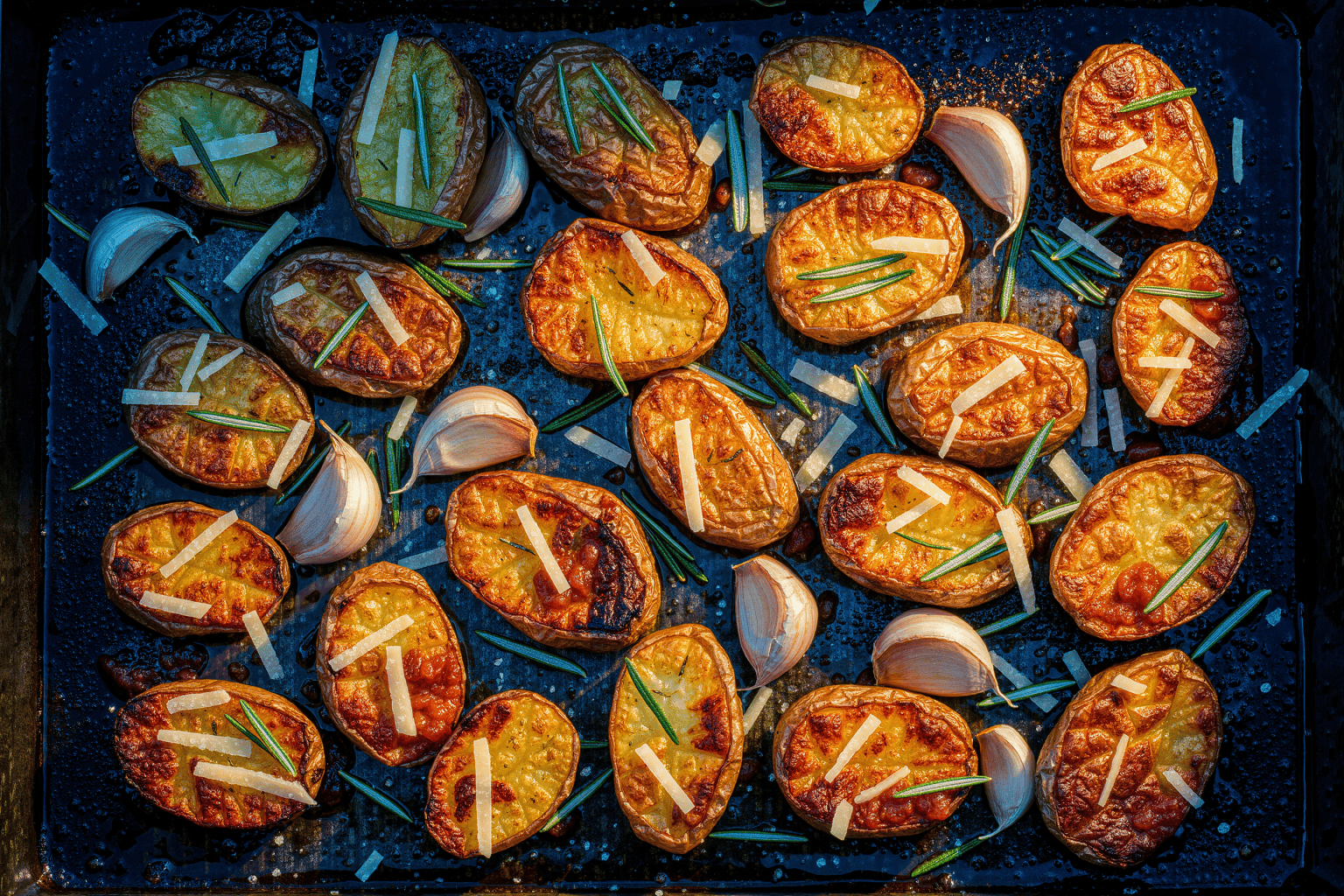
Four hundred and twenty-five degrees, twenty-five minutes, exactly as written. What comes out is pale, soft, unevenly cooked and sitting in a shallow pool of liquid, and it tastes steamed because it was.
A sheet pan is not a container. It is a water-management device, and the only question it asks is whether the steam coming off the food has anywhere to go.
Everything on the tray is boiling before it browns
Vegetables are eighty to ninety-five percent water and they release it as they heat. Until that water has left the surface, nothing on it can get past the temperature of boiling, and browning starts well above that.
On an open tray with space around each piece, the steam rises and leaves. On a crowded tray, the pieces are surrounded by the vapor coming off their neighbors, the air immediately around them is saturated, and evaporation slows to nothing. The tray becomes a covered pot with an open lid.
Which is why the same recipe works for one person and not for four. Nothing changed except the quantity, and the quantity was the recipe.
The rule is air on two sides
Every piece needs to touch the metal on one face and open air on at least two others. If pieces are leaning on each other, there are too many.
So the fix is almost always two trays rather than one, which feels like extravagance and is simply the correct amount of surface for the amount of food. Two half-full trays produce a better result than one full tray, in the same oven, in the same time.
If only one tray will fit, cook in two rounds. The pan has to recover between them, but a second round of properly roasted vegetables beats one round of steamed ones.
The tray itself is doing more than people think
Dark, matte, heavy metal absorbs radiant heat and transfers it hard into whatever is touching it, which browns the underside. Shiny thin aluminum reflects it, browns poorly and warps loudly at high temperatures, which flings the oil into one corner.
Radiation is absorbed by dark matte surfaces and bounced off bright ones, which is the whole of the difference, and it is why a battered old tray outperforms a new one.
Rimmed rather than flat, heavy enough not to buckle, and as large as the oven takes. That is the entire specification.
Preheat the tray for anything that should sear on contact
Potatoes, root vegetables, halloumi, anything you want a crisp underside on: put the empty tray in while the oven preheats and tip the oiled food onto hot metal. The contact face starts browning immediately instead of slowly warming up in its own moisture.
Do not do it for anything delicate or thin, which will stick and overcook on the base before the top has done anything.
Parchment and foil both cost you something
Parchment stops sticking and makes cleaning trivial, and it insulates the food from the metal, so the underside browns considerably less. Fine for fish, for anything sticky, for cookies. A real loss for roast potatoes.
Foil conducts well but food sticks to it, and it tears. Bare metal, well oiled, browns best and is the harder wash.
The honest version: use parchment where sticking is the problem and bare metal where browning is the point, and stop treating it as a default either way.
Almost nothing should go on at the same time
A tray with potatoes, broccoli, cherry tomatoes and chicken thighs on it is four ingredients with four different cooking times, and the recipe that puts them all on together is optimizing for one photograph rather than for four results.
The size of a cut is a decision about cooking time, so either cut everything to finish together — dense things smaller, soft things larger — or stage the tray: roots first, then the protein, then anything green or thin in the last few minutes.
And remember that vegetables have two good doneness points and a bad middle. A tray taken to the middle produces the specific soft, stringy, underwhelming result that gives sheet-pan dinners their reputation.
Where it sits and whether it turns
The upper third gets the most radiant heat and browns hardest; the lower third cooks the base. Two trays in an oven means neither is in the best position, so they get swapped as well as rotated halfway through.
Unless the oven has been mapped, that rotation is a guess. Ten minutes with a tray of bread slices tells you where the hot corner is, after which rotating stops being ritual and becomes a correction.
Oil and salt, both more than feels right
Enough oil to coat every surface, tossed in a bowl rather than drizzled on the tray, where it pools. Under-oiled food dries out and burns at the edges before it browns.
Salt at the start for dense vegetables, since salt draws moisture to the surface first and that moisture has forty minutes to leave. Salt at the end for anything thin or green, which has no time to recover from being drawn out.
The brown stuck to the tray is the point
What sticks after roasting is concentrated sugar and protein, and plain water lifts it. A splash of stock or wine on the hot tray, scraped with a spatula, makes a sauce out of what was about to be soaked in the sink.
Which reframes the whole thing. The sheet pan is not the easy option because it involves one dish. It is the easy option because it fits the forty-minute shape, cooks unattended, and leaves a sauce on the tray — provided the food on it was given room to lose its water.
Part of Recipes & Technique.


