Beach Blanket Deviled Eggs: Smoke First, Pickle Last
Make-ahead deviled eggs with smoked paprika, pickled mustard seeds and chives, built for tidy cold service and replenished in small batches.
Tools
Saucepan, ice bath, mixing bowl, fork or food processor, piping bag or spoon, lidded carrier
Ingredients · swaps in parentheses
Eggs, mayonnaise, Dijon mustard, pickle brine or white-wine vinegar, smoked paprika, pickled mustard seeds, chives
Magic
Cool the eggs completely for cleaner peeling. Mash yolks before adding wet ingredients. Add enough acid to sharpen the filling. Drain pickled mustard seeds before garnishing.
Before you begin
Boil and peel eggs up to two days ahead. Make filling one day ahead. Fill up to four hours before service and garnish late.
The parts that change whether this works tonight.
These fields come from the published recipe itself. If a recipe has not separately declared an operating fact, the gap stays visible instead of being filled with a guess.
- Servings
- 24 halves
- Timing
- About 1 hour 10 minutes, plus any additional chilling before service
- Equipment
- Not separately declared
- Make-ahead
- Two days before: Cook, cool, and peel the eggs. Store them chilled in a covered container lined with a barely damp paper towel. · One day before: Halve…
- Holding
- Not separately declared
- Leftovers
- Keep the eggs refrigerated until service and replenish the platter in small batches. For a long buffet, a 30-minute refill rhythm keeps the eggs cold and the garnish…
- Dietary notes
- Not separately declared
- Method map
- 10 ingredient lines · 4 method steps
Deviled eggs are already committed to the party. These simply arrive better dressed: smoked paprika for depth, pickled mustard seed for brightness, and enough acid to keep the filling from becoming soft yellow wallpaper.
The point is not to make a deviled egg unrecognizable. It is to keep the familiar creamy center while giving every bite a sharper sequence: smoke first, richness in the middle, then the small pop of pickle and mustard at the end. They are useful party food because most of the work can happen early, but they still need a disciplined cold-service plan. Eggs left wandering around a warm table are not demonstrating hospitality. They are demonstrating poor supervision.
Recipe brief
- Menu job: Cold appetizer that can be fully staged before hot food needs the kitchen.
- Yield: 24 halves.
- Host difficulty: Easy to moderate.
- Kitchen intensity: Low.
- Make-ahead value: High; eggs can be cooked ahead and filling made the day before.
- Service window: Put out small chilled batches and replenish rather than parking all 24 on the table.
- Transport / buffet: Excellent in a lidded egg carrier; keep level and cold.
- Scaling: Double the eggs, but add mayonnaise gradually because yolk size varies.
- Likely failure: Loose filling, torn whites, or wet garnish. Chill loose filling, reserve damaged whites for egg salad, and drain mustard seeds well.
- Leftovers: Refrigerate promptly; they are best the next day rather than treated as a multi-day buffet project.
Where these belong
Use these as part of a cold appetizer table, picnic spread with reliable chilling, brunch buffet, porch supper, or beach-house menu. They are especially helpful beside fried or grilled foods because the filling is cool and tangy rather than sweet. Plan on two halves per person when several appetizers are present, or three to four halves when the selection is small.
Yield: 24 deviled egg halves
Host difficulty: Easy to moderate. The cooking is simple; clean peeling and tidy service require attention.
Make-ahead rating: High. Eggs, filling, and garnish can be prepared in stages.
Kitchen intensity: Low. This recipe should be finished before the hot food begins asking questions.
Timing
- Prep: About 30 minutes
- Cook and cool: About 25 minutes
- Assembly: 15 to 20 minutes
- Total: About 1 hour 10 minutes, plus any additional chilling before service
- Best service temperature: Thoroughly chilled, then set out in small replenished batches
Ingredients
- 12 large eggs
- 1/3 cup mayonnaise, plus up to 2 tablespoons more as needed
- 2 teaspoons Dijon mustard
- 1 tablespoon pickle brine or white-wine vinegar
- 1/2 teaspoon smoked paprika, plus more for finishing
- 1/4 teaspoon kosher salt, plus more only if needed
- Freshly ground black pepper
- 2 tablespoons pickled mustard seeds, well drained
- 1 tablespoon finely chopped chives
- Optional: a few drops of hot sauce or 1 teaspoon finely grated lemon zest
Cook the eggs for a centered, tender yolk
Place the eggs in a saucepan in a single layer and cover them with cold water by about an inch. Bring the water just to a boil over medium-high heat. As soon as it reaches a full boil, cover the pan, remove it from the heat, and let the eggs stand for 11 minutes.
Prepare a large bowl of ice water while they stand. Transfer the eggs directly into the ice bath and cool them completely. The rapid cooling stops carryover cooking and makes the filling less likely to taste chalky. It also helps create a firmer white that can survive peeling, filling, transport, and the occasional guest who approaches a platter with more enthusiasm than precision.
Peel without turning the whites into archaeology
Crack each egg gently all over, then roll it under your palm to loosen the shell. Peel under a thin stream of cool water or in the bowl of water, beginning at the wider end where the air pocket usually gives you a reasonable opening. Pat the peeled eggs dry.
Do not chase absolute visual perfection. A few small marks are harmless. Deep tears, however, make the halves harder to fill and more likely to collapse. Reserve badly damaged whites for egg salad and keep the best 12 eggs for the platter.
Make the filling smooth before making it rich
Halve the eggs lengthwise with a thin sharp knife, wiping the blade between cuts. Gently remove the yolks and place them in a medium bowl. Arrange the whites on a tray and refrigerate them while you make the filling.
Mash the yolks thoroughly with a fork before adding any wet ingredients. This is the step most often rushed. Mayonnaise does not dissolve lumps; it merely gives them better lighting. Once the yolks are fine and even, beat in 1/3 cup mayonnaise, the Dijon, pickle brine, smoked paprika, salt, and several grinds of black pepper. Add more mayonnaise 1 tablespoon at a time only if the filling needs it.
The filling should be smooth enough to pipe but firm enough to hold a defined mound. If it is too stiff, add pickle brine 1/2 teaspoon at a time. If it is too loose, chill it for 15 minutes before deciding it needs correction. Cold mayonnaise firms considerably.
Taste the filling with a small piece of egg white. The white is bland and changes the balance. The mixture should taste slightly sharper and smokier in the bowl than you want the complete egg to taste.
Spoon or pipe, but do not overfill
For a relaxed platter, use two teaspoons to mound the filling into the whites. For a more formal presentation, transfer the filling to a piping bag fitted with a large plain or star tip. A zip-top bag with one corner cut works, though the opening should be generous enough that the filling does not emerge in a narrow, nervous rope.
Divide the filling evenly among the 24 halves. Overfilled eggs look dramatic until the filling slides sideways, the garnish disappears, and the first person who picks one up acquires a sleeve problem. Aim for a neat mound that sits inside the natural cup of the white.
The garnish has a job
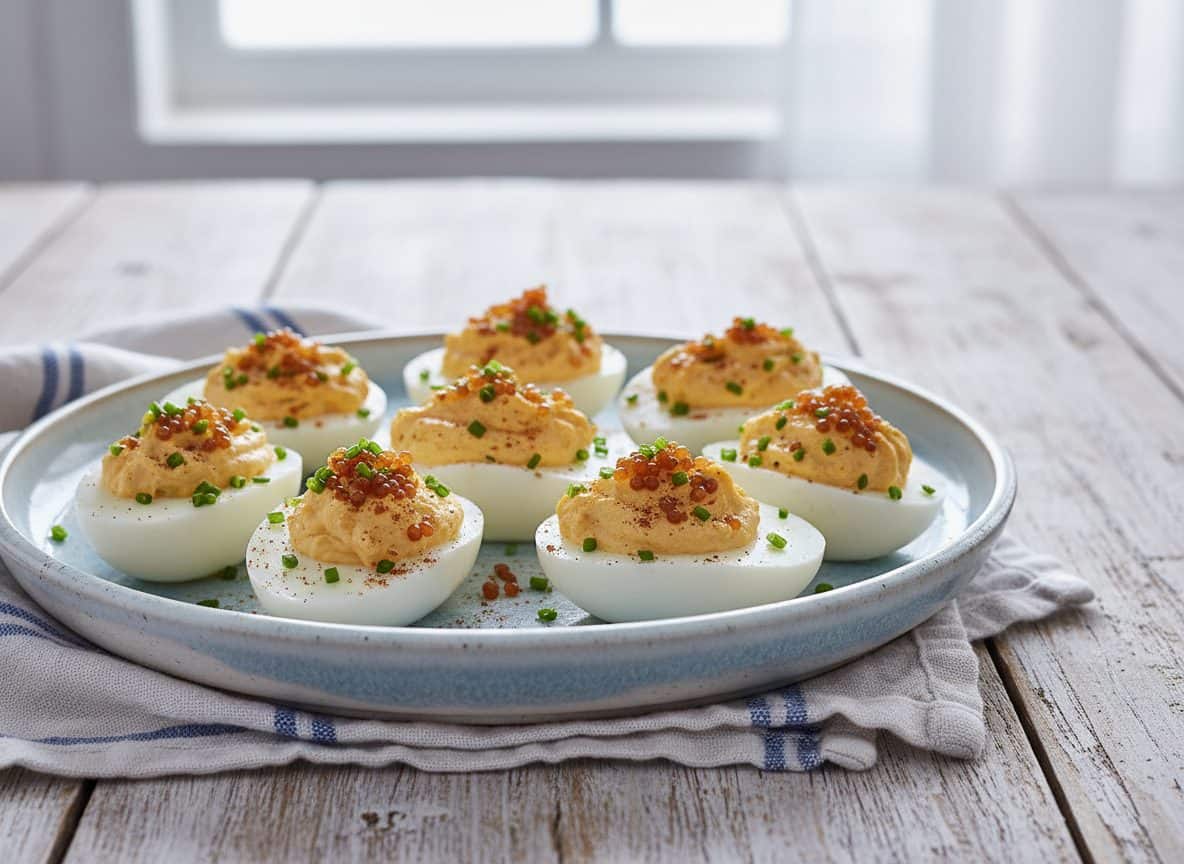
Drain the pickled mustard seeds thoroughly. If they carry too much liquid, they bleed into the filling and make the surface look wet. Place a small cluster on each egg, then add chives and a light dusting of smoked paprika.
The mustard seeds provide acid and texture; the chives add freshness; the paprika reinforces the smoke. None of them needs to become confetti. A deviled egg is already a small object. It does not need four more unrelated garnishes fighting on the roof.
Make-ahead sequence
Two days before: Cook, cool, and peel the eggs. Store them chilled in a covered container lined with a barely damp paper towel.
One day before: Halve the eggs and make the filling. Store the whites and filling separately. Press a piece of reusable wrap or parchment directly against the filling surface to prevent drying.
Up to four hours before service: Fill the eggs, cover carefully without touching the tops, and refrigerate.
Just before the platter goes out: Add pickled mustard seeds, chives, and the final paprika. Place only part of the batch on the table and replenish from the refrigerator as needed.
Transport without a yolk landslide
A lidded deviled-egg carrier is practical and earns its storage space if these appear often. Without one, line a shallow container with a slightly damp towel, place the eggs close enough that they cannot skate but not so tightly that they crush one another, and keep the container level and chilled.
Do not transport them on the final serving platter unless the platter has a secure lid and a flat route. Heroic balancing across a passenger seat is not a service plan.
Scaling the recipe
For 48 halves, double the eggs and seasonings but begin with 2/3 cup mayonnaise. Yolks vary in size and absorbency. Add more mayonnaise only as needed, 1 tablespoon at a time. Make the filling in one bowl if you have enough space, but pipe in two batches so it stays cold and manageable.
For a small table, halve the recipe using six eggs. Keep the full tablespoon of pickle brine only if the filling needs it; start with two teaspoons and taste.
Substitutions and their consequences
- Greek yogurt for part of the mayonnaise: Replaces some richness with tang. Use a thick yogurt and expect a slightly softer filling.
- Regular mustard seed garnish: Toasted mustard seeds are crunchy but do not provide the same juicy acidity. Use them sparingly.
- Sweet pickle relish: Adds more sweetness and visible texture. Reduce or omit the honey-like sweetness of bread-and-butter brine elsewhere.
- Chipotle powder for smoked paprika: Adds meaningful heat. Begin with a small pinch.
- No pickled mustard seeds: Use a very small amount of finely chopped cornichon or drained capers. The garnish should stay sharp and dry rather than making the filling wet.
Failure points
Rubbery whites: The eggs boiled too aggressively or too long. Use the covered off-heat method and cool promptly.
Chalky filling: The yolks overcooked or were not mashed finely before the mayonnaise was added.
Loose filling: Too much brine or mayonnaise was added at once. Chill first; if still loose, blend in one additional cooked yolk.
Flat flavor: Taste with the white, then adjust acid before salt. The filling often needs brightness more than another spoonful of mayonnaise.
Wet tops: The mustard seeds were not drained or the eggs were garnished too early.
Build the rest of the menu around temperature
Serve these with cold salads, shrimp toast, grilled vegetables, a crisp pickle plate, or a restrained bread basket. They can anchor the cool side of a menu while one hot appetizer receives the last-minute attention.
A dry sparkling wine, light lager, or fino-style profile works with smoke, mustard, and egg richness. For the teetotaler drink, use sparkling water with lemon peel and a small splash of pickle-brine shrub, or unsweetened black tea with lemon. The drink needs acid and dryness, not a fruit punch costume.
Kitchen Kit
Pairing: Champagne or a cold lager. Teetotaler: smoked-paprika lemonade with pickle brine. A deviled egg wants bubbles and a little heat.
Goods: Eggs, mayonnaise, Dijon, pickle brine, smoked paprika, pickled mustard seeds, chives, salt, and pepper.
Gear: Saucepan, ice bath, mixing bowl, fork or food processor, piping bag or spoons, shallow storage container, and chilled serving platter.
Magic: Cool completely, mash the yolks before adding anything wet, keep the acid visible, and drain the mustard seeds. Smooth yolks first; silk later.
Storage and final judgment
Keep the eggs refrigerated until service and replenish the platter in small batches. For a long buffet, a 30-minute refill rhythm keeps the eggs cold and the garnish looking intentional. Return leftovers to the refrigerator promptly; if a batch has spent more than two hours at room temperature, or more than one hour above 90°F, do not save it for later.
These are familiar enough to reassure people and sharp enough to avoid disappearing into the rest of the buffet. Make them early, garnish them late, and let the hot food be someone else’s scheduling problem.
Next decision
If these are one part of a larger appetizer table, use Occasion OS to check quantity and service timing before adding another cold bite. For the make-ahead question, read Make-Ahead Is Not a Personality Trait. If you are working from what is already in the refrigerator, Kitchen & Bar Intelligence can take over from there.
Part of Recipes & Technique.
Recipe provenance: Salty & Clever editorial formulation, built from established culinary technique and the traditions identified in the article. No chef, restaurant, family, or firsthand cultural provenance is claimed unless it is explicitly named and sourced. How we write and check recipes


