A Brunch Menu for Guests Who Do Not Arrive Together
Build brunch around arrival bands, stable food, a clear hot anchor, equal-status drinks, and service that does not punish the earliest or latest guest.
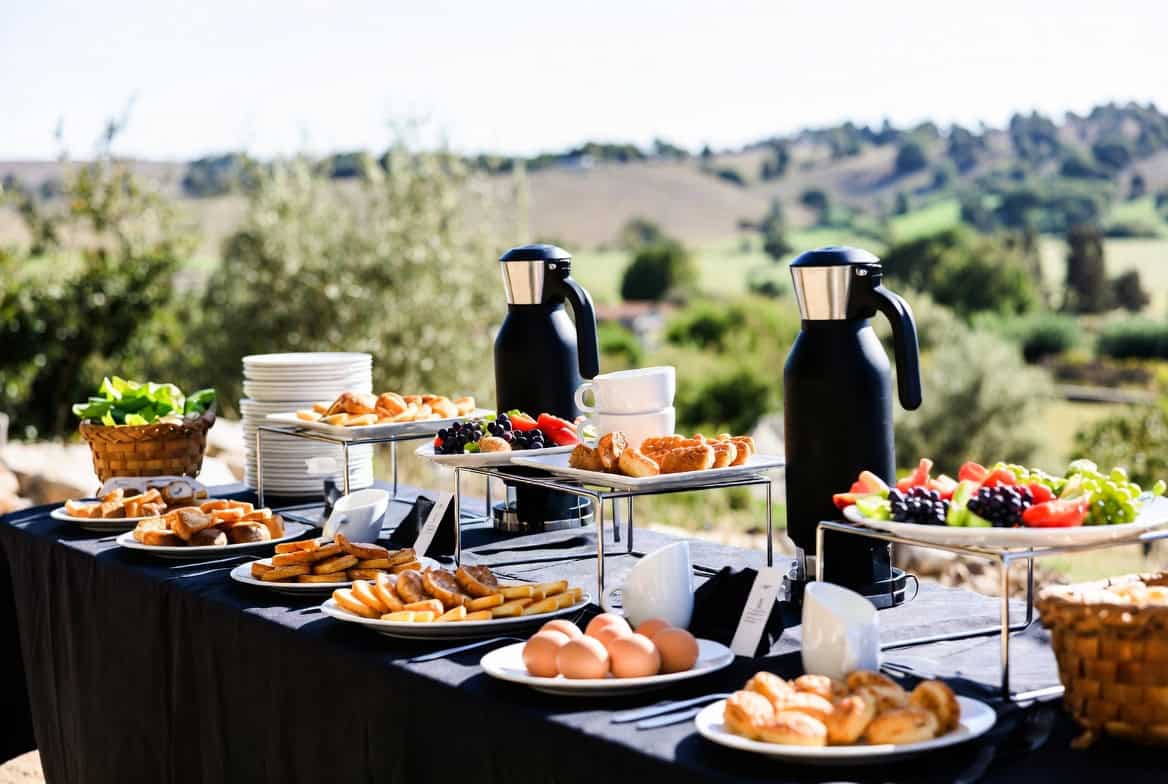
Brunch rarely begins at one clean moment. One guest arrives early. Another texts from the car. Someone brings coffee. Someone else appears forty minutes later and expects the eggs to have remained emotionally available.
A staggered arrival is not a guest-management failure. It is the condition the menu must be designed to survive.
Use arrival bands instead of one start time
Plan three periods:
- Opening band: the first guests arrive and need something immediate.
- Gathering band: most people are present, but the group is still fluid.
- Anchor moment: the hot or most time-sensitive food is served.
This keeps the entire menu from waiting on the last arrival. It also prevents early guests from eating the meal before the meal exists.
Make the opening food genuinely ready
The first item should require no final pan, no knife work and no custom assembly. It may be a baked item, fruit, a savory spread, yogurt components kept appropriately chilled, or another tested choice that fits the service plan.
The opening food needs enough substance to welcome people without becoming a duplicate breakfast. Its job is to absorb uncertainty.
Choose one hot anchor
Eggs, pancakes, waffles, fried components and delicate breakfast foods often have narrow service windows. A menu built around several of them asks the host to operate a short-order kitchen.
Choose one item that deserves immediate attention. Surround it with components that hold, wait or can be served intentionally at another temperature. The hot anchor should create the meal, not recruit the rest of the menu into crisis.
Make the late plate possible
Before cooking, decide what a late guest receives. Can one portion be held under the tested method? Can the stable components remain available while the fragile item is cooked once more? Is the correct answer that the anchor is served at a stated time and later guests join what remains?
Clarity is kinder than pretending every dish can restart indefinitely.
Separate beverage pacing from food pacing
Coffee and tea may need replenishment throughout the arrival window. Alcoholic brunch drinks and zero-proof options should not require the host to build every glass while managing the hot anchor.
Use complete stations or batched routes when the recipe supports them. Keep water visible. Give the zero-proof option flavor, glassware and garnish logic equal to the alcoholic choice.
Protect the refrigerator and counter
Brunch can overload cold storage with juice, dairy, fruit, prepared dishes and leftovers from ordinary life. It can also consume counters with appliances, mugs, glasses, condiments and serving boards.
Map the landing zones before shopping:
- coffee and tea;
- cold beverages;
- opening food;
- hot-anchor production;
- used dishes;
- late-arrival portions.
Keep the route between the hot appliance and the table clear.
A sample operating shape
This is a structure, not a prescribed menu:
| Stage | Food job | Host job |
|---|---|---|
| Opening | Ready-to-serve welcome food | Greet, pour, observe arrival pace |
| Gathering | Stable cold or room-temperature supports | Reset plates, confirm hot-anchor timing |
| Anchor | One hot, time-sensitive item | Cook once, serve clearly |
| Late plate | Planned combination of stable items and an approved anchor portion | Serve without reopening the whole kitchen |
The final ninety minutes
- 90 min outClear the beverage station, verify refrigerator zones, stage the opening food, preheatNothing on this line involves cooking, which is the point of putting it here
- 60 min outStart the anchor on its tested schedule, set the stable supports, check coffee capacityTested schedule, not an optimistic one
- 30 min outOpen the arrival food, make water visible, give one person the doorThat person exists to redirect questions away from the kitchen
- 10 min outCheck the anchor, warm the serving pieces, finish the fresh contrastThe only genuinely last-minute work in the whole plan
- ServiceLand the anchor once, announce it clearly, and leave the production positionOnce. Landing it twice is how brunch becomes a shift.
Set the social expectation
Tell guests when food will be served. “Come anytime after ten; the hot dish lands at eleven” is more useful than a vague invitation that makes every arrival equally urgent.
The point is not strictness. It is letting the menu and the people meet at the same time.
Build a real eight-person brunch model
For eight guests arriving across a ninety-minute window, use a three-part menu. Opening food might include one baked item cut into ten portions, a fruit platter sized for eight, and a chilled spread or yogurt component kept under appropriate temperature control. The gathering band can add one sturdy salad or grain-based dish, bread, and condiments that do not depend on a final pan. The anchor can be a baked egg dish, strata, savory bread pudding, sheet-pan preparation, or another tested recipe that can be served once with a defined late-plate method.
Do not build the menu around simultaneous pancakes, fried eggs, waffles, and potatoes unless several people are assigned to cook. That is not relaxed brunch. It is a restaurant line with worse ticket management.
Set the arrival clock
Write the invitation around the operating plan. For example: doors open at 10:00, coffee and opening food are ready immediately, the hot anchor is served at 11:00, and the table remains open through noon. That sentence gives early guests a welcome, late guests a consequence they can understand, and the host a finish line.
Use visible cues rather than repeated announcements. Put opening food where guests can serve themselves. Keep the hot anchor out of view until its service moment. When it lands, add the final salad or fresh contrast at the same time so the table reads as a complete meal rather than a collection of snacks.
Quantities and scaling
For eight adults, plan opening food at roughly one modest portion per person, not an unlimited premeal. Size the hot anchor for eight full portions plus one or two insurance portions if the recipe holds well. Provide enough stable support that a late guest can still make a plate without demanding a complete remake.
For twelve guests, do not simply multiply one casserole and hope the center cooks on schedule. Test pan depth, oven circulation, chilling, reheating, and serving time. Two shallower pans may cook and serve more predictably than one deep vessel. Divide cold food between two bowls so the second can remain protected until needed.
Coffee, tea, and cold drinks
Separate the beverage station from the hot-anchor route. Coffee cups, tea, milk, sweeteners, water, juice, sparkling beverages, and ice can consume more surface than the food. Give them a dedicated station with a waste bowl, napkins, stirrers, and a clear place for used tea bags.
Estimate cups rather than guests. If six people are likely coffee drinkers and most take two small cups, the first batch must support twelve cups or have a planned refill. Keep dairy and plant-based additions under the correct temperature control, label them clearly, and avoid placing them near the oven or sunny window for the entire arrival period.
If alcohol is offered, choose one batched, lower-complexity route and one complete zero-proof counterpart. Measure pours, provide food and water, and avoid turning the staggered arrival window into staggered over-service.
The late-guest protocol
A late plate should be designed before the event. Reserve one portion of the hot anchor only when the tested recipe supports holding or reheating without compromising safety or quality. Keep stable accompaniments separate and covered. Do not dress the final portion of salad or assemble the last delicate garnish until it is needed.
When a guest arrives after the anchor window, welcome them without apology and explain what is available. Serve the planned plate once. Do not reopen every station, restart frying, or ask the entire group to wait through a second brunch.
Dietary and allergen routes
Ask about allergies and dietary exclusions before selecting the anchor. Eggs, dairy, wheat, nuts, soy, sesame, and shared appliances are common brunch complications. A vegetarian menu may still rely heavily on eggs and dairy; a gluten-free baked dish may still face cross-contact in a shared kitchen.
Use factual labels and keep ingredient information available. When a separate portion is necessary, identify its vessel, utensil, storage location, and service owner in advance. A sticky note placed on a casserole after guests arrive is not an allergen-control system.
Final ninety-minute map
Ninety minutes before anchor: clear the beverage station, verify refrigerator zones, stage opening food, and preheat equipment. Sixty minutes before: start the anchor according to its tested schedule, set stable supports, and check coffee capacity. Thirty minutes before: open the arrival food, make water visible, and assign one person to greet and redirect questions away from the kitchen. Ten minutes before: check the anchor, warm serving pieces if appropriate, and finish the fresh contrast. At service: land the anchor once, announce it clearly, and move the host out of the production position.
Failure recovery
If the anchor is late, serve a defined second round of stable opening food and give guests a truthful time update. Do not introduce a new hot dish. If the anchor browns before the center is ready, cover or adjust heat according to the tested recipe rather than increasing temperature blindly. If coffee runs out, brew one planned refill and switch the station to tea or another ready drink instead of managing individual emergency cups.
If attendance is lower than expected, keep untouched reserve food protected rather than setting everything out. If attendance is higher, enlarge stable supports, cut the anchor into accurate portions, and avoid shrinking the dietary route first.
Cleanup and leftovers
Reserve refrigerator space and containers before service. Brunch produces awkward leftovers: partial baked dishes, dairy, cut fruit, sauces, and several open beverage containers. Label and store them according to current guidance. Clear the beverage station in one pass, move used dishes to a designated zone, and keep the late-plate components identifiable until the arrival window closes.
Concept and testing status
This article provides an operating framework rather than a tested universal brunch menu. Every anchor recipe must be tested in the intended pan, oven, batch size, and holding plan. Record actual cook time, finished yield, quality after delay, and safe storage or reheating method before relying on it for guests.
Brunch service card
Keep one printed card in the kitchen with five lines: doors open, anchor cook start, anchor service time, late-plate location, and station-close time. Add the names of the beverage owner and the person clearing opening food. The card prevents every new arrival from changing the schedule.
Accessibility and room flow
Make sure guests can reach water, seating, and food without crossing the hot-appliance path. Provide stable seating for anyone who cannot comfortably stand through the gathering band. Keep cords, stools, bags, and open oven doors out of the circulation route. A loose brunch should not require guests to negotiate an obstacle course.
Closing the arrival window
At the stated end of the arrival period, consolidate food, refrigerate or discard items according to current guidance, and convert the room from open-house service to ordinary conversation. Leaving every station active indefinitely creates more exposure, clutter, and cleanup without meaningfully improving hospitality.
When the plan is too fragile
Change the menu when several dishes depend on exact arrival, the host must cook continuously, or the late-guest plan requires unsafe or poor-quality holding. A baked anchor, composed spread, buffet or open-house format may fit the gathering better.
Brunch should feel loose because the system can handle movement, not because nobody made a decision.
If the roles are the problem rather than the food, Menu Builder will assign them. Drinks and Zero-Proof handles the pacing, which at a staggered brunch is most of the job.
Safety note: Use tested recipes and current authoritative guidance for eggs, dairy, hot and cold holding, refrigeration, allergens and leftovers.
Part of Menus & Kitchen Systems.


