Buttermilk Chicken Thighs with Pickle-Molasses Glaze
Buttermilk chicken thighs with a late pickle-molasses glaze that turns glossy instead of burnt, plus the make-ahead and scaling logic for a crowd.
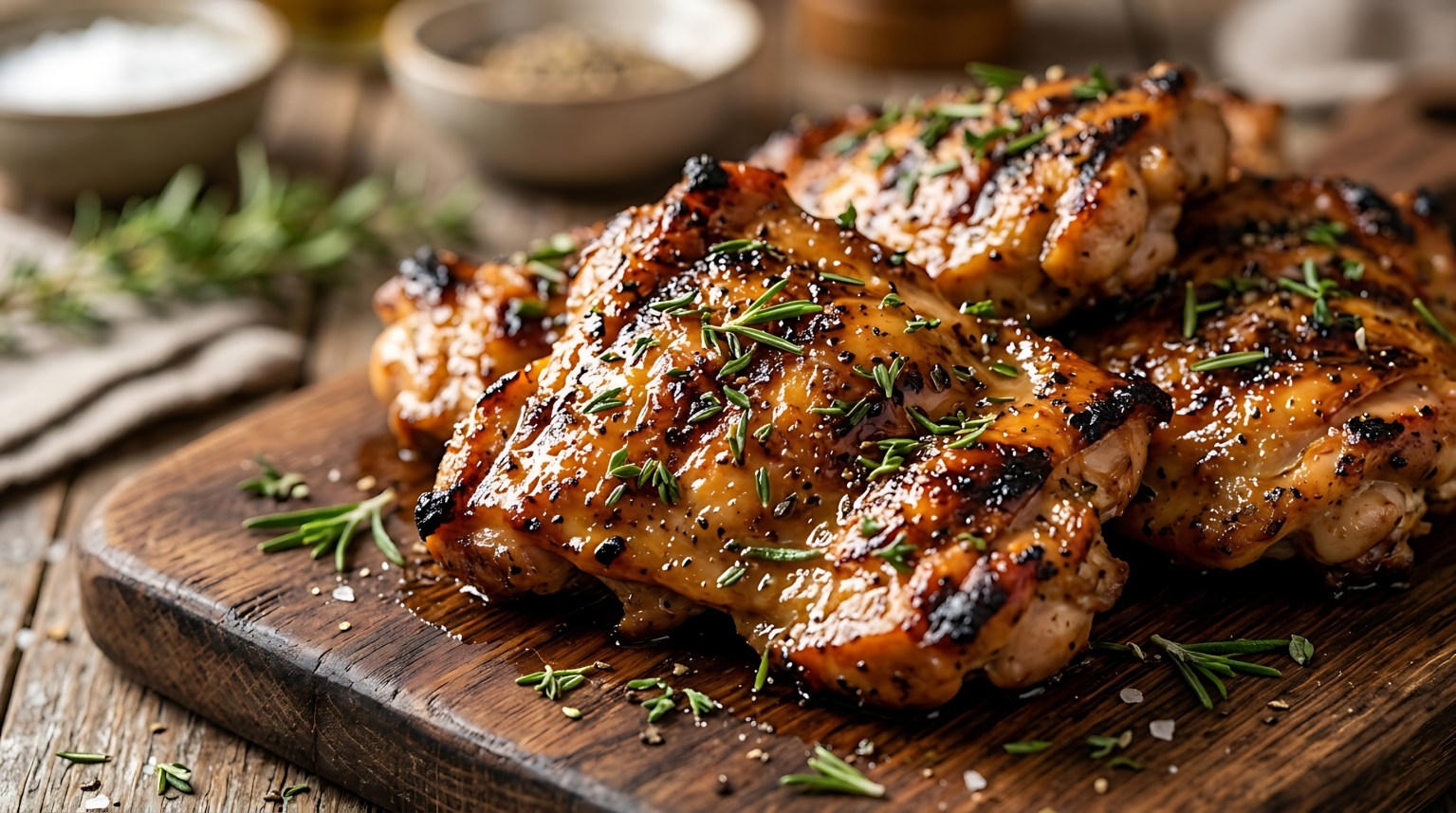
The parts that change whether this works tonight.
- Yield
- 8 chicken thighs; serves 4 to 6
- Time
- Prep 20 minutes · Cook 35 to 45 minutes
- Equipment
- Large container or zip bag, rack, sheet pan, saucepan, whisk, pastry brush, instant-read thermometer, and platter
- Make-ahead
- Marinate the chicken the morning of service and make the glaze up to four days ahead
- Leftovers
- Refrigerate for up to four days. Reheat uncovered at 375°F until the center reaches 165°F, brushing with a little reserved glaze near the end
- The method
- 18 ingredients · 7 steps
From this recipe’s own recipe card. Nothing here is a guess.
Pairing
Wine — Off-dry Riesling or a cold lager. Teetotaler — Pickle-brine ginger beer. Molasses and pickle want acid and chill, not a tannic red.
Tools
Large container or zip bag, rack, sheet pan, saucepan, whisk, pastry brush, instant-read thermometer, and platter.
Ingredients · swaps in parentheses
Chicken thighs, buttermilk, pickle brine, salt, pepper, paprika, garlic, molasses, Dijon, vinegar, hot sauce, butter, pickles, and herbs.
Magic
Cook the thighs almost through before glazing, use clean reserved sauce at service, and finish dark meat at 175°F to 185°F for tenderness.
Gotcha
Molasses burns fast. Apply the glaze late and keep it away from direct flame; if the skin is still wet with marinade, it will steam instead of crisp.
Buttermilk chicken thighs are dependable until the glaze arrives and tries to burn the whole arrangement. This version keeps the chicken tangy and well seasoned, then adds a pickle-molasses lacquer only near the end so it turns glossy instead of bitter. The result should be deeply browned, juicy, sweet-sour, and unmistakably savory.
Yield and timing
- Yield: 8 chicken thighs; serves 4 to 6
- Prep: 20 minutes
- Marinate: 4 to 12 hours
- Cook: 35 to 45 minutes
- Rest: 8 minutes
Ingredients
For the chicken
- 8 bone-in, skin-on chicken thighs, about 3 1/2 pounds
- 2 cups buttermilk
- 1/3 cup dill-pickle brine
- 2 teaspoons kosher salt
- 1 teaspoon black pepper
- 1 teaspoon smoked paprika
- 1/2 teaspoon garlic powder
- 1 tablespoon neutral oil
For the pickle-molasses glaze
- 1/3 cup unsulfured molasses
- 1/4 cup dill-pickle brine
- 2 tablespoons Dijon mustard
- 1 tablespoon apple-cider vinegar
- 1 tablespoon hot sauce
- 1 garlic clove, grated
- 1 tablespoon unsalted butter
For finishing
- 1/3 cup finely chopped dill pickles
- 2 tablespoons chopped fresh dill or parsley
- Flaky salt, optional
Method
Where the time goes
- 4–12 hrMarinate
- 20 minDry the skin
- 5–7 minMake the glaze
- 30–35 minOven method425°F
- 5–8 minGlaze late175°F
- 25–35 minGrill method175°F
- 8 minRest and finish
- Marinate: Whisk buttermilk, pickle brine, salt, pepper, paprika, and garlic powder. Add chicken and turn to coat. Refrigerate 4 to 12 hours; longer can make the surface mealy.
- Dry the skin: Remove chicken from marinade, scrape off excess, and pat very dry. Set skin-side up on a rack for 20 minutes while the oven or grill heats.
- Make the glaze: Simmer molasses, pickle brine, Dijon, vinegar, hot sauce, and garlic for 5 to 7 minutes, until lightly syrupy. Remove from heat and whisk in butter. Reserve half in a clean bowl for serving.
- Oven method: Heat oven to 425°F. Rub chicken lightly with oil and arrange skin-side up on a rack over a sheet pan. Roast 30 to 35 minutes, until the skin is browned and the thickest part reaches 165°F.
- Glaze late: Brush with the cooking portion of glaze and roast 5 to 8 minutes more, brushing once again, until lacquered and the meat reaches 175°F to 185°F near the bone. Thighs become more tender above the minimum safe temperature.
- Grill method: Cook skin-side up over indirect medium heat, covered, for 25 to 35 minutes. Move briefly over direct heat to crisp the skin, then return to indirect heat, glaze, and cook until glossy and 175°F to 185°F.
- Rest and finish: Rest 8 minutes. Spoon over a little clean reserved glaze and scatter with chopped pickles and herbs.
Make-ahead and service
Marinate the chicken the morning of service and make the glaze up to four days ahead. For a party, roast the chicken through the first 30 minutes, hold at room temperature no longer than 30 minutes, then glaze and finish in a hot oven immediately before serving. Do not partially cook chicken and refrigerate it for later completion.
Substitutions
- Use boneless thighs and begin checking at 20 minutes; pull near 175°F.
- Replace molasses with dark brown sugar plus 1 tablespoon water, though the flavor will be lighter.
- Use bread-and-butter pickle brine for a sweeter glaze and reduce molasses by 1 tablespoon.
- For less heat, omit hot sauce and add an extra teaspoon vinegar.
Likely failure points
The skin is rubbery: Too much marinade remained on the surface or the chicken cooked entirely over low heat.
The glaze burns: It was applied too early or over direct flame. Molasses needs late heat.
The chicken is bland near the bone: The marinade was too short or the thighs were unusually large. Salt the chicken directly before marinating.
The glaze is harsh: It reduced too far. Loosen with pickle brine and whisk in butter.
Storage and reheating
Refrigerate for up to four days. Reheat uncovered at 375°F until the center reaches 165°F, brushing with a little reserved glaze near the end. Store extra glaze separately.
Why chicken thighs earn the party slot
Chicken thighs give you a wider service window than breasts and enough fat to tolerate reheating without immediately becoming punishment. That does not make them indestructible. The skin still wants dry heat, the glaze still wants late heat, and the meat still needs enough time to become tender rather than merely safe.
This is the kind of main I would use when the rest of dinner needs room. The marinade happens early. The glaze happens in a saucepan. The final oven work is predictable. You are not trying to sear six steaks while somebody asks for ice.
The pickle brine is seasoning, not a stunt
Pickle brine brings salt and acidity to the marinade and gives the molasses somewhere sharper to land later. The point is not to make the chicken taste like a pickle jar. If the finished glaze reads sweet first and pickle second, add vinegar before adding more brine. If it reads aggressively salty, you have stacked too much brine with too much added salt.
The chopped pickle finish should stay small and fresh. It is contrast, not a second sauce.
Separate the crisp job from the glaze job
The skin has to brown before the sticky glaze arrives. That sequence is what keeps this from becoming soft chicken under a shiny coating. Dry the skin thoroughly, let the hot oven build color, then use the final minutes for lacquer.
If you are making this for guests, resist the instinct to keep brushing. Every layer adds moisture and sugar. Two light coats give you more control than one thick one, and the skin remains visible instead of disappearing under syrup.
For twelve or sixteen, use the oven like an oven
Do not crowd thighs into one roasting pan because you want fewer dishes. Use two sheet pans with racks and rotate them if necessary. Crowded chicken sheds steam, which is precisely what you do not want when the recipe’s whole point is browned skin.
Make one larger batch of glaze, divide it before it ever goes near raw chicken, and keep the serving portion clean. The system should get simpler as the guest count rises, not more improvised.
Build the plate around the glaze
This chicken already brings sweet, sour, salt, smoke, and richness. It wants a side with less ambition: mashed potatoes, a sharp cabbage salad, roasted carrots, or a plain grain. I would not pair it with another sticky-sweet vegetable and a sweet cocktail and then wonder why dinner feels exhausting.
One loud main is enough. Let the rest of the plate create room around it.
Leftovers want a different format
Cold sliced thigh meat is excellent in a sandwich with sharp slaw or over rice with cucumber and herbs. If reheating whole pieces, use the oven so the skin has a chance to recover. A microwave will make the glaze hot and the skin soft, which is technically reheated and emotionally not the same dish. Recipes and Technique has the other mains built around what service actually does to them. And keep the rest of the plate quieter than the glaze, which is a menu decision rather than a cooking one — Menus and Kitchen Systems is where it gets made.
Part of Recipes & Technique.
Recipe provenance: Salty & Clever editorial formulation, built from established culinary technique and the traditions identified in the article. No chef, restaurant, family, or firsthand cultural provenance is claimed unless it is explicitly named and sourced. How we write and check recipes
Where this goes next

