Za’atar Chicken and Freekeh Salad with Cucumber and Preserved Lemon
Za’atar-crusted thighs, freekeh carrying the smoke from its own harvest, and a yogurt sharpened with preserved lemon rind. Built to survive four days in a container.
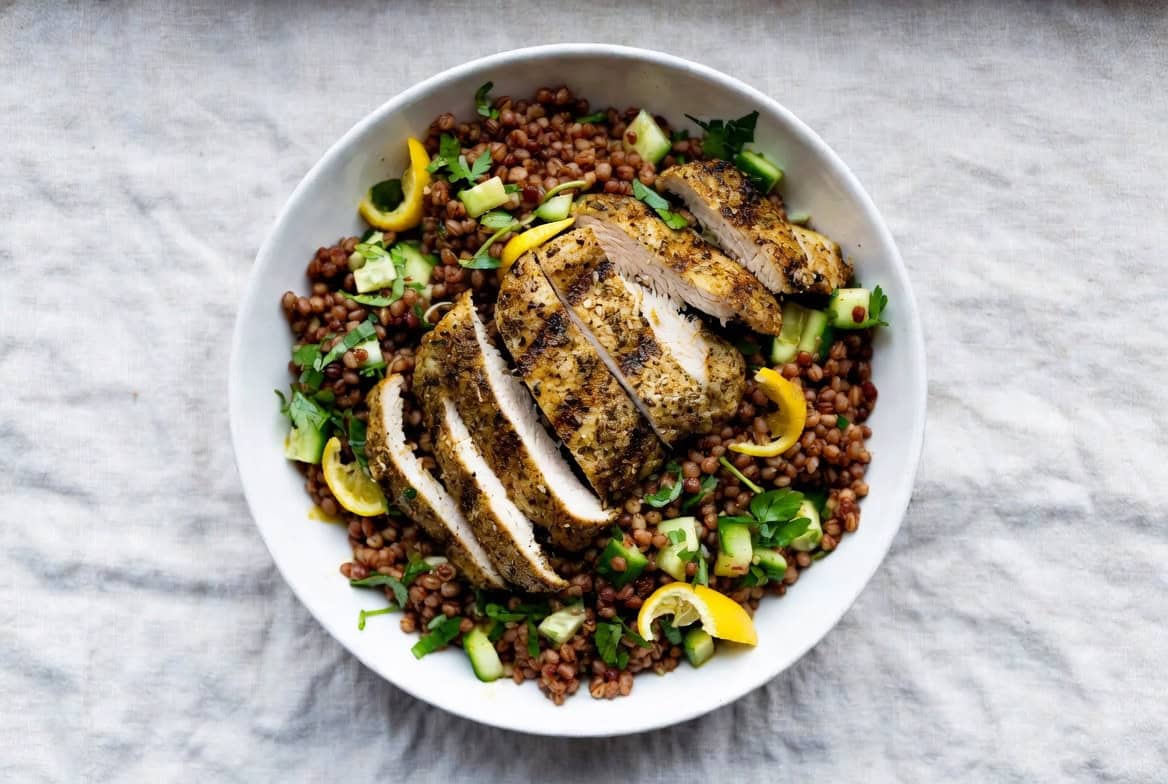
The parts that change whether this works tonight.
- Serves
- 4
- Time
- 40 minutes
- Equipment
- A sheet pan and a rack, so the thighs are not sitting in their own rendered fat
- The method
- 13 ingredients · 5 steps
From this recipe’s own yield and timing lines and Kitchen Kit. Nothing here is a guess.
Pairing
Wine — Assyrtiko, or a dry Lebanese white. Preserved lemon is salt and acid arriving together, which strips most whites bare — you want one that started out lean and mineral. Mixed drink — Arak with cold water and ice. It is the drink this meal is eaten with across the region, and anise beside za'atar is not an accident of geography. Teetotaler — Mint lemonade, barely sweetened, or ayran if you want something that will genuinely cool you down. Both are standard beside za'atar and both beat anything carbonated.
Tools
A sheet pan and a rack, so the thighs are not sitting in their own rendered fat. An instant-read thermometer. A jar of preserved lemons, which is less a tool than a standing investment.
Ingredients · swaps in parentheses
Boneless chicken thighs (bone-in thighs, add 10 minutes), za’atar, olive oil, cooked freekeh (bulgur, farro), cooked chickpeas, cucumber, cherry tomatoes, parsley, mint, Greek yogurt (labneh), preserved lemon rind and its brine, lemon juice, salt, pepper.
Magic
Brine the thighs for twenty minutes in the cloudy liquid from the preserved lemon jar, thinned with an equal amount of water. Everyone chops the rind and pours the brine down the drain. It is salt, lemon oil, and a year of slow fermentation, and it seasons the meat all the way through instead of just the surface — the chicken comes out tasting of lemon from the inside, which the za’atar crust cannot do on its own. Not feeling brave? Salt the thighs plainly and stir a spoonful of the brine into the yogurt instead.
Gotcha
Za’atar is sesame seeds and dried herbs and it burns. Twenty-plus minutes at 425°F will scorch a dry rub into something acrid and gray. Oil the chicken first, then press the za’atar on so every seed is coated, and pull the pan the moment the thighs hit temperature.
Serves: 4 Time: 40 minutes
Za’atar chicken and smoky freekeh give this salad enough character to survive meal prep without tasting administrative.
Ingredients
- 1 pound boneless chicken thighs
- 2 tablespoons za’atar
- 1 tablespoon olive oil
- 2 cups cooked freekeh
- 1 1/2 cups cooked chickpeas
- 1 cucumber, chopped
- 1 cup cherry tomatoes, halved
- 1/2 cup parsley and mint
- 3/4 cup Greek yogurt
- 1 tablespoon minced preserved lemon rind
- 2 tablespoons preserved lemon brine, for the optional soak
- 2 tablespoons lemon juice
- Salt and pepper
Method
- Season the chicken. For the magic version, soak the thighs in the preserved lemon brine cut with equal water for twenty minutes here, then pat them dry. Rub with the olive oil first, then the za’atar, salt, and pepper, pressing so the spice sticks.
- Roast. 425°F for 20 to 24 minutes on a rack. Thighs are forgiving but not infinitely so; 175°F internal is the sweet spot for dark meat, where the connective tissue has softened and the juices have not run out. Rest 5 minutes, then slice against the grain.
- Mix the yogurt. Greek yogurt, minced preserved lemon rind, lemon juice. Taste before salting. Preserved lemon is aggressively salty and how salty depends entirely on whose jar it came from.
- Build the base. Toss the freekeh, chickpeas, cucumber, tomatoes, and herbs. Season lightly.
- Plate. Chicken over the grain base, yogurt spooned across, resting juices poured over everything. Do not skip the resting juices. That is concentrated za’atar chicken fat and it is the best thing on the board.
What freekeh actually is
Freekeh is durum wheat harvested while the grain is still green and soft, then set on fire. The straw burns off, the high moisture in the immature kernel keeps the grain itself from burning, and what is left is a smoked green wheat that gets cracked or left whole. It is a Levantine staple with a long history across Palestine, Lebanon, Syria, and Jordan, and the smoke is not a flavoring added later — it is a byproduct of the harvest method.
This matters for cooking. Freekeh does not need help tasting interesting, so do not bury it. Cook it in water or a light stock with a bay leaf, drain it well, and let its own smokiness work against the yogurt. Cracked freekeh takes about 20 minutes. Whole takes 40 and holds a far better chew.
Za’atar is a blend, and blends vary
The word covers both the wild herb and the mixture built around it: dried thyme or oregano, toasted sesame, sumac, salt, sometimes more. Ratios shift by region and by household. A Palestinian blend often leans heavily on sumac and reads sharply sour. A Lebanese one may carry more sesame and taste rounder and nuttier. Neither is the correct one.
Practically, taste yours before you commit two tablespoons of it to a pound of chicken. If it is sumac-forward, ease off the lemon juice in the yogurt. If it is sesame-heavy and mild, add a scrape of lemon zest to the rub. Buy it somewhere with turnover, because the dried herbs go dusty and flavorless within a year and most supermarket jars are already past it.
Thighs, not breasts
Breast meat in a meal-prep salad is a trap. It is fine at minute one and dry by day two, because there is no intramuscular fat to buffer it through refrigeration. Thighs hold. The extra fat keeps them tender cold, sliced, three days later, sitting under yogurt in a container. That is the entire argument and it is enough.
Slice them across the grain even though the muscle fibers in a thigh are shorter and less obvious than in a breast. It still changes the bite.
Assembly for the week
The grain base holds four days if the cucumber and tomatoes go in separately. Both weep, and by day two they will have turned the freekeh soggy at the bottom of the container. Herbs the same; add them the morning of. The yogurt sauce keeps a week and gets better on day two once the preserved lemon has bled through it.
Chicken can be roasted, cooled fully, and refrigerated whole rather than sliced. A whole thigh loses less moisture than five slices with all that cut surface exposed. Slice it when you are about to eat it, which takes fifteen seconds and is worth doing.
Part of Recipes & Technique.
Recipe provenance: Salty & Clever editorial formulation, built from established culinary technique and the traditions identified in the article. No chef, restaurant, family, or firsthand cultural provenance is claimed unless it is explicitly named and sourced. How we write and check recipes
Where this goes next

