Gluten-Free Mango Sorbet with Lime and Tajín
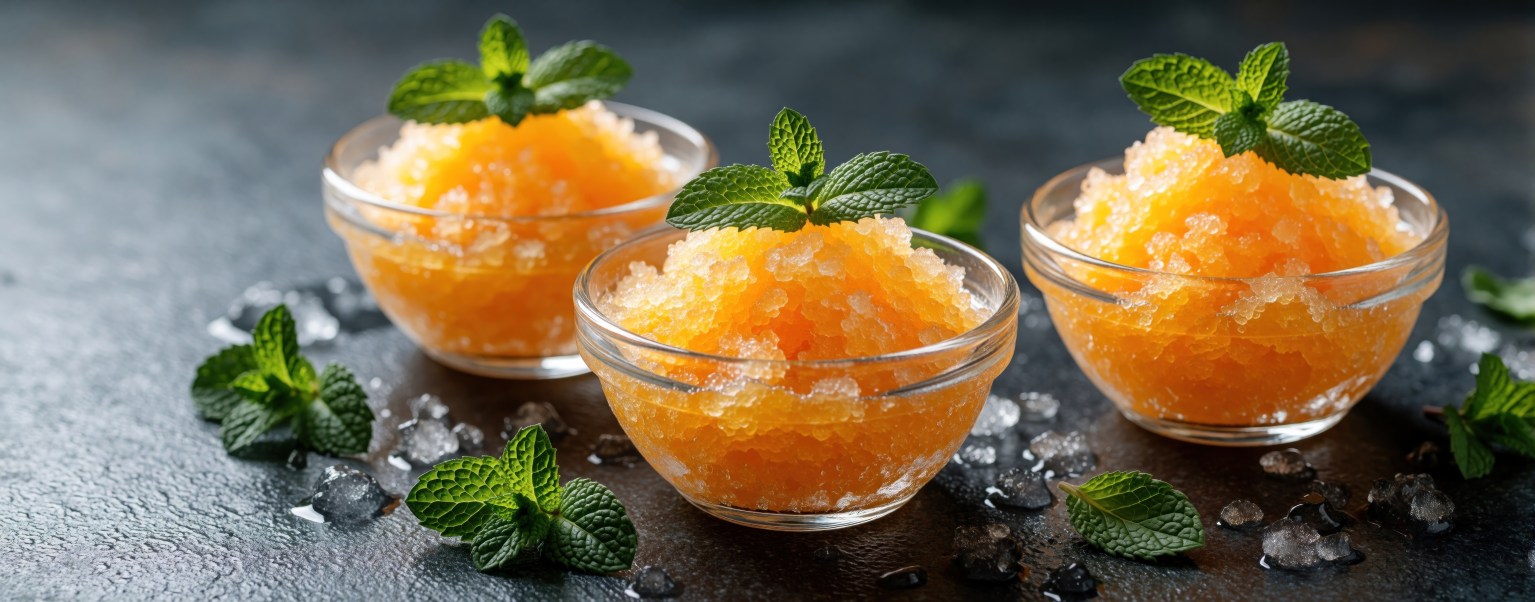
The fruit-cart order — mango, chile, lime, salt — translated to a spoon. Sugar runs the freezer chemistry; the Tajín stays on top where it belongs.
The parts that change whether this works tonight.
These fields come from the published recipe itself. If a recipe has not separately declared an operating fact, the gap stays visible instead of being filled with a guess.
- Servings
- about 1 quart
- Timing
- Not separately declared
- Equipment
- Not separately declared
- Make-ahead
- Not separately declared
- Holding
- Not separately declared
- Leftovers
- Not separately declared
- Dietary notes
- Not separately declared
- Method map
- 9 ingredient lines · 7 method steps
Pairing
Wine — Moscato d'Asti, or a late-harvest Torrontés. Mango is intensely perfumed and the Tajín is salty and sour — the wine needs aromatics of its own or it just tastes like sugar. Mixed drink — Mezcal and lime over crushed ice, or a short margarita. Chile-lime salt on fruit is a Mexican street idea, and agave is its natural companion. Teetotaler — Salted limeade, or sparkling water with a Tajín rim. The sorbet handles the sweetness; the glass handles the salt and the cold.
Tools
A small saucepan for the syrup, a blender, a fine-mesh strainer for stringy mangoes, an ice-cream maker (or a shallow metal pan and a fork with a work ethic, or a food processor and ice-cube trays), and a shallow freezer container with parchment for the surface.
Ingredients · swaps in parentheses
Very ripe mango, ideally Ataulfo or Champagne (ripe Kent or Keitt), granulated sugar, water, light corn syrup optional but useful, fresh lime juice and zest, fine sea salt, Tajín or another verified gluten-free chile-lime seasoning, fresh mint optional.
Magic
Blend two or three Thai basil leaves into the base. The anise-clove edge sits underneath the mango like a second bassline, and against the Tajín it makes the whole bowl taste like a street stall with opinions. Not feeling brave? Double the lime zest and stop there.
Gotcha
Taste the base before it freezes: it should read slightly too sweet and too bright at room temperature, because the freezer mutes both. Balance it for your spoon now and you will serve a brick of polite nothing later.
Anyone who has bought a bag of mango from a fruit cart — chile, lime, salt, sun — already understands this dessert. It is that exact order, translated to a spoon. The mango goes velvet, the lime keeps it awake, and the Tajín lands at the end, dusty and sharp, right where the cart vendor would have put it.
The catch is that sorbet only pretends to be a four-ingredient recipe. In the freezer it becomes chemistry. Not enough sugar and the purée sets like a paving stone; too much and it never firms past slush. Lime overdone mutes the fruit, lime underdone leaves a flat sweetness that gets duller as the bowl gets colder. So this base uses a modest syrup, a pinch of salt, and an optional couple tablespoons of corn syrup, which does nothing for flavor and a great deal for texture by interrupting large ice crystals. The Tajín stays out of the base entirely. Blended in, it goes muddy; dusted on top, it stays loud.
Sugar is the machinery
In sorbet, sugar is barely about sweetness. Dissolved sugar lowers the freezing point of the mixture, keeping a fraction of the water unfrozen at freezer temperature — that unfrozen fraction is the entire difference between scooping and chiseling. And because fruit ripeness varies, no formula is truly universal. A scale helps, but your tongue is the real instrument: the unfrozen base should taste a notch too sweet and too bright at room temperature, since cold suppresses both. What tastes correct in the blender comes out of the freezer tasting like a shrug.
Gluten, in a fruit dessert? Unfortunately, yes
The ingredients are naturally clean: mango, lime, sugar, salt. Corn syrup is generally gluten-free by formulation, and Tajín Original is commonly labeled gluten-free in many markets, but labels and manufacturing statements drift, so verify the actual package if it is medically necessary. The likelier hazard is the freezer itself. Home scoops migrate between cartons full of cookie pieces, brownie chunks, and cone shards, so celiac-safe service means a clean scoop and a dedicated container, not a shared dessert station where utensils wander.
Makes: about 1 quart
Estimated active time: 25 minutes, plus chilling and freezing
Equipment: blender and ice-cream maker, with a no-churn option below
Ingredients
- 4 cups diced very ripe mango, about 2 pounds whole fruit
- 1/2 cup granulated sugar
- 1/2 cup water
- 2 tablespoons light corn syrup, optional
- 3 tablespoons fresh lime juice, plus more to taste
- 1 teaspoon finely grated lime zest
- 1/8 teaspoon fine sea salt
- Tajín or another verified gluten-free chile-lime seasoning, for serving
- Fresh mint, optional
Method
- Combine sugar and water in a small saucepan. Warm over medium heat just until the sugar dissolves. Remove from heat and stir in corn syrup if using. Cool to room temperature.
- Blend mango, 3/4 cup of the cooled syrup, lime juice, lime zest, and salt until completely smooth. Add more syrup only if the base tastes noticeably tart or the mango was not very sweet. For the magic version, drop two or three Thai basil leaves into the blender here.
- For an especially smooth texture, push the purée through a fine-mesh strainer. This is optional with fiber-free mango varieties but useful with stringier fruit.
- Chill the base until very cold, at least 3 hours or overnight.
- Churn according to your ice-cream maker’s instructions until the texture resembles soft serve, usually 15 to 25 minutes.
- Transfer to a shallow freezer container, press parchment directly onto the surface, cover, and freeze 3 to 4 hours for a firmer scoop.
- Let the sorbet sit at room temperature 5 to 10 minutes before scooping if it has frozen overnight. Finish each serving with a very light dusting of Tajín.
No machine, two honest workarounds
The fork method: chilled base into a shallow metal pan, 45 minutes in the freezer, then scrape hard, pulling the frozen edges to the center. Keep returning every 30 minutes for about 3 hours. It comes out a touch icier than churned, but the shallow pan and the repeated violence keep the crystals small enough to respect.
The food-processor method trades scraping for planning. Freeze the base in ice-cube trays, blitz the frozen cubes until smooth, and refreeze for an hour. Move fast at the processor stage — the goal is smooth, not melted.
Choose between them by which failure you are less likely to commit. The fork method wants you in the kitchen every half hour for an afternoon. The processor method wants you to remember tomorrow that the trays exist. Neither is difficult. Both are easy to abandon halfway, and an abandoned sorbet is a solid orange block you chip at with a spoon and then quietly throw away.
Buy the mango like it is the recipe, because it is
Freezing magnifies whatever the fruit brought. A firm, politely sweet counter mango does not become interesting at 0 degrees; it becomes cold. You want fruit that smells fragrant at the stem and gives gently under a thumb. Ataulfo and Champagne mangoes purée nearly fiber-free, which is why they lead the list, but genuinely ripe Kent or Keitt works well — just plan on the strainer, since stringier varieties leave threads the blender cannot fix.
Which makes the fruit the one line on this list worth being fussy about. Sugar is sugar and lime is lime. A mango bought before it is ready is a different dessert, and no amount of syrup arithmetic repairs it afterwards. Buy the fruit, then wait for it. Nothing else here is in a hurry.
When the freezer disagrees with you
Frozen solid means the base wanted more sugar, or your freezer runs arctic; temper the container longer before scooping, and next batch add 1 to 2 tablespoons more syrup or take the corn syrup option. The opposite problem — a sorbet that never firms — means too much sugar went in, so use less syrup next time and park the container in the coldest corner. Fibrous texture is a variety issue, solved by straining before the chill. And dull flavor gets fixed in the base, before churning: a teaspoon of lime juice and a tiny pinch of salt. Once it is frozen, the seasoning window has closed.
The clock, and the bowl
Sorbet peaks inside about a week, while the crystals are small and the mango aroma still leads. Keep it in the coldest part of the freezer with parchment pressed to the surface. If it turns hard after several days, 10 to 15 minutes in the refrigerator brings it back; the microwave melts the edges while the center stays stubborn, and then you have both problems at once.
Serve it with restraint. Tajín alone is a complete casual bowl. After dinner, add berries, pineapple, toasted coconut, or a spoonful of lightly sweetened coconut cream — one of those, not all of them. Mango has enough personality without the bowl becoming a committee.
Part of Recipes & Technique.
Recipe provenance: Salty & Clever editorial formulation, built from established culinary technique and the traditions identified in the article. No chef, restaurant, family, or firsthand cultural provenance is claimed unless it is explicitly named and sourced. How we write and check recipes


