Elegant Chicken for a Dinner Party: Choose the Cut That Survives Service
Elegant chicken is not about tiny garnishes. Choose the cut, sauce, and service method that keep the meat juicy when guests are ten minutes late and dinner still has to look intentional.
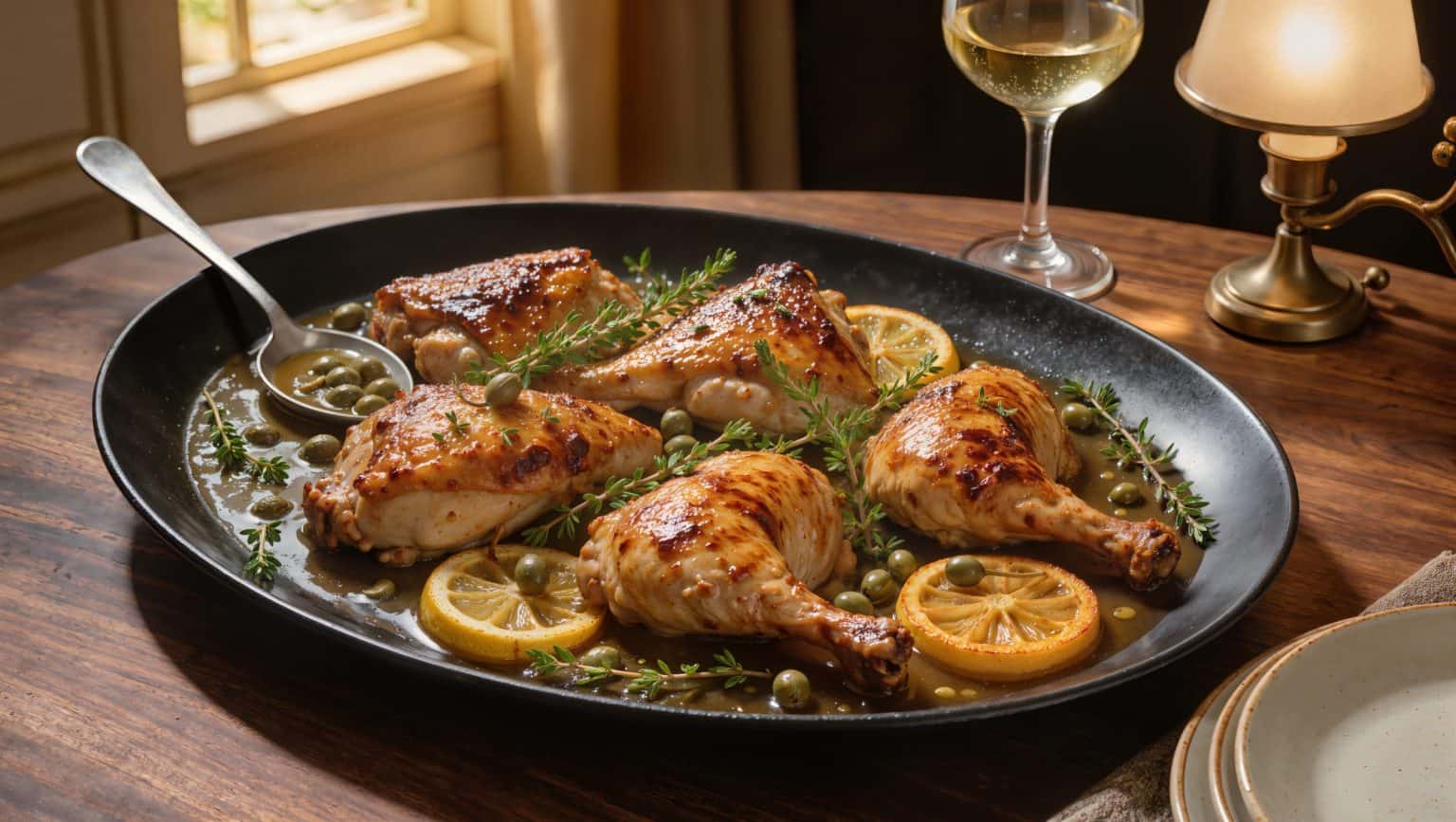
Elegant chicken recipes for a dinner party are a breakout search right now, and I suspect a lot of people are hoping elegant is a garnish.
It is not.
Elegant chicken is chicken that arrives juicy, tastes deliberate, works with the rest of the menu, and does not require the host to stand over twelve individual breasts while everyone else is having a better evening.
I am much more interested in the cut and the service window than whether there is a microgreen leaning against it.
Boneless chicken breast is not automatically the sophisticated choice
Chicken breast can be excellent. It can also move from juicy to dry with an efficiency I do not admire.
For a small dinner where you can control the timing, a well-cooked breast with a real sauce can be beautiful. For a larger party, especially one with an elastic dinner time, I often prefer bone-in pieces, thighs, a whole roasted bird carved before service, or a braised preparation. They give the host more room to recover from the doorbell, the missing chair, or the guest who is apparently still twelve minutes away and has been twelve minutes away for half an hour.
Forgiveness is elegant. Panic is not.
Cuts, judged on what they do when dinner slips
| The cut | What it does at service | When it is the right call |
|---|---|---|
| Boneless breast | Moves from juicy to dry with an efficiency I do not admire | A small dinner you can time precisely, with a real sauce under it |
| Bone-in pieces | Holds its moisture and forgives a delay | A larger party with an elastic dinner hour |
| Thighs | Very hard to ruin, better still with a sauce | Any night the door is going to keep opening |
| Whole bird, carved before service | One oven event and one carving moment, not twelve | When you want a centerpiece and only one deadline |
| Braised | Improves while it waits, which is the rarest property on this list | When you would rather be in the room than at the stove |
A sauce earns its place when it protects the chicken
A sauce is how dinner-party chicken feels generous without becoming fussy. A mustard cream sauce, lemon and olive braising liquid, roasted grape and shallot jus, mushroom sauce, herb pan sauce, tomato and saffron broth, or something similarly assertive gives the plate a point of view and gives the meat a little insurance.
The sauce should not exist only to create a swoosh on the plate. It should carry flavor, moisture, acidity, richness, or heat. Preferably more than one of those.
If the chicken has to rest before serving, keep enough warm sauce to spoon over it just before it reaches the table. If the sauce gets thick as it waits, hold back a little stock or other appropriate liquid so you can loosen it rather than serving something with the texture of wallpaper paste.
Thighs are not a consolation prize
Chicken thighs are richer, more forgiving, and very good at carrying strong flavor. That makes them extremely useful for a party. Roast them until the skin is deeply browned. Braise them with wine, tomatoes, citrus, spices, olives, or aromatics. Glaze them near the end. Put them on one large platter instead of treating every serving like a private ceremony.
They also scale cleanly. A larger pan of thighs does not ask you to perform the same precision operation twelve separate times. That matters when the rest of dinner also exists.
The USDA safe minimum internal temperature for poultry is 165°F, measured with a food thermometer. That is the safety line. The cooking method determines how you get there without sacrificing the meal.
If you want breast meat, give it a friend
A naked chicken breast with two vegetables arranged beside it is exactly the kind of dinner that makes home cooks feel as though they are competing with a banquet department.
Do not.
Use skin-on breast if the recipe supports it. Roast or poach gently. Slice before serving so guests are not wrestling with a large piece of meat. Put it over something that catches the juices: soft polenta, beans, lentils, a warm grain, a vegetable purée, or a sauce. Add a sharp salad, bitter green, pickle, citrus, or herb finish to keep the plate from becoming one long beige sentence.
Elegance is often contrast with good lighting.
Whole roast chicken is beautiful if carving is already solved
A burnished roast chicken on a platter looks like dinner. I understand the appeal completely.
What happens next is the part the photograph does not show. Who carves it? Where? On what board? Is there room on the counter? Does the person carving know what they are doing? Are guests waiting while the skin cools and the juices run into a cutting board that was already holding bread?
If whole birds are the plan, rest them properly, carve them in the kitchen, and reassemble the pieces on a warm platter with their juices or sauce. You still get the abundance of roast chicken without turning the dining table into a demonstration.
For a very small dinner, carve at the table if you enjoy it. For a crowd, I would rather have the food arrive ready to eat.
Build the sides around what the chicken is doing
Rich braised chicken does not need three creamy sides. Crisp roasted chicken does not need every other component to be roasted and brown. A mustard sauce wants something green or bitter. A lemony chicken can handle a richer potato. A tomato-based braise may want bread more than another starch with a personality disorder.
I like one quiet dish on a menu for exactly this reason. If the chicken is glossy, aromatic, and assertive, the vegetables are allowed to taste like vegetables. Good rice with herbs can be enough. Buttered beans can be enough. A clean salad with real acid can be enough.
The meal feels more expensive when the components are not fighting for attention.
Choose the method by the delay you can tolerate
If dinner will be served the minute everyone sits, you can choose a more timing-sensitive preparation. If guests are arriving over an hour, the cocktail portion may run long, or the main has to wait while everyone moves outside, use a method that can tolerate that reality.
Braises are excellent here because the sauce protects the meat and the dish often improves after a rest. Roasted thighs have a useful window. Chicken breast needs tighter control. Fried chicken has its own hold problem because crispness is a clock. The technique is part of the hosting plan.
This is also why I would not build four last-minute sides around a last-minute main. The final half hour needs hierarchy. Chicken can have the spotlight. The carrots do not also need a live performance.
Family-style is usually more elegant than a frantic plate
There is a version of elegance that assumes every guest needs a restaurant plate assembled by one increasingly resentful person in a home kitchen.
I reject it.
Slice or portion the chicken. Arrange it on a large warm platter. Spoon over the sauce. Add the herbs, citrus, crisp shallots, toasted nuts, or whatever finish actually matters. Put the sides in good bowls. Sit down.
Family-style service works when the platters fit the table and the food is easy to pass. It can feel abundant and deliberate without turning dinner into twelve tiny construction projects.
Make one finishing move, not six
If you want the dinner to feel special, give the chicken one final move with real impact: a glossy pan sauce, a mound of herbs, charred lemon, a crunchy breadcrumb mixture, roasted grapes, preserved lemon, a spoonful of chile oil, browned butter, or something else that changes flavor and texture.
Do not add six tiny finishes because the word elegant made you nervous. Guests can taste one excellent decision much more clearly than six nervous ones.
Chicken is not boring. Bad chicken is boring. Dry chicken with decorative ambition is worse.
Choose the cut that survives your service window, build a sauce with a job, make the sides support the main, and get the platter to the table while the food is still the thing everyone should be paying attention to. That is elegant enough.
Food-safety reference: USDA Food Safety and Inspection Service safe minimum internal temperature guidance for poultry.
Part of Hosting & Service.
Where this goes next

