What to Serve at Book Club When You Still Want to Talk About the Book
Book-club food has one job beyond tasting good: it cannot hijack the conversation. Build a menu that feeds people, protects the books, and gives the host somewhere to sit.
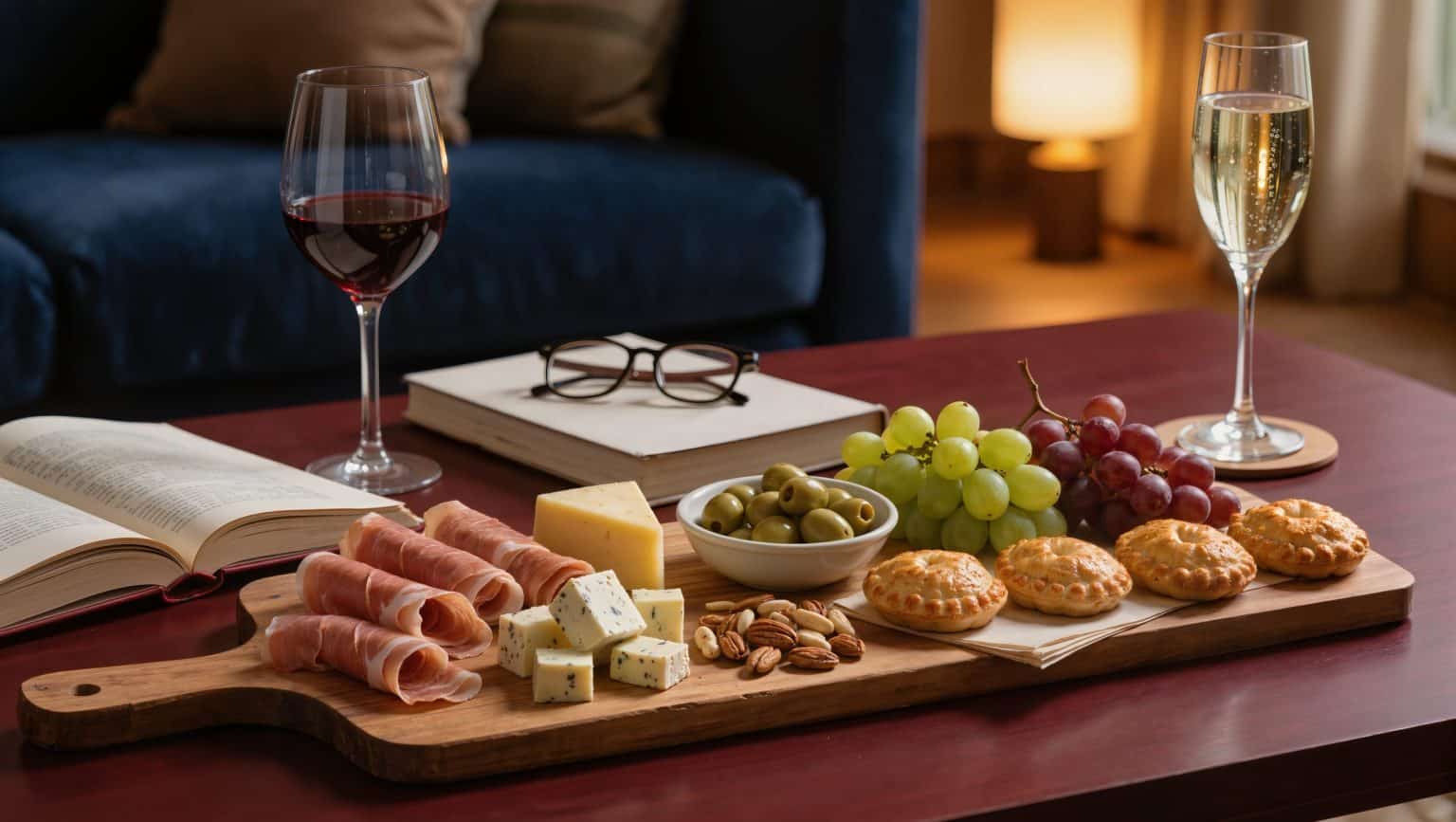
Book-club food has an oddly specific job description.
It needs to be good enough that people are happy they came, substantial enough that “we are meeting at seven” does not turn into ten adults quietly wondering whether dinner was implied, and cooperative enough that nobody spends the discussion balancing a saucy forkful over page 214.
That last part matters more than it gets credit for.
Evite’s 2026 survey put book clubs among the gathering formats gaining popularity. I can see the appeal. It is a recurring reason to invite people over that already comes with a subject. The host does not have to manufacture entertainment. The book did that part. The food should support the room rather than launch a hostile takeover.
First decide whether this is dinner
“Book club” is not a meal description.
If people arrive at 6:30 or 7:00 after work, they are going to read the food as dinner whether you intended it or not. A beautiful board of crackers, grapes, and three cheeses can look abundant for twelve minutes and then reveal that everybody has eaten a handful of almonds for supper.
Say what the evening is.
If you are serving dinner, make dinner. It can be casual, but it needs an anchor: soup and a substantial sandwich; pasta and salad; a savory tart with vegetables and something crisp; braised chicken with bread; a grain bowl with enough texture and protein to feel finished.
If the meeting starts after dinner, say “dessert and drinks.” If it is a Sunday afternoon, coffee, tea, something savory, and one sweet thing may be exactly right.
Ambiguity is not sophisticated. It is how a cheese board gets blamed for a problem it did not create.
The best book-club food does not require visual supervision
This is not the night for a dish that needs everybody to stop talking and admire its tableside finish.
Book club works better with food that can be eaten almost automatically: a fork-friendly bowl, a sandwich cut small enough to hold, a tart slice, a piece of focaccia, roasted vegetables, a composed salad that does not fling leaves across the room, a dessert that can sit on a plate without becoming an engineering problem.
I would avoid anything that requires repeated cutting, shelling, dipping through a shared bowl, or aggressive two-handed assembly once the discussion starts.
Ribs may be delicious. They are not helping a person defend an unpopular opinion about the narrator.
Protect the book from the menu
Yes, this sounds ridiculous until somebody puts a library copy face-down beside a bowl of chile oil.
Foods with orange dust, loose powdered sugar, dripping sauces, oily shells, exploding pastry flakes, and heavily dyed frosting are all perfectly capable of being excellent. They are also capable of becoming marginalia.
If the group uses physical books, create a food zone and a discussion zone even if they are in the same room. A sideboard, coffee table, kitchen island, or console can hold plates and refills. Put napkins everywhere people might set something down. Use small plates with an actual lip instead of flat decorative tiles that appear to have been designed by someone with a personal objection to gravity.
The Sideboard Is a Service Tool, Not a Furniture Prop applies almost suspiciously well here.
Give the menu one-handed food and one real plate
A common mistake is deciding that because people will be talking, every food must be a canapé.
Then the host makes forty-eight tiny things.
No.
Use one-handed food at arrival, when people are coming in, pouring drinks, putting down bags, and talking over one another. Then give the group one substantial plate or bowl before the real discussion gets underway.
That might look like:
Arrival: marinated olives and a crisp flatbread with a whipped cheese or bean spread.
Actual food: baked rigatoni with bitter greens on the side.
Later: dark chocolate cookies and coffee.
Or:
Arrival: smoked salmon or roasted vegetable tartines.
Actual food: a large savory tart with a sharp salad.
Later: citrus olive-oil cake.
The point is not those exact dishes. The point is workload. One small welcome bite, one meal, one ending. Book club does not need seven chapters of hors d’oeuvres.
Theme the food only when the book gives you something useful
I love specificity. A menu can absolutely borrow from a book’s place, season, food references, or mood.
But there is a difference between an intelligent connection and making everybody eat blue food because the cover is blue.
If the novel takes place in Naples, an Italian menu has a reason. If a memoir revolves around a family restaurant, cooking one dish connected to that food tradition can deepen the evening. If the book spends six pages on a peach pie, clearly the universe has assigned dessert.
What I would not do is turn every meeting into costume catering. The group has to meet again. A recurring format should be able to carry one strong idea without needing a new prop warehouse every month.
Use the book as a lens, not an obedience test.
Build for the person who did not finish the book
Somebody will not finish it.
They may have hated it. They may have had a terrible week. They may have read the first forty pages and then discovered three hundred more waiting with the patience of a creditor.
The food should not make participation conditional on completion.
This is partly why shared plates and a relaxed first twenty minutes work so well. People can arrive as people before the room becomes a seminar. Feed them. Let the conversation warm up. Then talk about the book.
The reader is not the punchline. Neither is the person who is new to the group, does not drink, has a smaller food budget, or needs to ask what is in a dish.
Do not make the host run a bar during the best part
Book club is exactly the kind of gathering where a self-serve drink setup earns its keep.
Water should be obvious. Wine, if you are serving it, can be open and available rather than ceremonially poured every nine minutes. The zero-proof option should feel like a drink, not a sentence of sparkling water with a lemon wedge.
A pitcher of tart hibiscus tea with citrus, a cold-brewed green tea with grape and herbs, a bitter orange soda with tonic, or a properly built seasonal punch can all sit beside the alcoholic option with equal confidence.
One good drink and one good no-drink. Then sit down.
If you need proof that zero-proof can carry atmosphere, Snowmelt Social and Neon Screensaver already make the argument.
Keep allergens legible
Recurring groups learn one another’s preferences, but familiarity is not a reason to get casual about allergies.
Keep package labels for any prepared ingredient until the night is over. Tell people what is in dips, dressings, desserts, and anything with nuts, sesame, dairy, wheat, soy, eggs, fish, or shellfish. Use separate serving utensils when cross-contact matters.
And if someone has a severe allergy, ask what they actually need rather than improvising a definition of “safe.” A home kitchen may not be able to promise the level of separation a person requires. Honesty is more hospitable than confident guessing.
Three book-club formats worth repeating
The weeknight bowl
One warm bowl that can be made ahead, a crisp or acidic topping added at the end, bread, and one simple dessert. Think braise, soup, baked pasta, curry if it suits the group, or a substantial grain-and-roasted-vegetable dinner.
The host can feed people quickly and join the conversation. That is the point.
The Sunday-afternoon table
A savory tart or strata, salad, fruit, coffee, tea, and something sweet. Lighter than dinner, more complete than snacks, and forgiving about arrival time.
Dessert and drinks
Use this when the meeting starts later. One genuinely good dessert, coffee and tea, one alcoholic option if desired, one zero-proof option, and a small salty plate so the evening does not become frosting plus merlot.
A late book club does not need to cosplay as dinner.
Let the menu repeat more than you think
A recurring gathering does not need a completely original food identity every month.
Keep a house structure. Maybe there is always something warm, something sharp, and one dessert. Maybe the host chooses the main and another member brings the sweet. Maybe every meeting begins with the same bowl of olives and ends with coffee.
Repetition can become part of the pleasure. It also gives the host a baseline. You learn how much people eat, which serving pieces work, where drinks belong, and how long dinner actually takes before the discussion starts.
Save the novelty for the part worth changing.
That baseline is worth keeping somewhere the host can find it in October. Occasion holds the house structure and re-sizes it for however many people said yes this month, which leaves you with the one decision you actually wanted to make.
The menu is successful when it disappears at the right moment
I want book-club food to be memorable enough that someone asks for the recipe and well-behaved enough that, halfway through the discussion, nobody is thinking about service.
Feed people properly. Keep the first bite easy. Give the evening one real plate. Protect the books. Make the drinks self-sufficient. Theme the menu when the story gives you a reason, then stop before symbolism requires edible gold leaf.
The book should eventually take over the room.
That is not the food losing. That is the food doing its job.
Sources consulted: Evite 2026 Pregame Report; U.S. FDA food-allergen guidance.
Part of Hosting & Service.
Where this goes next

