Make-Ahead Pork Meatballs with Mustard Cream for the Host Who Plans to Sit Down
Tender pork meatballs, a sharp mustard-cream sauce, and a make-ahead service plan that keeps the final hour civilized.
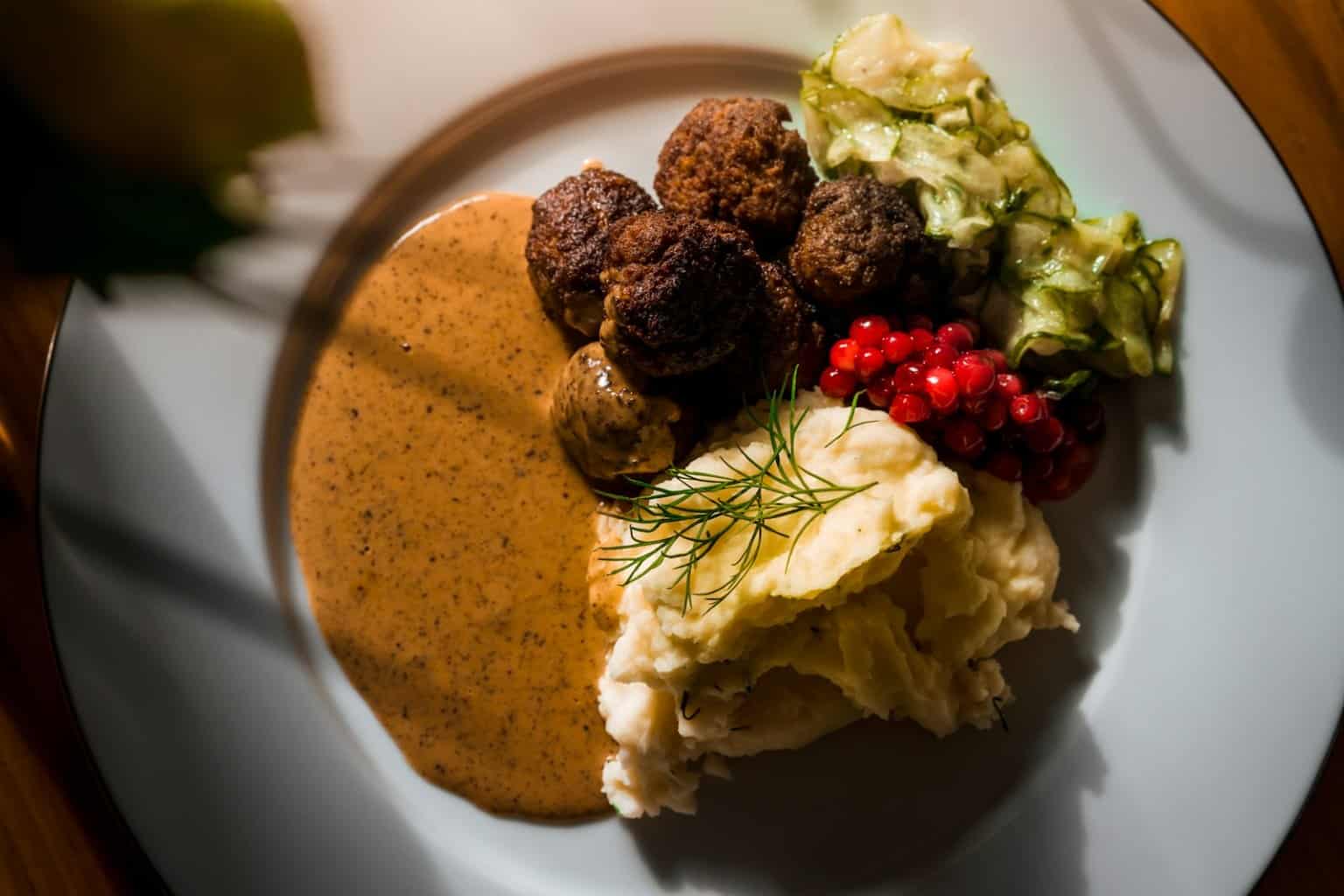
The useful party meatball is not the one with the most elaborate glaze. It is the one that reheats without toughening, holds without splitting, and lets the host remain visible after the first drink.
That is the actual design brief here. Tender pork, enough mustard to keep the sauce awake, and a service plan that does not require standing over the skillet while everyone else is already eating.
Yield: 24 meatballs, serving 6
Prep: 25 minutes
Cook: 35 minutes
Ingredients
- 1 1/2 pounds ground pork
- 1/2 cup fresh breadcrumbs
- 1/3 cup milk
- 1 egg
- 1 small onion, finely grated
- 1 teaspoon kosher salt
- 1/2 teaspoon pepper
- 1/4 teaspoon allspice
- 1 tablespoon oil
- 1 cup chicken broth
- 3/4 cup heavy cream
- 2 tablespoons Dijon mustard
- 1 tablespoon whole-grain mustard
- 1 teaspoon cider vinegar
Method
- Soak breadcrumbs in milk 5 minutes. Mix with pork, egg, onion, salt, pepper, and allspice just until combined.
- Shape 24 meatballs. Brown in oil in batches; transfer to a plate.
- Add broth to the skillet and scrape up browned bits. Stir in cream and both mustards.
- Return meatballs and simmer gently 12 to 15 minutes, until cooked through. Finish with vinegar.
The breadcrumb mixture is there for tenderness
Milk-soaked breadcrumbs give the meatballs moisture and interrupt the dense protein network that can turn ground meat rubbery. Let the breadcrumbs sit for the full five minutes so they actually hydrate before the pork goes in.
Then mix only until the ingredients are distributed. This is not bread dough. More kneading does not create virtue.
When the mixture holds together and the onion, egg, seasoning, and breadcrumbs are evenly incorporated, stop. Overmixing compresses the meat proteins and gives you bounce where tenderness was requested.
How do I know I have mixed enough? When the ingredients agree to stay together. Stop before they form a committee.
Grated onion does two jobs
Finely grating the onion distributes it through the mixture without leaving large pieces that can make the meatballs split. It also brings moisture, which helps the pork stay tender during browning and reheating.
If the onion is extremely juicy, include the juice unless the mixture becomes visibly loose. The breadcrumbs are there to absorb some of that moisture.
The allspice is deliberately quiet. One-quarter teaspoon adds warmth without making the meatballs taste like holiday potpourri.
Brown in batches because gray meatballs are a different recipe
Crowding the skillet lowers the pan temperature and traps steam. The meatballs will cook, but they will not develop the browned surface that gives the sauce its deeper flavor.
Use enough oil to film the pan and brown in batches. They do not need to cook through at this stage. You are building color and fond, then finishing the meatballs gently in the sauce.
That division of labor matters. Trying to fully cook them during browning makes the exterior tough before the sauce gets involved.
The sauce should taste like mustard, not punishment
Dijon gives the sauce sharpness and body. Whole-grain mustard brings a rounder flavor and visible texture. Together they make the cream sauce interesting without turning it into straight mustard with dairy standing nearby.
After browning the meatballs, add the broth and scrape up the browned bits from the skillet. That fond is part of the sauce. Stir in the cream and mustards, then return the meatballs and keep the simmer gentle.
A hard boil is not helping. Cream sauces can separate, and the meatballs tighten under aggressive heat. Gentle cooking is the point.
Use a thermometer for the safety decision
Ground pork should reach 160°F as measured with a food thermometer under current USDA guidance. Color is not the safety test. Check the center of a representative meatball without pressing the thermometer tip against the pan.
The USDA guidance for ground pork is current at FSIS. If you substitute another ground meat, use the safe minimum temperature for that meat rather than carrying the pork number over by habit.
The vinegar goes in at the end for a reason
Cream, pork, broth, and mustard can still land heavy without a final sharp edge. One teaspoon of cider vinegar clears the sauce without turning it sour.
Add it after the meatballs are cooked and the sauce is where you want it. Taste before adding more. The mustards already bring acidity, and the final balance depends on the broth and cream you used.
The finished sauce should cling lightly to the meatballs. It should not sit in the skillet like gravy paste.
Make-ahead is the reason to choose this recipe
Cook the meatballs and sauce ahead, cool and refrigerate them properly, then reheat gently together. The sauce protects the meat from drying, and the flavor has time to settle.
Refrigerate in sauce up to 3 days or freeze up to 1 month. Reheat covered over low heat, stirring the sauce carefully around the meatballs rather than aggressively breaking them up.
If the sauce thickens in the refrigerator, loosen it with a little broth before adding more cream, mustard, or salt. Texture first. Seasoning second.
Do not let reheating erase the tenderness you built
The easiest way to ruin make-ahead meatballs is to reheat them at a hard boil because guests are already at the door.
Start earlier. Use low heat. Keep the sauce moving gently and give the center time to become hot without tightening the exterior.
If the sauce looks as though it is beginning to separate, lower the heat and stir in a small amount of broth. The solution is usually less aggression, not more.
Serve them with something that earns the sauce
Mashed potatoes, egg noodles, or buttered cabbage all make sense because they can carry the mustard cream and hold well enough for a party.
I would not pair these with another creamy side. The sauce already owns that register. Give the rest of the plate something sharper, greener, or more textural.
A simple cabbage salad, roasted apples, green beans with vinegar, or bitter greens can make the meatballs taste richer without making the dinner heavier.
For a party, the pan can be the serving vessel
If the skillet or Dutch oven is presentable and safe for the table, use it. Transferring the meatballs into a decorative serving bowl creates one more hot vessel to manage and one more dish to wash.
A trivet and a good serving spoon solve a surprising amount of styling.
For a buffet, keep the sauce warm without boiling and give guests a spoon large enough to pick up meatballs and sauce together. Tiny utensils create longer lines and more dropped sauce. This is not the place for dainty.
Swaps need to respect the structure
Ground turkey works, but it is leaner. Add an extra tablespoon of cream to the mixture to help preserve tenderness. Cook poultry to the safe internal temperature required for ground poultry.
Sour cream can replace heavy cream if it is added off heat or over very low heat. It brings more tang and is more prone to curdling under a hard boil, so the method changes with the ingredient.
If you want more herb flavor, finish with parsley or chives rather than loading the meat mixture with fresh herbs that disappear into the sauce.
The host is part of the recipe
The point of make-ahead food is not merely that it can be made earlier. It is that the earlier work buys something later.
These meatballs buy a calmer final hour. Brown them when nobody is asking where the wine opener went. Build the sauce. Reheat gently. Put the pan on the table.
Then sit down with everyone else. That was the design brief.
Food that behaves this well once service starts is most of what Hosting and Service and Menus and Kitchen Systems are arguing about.
Part of Hosting & Service.
Where this goes next

