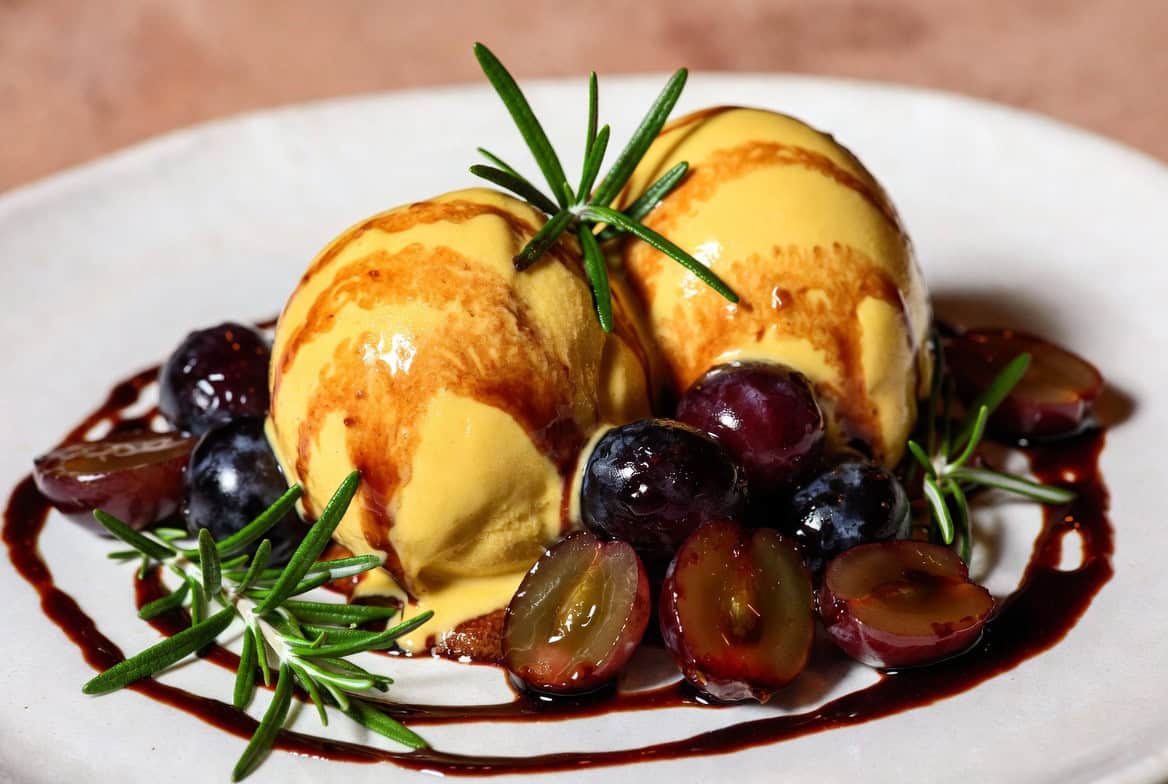
Indulgence Tax Olive-Oil Gelato Sundae with Roasted Grapes and Rosemary Caramel
Bought gelato, blistered grapes, rosemary caramel, good oil, flaky salt. Nothing can collapse; the whole tax is one unblinking minute of amber.
The parts that change whether this works tonight.
- Yield
- 4
- Time
- 45 minutes
- Equipment
- A sheet pan for blistering grapes, a small saucepan you will not stir, a whisk, and bowls that have done time in the freezer
- The method
- 14 ingredients · 4 steps
From this recipe’s own recipe card. Nothing here is a guess.
Tools
A sheet pan for blistering grapes, a small saucepan you will not stir, a whisk, and bowls that have done time in the freezer.
Ingredients · swaps in parentheses
Seedless red grapes (black grapes), olive oil, sugar, kosher salt, heavy cream, butter, rosemary (thyme), olive-oil or vanilla gelato, toasted pine nuts (toasted walnuts), extra-virgin olive oil for finishing, flaky salt, red wine vinegar (optional).
Magic
Splash red wine vinegar over the grapes the second they leave the oven. It hisses, evaporates to almost nothing, and leaves fruit that tastes intensely of grape instead of jam — which is exactly the argument you want next to caramel and cold fat. Not feeling brave? A little lemon zest over the finished sundae keeps things awake with less theater.
Gotcha
Caramel goes from deep amber to acrid in seconds, and the cream must be warm and standing by. Cold cream into hot sugar spatters and seizes, and you will be starting over either way.
Nothing in this sundae can collapse, deflate, weep, or refuse to set. After a season of gelatin and choux, that sentence reads like a vacation. The tax in the name gets paid all the same — just in one concentrated minute at the stove, when the sugar goes amber and your full attention is the only currency accepted. Everything else is shopping well and assembling fast: bought gelato, roasted fruit, a caramel that steeps with rosemary, pine nuts, oil, salt. Restaurant desserts have run on less.
Serves: 4
Estimated time: 45 minutes
Ingredients
- 1 pound seedless red grapes
- 1 tablespoon olive oil
- 1 tablespoon sugar
- Pinch of kosher salt
- 1/2 cup granulated sugar
- 2 tablespoons water
- 1/3 cup heavy cream, warmed
- 2 tablespoons unsalted butter
- 1 small rosemary sprig
- Pinch of salt
- 1 pint good-quality olive-oil or vanilla gelato
- 1/3 cup toasted pine nuts
- 2 tablespoons extra-virgin olive oil
- Flaky salt
Method
Where the time goes
- 18–25 minRoast the grapes425°F
- 10 minMake the caramel
- Build
- Serve immediately
- Roast the grapes. Heat oven to 425°F. Toss grapes with olive oil, sugar, and salt on a sheet pan. Roast until blistered and juicy, 18 to 25 minutes — some should split, a few should catch color. Cool until just warm. For a sharper finish, splash the grapes with a little red wine vinegar the moment they leave the oven.
- Make the caramel. Cook sugar and water in a small saucepan without stirring until deep amber; swirl the pan if it colors unevenly. Off heat, carefully whisk in warm cream, then butter, rosemary, and salt. Steep 10 minutes and remove rosemary.
- Build. Spoon gelato into chilled bowls. Add warm roasted grapes, rosemary caramel, pine nuts, a few drops of good olive oil, and a small pinch of flaky salt.
- Serve immediately. The collision of cold gelato and warm fruit is the point, and it lasts about ninety seconds.
The caramel minute
Dry-adjacent caramel is not hard; it is unforgiving, which is different. The no-stirring rule exists because agitation throws syrup up the pan walls where it crystallizes and seeds the whole pot into a grainy rock. Swirl instead. Watch the color through the last stage like it owes you money — deep amber smells nutty and faintly bitter; one shade darker smells like regret. And take the card seriously about the cream: warm, measured, standing at the stove before the sugar ever goes on the heat. The whisk-in will still bubble up violently. That is normal. Cold cream makes it a weapon.
Restraint, in two places
One small rosemary sprig, ten minutes, out. Rosemary extracts fast into hot fat and sugar, and past the ten-minute mark the caramel starts tasting like a shrub, which is not the assignment. Same logic governs the finishing oil: this is the place for the peppery, grassy bottle you hoard, especially over vanilla gelato, where those few drops are doing the olive-oil gelato’s job for it. Over actual olive-oil gelato the finishing oil is reinforcement; over vanilla it is the argument itself.
Running it for guests
This is the kind of dessert that earns its make-ahead status. For the same decision on another dish, use the Make-Ahead Holding Test before it gets a place on the menu.
Every component holds. Roast the grapes in the afternoon and rewarm them gently in a low oven or a skillet while the coffee brews. The caramel keeps a week in the fridge; loosen it in a warm water bath, because a microwaved caramel goes from solid to boiling with no intermediate opinion. Nuts, days ahead. Bowls in the freezer after lunch. The only live action is scooping and pouring, which takes less time than anyone at the table will believe — a sundae is the rare dessert where the gap between effort and effect runs entirely in your favor.
Part of Recipes & Technique.
Recipe provenance: Salty & Clever editorial formulation, built from established culinary technique and the traditions identified in the article. No chef, restaurant, family, or firsthand cultural provenance is claimed unless it is explicitly named and sourced. How we write and check recipes
Where this goes next

