Cooking for twelve is not cooking for four with the numbers multiplied. Somewhere between the two, the recipe stops being the hard part and the kitchen starts being the hard part — and no recipe you own will mention it, because every recipe is written as though it were the only thing you were cooking that day.
This is the whole system in one file. You describe the evening at the top — who is coming, what kind of dinner, what time it lands on the table — and eleven panels read from it.
What it works out
- What to buy. Two numbers on every line: what reaches the table, and what to buy. Those are not the same number, and the gap between them is yield. It is the reason hosts run out of the main course.
- The menu. Choose the dishes once and the quantity for each, the shopping list by section of the shop, the trips in order and the prep that can leave the day all fall out of that single choice. The recipe quantity and the shopping quantity are two renderings of one calculation, so they cannot drift apart.
- The bar. Bottles, glassware, garnish, zero-proof, and a batching calculator that adds the dilution water a batch actually needs — the difference between a good batched cocktail and a strong bad one.
- The board. Which cheeses and how much of each, rounded the way a counter sells it, and the board you actually own drawn to scale: bowls first, every cheese with room for its knife, the meat between them, and the trays that keep it full all evening.
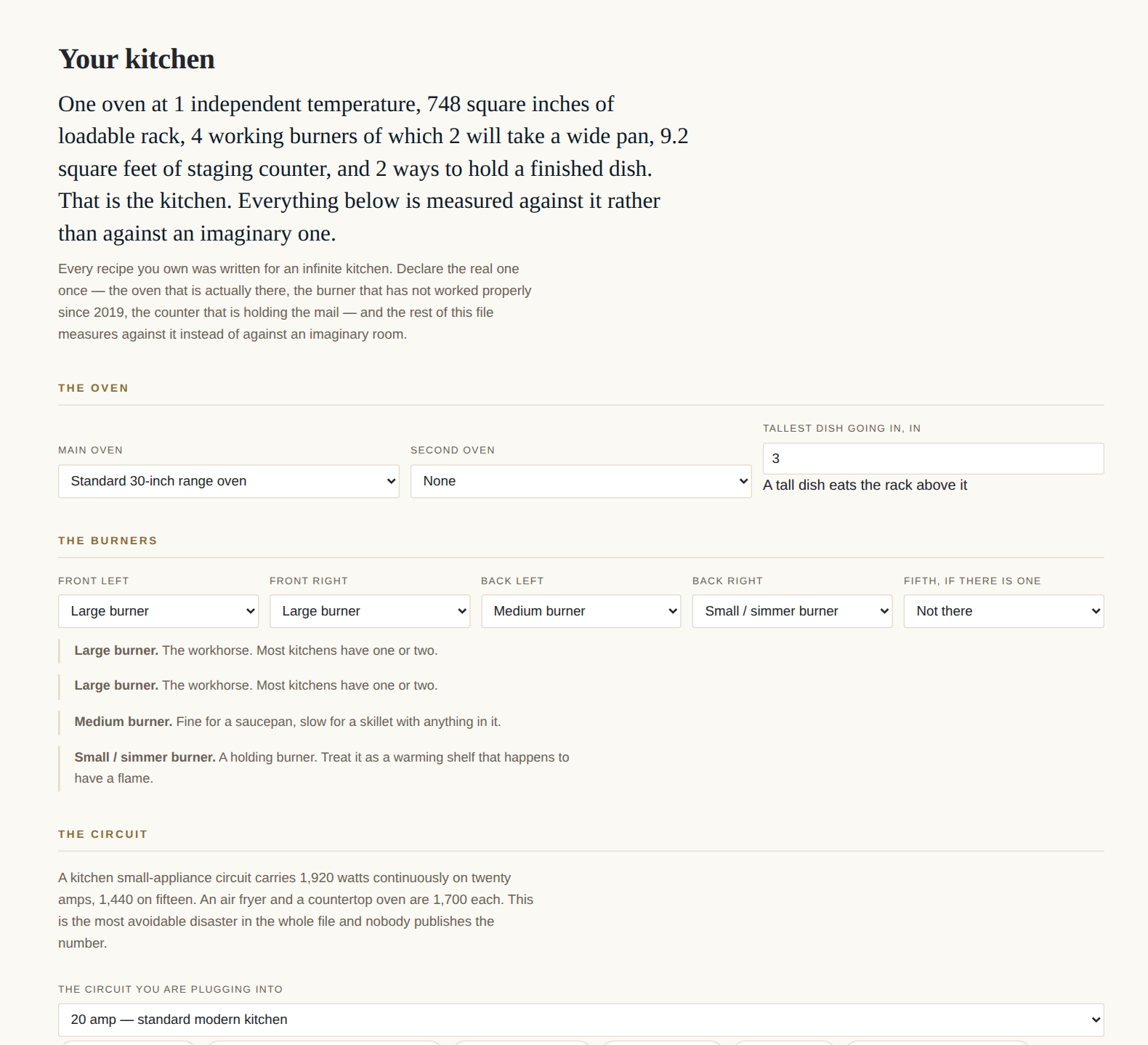
- Your kitchen. The room declared honestly: usable oven area rather than rack count, burners by what they will really heat, the circuit that carries 1,920 watts against the two appliances drawing 3,500, the counter once the cooks have somewhere to stand, and the serving vessels that actually cap a menu. Then a ranked answer to what runs out first.
- Cold space. Refrigerator capacity measured the way it actually runs out: square inches of shelf under a usable height, because covered party food does not stack. Plus the ice arithmetic, which is mostly not about ice in glasses.
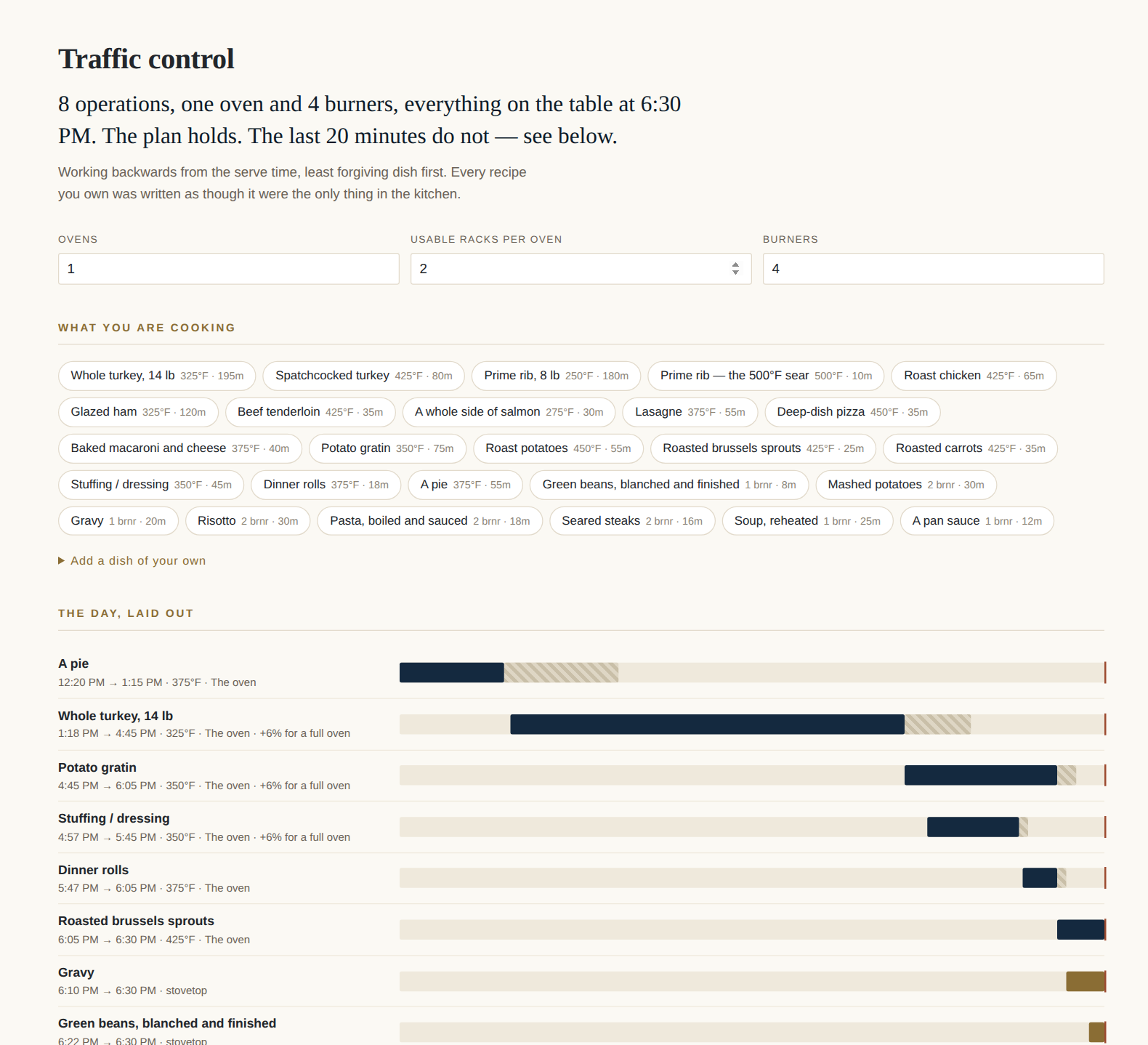
- Traffic control. Every dish placed backwards from the serve time, least forgiving first. It finds the temperature conflicts, the missing rack and the burner collision at 6:45, and says plainly which dish has to move to Wednesday.
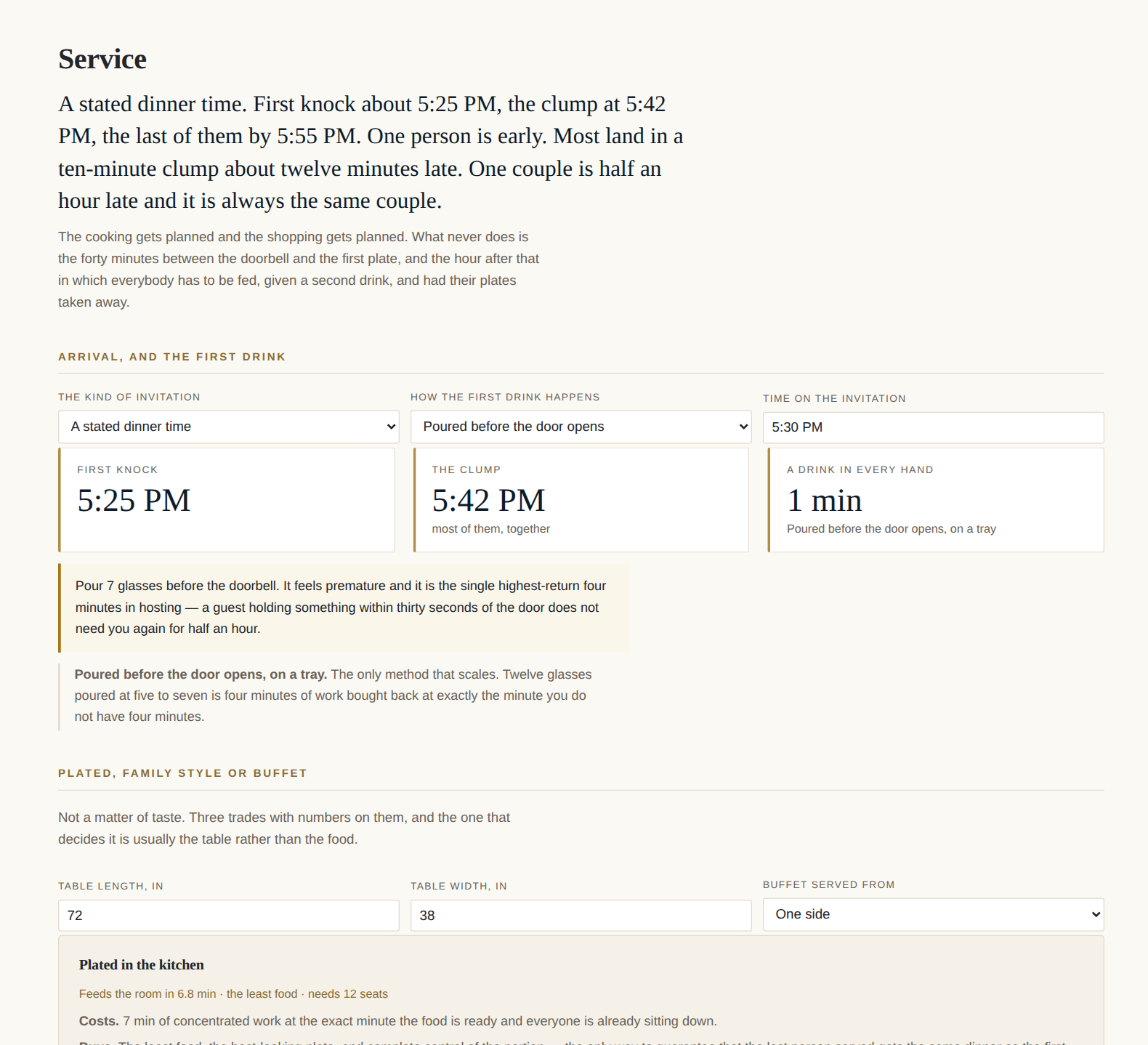
- Service. Arrival and the first drink, the honest trade between plated and family style and a buffet, whether the table seats the room and holds the platters, and where every finished dish waits — with the refusal when nothing in the kitchen will hold it.
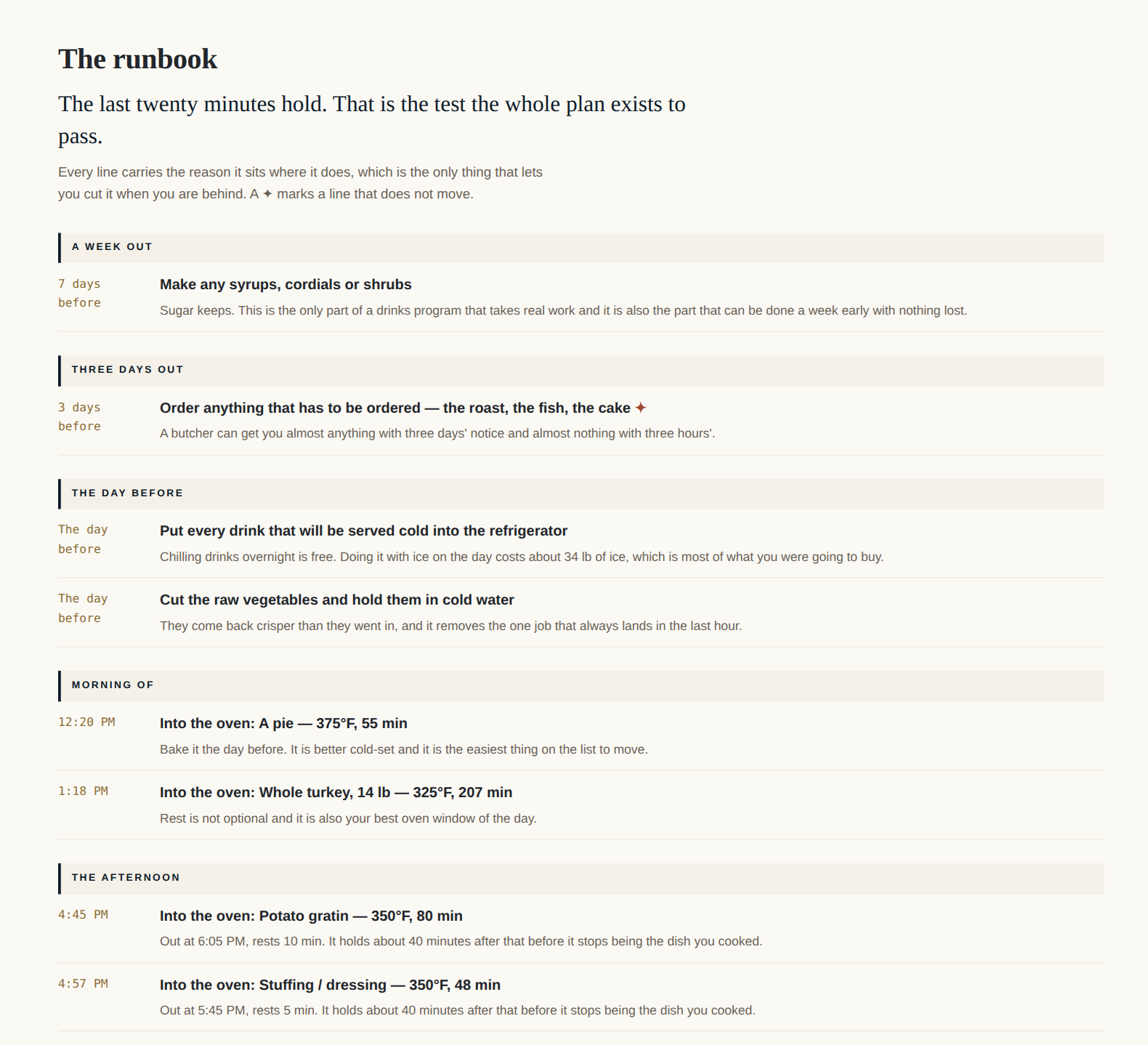
- The runbook. All of it merged into one timeline, every line carrying the reason it sits where it does — which is the only thing that lets you cut it when you are behind.
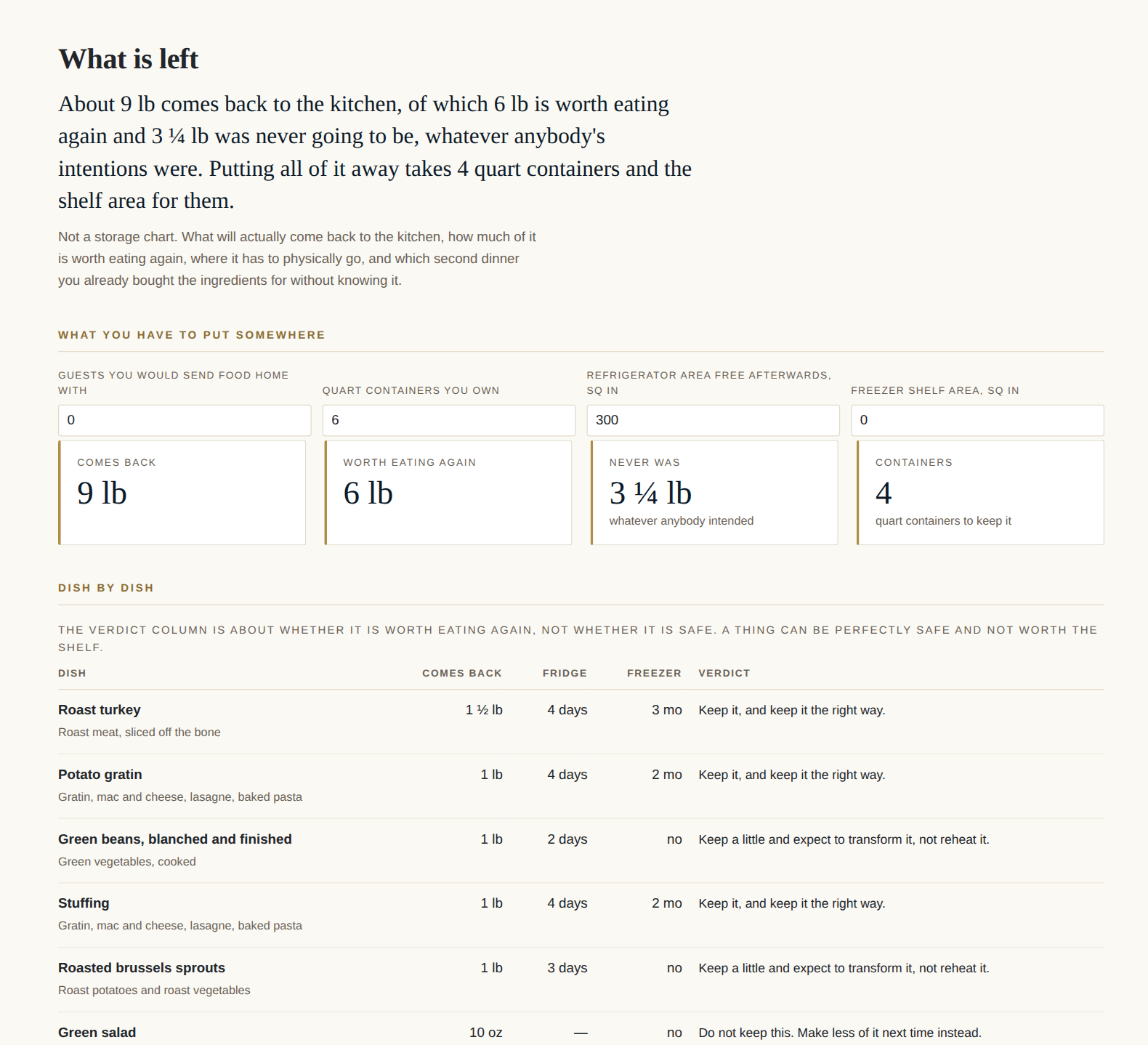
- What is left. How much food comes back, how much was never worth keeping, how many containers that is, and which weeknight dinner you already bought without knowing it.
- Host, or go out. Two ledgers for the same evening, in dollars and in minutes, and no score between them.
It keeps the evening, and hands it on
Press Save this evening and the whole plan goes into one small file on your own computer. Open it tomorrow, or in any other Salt Notes system, and every number comes back. Nothing is stored anywhere you cannot see.
When the plan is set, Copy for the crew sheet sends the runbook to the Crew Sheet, which is included and works in Google Sheets, Excel or Numbers. Put a name against each line and every helper gets a card with only their own jobs on it: the time, the job, and a ✦ against anything that does not move. A worked example comes with it, the Winter Table, dinner for eighteen, filled in by the app itself. If the household runs on Notion or ClickUp instead, Save for Notion or ClickUp writes the same lines to a file either one imports as it is: one task per line, with Who and Done left for you.
The Field Manual is included
Thirty-seven printed pages of the same numbers, generated from the same code, for when your hands are wet and the laptop is in the other room.
What’s free
The reference pages and single-question calculators stay free: quantities, bar arithmetic, cold-planning figures and oven traffic are all available without buying this file. The Host’s Operating System is the integrated layer. One description of the evening feeds every panel, the state is kept across them, conflicts are resolved across the same night, and the output becomes one runbook rather than ten disconnected answers. The free tools answer their questions. This file carries the evening from one decision to the next.
How it works
One HTML file. Double-click and it opens in your browser. Nothing installs, nothing phones home, nothing you type leaves your computer, and it works with no internet at all — this year and in ten years. If you paid for it, it should not be possible to take it away.
Who this is not for
If you want recipes, this is the wrong product; it is the arithmetic around them. And it is hosting logistics, not a food-safety authority. For home hosting, the current file uses the conservative USDA household baseline for perishable food out of refrigeration: two hours at ordinary room temperature and one hour above 90°F. That is not a universal professional foodservice limit; caterers and other regulated operators must use their adopted local code and approved procedures. Cook to temperature, not to a schedule.