When the Restaurant Plan Fails in a Small Town: Build a Backup Before You Drive
In a small town, one closure, sold-out dining room, or changed kitchen hour can erase the plan. Build a backup that solves the same night before you leave.
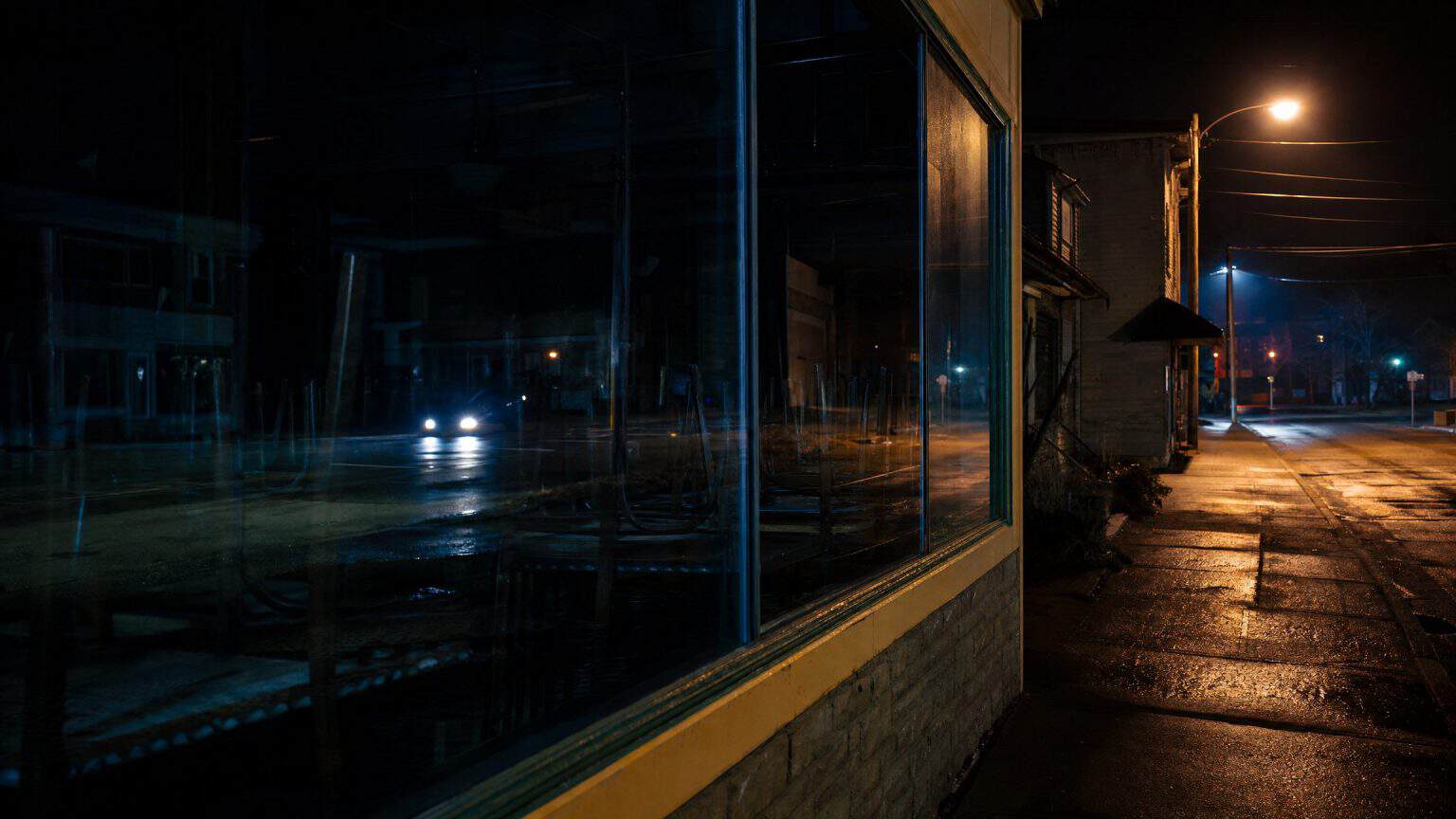
In a small town, a backup restaurant is not the place you vaguely remember seeing on the highway. It is a second plan that has been checked enough to solve the same night if the first one fails. If Monday is the thing quietly breaking the whole itinerary, Elsewhere, Apparently has the travel-side version of this problem.
Big-city restaurant advice is built around abundance. No table? Walk two blocks. Kitchen closed? Open the map and choose among thirty places still serving. The entire failure plan is basically “something else will exist.”
That is not how dinner works everywhere.
In a smaller town, the restaurant you chose may be one of three places serving a real dinner after seven. The second option may close on Tuesdays. The third may technically be open but stop serving the menu you came for at 8:00. A fourth may exist only as a very enthusiastic map pin attached to a business that changed hands two years ago.
One closure can change the whole night.
The answer is not to turn dinner into emergency management. It is to build one useful fallback before the drive begins.
A backup should solve the same problem
Most backup plans fail on that one word: same.
The first choice is a comfortable restaurant for a birthday dinner with grandparents, two kids, and one person who needs gluten-free food. The backup is a brewery with bar stools, loud music, a short snack menu, and no clear dietary information.
Technically, that is another business selling food.
It is not a backup.
A real fallback needs to preserve the conditions that matter most. Maybe not all of them. The second restaurant does not need the same wallpaper, menu, or atmosphere. But it should still be capable of feeding the group at the relevant hour, handling the hard constraint, and producing an evening people would willingly have.
If the first plan is “birthday dinner,” the backup should still be a birthday dinner—not twelve people eating crackers in separate cars because the only restaurant left open cannot seat them.
Start with the failure that is actually plausible
There is no need to invent a disaster movie.
Small-market restaurant plans usually fail in ordinary ways: the restaurant is closed for a private event, seasonal hours changed, the kitchen stops earlier than the building, the dining room fills, weather disrupts staffing, a reservation was never completed, the road takes longer than expected, or somebody in the group discovers that the menu does not actually work for them.
Build the fallback around the failure with the highest consequence.
If you are driving two hours and arriving at 8:15, late kitchen hours matter. If the group includes a diner with celiac disease, a second restaurant that cannot answer cross-contact questions is not much help. If twelve people are traveling together, walk-in availability at a six-table cafe is optimistic rather than resilient.
A useful backup starts with the condition you cannot afford to lose.
Do not wait until the first restaurant fails to research the second
The worst moment to discover that Restaurant B closes at 8:00 is 8:07 in Restaurant A’s parking lot.
Before leaving, verify enough of the backup to know it is real. That usually means current operating day, service window, basic menu fit, location, and the one hard condition that matters to your group.
You do not need to investigate the fallback with the same intensity as the main choice. You do need enough evidence that it is not imaginary.
Think of the backup as a compressed decision file: open, serves food we can use, reachable, works for the group, and still functions at the time we would need it.
Anything less is a possibility, not a plan.
The best fallback may not be another restaurant
This is especially true in seasonal towns, mountain towns, rural areas, and places where dining rooms close earlier than visitors expect.
A backup can be a hotel restaurant that serves later. It can be a grocery market with a strong prepared-food counter confirmed open until nine. It can be takeout from the same restaurant before the dining room closes. It can be a pizza place that is less exciting but reliably feeds eight people. It can be an earlier meal followed by dessert or drinks somewhere else.
The question is not, “What is the second-best restaurant?”
The question is, “What preserves the evening if the first plan disappears?”
Sometimes the answer is less glamorous and more intelligent.
I would rather know in advance that the fallback is good pizza at the hotel than discover after a ninety-minute drive that the backup is a gas-station sandwich nobody wanted and one person cannot eat.
Time changes what counts as a viable fallback
A backup that works at 6:00 may be useless at 8:45.
This is why operating hours should be evaluated against the failure point rather than the start of the night. If your primary reservation is at 7:30, and you may not know it failed until 7:40, a backup restaurant that stops seating at 8:00 is fragile.
Allow for the time required to discover the problem, regroup, drive, park, and get seated.
That buffer is not pessimism. It is arithmetic.
For late arrivals, the backup should be chosen specifically for the late window. A restaurant that is wonderful at 5:30 but effectively gone by 8:15 does not solve an 8:15 problem.
Distance is part of the backup
In a city, two miles may be a short ride. In a rural market, the next plausible restaurant may be thirty miles away, across a pass, or in the opposite direction from the hotel.
“Nearby” deserves a number.
How long does the fallback actually take from the point where Plan A is likely to fail? Does the route add twenty minutes or an hour? Is the road simple after dark? Does weather materially change the answer? Does parking add another problem when the group arrives?
A fallback that is technically open but geographically absurd is not useful.
Restaurant Intelligence should treat travel time as part of restaurant fit whenever the market is sparse enough that distance becomes one of the ingredients.
For groups, capacity beats theoretical availability
A table for two has more escape routes than a table for ten.
If the group is large, the fallback needs a realistic seating path. A walk-in restaurant with ten empty seats scattered across a counter and four two-tops is not necessarily capable of taking twelve people together.
Check whether the restaurant accepts larger groups, whether separate tables are possible if the group can tolerate them, whether advance notice is useful, and whether a group menu or automatic service charge changes the decision.
If the occasion requires everyone at one table, protect that condition.
If the group could happily split into two nearby tables for the backup, say that in advance. Flexibility is useful when it is deliberate. It is miserable when it appears as a surprise after everyone is hungry.
Dietary needs narrow the backup before anything goes wrong
This is one of the places where “we will figure it out” can quietly make one person’s night the expendable part of the plan.
If someone needs a medically necessary accommodation, the fallback has to be screened for that need before it earns backup status. A gluten-free icon does not automatically establish celiac suitability. An allergen note does not automatically establish a cross-contact process. A vegetarian entrée does not automatically create a vegan meal.
The same principle applies to less medical but still meaningful needs. A child with a very narrow accepted-food range, an older guest who needs easier textures, or somebody who does not drink may materially change which fallback is humane rather than merely available.
The backup does not have to make every preference perfect.
It does have to avoid solving the host’s problem by transferring the failure to one guest.
Bad weather turns a thin restaurant market into an even thinner one
Seasonal towns often operate close to the edge of weather, staffing, and road conditions.
A patio may close. A mountain road may slow the drive. A restaurant may open with reduced staffing. A resort area may be packed because everyone abandoned the outdoor plan at the same time.
If weather is likely to affect the evening, choose a fallback that is less dependent on the same vulnerability as the primary plan.
If Restaurant A is patio-heavy, Restaurant B should not also rely on patio seating. If the first choice requires driving farther up the canyon, the fallback might belong closer to the hotel rather than farther away. If a storm can delay arrival, the backup should have a later kitchen.
Redundancy only works when the second plan does not fail for the exact same reason.
A reservation is not automatically safer than a walk-in
Reservations reduce one kind of uncertainty: whether a table is expected for you.
They do not eliminate closures, weather, menu changes, kitchen limitations, staffing problems, or your own late arrival.
Likewise, a walk-in restaurant can be an excellent fallback if it has generous service hours, enough capacity, and a menu that works for the group.
The useful distinction is not reserved versus unreserved.
It is fragile versus resilient.
How many assumptions have to remain true for this plan to work?
Keep the fallback socially acceptable
This matters more than restaurant planning advice usually admits.
People resist backup plans when the backup sounds like punishment. The beautiful bistro fails, so now everyone gets a sad sandwich under fluorescent lights. Of course nobody wants to think about Plan B.
Choose a fallback you would actually enjoy.
Maybe it is the excellent burger place with a later kitchen. Maybe it is pizza and a bottle of wine back at the rental. Maybe it is a hotel bar with surprisingly serious food. Maybe it is takeout eaten somewhere with a better view than the dining room ever had.
The backup should feel like another version of the night, not the night being canceled.
Have one sentence ready before the problem happens
This sounds almost too small to matter, but it changes the mood.
“If they are closed, we are going to the pizza place by the hotel—they serve until ten and everyone has something there.”
Done.
Nobody has to stand in a parking lot passing phones around while the hungriest person reads contradictory listings aloud.
The decision has already been made at the point when everyone still had patience.
That is what a good operating system does. It spends a little thought early so the live failure costs less later.
Deep Dish should store the fallback beside the decision
The primary restaurant file is only half the useful record in a thin market.
The decision should carry its backup with it: fallback name, verified service window, distance from the primary location, basic menu fit, hard-constraint status, source date, and what still needs confirmation.
That turns “Plan B” from a note somebody vaguely remembers into part of the actual restaurant decision.
It also makes the system more honest. A recommendation in a sparse market should reflect how hard the evening is to recover if the recommendation fails.
A wonderful restaurant with no workable fallback may still be the right choice. It is simply a different risk profile than a restaurant in a denser area.
What makes a fallback an actual fallback
- Does it solve the same problem as the first choice?
- A birthday dinner has to stay a birthday dinner
- Not twelve people eating crackers in separate cars
- Start with the failure that is actually plausible
- Closed for a private event, seasonal hours changed, the kitchen stopping before the building does
- Build around the failure with the highest consequence
- Research it before the first restaurant fails
- The worst moment to learn Restaurant B closes at 8:00 is 8:07 in Restaurant A's parking lot
- Open, serves food you can use, reachable, works for the group
- Check its hours against the failure time, not the start of the night
- A 7:30 reservation may not be known to have failed until 7:40
- Allow time to discover, regroup, drive, park and get seated
- Give the distance a real number
- "Nearby" is not a number. Thirty miles across a pass is.
- Does the route add twenty minutes, or an hour?
- Make sure it does not fail for the same reason
- If the first is patio-heavy, the second should not be
- Redundancy only works when the second plan has a different weakness
- Fragile or resilient, not reserved or unreserved
- How many assumptions have to stay true for this to work?
- A reservation removes one kind of uncertainty and none of the others
- Have the sentence ready before the problem happens
- "If they're closed, we're going to the pizza place by the hotel — they serve until ten"
- Decided while everybody still had patience
The best restaurant plan includes the moment after no
Restaurant guides usually stop once they have named the place.
Small-market intelligence should keep going.
What if it is closed? What if the kitchen changed hours? What if the reservation did not go through? What if the group arrives late? What if the dietary accommodation is not what you expected?
You do not need five backups. You need one that is real.
Verify it lightly. Make sure it solves the same essential problem. Check it against the time the failure would actually happen. Protect the hard constraint. Prefer a fallback you would still enjoy.
Then go have dinner without spending the whole drive wondering whether the plan is made of tissue paper.
Read Small-Market Restaurant Intelligence, what to trust when restaurant information disagrees, and use Restaurant Intelligence to carry the decision through verification.
Restaurant hours, menus, road conditions, policies, and availability can change. Reconfirm any detail that materially affects travel, access, health, or whether the fallback can actually serve the group.
Part of Restaurant Records.


