One Table, Different Needs: Choosing a Small-Town Restaurant for a Mixed Group
How to choose a small-town restaurant when one diner has celiac disease, another is vegan, a child eats narrowly, and everyone still needs a real dinner.
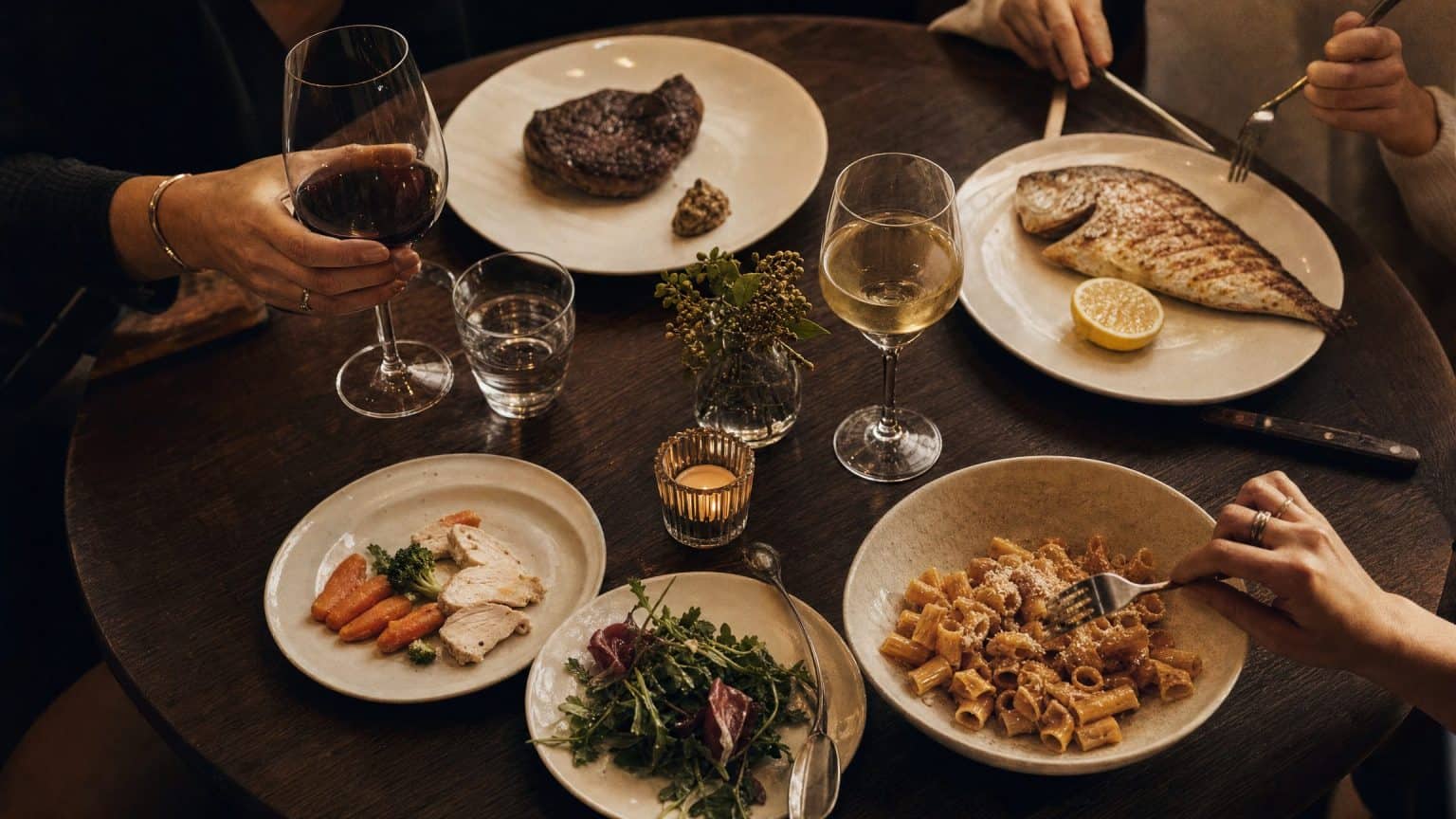
A restaurant does not need one menu that works identically for everyone. It needs enough trustworthy routes through the menu that every person at the table can eat a real dinner without one guest becoming the logistics department.
This is easy to say in a city with several hundred restaurants and considerably harder in a town with nine.
One person has celiac disease. Another is vegan. A child eats a narrow range of familiar foods. Somebody else is happy with almost anything but would rather not spend $42 on the only entree they can tolerate. The host opens three menus, finds one salad without croutons, one plate of fries, and one pasta that might be vegan if the sauce does not contain butter, and announces that the restaurant has “options.”
Technically, perhaps.
Dinner is a higher standard. If the mixed group is traveling together and the restaurant problem begins inside the hotel or resort, Elsewhere, Apparently handles the property-side dining constraints.
The useful question for a mixed group is not whether every restriction appears somewhere on the menu. It is whether every diner can assemble a meal that is safe or appropriate for their actual boundary, substantial enough to count as dinner, and reasonably compatible with the same restaurant at the same time.
Do not collapse every need into one category called dietary restrictions
This is the first place planning goes sideways.
Celiac disease is not a preference. Cross-contact can matter even when the ingredients in the dish itself are gluten-free. Veganism may be an ethical commitment, a dietary pattern, or both. A selective eater may need predictability, familiar textures, or food served in a less combined form; that is not the same question as cross-contact. Another guest may simply dislike mushrooms.
These needs can all affect the restaurant choice. They do not all carry the same consequence when the kitchen misses them.
Before choosing a restaurant, name each person’s hard boundary and keep it attached to the person it actually belongs to. Do not turn the whole table into “gluten-free and vegan” because two people have different needs. Do not turn a child’s narrow food range into a diagnosis. Do not promote somebody’s preference to a medical emergency because it makes the spreadsheet cleaner.
Precision is kinder than one giant bucket labeled difficult.
Start with the person who has the least flexible boundary
This does not mean that person’s taste controls the whole evening. It means the restaurant has to survive the hardest constraint before you spend time admiring the wallpaper.
If one diner has celiac disease, the question is not merely whether a gluten-free symbol appears beside a dish. Current celiac guidance emphasizes avoiding gluten cross-contact and asking how food is prepared, including whether clean cookware and utensils are used and whether fried foods or pasta share equipment or water with gluten-containing food.
That makes the restaurant’s process part of the decision.
A steak and potato may look naturally gluten-free while the sauce, seasoning, shared grill, fryer, or preparation area introduces a different question. A pizza place may sell a gluten-free crust without operating a kitchen that a particular person with celiac disease is comfortable using.
The restaurant does not have to promise the impossible. In fact, a clear explanation of what the kitchen can and cannot control is more useful than a breezy “we can make anything gluten-free.”
If the medically necessary route does not hold up, move on before everybody else falls in love with the menu.
That is the sentence that saves the evening, and it is the one hosts skip. By the time somebody has read the dessert list out loud, nobody wants to hear that the fryer is shared.
Then give every other diner a complete route, not a technical option
A vegan diner should not have to construct dinner from lettuce, a side of potatoes, and the garnish removed from somebody else’s entree unless that is genuinely what they want.
Look for a route with enough substance and pleasure to feel intentional: a main dish, a combination of shareable plates, a grain or noodle dish with vegetables and protein, a composed vegetable course that is actually built to satisfy, or several small plates that clearly make a meal together.
If the menu uses butter, cream, egg, cheese, meat stock, fish sauce, or other animal-derived ingredients throughout, the useful question is whether the kitchen already has a vegan route or can describe one without inventing dinner during service.
“We can remove the cheese” may be perfectly fine if the dish remains good. It may also remove the only richness, salt, and substance the plate had.
An accommodation that deletes the point of the dish is not automatically a successful meal.
Cheese is very often the salt, the fat and the reason all at once. Take it off a gratin and you have a plate of hot vegetables that one person has to be polite about for forty minutes while everybody watches.
Selective eating needs dignity and usable information
Some children eat a wide range of foods. Some do not. Some adults do not either.
For restaurant planning, the useful information is concrete: which foods are reliably accepted, which textures or combinations are hard, whether sauces need to stay separate, whether a plain protein or starch works, and how much flexibility the person has that particular day.
You do not need to diagnose anybody from the menu.
In a small market, a restaurant with a simple burger, plain rice, grilled chicken, bread, pasta, potatoes, or another familiar component may be much more workable than a more fashionable room where every dish arrives fully composed and heavily sauced. That does not make the simpler restaurant inferior. It means it fits this table better.
Deconstruction can be useful when the kitchen can do it easily. Sauce on the side. Toppings separate. Plain rice beside the more elaborate dish. A burger without the stack of extras. The point is not to demand that the kitchen become a different restaurant. It is to notice whether the menu contains components the diner can actually use.
And no, the rest of the table does not have to eat beige because one person needs predictable food.
The real-plate test catches most fake accommodation
Imagine the meal arrives exactly as planned.
What is on each person’s plate?
Not what could technically be ordered. Not what ingredient could be omitted. What will that diner actually eat for dinner?
If the person with celiac disease has a safely prepared grilled entree, vegetables, and potatoes, that is a route. If the vegan diner has a substantial noodle dish plus a vegetable starter, that is a route. If the selective eater has a plain protein, familiar starch, and fruit or another accepted food, that is a route.
If one person has a bowl of greens while everybody else gets dinner, the restaurant may have accommodated the ingredient list without accommodating the person.
This is one of the places where Deep Dish can be more useful than a filter. A checkbox can tell you that a menu contains vegan items. It cannot automatically tell you whether those items add up to a coherent meal for this particular table.
The order to solve the table in
- Do not collapse everybody into "dietary restrictions"
- Celiac disease is not a preference
- And a child's narrow food range is not a diagnosis
- Start with the least flexible boundary
- Not whether a gluten-free symbol appears beside a dish
- If the medically necessary route does not hold, move on before anybody falls in love with the menu
- Give every other diner a complete route, not a technical option
- A vegan diner should not build dinner out of lettuce and a side of potatoes
- "We can remove the cheese" is fine, unless the cheese was the only richness
- Run the real-plate test
- What is on each person's plate? Not what could technically be ordered.
- A bowl of greens beside five dinners is an ingredient list accommodated, not a person
- Question the fryer, the broth, the sauce, the finish
- Fries may share a fryer with breaded food
- Aim every question at the dish that person actually plans to order
- Do not let one guest carry the whole conversation
- The host can do some of it before the reservation
- The person whose health is affected still decides whether the answer is enough
- Weigh price only once the restrictions are solved
- If the only vegan route costs twice the other entrées, note it
- A $28 plate somebody eats four bites of is part of fit too
- Choose the room with the fewest fragile assumptions
- The fryer must be separate. The vegan sauce must be available.
- Every "must" is one more thing that can turn out not to be true on the night
Shared plates make mixed needs harder unless the menu has structure
I like shared plates. I also like everyone being able to eat.
Those interests occasionally fight.
A menu designed for the table can work beautifully for mixed needs when there are enough dishes that naturally overlap: a safe rice dish, a vegetable plate, a substantial vegan course, a protein the omnivores want, and enough separate serving utensils and kitchen controls for the medically necessary boundary.
It works badly when the entire meal depends on everyone eating from the same few bowls and one restriction affects most of them.
If cross-contact matters, the diner may need a separately prepared plate rather than the communal version. If vegan dishes are scarce, the table should not consume the only vegan option before the vegan diner has eaten. If one child needs plain food, family-style service may be easier if one component can be held back before the sauce arrives.
The sharing format is not automatically inclusive just because everybody can reach the plate.
Look at sauces, fryers, broths, and finishing ingredients
The ingredient that complicates a mixed table is often not the obvious center of the dish.
Fries may share a fryer with breaded foods. A vegetable soup may use chicken stock. A seemingly vegan grain dish may be finished with butter. A dressing may contain dairy. A noodle sauce may contain fish sauce. A gluten-free-looking dish may include soy sauce or another gluten-containing ingredient depending on the recipe.
This does not mean the host should interrogate the menu until dinner loses all appeal.
It means the questions should be aimed at the dish the person actually plans to order.
A narrow, specific question is easier for the restaurant to answer and more useful than asking whether the entire kitchen is “allergy friendly” or “good with dietary restrictions.”
Small towns make complete coverage possible
Limited restaurant inventory becomes the advantage.
If a town has twelve serious dinner options, we can actually evaluate twelve.
Which restaurants publish useful dietary information? Which have enough menu breadth for a mixed group? Which are structurally difficult because everything is fried in one shared fryer, every vegetarian dish depends on dairy, or every plate is designed to be shared? Which have a plain-food path for a child without forcing the adults into a children’s-menu restaurant? Which have staff or first-party materials that explain what the kitchen can realistically do?
In a giant city, that level of completeness is hard to maintain.
In a smaller market, it can become the whole point.
The guide can stop saying “here are five places that might work” and start saying, “we checked the field; these are the places with a credible route for this combination, these are the ones that need a call, and these are the ones that do not currently fit.”
That is much more valuable than fifteen hundred thin listings.
The restaurant should not make one guest carry the entire conversation
There is a social cost to being the person who always has to ask.
The host can reduce that burden by doing some of the work before the reservation: read the current menu, find the likely dishes, note the unresolved safety question, and contact the restaurant at a sensible time if the answer matters.
Then the diner can make the final call about their own needs.
This is especially important for medical restrictions. The host can gather evidence. The person whose health is affected decides whether the answer is sufficient for them.
Helpful is not the same as taking ownership of somebody else’s body.
Do not make the most constrained guest choose the restaurant alone
There is another version of the same burden: “You have the restriction, you pick.”
Sometimes that is welcome. Sometimes it turns one person into the unpaid group planner every time people eat together.
A better host can bring two or three pre-screened options and ask which feels comfortable.
“These two have current menus that seem workable. I still need to verify the fryer at this one. Which would you rather do?”
That is different from handing someone eight restaurant tabs and asking them to certify the town.
Price still matters after the restrictions are solved
A restaurant can technically work for everyone and still be the wrong restaurant.
If the only vegan route costs twice as much as the other entrees, note it. If the celiac-compatible dinner requires the most expensive steak because the rest of the menu relies heavily on breading or shared fryers, that changes value. If the child will eat exactly one $28 plate and likely consume four bites, the host may decide that another room creates an easier night.
Twenty-eight dollars for four bites is not a moral failure. It is a bad trade, and it is allowed to count against the restaurant like any other bad trade.
This is not about putting a price on accommodation.
It is about acknowledging that money is part of fit, especially for a group.
The goal is a restaurant where the needs are manageable without making the whole evening financially or operationally strange.
Choose the restaurant with the fewest fragile assumptions
A mixed-needs plan becomes risky when it depends on too many things being true at once.
The fryer must be separate. The vegan sauce must be available. The plain pasta must be possible. The seasonal menu must still contain the one dish. The group menu must allow substitutions. The server must remember every modification. The kitchen must not be slammed.
Possible. Still fragile.
A stronger choice has more needs solved by the restaurant’s normal operation rather than by a chain of special exceptions. Naturally gluten-free dishes with clear preparation practices. Vegan food already built into the menu. Simple components that can be served plainly. Enough variety that one sold-out item does not erase a person’s meal.
Every exception is another handoff. Handoffs are where plans get interesting in all the wrong ways.
The best mixed-table restaurant lets everyone forget about the system for a while
The research can be meticulous. Dinner should not feel like it.
Do the hard thinking before the reservation. Separate medical safety from preference. Find the least flexible boundary first. Build a real plate for every diner. Verify the cross-contact question when celiac disease is involved. Give vegan diners an actual meal. Keep selective eating concrete and respectful. Check price, group format, and service structure.
Then choose the restaurant where the most important needs are solved by the way the place already works.
Read Small-Market Restaurant Intelligence, what to verify for celiac dining, and use Restaurant Intelligence to compare the complete routes through the menu.
Celiac source note: Celiac Disease Foundation, Dining and Social Eating; Beyond Celiac, Gluten-Free Dining. Restaurant ingredients, preparation practices, menus, and accommodations change; confirm medically necessary details directly and let the diner decide whether the current answer meets their needs.
The goal is not a perfect menu where every person can eat every dish.
The goal is one table where nobody has to pretend a side salad was dinner.
Part of Restaurant Records.


