Cider-Braised Chicken Thighs with Apples That Hold Their Shape
A cool-weather braise with crisp-skinned chicken, tart apples, mustard, and cider—built for a calm final hour.
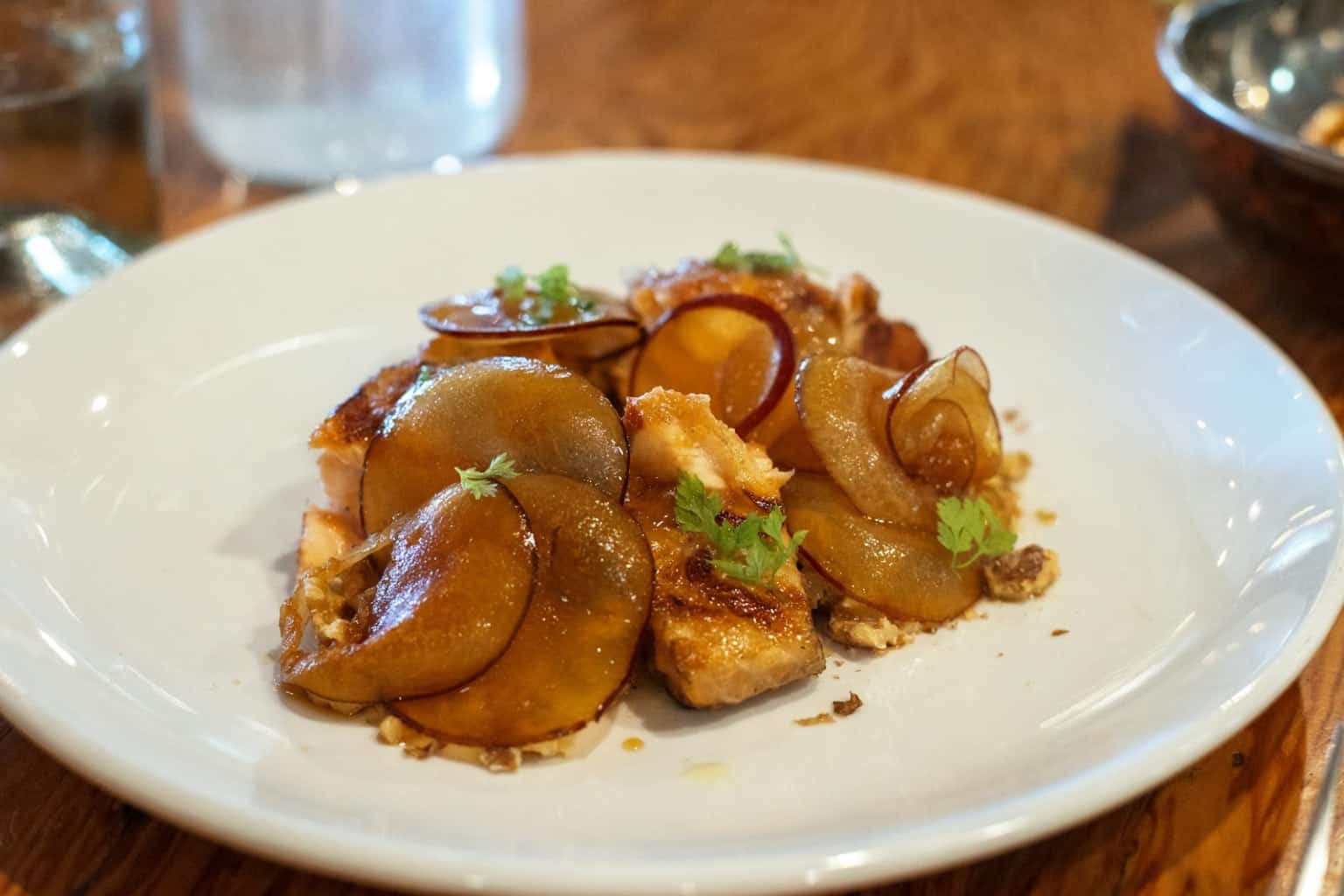
A good braise moves the difficult work earlier. The chicken browns before anyone arrives, the sauce builds itself in the oven, and the apples go in late enough to remain apples rather than seasonal applesauce.
This is exactly the kind of dinner I like for hosting: it looks generous, smells like you did something serious, and spends most of its useful life not asking you to stand over it.
Yield: serves 6
Prep: 20 minutes
Cook: About 1 hour 5 minutes
Ingredients
- 6 bone-in, skin-on chicken thighs
- Kosher salt and black pepper
- 1 tablespoon neutral oil
- 1 onion, sliced
- 2 teaspoons Dijon mustard
- 1 1/2 cups dry apple cider
- 1 cup chicken broth
- 4 thyme sprigs
- 2 firm tart apples, cut into wedges
- 1 tablespoon cider vinegar
Method
- Heat oven to 375°F. Season chicken. Brown skin-side down in oil in a Dutch oven, 8 to 10 minutes; turn briefly and remove.
- Cook onion 5 minutes. Stir in mustard, cider, broth, and thyme, scraping the pot.
- Return chicken skin-side up, keeping skin above liquid. Braise uncovered 30 minutes.
- Add apples around chicken and cook 15 to 20 minutes more, until chicken is cooked through and apples are tender but intact.
- Transfer chicken and apples. Simmer sauce if needed; finish with vinegar.
Brown the chicken like you mean it
The first 8 to 10 minutes are where the dish earns depth. Put the thighs skin-side down in a properly heated Dutch oven and let the skin develop real color before turning them.
If the chicken sticks hard, give it another moment before forcing it loose. Browning creates fond on the bottom of the pot, and that fond becomes part of the sauce when the cider and broth go in.
Brown in batches if the pot is crowded. Six thighs may fit comfortably in a large Dutch oven; in a smaller one they can trap steam and give you pale skin with excellent self-esteem.
Keep the skin above the tide
Submerged skin softens. That is not a defect in braising; it is what liquid does.
Return the thighs skin-side up and keep most of the browned skin above the cider-broth mixture. The meat benefits from moist heat underneath while the exposed skin continues to roast.
The finished skin will not be fried-chicken crisp, but it should retain much more texture than a fully submerged thigh.
If the liquid completely covers the chicken, either the pot is too small or the liquid level is too high for the intended texture. The geometry matters.
The cider needs to be dry enough to stay savory
Apple cider can push a braise from gently fruity to dessert-adjacent faster than expected. Use dry cider when you can, and remember that the liquid will concentrate as it cooks.
Dijon helps pull the sauce back toward savory. Chicken broth adds body. Thyme gives the apple a more dinner-like context. Cider vinegar at the end sharpens everything after reduction.
Taste the finished sauce before adding more sweetness or salt. The apples themselves will contribute more fruit as they cook.
The apples go in late because texture matters
Firm tart apples such as Pink Lady or Granny Smith hold better than soft varieties. Cut them into wedges substantial enough to survive the braise.
Add them only for the final 15 to 20 minutes.
Can the apples go in at the beginning? Only if the plan is cider-scented applesauce with witnesses.
The late addition lets the wedges absorb the braising liquid while keeping enough structure to feel like part of the plate rather than part of the sauce.
Pears can substitute, but they generally need less time. Check them earlier.
The onion is part of the sauce architecture
Five minutes is enough to soften the sliced onion and start building sweetness without taking the whole dish toward deeply caramelized onion territory.
Once the cider and broth go in, scrape the browned bits from the bottom of the pot. That is flavor you already paid for with the browning step.
The onion will continue to soften during the braise and become part of the finished sauce. If you prefer a smoother sauce, you can strain or blend it after the chicken and apples are removed, but I do not think the extra step is necessary unless the presentation needs it.
Use a thermometer for the chicken
Current USDA guidance calls for poultry to reach 165°F as measured with a food thermometer. Check the thickest part of a thigh without touching bone.
Use current USDA FSIS temperature guidance rather than relying on color alone.
Bone-in thighs are forgiving, which is one reason they work so well for a braise. They can handle a longer cooking window better than lean breast meat while remaining juicy.
Reduce only if the sauce needs it
After the chicken and apples come out, look at the sauce before automatically simmering it.
If it is already glossy and concentrated enough to coat a spoon lightly, leave it alone. If it is thin, simmer until the flavor and texture tighten.
Reduction intensifies salt, sweetness, and acidity. Taste as you go. A sauce can move from balanced to aggressive while you are waiting for it to become “restaurant thick.”
The goal is a loose braising sauce that can soak into potatoes or polenta, not a sticky glaze.
The vinegar belongs at the end
One tablespoon of cider vinegar is there to clear the richness and sweetness after cooking.
Add it after the sauce is reduced to the consistency you want. If you add it before a long reduction, you lose some of the bright aromatic quality that makes the finish useful.
The final sauce should taste savory first, gently apple-like second, and sharp enough at the end that the next bite still sounds good.
Serve it with something prepared to catch the sauce
Mashed potatoes are the obvious answer because they are excellent at holding and excellent with mustardy cider sauce. Polenta works too. So does a simple cabbage preparation if you want less starch and more freshness.
I would keep the second side sharp or green. This dinner already has browned chicken, soft onion, fruit, and a rich sauce. It does not need another sweet roasted vegetable competing for the same flavor space.
A bitter greens salad or vinegary cabbage gives the plate much better contrast.
This is a hosting dish because the final hour is calm
The chicken can do most of its work while you handle the rest of dinner. The apples go in for the final stretch. The sauce is adjusted at the end.
That gives you a very different hosting experience from a main that requires continuous flipping, basting, or individual plating.
Set the sides before the chicken comes out. Have the platter ready if you are using one. Then the final tasks are straightforward: remove chicken and apples, adjust sauce, pour or spoon it around the food, and serve.
Or bring the Dutch oven to the table if it is presentable. A braise has already done the work. It may as well receive the credit.
Make-ahead and storage
Refrigerate up to 4 days. Reheat uncovered at 350°F so the skin has some chance to recover rather than steaming under a lid.
If making the dish ahead for guests, consider slightly under-reducing the sauce on the first day. It will often thicken during refrigeration and reheating. Add a little broth if necessary before deciding the sauce needs more creaminess or fat.
Store and reheat according to current food-safety guidance, cooling leftovers promptly and reheating them thoroughly.
The apples should still be apples
That is really the test.
The chicken should be deeply savory and tender. The sauce should taste like cider without becoming sweet gravy. The mustard and vinegar should make the richness feel deliberate. And the apple wedges should still have edges.
The dish is ambitious enough to feel like dinner-party food and forgiving enough that the host can leave the kitchen. That balance is what earns it a place.
If this is feeding more people than it was written for, the holding and service arithmetic is in Hosting and Service, and the rest of the menu around it is in Menus and Kitchen Systems.
Part of Hosting & Service.
Where this goes next

