Summer Tomato Bread Gratin for the Tomatoes That Ripened All at Once
Juicy tomatoes, torn bread, garlic, and Parmesan baked into a crisp-topped summer side that absorbs abundance rather than fearing it.
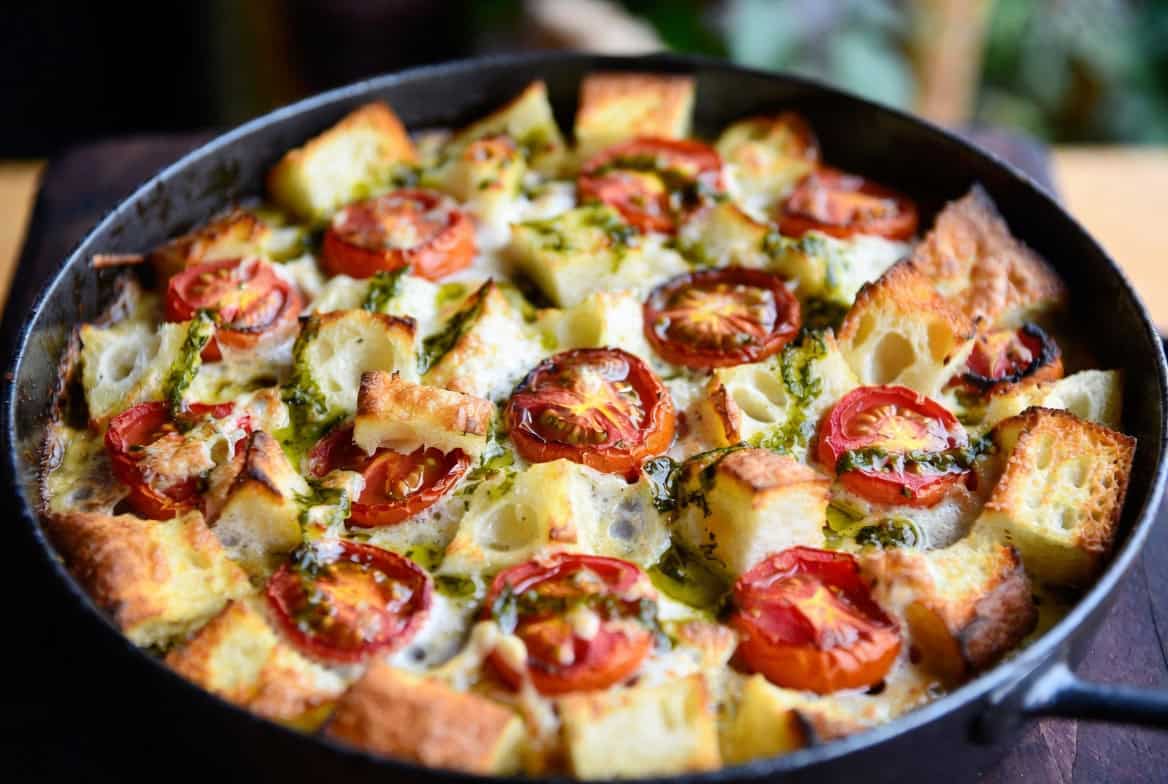
When tomatoes ripen together, delicacy becomes an inventory problem. This gratin gives them somewhere useful to go: into torn bread that absorbs their juices while the exposed edges crisp.
This is not bread pudding wearing a tomato costume. The point is contrast. The bottom should be juicy and savory; the top should have real crisp edges; the tomatoes should still taste like tomatoes instead of disappearing into a wet casserole.
Yield: serves 6
Prep: 20 minutes
Cook: 40 minutes
Ingredients
- 2 pounds ripe tomatoes, cut into chunks
- 6 cups torn day-old country bread
- 3 tablespoons olive oil
- 2 garlic cloves, grated
- 1 teaspoon kosher salt
- 1/2 teaspoon black pepper
- 1/2 cup grated Parmesan
- 1/3 cup torn basil
- 1 tablespoon red wine vinegar
Method
- Heat oven to 400°F. Toss tomatoes with salt and let stand 10 minutes.
- Combine bread, garlic, oil, pepper, half the Parmesan, basil, vinegar, and tomatoes with their juices.
- Transfer to a shallow 2-quart dish. Top with remaining Parmesan.
- Bake 35 to 40 minutes until bubbling underneath and crisp on top. Rest 10 minutes.
The tomato juice is not runoff
Salting the tomatoes before assembly draws out liquid, and that liquid is exactly what makes the bread taste like the season instead of like bread sitting next to tomatoes. Keep it. Toss the bread through it. The goal is not to wring the tomatoes dry.
The useful control is the bread. Fresh, soft bread can absorb liquid so quickly that the center becomes gummy before the top has time to crisp. Day-old country bread is better because it has enough structure to take on tomato juice without surrendering completely.
Tear it rather than cutting perfect cubes. Rough edges give you more small crisp points, which is the part I want. This is summer tomato overflow, not geometry homework.
A shallow dish changes the result
The recipe calls for a shallow 2-quart dish because surface area matters. A deep casserole traps more moisture and gives you less crisp top. A wider, shallower dish exposes more bread and tomato edges to dry heat.
If your baking dish is deeper than the one described, expect the center to stay softer and potentially need more time. If you spread the mixture too thin on an oversized tray, the opposite can happen: too much evaporation, not enough juicy interior.
The correct texture lives between those two failures. You want enough depth for tomato juice to collect and soak into the bread, but enough exposed surface for browning.
Use ripe tomatoes, not merely red ones
This recipe depends on the tomatoes for most of its liquid and much of its flavor. Under-ripe supermarket tomatoes will technically work, but they are going to ask the garlic, cheese, oil, and vinegar to carry more of the meal.
Ripe summer tomatoes bring sweetness, acidity, and enough juice to make the bread useful. If the tomatoes are extremely watery, do not panic and drain them automatically. Assemble the gratin and judge the dish you are actually using. A shallow pan and enough bake time can handle a generous amount of tomato liquid.
Cherry tomatoes can work, but halve them so their juices can get into the bread. If they are very sweet, the vinegar becomes even more important.
The vinegar is doing more than making the tomatoes brighter
Tomatoes, bread, Parmesan, and olive oil can become soft and rich very quickly. Red wine vinegar keeps the gratin from tasting sleepy. One tablespoon is enough to sharpen the tomato without making the dish taste pickled.
Taste the tomatoes before assembly. Very acidic tomatoes may need no additional acid beyond the recipe amount; very sweet tomatoes are exactly where the vinegar helps.
The basil belongs in the flavor, not on top as proof of summer. Tear it through the mixture so the aroma reaches more than the first bite.
Parmesan is seasoning and structure
Half the Parmesan goes inside, where it seasons the bread and tomatoes. The rest goes on top, where it helps create a crisp, salty crust.
Pecorino can replace Parmesan, but it is generally saltier and more assertive, so reduce the added salt rather than changing nothing and acting surprised later. A mild cheese that melts into a soft blanket is a different gratin. Good, but different.
Do not skip the rest
The ten-minute rest after baking is not decorative recipe language. The gratin is still moving when it comes out of the oven. Tomato juices are bubbling, the bread is very soft underneath, and the top is fragile.
Resting gives the liquid time to redistribute and the structure time to settle. It also gets the dish out of the “molten tomato napalm” stage, which is useful if you planned to taste dinner rather than just remember it.
What to serve with it
This can sit next to grilled steak, pork, chicken, or fish, but it is substantial enough that I would not automatically add another starch. If the main is rich, make the other side green, bitter, sharp, or very simple.
A salad with a mustardy vinaigrette works because it brings freshness and crunch. Grilled fish works because the tomato juices become almost sauce-like on the plate. White beans can turn it into a meatless meal for readers who use them, though they are not where I personally start.
For a summer dinner party, the operational advantage is that the gratin can rest. It does not need to be served in the first ninety seconds after leaving the oven. That makes it a much better side than something crisp that collapses while the main is being carved.
Scaling changes the pan before it changes the math
If you double the recipe for a crowd, use two shallow dishes rather than one deep hotel-pan situation unless you have tested the deeper format. More volume means more trapped steam and a longer path for heat to reach the center.
Two pans give you more crisp surface and more predictable timing. They also give you a recovery option: one can stay warm while the other goes to the table.
Do not stack both pans into an overcrowded oven with three other casseroles and expect the original 35-to-40-minute bake time to remain sacred. Airflow and oven load matter.
Storage and the next-day problem
Refrigerate leftovers up to 3 days. Reheat uncovered at 375°F so the top has a chance to crisp again. Covering it tightly for reheating traps steam and gives you the exact texture you were trying to avoid.
If the gratin looks soupy when it comes out of the oven, give it more time in a wider dish rather than adding dry bread at the end. If it seems dry, a drizzle of olive oil and a spoonful of tomato juice can bring moisture back without turning the top soft.
If the top is pale, use the broiler briefly and stay nearby. Bread can move from rustic to evidence very quickly.
The reason this earns a place in the rotation
Summer produce recipes sometimes treat abundance like a spiritual condition. Sometimes you just have too many tomatoes.
This one solves that problem without flattening the ingredient. The tomatoes remain juicy. The bread becomes part of the sauce. The cheese creates a crust. The vinegar and basil keep the whole thing awake.
And, importantly, it can wait ten minutes while you finish something else. A recipe that tastes good and behaves at service has already done more than most side dishes are asked to do.
For more dishes built around service rather than fantasy timing, see Recipes and Technique and Hosting and Service.
Part of Hosting & Service.
Where this goes next

