The Vacation-Rental Kitchen Preflight: What to Check Before You Promise Dinner
The listing photo is allowed to be pretty; dinner has to be executable. A ten-minute preflight — oven, burners, cookware, knives, cold storage — before the first grocery run is what keeps an ambitious menu from meeting one scratched skillet.
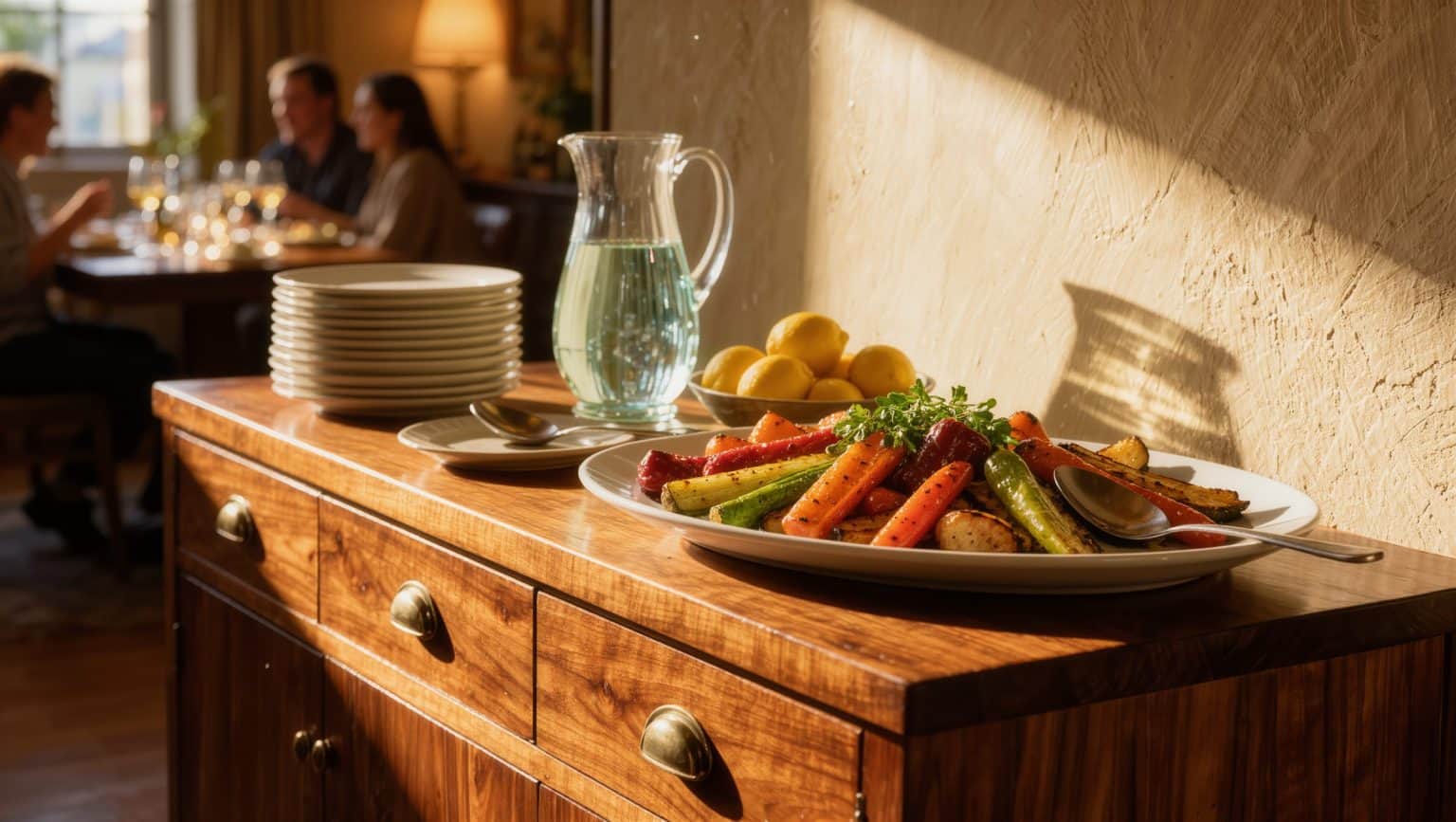
A vacation-rental kitchen is one of the easiest places to make an ambitious dinner plan based on evidence that does not actually exist.
The listing shows a range. There are cabinets. Someone has placed a wooden spoon in a crock. A bowl of lemons is doing tremendous public-relations work on the island. Therefore: kitchen.
Then you arrive and discover that the “fully equipped” part means one scratched skillet, a stockpot large enough to poach a sock, four butter knives, no sheet pan and a corkscrew that appears to have lost a legal dispute.
I have used enough short-term rentals to be deeply uninterested in arguing with the listing photo. The photo is allowed to be pretty. Dinner has to be executable. If you are still deciding whether the room even qualifies as a kitchen, Elsewhere, Apparently starts one step earlier with what “kitchenette” actually buys you.
So before I promise a serious meal in an unfamiliar kitchen, I want a preflight. Five to ten minutes. Cabinets open. Oven open. Refrigerator open. Actual cookware counted. The romantic part can resume immediately afterward.
Rule one: inspect before the first grocery run
This sounds obvious right up until everyone is tired from travel and the grocery store is on the way from the airport, so you buy the whole menu first and meet the kitchen second. If the grocery stop is part of the travel plan rather than just the shopping list, Elsewhere, Apparently has the trip-side case for making it an intentional first stop.
If dinner matters, reverse that order whenever you reasonably can. Arrive. Put down the bags. Drink some water. Then find out what room you actually rented.
The first inspection is not a cleanliness audit or a design critique. It is a capacity check.
| Check | What you are trying to learn | Menu consequence |
|---|---|---|
| Oven | Does it work, how many racks, what pan dimensions fit? | Whether roasting/baking can be one job or several |
| Stovetop | How many burners are usable with the available pans? | Whether two “stovetop” dishes actually coexist |
| Cookware | Pan size, pot size, lids, condition, handles | Whether your intended batch size is real |
| Knives and boards | Can you safely prep what you bought? | Whether the menu needs less chopping and fabrication |
| Refrigerator | Temperature, shelf geometry, leftover/drink space | How much cold prep and storage the menu can carry |
| Sink/dishwasher | Basin, detergent, drying space, dishwasher size/function | How many vessels you can afford to create |
| Serving pieces | Platters, bowls, plates, glasses, utensils | Whether service must become simpler or more casual |
| Ventilation | Hood, windows, sensitivity to smoke | Whether high-smoke techniques belong on the plan |
You are not trying to identify every imperfection. You are trying to identify the thing that owns the menu.
The biggest lie in a rental kitchen is usually not the oven. It is the pan.
People see a full-size range and assume a full-size meal is now available. But an oven only cooks what fits inside the cookware you have.
A recipe that feeds eight on a half-sheet pan does not still feed eight when the rental supplies a small cookie sheet. A braise that normally lives in your Dutch oven is a different project when the only covered pot is two quarts. Pancakes for ten are less charming when there is one six-inch skillet and no griddle.
The useful arithmetic begins:
batch count = ceiling(guest count ÷ tested yield per available pan)
If the rental skillet can cook three portions cleanly and you have nine people, you do not have “one skillet dinner.” You have three skillet cycles. Add cook time, recovery time, holding and the fact that somebody will ask where the bottle opener is during cycle two.
That may still be fine. It just has to be intentional.
Do not test the oven with the important food
An unfamiliar oven does not deserve blind faith just because the display lights up.
If you have time, turn it on before the meal window. Confirm that it heats, that the rack positions make sense and that your pan physically fits with the door closed. If the rental has an oven thermometer, useful. If you travel with a small thermometer because cooking on trips is normal for you, also useful. The point is not laboratory calibration. It is avoiding the discovery at 6:20 that the roasting pan cannot clear the rack above it or that the broiler arrangement is completely different from yours at home.
The same goes for induction. If the cooktop is induction, confirm that the supplied pans are compatible before building a menu around three burners. If it is gas, make sure you understand the controls and that the flame is behaving normally. If anything appears damaged or unsafe, stop treating dinner as the test case and contact the host or property manager.
Cold space is part of the arrival plan
The refrigerator is often already carrying someone else’s idea of hospitality: water bottles, condiments, ice trays, maybe a welcome item, plus the food your group brought in during travel.
Before you buy a menu full of make-ahead dishes, measure the refrigerator with objects, not hope. Which shelf can accept a casserole? Can a sheet pan fit anywhere? Is there room for a large bowl? Is the freezer functional? Where are the drinks going?
Food-safety rules do not become vacation rules. USDA guidance places the food-safety “danger zone” between 40°F and 140°F; keep cold food at 40°F or below and hot food at 140°F or above when holding it for service. USDA FSIS explains the temperature guidance here. If the rental refrigerator is not holding a safe temperature, that is not a menu inconvenience. It is a problem to address.
For the full cold-space planning method, use The Small-Refrigerator Menu. In a short-term rental, the extra variable is that you do not know the shelf geometry until you arrive.
Build an uncertainty-tolerant menu
Some meals travel beautifully into an unknown kitchen. Others arrive with a list of equipment demands longer than the rental agreement.
I think of them in three bands.
Green: resilient
- large-format roast or braise with a broad doneness window;
- pasta with one sauce and one large pot;
- grain or bean dishes that hold well;
- room-temperature vegetables and salads;
- good bread, cheese, olives and prepared accompaniments;
- dessert bought locally or made before the trip.
Yellow: inspect first
- sheet-pan dinners for a large group;
- anything dependent on a blender, food processor or mixer;
- menus with two simultaneous oven temperatures;
- multiple fried or hard-seared components;
- recipes that require exact pan dimensions;
- cocktails that expect a full bar tool set and endless glassware.
Red: save it for a kitchen you know
- a first-time soufflé for twelve;
- six individual steaks finished simultaneously in one questionable skillet;
- a multi-course plated dinner that depends on warming drawers you absolutely do not have;
- deep frying in a poorly ventilated unfamiliar kitchen;
- a menu where every course needs the same appliance at a different temperature within forty minutes.
The red list is not a moral judgment. I love unreasonable food when the room has earned it. A vacation kitchen simply has not earned your trust yet.
One missing object can change the whole menu
This is the part where people panic-buy a kitchen.
No colander? Buy a colander. No whisk? Buy a whisk. No serving platter? Buy two platters, because now we are emotionally invested. Four days later you are trying to fit a twelve-inch ceramic tray between shoes in the trunk.
Use a smaller decision tree:
- Can another object already in the kitchen do the job safely? A pot lid can sometimes help drain pasta; a sheet pan can carry food; a large bowl can mix and serve.
- Can the technique change? Chop instead of blend. Roast instead of griddle. Serve room-temperature instead of building another reheating step.
- Can the menu change without losing its point? This is often cheaper and smarter than buying equipment for one meal.
- Would buying or borrowing one item remove the actual bottleneck? If yes, buy or borrow that item—not six supporting characters.
The object has to earn the inconvenience of acquiring it and then transporting, storing or abandoning it later.
For ten people, service matters more than your recipe collection
Say the rental sleeps ten. That does not tell you whether the kitchen can serve ten plates of hot food at once.
Suppose the kitchen has:
- one oven rack;
- two burners that remain usable with the available cookware;
- one small dishwasher;
- eight matching dinner plates and several bowls;
- a dining table for six plus a large outdoor table;
- one long kitchen counter, half occupied by the coffee maker and toaster.
A ten-person plated dinner is going to manufacture a problem the room did not have. A family-style dinner with two large serving bowls and one roast may be completely comfortable. A buffet on the outdoor table may be easier still, provided you can keep perishable food at safe temperatures and protect it from weather and insects.
If buffet food will sit out, use FDA’s holding guidance: keep hot foods at 140°F or warmer, cold foods at 40°F or colder, and do not leave perishable foods at room temperature for more than two hours—or one hour when the temperature is above 90°F. FDA’s safe-buffet guidance is here.
The change is not “casual instead of nice.” The change is a service system that fits the room.
The first grocery run should buy confidence, not complexity
Once you know the kitchen, the first shop should protect the meal against the unknowns you found.
If the cookware is weak, buy food that does not require precision cookware. If the refrigerator is small, do not bring home four giant beverage packs and then wonder why dinner cannot fit. If there are six forks for nine people, solve that before the table is set. If there is no useful cutting board, that may be the one boring purchase that saves the entire week.
I would also separate “vacation food” from “vacation cooking.” They are not the same thing. Vacation food can be wonderful local bread, a rotisserie chicken, ripe fruit, cheese, a giant salad, something excellent from a nearby bakery and one dish you actually wanted to cook. You do not have to recreate your home kitchen’s full output in a stranger’s cabinet system to prove you made dinner.
A two-minute preflight card
If cooking will matter on the trip, save this list. It is the version I would want before buying anything substantial.
- How many real oven rack positions and what pan sizes fit?
- How many burners are usable with the supplied cookware?
- What are the largest skillet, pot and covered pot?
- Is there one safe, usable knife and cutting board?
- Is the refrigerator holding 40°F or below, and what shapes fit on the shelves?
- What is the dishwasher/sink/drying situation?
- How many dinner plates, bowls, glasses and forks are there?
- Where can finished food be served outside the cooking path?
- What high-smoke technique should be removed if ventilation is weak?
- What single missing item, if any, changes the menu enough to justify buying or borrowing it?
Then write the menu.
The listing is not the operating manual
Short-term rentals are particularly good at reminding us that “has a kitchen” and “can execute my dinner” are very different statements.
The useful host does not spend the evening being offended by the missing whisk. They find the true capacity quickly, choose the menu that belongs there and keep the night intact.
That may mean the roast stays. The elaborate side becomes a salad. Dessert comes from the bakery you passed on the way in. Drinks move to the deck. The one decent skillet gets one important job instead of five mediocre ones.
And suddenly the rental kitchen looks much better—not because it changed, but because the plan stopped asking it to be somebody else’s kitchen.
Part of Hosting & Service.
Where this goes next

