Salmon with Chile-Lime Yogurt and Crispy Chickpeas
Salmon and chickpeas on one pan, staggered because they want different things, over a cold chile-lime yogurt that does the temperature contrast work.
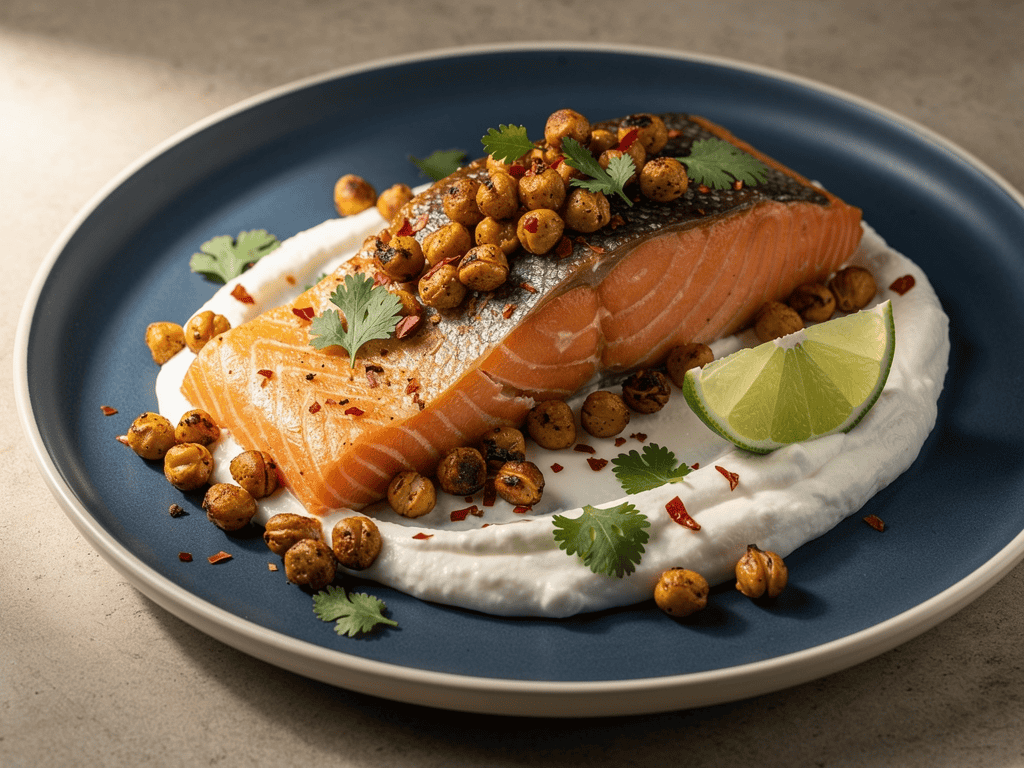
The parts that change whether this works tonight.
- Yield
- 4
- Time
- 35 minutes
- Equipment
- One sheet pan, a clean towel for drying, and a microplane. A wide shallow platter rather than plates, because the yogurt goes down first…
- The method
- 11 ingredients · 5 steps
From this recipe’s own recipe card. Nothing here is a guess.
Pairing
Wine — Dry Provençal rosé or Sancerre. Mixed drink — Ranch water with a chile slice. Tequila, lime, bubbles. That is the whole argument. Teetotaler — Salted lime soda, or cucumber-lime soda over ice. The chile-lime yogurt already does the acid work. Keep the glass mineral so the chickpeas stay the crunch.
Tools
One sheet pan, a clean towel for drying, and a microplane. A wide shallow platter rather than plates, because the yogurt goes down first and needs somewhere to spread.
Ingredients · swaps in parentheses
Salmon fillets (arctic char, steelhead), chickpeas, olive oil, cumin, smoked paprika, kosher salt, Greek yogurt (labneh, loosened), lime juice and zest, fresh chile (serrano, Fresno), cilantro
Magic
Grate lemon zest — lemon, not more lime — directly over the salmon the second it leaves the oven, while the surface fat is still hot enough to melt the oils out of it. The heat volatilizes them instantly and they land on the fish rather than sitting on top of it. Lime is already doing the sharp, high, sour job in the cold yogurt; lemon is rounder and warmer and it belongs to the hot component, so the two citrus notes stay on separate parts of the plate instead of blurring into generic brightness. Not feeling brave? A light pass over one fillet first, then taste it against the yogurt.
Gotcha
The salmon will be done before the chickpeas are properly crisp, and waiting for them is how good fish gets ruined. Take the salmon off the pan and put the pan back in; nothing on this plate is improved by overcooked salmon.
This is a single sheet pan holding two things that want different amounts of time, and the recipe only works if you accept that from the start. Chickpeas want a long stretch of dry heat to drive the water out of them. Salmon wants ten minutes and then immediate removal. Staggering them handles most of it, but the important move is psychological: decide in advance that the fish leaves when the fish is ready, and that the chickpeas can finish alone.
Serves: 4
Time: 35 minutes
Ingredients
- 4 salmon fillets
- 1 can chickpeas, dried thoroughly
- 2 tablespoons olive oil
- 1 teaspoon cumin
- 1/2 teaspoon smoked paprika
- 3/4 teaspoon kosher salt
- 3/4 cup Greek yogurt
- 1 tablespoon lime juice
- 1 teaspoon lime zest
- 1 small chile, finely chopped
- Cilantro
Method
Where the time goes
- Heat the oven hard425°F
- 15 minStart the chickpeas
- 10–13 minAdd the fish
- Mix the yogurt
- Assemble
- Heat the oven hard. Heat oven to 425°F, and give it a full ten minutes past the beep so the pan and the oven walls are genuinely at temperature.
- Start the chickpeas. Toss the chickpeas with 1 tablespoon oil, cumin, paprika, and half the salt. Spread them in one layer and roast 15 minutes. Shake the pan once, halfway.
- Add the fish. Push the chickpeas aside. Add the salmon, rub with the remaining oil and salt, and roast 10 to 13 minutes.
- Mix the yogurt. Mix the yogurt, lime, chile, and a pinch of salt while the fish is in.
- Assemble. Serve the salmon over the yogurt with the chickpeas and cilantro. For the magic version, grate the lemon zest over the fillets here, straight out of the oven.
“Do the chickpeas decide when dinner is ready?” “No. They are a garnish with ambition, not the governing authority.”
Dry is the only variable that matters for crispness
A roasted chickpea gets crunchy by losing water, and water leaves through the surface. Anything sitting on that surface has to boil off before the drying can begin, which means a wet chickpea spends its first several minutes in the oven steaming rather than roasting. Drain them, rinse them, then spread them on a towel and roll them around until the towel stops darkening.
Some of the skins will come loose while you do this, and you should let them. Loose skins burn to black flakes on a hot pan and taste of nothing but char. Space matters for the same reason as dryness: chickpeas packed shoulder to shoulder trap the moisture they are trying to release, and the ones in the middle of the crowd never get there.
They are also not going to be as crisp as the ones you buy in a bag, and that is not a failure of technique. Fifteen to twenty-five minutes gets you a firm, chewy-crunchy exterior over a soft interior, which is exactly right against soft fish and thick yogurt. Chasing total dehydration means either an hour in the oven or something that shatters like gravel.
Salmon, and the point of no return
Ten to thirteen minutes is a wide window because fillets are not standardized. A thick center-cut piece will need the full thirteen and a thin tail piece will be done at nine. Judge it by pressing the top with a finger: while it is still raw inside it feels springy and resistant, and at the moment it is right it gives softly and the flakes begin to separate under the pressure.
The internal temperature people quote is 145, and at 145 salmon is dry. Pull it in the low 120s to high 120s if you like it translucent at the center, or around 130 if you want it flaking cleanly through. It will climb several degrees on the platter no matter what you do.
Skin-on fillets are worth buying even though the skin is not going to crisp under these conditions. It insulates the bottom of the fillet from the hot pan and stops the underside from overcooking while the top gets there, and it peels away cleanly afterward for anyone who does not want it.
Cold yogurt against hot fish
The yogurt is not a sauce in the classical sense — nothing is reduced, nothing is emulsified. It is a cold dairy counterweight, and its job is temperature contrast as much as flavor. Spread it on the platter first, in a thick layer, and put the hot fish directly onto it. The bottom of the yogurt warms slightly and loosens, the top stays cold, and each forkful gets both.
Greek yogurt is specified because it is strained and thick enough to hold that shape. Regular yogurt slumps into a pool and the salmon ends up sitting in liquid. If your Greek yogurt is very stiff, a teaspoon of water or a little olive oil loosens it without making it runny.
The chile goes in raw and finely chopped. Twenty minutes in the yogurt is enough for the heat to distribute so nobody gets an unexpected mouthful, and dairy is unusually good at carrying capsaicin evenly and at moderating it, which is why a chile that would be aggressive on its own reads as a warm hum here.
Order of assembly, and the last thirty seconds
Yogurt down, fish on top, chickpeas scattered at the last moment. That order is not aesthetic. Chickpeas dropped onto the platter early and then covered will soften from steam and contact within a couple of minutes, and everything you did with the towel is undone.
Cilantro goes on whole-leaf rather than chopped, and extra lime goes on the table in wedges. Serve it as a platter rather than plating individually; people take what they want, the chickpeas stay crisp longer in a heap than spread thin, and the whole thing looks like dinner rather than like an arrangement.
Part of Recipes & Technique.
Recipe provenance: Salty & Clever editorial formulation, built from established culinary technique and the traditions identified in the article. No chef, restaurant, family, or firsthand cultural provenance is claimed unless it is explicitly named and sourced. How we write and check recipes
Where this goes next

