Tomato-Basil Breakfast Gnocchi with Crispy Prosciutto, Burrata, and Jammy Eggs
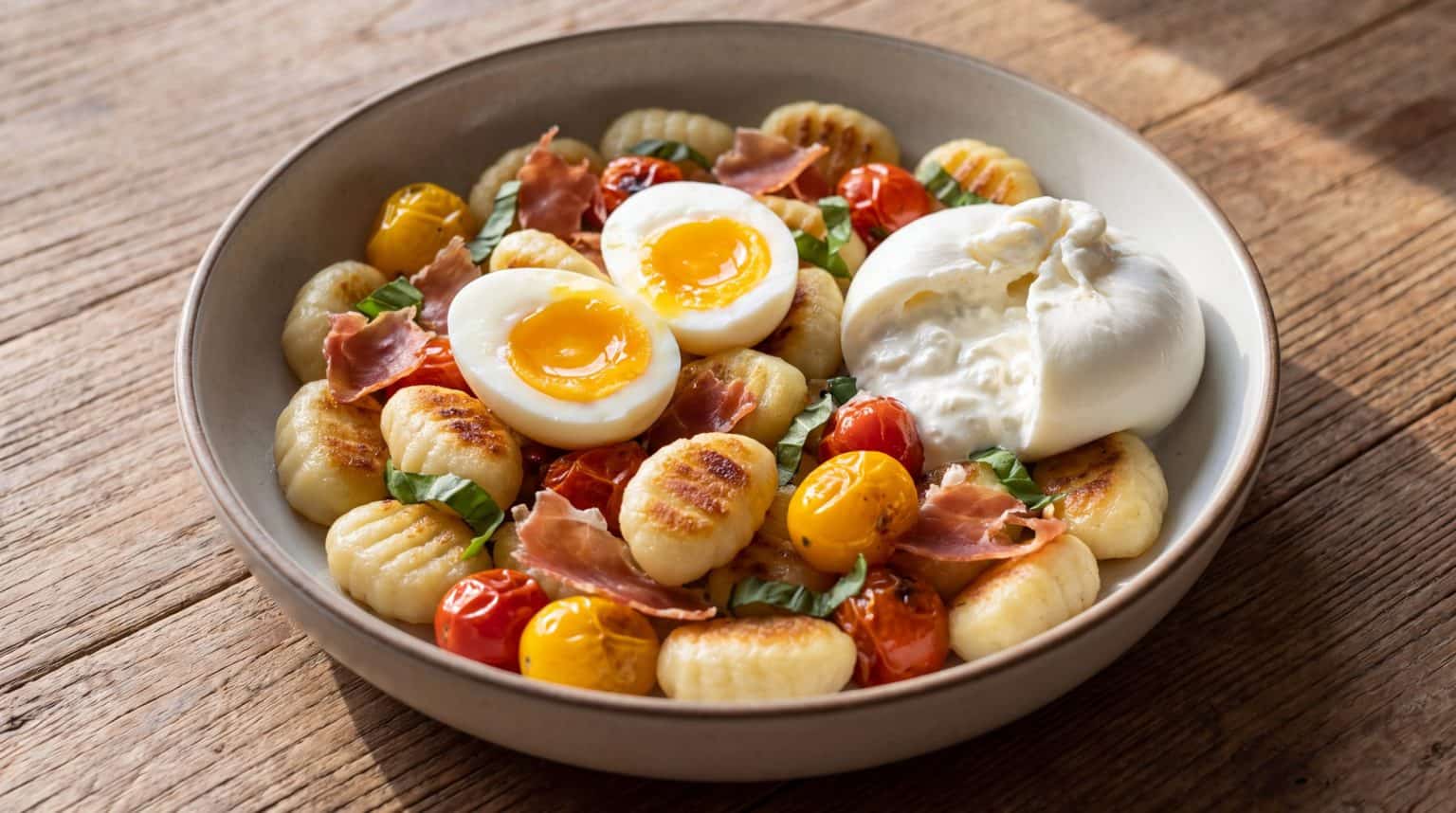
Pan-crisped potato gnocchi with blistered tomatoes, basil, crispy prosciutto, cool burrata, and jammy eggs—breakfast potatoes with significantly better public relations.
Serve alongside
Serve within 10 minutes; keep burrata cool and prosciutto crisp until the plate is finished.
Tools
Large skillet with lid, saucepan, ice bath bowl, slotted spoon, thin spatula, shallow bowls, knife, cutting board
Ingredients · swaps in parentheses
Potato gnocchi, eggs, prosciutto, olive oil, cherry tomatoes, garlic, red-wine vinegar or lemon, basil, burrata, optional Parmesan, kosher salt, black pepper
Magic
Do not boil refrigerated gnocchi first steam briefly in the skillet evaporate moisture before crisping season tomatoes late add burrata and prosciutto only on the plate.
Before you begin
Cook the jammy eggs first, drain burrata, tear prosciutto and basil, and dry the tomatoes before starting the gnocchi.
The parts that change whether this works tonight.
These fields come from the published recipe itself. If a recipe has not separately declared an operating fact, the gap stays visible instead of being filled with a guess.
- Servings
- Serves 4
- Timing
- About 40 minutes
- Equipment
- Not separately declared
- Make-ahead
- Not separately declared
- Holding
- Not separately declared
- Leftovers
- Refrigerate gnocchi, eggs, burrata, and prosciutto separately within two hours. Use within 3 days. Reheat gnocchi in a hot skillet or 425°F oven until hot and crisp again.…
- Dietary notes
- Not separately declared
- Method map
- 12 ingredient lines · 6 method steps
Gnocchi at breakfast sounds stranger than it eats. Potato is already doing half the morning shift; this simply gives it a better shape. Pan-crisped gnocchi gets the same browned exterior we chase in breakfast potatoes, but the center stays tender without an hour of roasting.
Blistered tomatoes and basil keep the plate fresh, prosciutto brings crisp salt, and burrata stays cold enough to create contrast instead of melting into a cream sauce. Jammy eggs finish the argument.
Yield and timing
- Yield: Serves 4
- Prep: 15 minutes
- Cook: 25 minutes
- Total: About 40 minutes
- Best service window: Within 10 minutes of finishing the gnocchi
Ingredients
- 4 large eggs
- 4 ounces thinly sliced prosciutto, torn into large pieces
- 1 pound refrigerated potato gnocchi
- 2 tablespoons olive oil, divided, plus more if needed
- 2 cups cherry tomatoes
- 1 garlic clove, thinly sliced
- 1 tablespoon red-wine vinegar or fresh lemon juice
- 1/2 teaspoon kosher salt, plus more as needed
- Freshly ground black pepper
- 1/2 cup loosely packed basil leaves, torn
- 8 ounces burrata, drained
- 1/4 cup finely grated Parmesan, optional
Method
Where the time goes
- 7 minCook the eggs
- 3–5 minCrisp the prosciutto
- 3–5 minPan-crisp the gnocchi
- 4–6 minBlister the tomatoes
- Finish the pan
- Plate
- Cook the eggs: Bring a saucepan of water to a boil. Lower in the eggs and cook 7 minutes. Transfer immediately to an ice bath for at least 5 minutes, then peel carefully and set aside.
- Crisp the prosciutto: Place prosciutto in a large dry skillet over medium heat. Cook 3 to 5 minutes, turning once, until crisp. Transfer to a plate. It will crisp further as it cools.
- Pan-crisp the gnocchi: Add 1 tablespoon olive oil to the prosciutto skillet and increase heat to medium-high. Add gnocchi in a single layer and cook without moving for 3 minutes. Toss, add 2 tablespoons water, and cover for 2 minutes to steam the centers. Uncover and cook 3 to 5 minutes more, tossing occasionally, until multiple sides are golden and crisp. Transfer to a bowl.
- Blister the tomatoes: Add remaining 1 tablespoon oil to the same skillet. Add tomatoes and cook over medium-high for 4 to 6 minutes until blistered and beginning to split. Add garlic during the final minute so it softens without burning.
- Finish the pan: Return gnocchi to the skillet. Add vinegar or lemon juice, salt, black pepper, and half the basil. Toss for 30 seconds, just long enough to combine without turning the tomatoes into sauce.
- Plate: Divide gnocchi and tomatoes among four shallow bowls or plates. Tear burrata into four portions and place one on each plate. Halve the jammy eggs and add two halves per serving. Finish with crisp prosciutto, remaining basil, black pepper, and Parmesan if using.
Assembly and plating
Keep the burrata in a distinct white mound rather than stirring it through the hot gnocchi. The tomatoes should be blistered but still recognizable, the gnocchi deeply browned on several faces, and the prosciutto visibly crisp. Cut the eggs just before serving so the yolks remain glossy and jammy.
Make-ahead, holding, and batching
One day ahead: Cook the eggs, cool completely, and refrigerate unpeeled. Tear the prosciutto and wash the tomatoes and basil.
Up to 20 minutes ahead: Crisp the prosciutto and leave uncovered at room temperature.
For eight people: Crisp the gnocchi on two sheet pans in a 450°F oven with olive oil, then blister the tomatoes in one large skillet. Crowding one pan turns this from crispy breakfast into potato dumpling stew.
Substitutions that work
- Shelf-stable gnocchi: Works well; add an extra tablespoon of water during the covered steaming step.
- Fresh mozzarella: Replaces burrata for a firmer, less creamy finish.
- Bacon: Can replace prosciutto; drain most of the fat before crisping the gnocchi.
- Arugula: Fold a handful into the hot gnocchi off heat in place of half the basil.
- Poached eggs: Excellent if you prefer a looser yolk and are serving only a few people.
Likely failure points
The gnocchi is gummy: It was boiled first or crowded while pan-frying. Refrigerated gnocchi can go directly into the skillet; the brief covered steam cooks the center.
It will not brown: The pan was not hot enough or too much water remained after steaming. Uncover fully and let moisture evaporate before tossing.
The tomatoes flood the skillet: They were salted at the beginning or cooked too long. Blister first, season later.
The burrata disappears: It was mixed into the hot pan. Burrata belongs on the plate where temperature contrast can still exist.
The prosciutto softens: It was folded in too early. Scatter it at the end and leave some pieces exposed to air.
Storage and reheating
Refrigerate gnocchi, eggs, burrata, and prosciutto separately within two hours. Use within 3 days. Reheat gnocchi in a hot skillet or 425°F oven until hot and crisp again. Add cold burrata, fresh basil, and reheated or freshly cooked eggs only after the gnocchi is ready.
Kitchen Kit
Pairing: Espresso, strong coffee, or basil-lemon sparkling water. The plate is rich enough to appreciate a clean drink.
Goods: Potato gnocchi, eggs, prosciutto, olive oil, cherry tomatoes, garlic, red-wine vinegar or lemon, basil, burrata, optional Parmesan, salt, and black pepper.
Gear: Large skillet with lid, saucepan, ice bath bowl, slotted spoon, thin spatula, shallow serving bowls, knife, and cutting board.
Before: Cook the eggs first, drain the burrata, tear the prosciutto and basil, and have the tomatoes dry before the gnocchi hits the skillet.
Magic: Skip boiling the gnocchi, steam it briefly in the skillet, drive off the water before crisping, season tomatoes after blistering, and keep burrata and prosciutto out of the hot pan at the finish.
If breakfast potatoes are allowed to sit beside eggs without explanation, gnocchi can manage the same job. It just does it with better edges.
Part of Recipes & Technique.
Recipe provenance: Salty & Clever editorial formulation, built from established culinary technique and the traditions identified in the article. No chef, restaurant, family, or firsthand cultural provenance is claimed unless it is explicitly named and sourced. How we write and check recipes


