Lemon and Olive Oil Cake
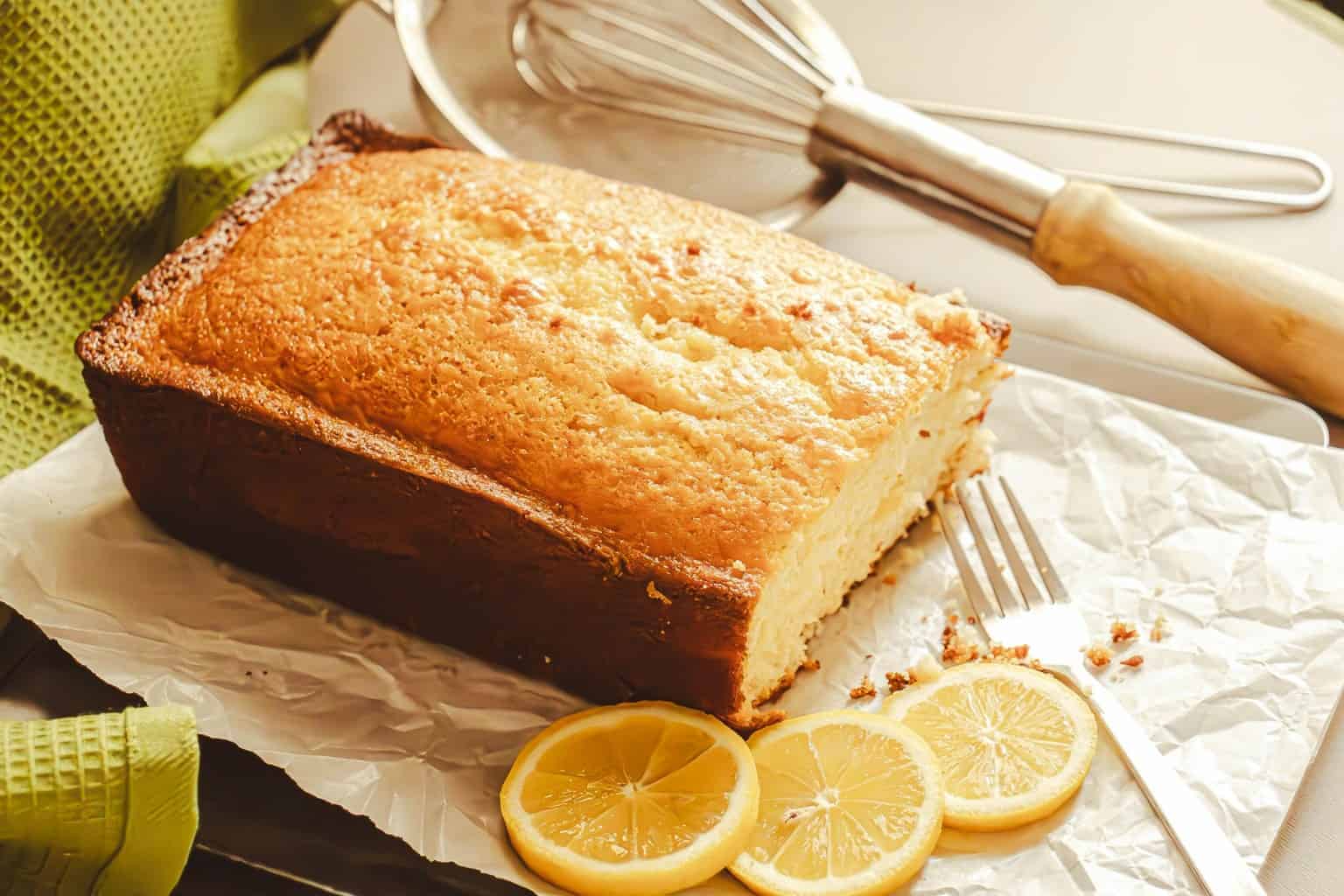
A warm olive oil cake heavy on lemon zest and juice, cut at the table and served with cold sour cream — warm cake, cold cream, for the moment the glasshouse shutters open.
Pairing
Wine — Moscato d'Asti, very cold — barely five percent alcohol, grapey and high in acid, so it lifts a heavy oil cake instead of stacking sugar on sugar the way a passito would. Mixed drink — Fernet over ice with cold-brew coffee. Bitter, minty and dark, and the one thing that stands up to a slice of cake this rich without pretending to be a dessert itself. Teetotaler — Chamomile brewed strong, chilled hard, then shaken with ice and a teaspoon of the same superfine sugar until it foams. Floral and faintly apple-like, and the froth does what the cold cream does.
Tools
A microplane and the patience for four lemons of zest, a citrus press, a digital scale (13½ oz of sugar and 1½ cups of oil are not quantities to eyeball), a big bowl and a balloon whisk, and a wide shallow tray you are willing to carry to the table and cut in front of people — depth is the failure mode here, so ¾ to 1¼ inches of batter across a large tray, never a deep pan, plus a skewer and a small serving bowl kept in the fridge for the cream
Ingredients · swaps in parentheses
All-purpose flour, baking powder that is actually in date, fine sea salt, superfine sugar, four unwaxed lemons for zest and juice, six large eggs, a fresh fruity olive oil — taste it first, because a very peppery oil comes through loudly in the finished cake — and cold full-fat sour cream (well-chilled coconut yogurt for a dairy-free table, the cake itself already is), with fennel seeds and black pepper if you take the twist
Magic
Season the cream like a savory dish. Toast two teaspoons of fennel seeds in a dry pan until they smell of aniseed, crush them coarsely so some stay whole, and fold them through the cold sour cream with a lot of cracked black pepper and a pinch of flaky salt — no sugar at all. There are 2 cups of sugar in the tray and the cream is the only brake the dessert has leaving it plain makes it merely cold, whereas making it aromatic and slightly savory turns each mouthful into a swing between the two rather than a slow slide into sweetness, and the aniseed sits very happily beside the olive oil already in the crumb. It also means the occasional whole seed cracks between the teeth, which is the only texture on an otherwise soft plate. Not sold on seeds in the cream? Crack a great deal of black pepper into it and leave the fennel out — less interesting, still much better than plain.
Before you begin
Fold the flour in until the streaks just disappear and then stop, since this batter turns tough rather than tender when it is worked. Do not pour a deep tray to save on dishes — the center will still be wet when the edges are dry, and adding trays is the only correct answer for more people. Fifteen minutes in the pan is the whole cooling window: this dish is warm cake against cold cream, and a cake that has drifted to room temperature is a different, duller dessert, so time the bake to the room rather than to your prep list. Keep the cream in the fridge until the moment it is carried out, not on the bench getting ready.
The parts that change whether this works tonight.
- Yield
- One large tray, about 20 servings
- Time
- 1 hour
- Equipment
- A microplane and the patience for four lemons of zest, a citrus press, a digital scale (13½ oz of sugar and 1½ cups of…
- Make-ahead
- Best baked the day of, close to serving; batter can be mixed a few hours ahead
- Holding
- Warm, this is at its best within about 45 minutes of coming out of the oven — the menu gives it a 1-hour warm window, after which it's still good…
- The method
- 9 ingredients · 7 steps
From this recipe’s own recipe card. Nothing here is a guess.
Warm, heavy on Garda oil and citrus zest and juice, baked in wide flat trays and brought to the table warm, cut in front of the guests, with a cold soured cream on the side. The menu’s own line is exactly right: warm cake, cold cream, a recovering room. This is the dessert for the moment the glasshouse shutters open and the space starts to feel less sealed against February, and the contrast between the warm cake and the cold cream is doing real work, not just decoration.
Before the texture claims below: I am a bad baker, cheerfully and permanently, and my husband owns that end of the kitchen. What I can defend here is not pastry instinct, it is mechanism. Rubbing zest into sugar works because the crystals abrade the peel and pull the oil out; overmixing tightens the gluten and gives you a tougher crumb. Those are reasons, not credentials, and I would rather hand you the reason and let you judge the cake than perform confidence I have not earned.
Yield and time
- Yield: One large tray, about 20 servings; written for a table of 50, roughly 2.5 trays
- Active time: 25 minutes
- Total time: 1 hour
- Make-ahead window: Best baked the day of, close to serving; batter can be mixed a few hours ahead
Ingredients
- All-purpose flour — 3¼ cups
- Baking powder — 3½ teaspoons
- Fine sea salt — 1 teaspoon
- Superfine sugar — 2 cups
- Lemon zest, finely grated — from 4 lemons
- Eggs — 6 large
- New Garda olive oil, or another good fruity oil — 1½ cups
- Fresh lemon juice — ½ cup
- Sour cream, cold, to serve — 2 cups
Method
- Heat the oven to 350°F and line a large, wide baking tray.
- Whisk the flour, baking powder and salt together in a bowl.
- In a separate large bowl, rub the lemon zest into the sugar with your fingertips until it’s fragrant and slightly damp — this releases the lemon oil into the sugar far more effectively than just adding zest on its own.
- Whisk the eggs into the lemon sugar until pale and slightly thickened, then whisk in the olive oil in a slow stream, followed by the lemon juice.
- Fold in the dry ingredients in two additions, mixing just until no streaks of flour remain — overmixing at this stage makes the cake tougher rather than tender.
- Pour into the prepared tray and bake for 30–35 minutes, until deeply golden, springs back when pressed lightly in the center, and a skewer comes out clean.
- Let cool in the tray for 15 minutes — it should still be genuinely warm, not merely room temperature, when it’s brought to the table and cut, with the cold sour cream served alongside in a separate bowl.
Make-ahead
The batter can be mixed a few hours ahead and held, covered, at room temperature, though it bakes best relatively fresh. This cake is built to be served warm, so the actual baking should be timed to finish shortly before it’s needed, rather than baking it hours ahead and trying to rewarm a fully cooled cake, which never quite recovers the same texture.
This recipe was developed by reasoning from method rather than from a tested bench run, which is how most of what we publish begins; Salty & Clever’s standing note on how we write and check recipes applies to it. The texture claim above is reasoning about how a cooled crumb takes heat back, not a verdict from a bench, so bake one tray early in the day if you want to know how it behaves in your own oven before you commit the rest.
Holding and service
Warm, this is at its best within about 45 minutes of coming out of the oven — the menu gives it a 1-hour warm window, after which it’s still good, just no longer delivering the specific warm-cake-cold-cream contrast the dish is built around.
Scaling
Multiplies cleanly by tray; a single tray shouldn’t be poured too deep, or the center won’t set properly in the same time as the edges — add trays rather than depth for a larger table.
Substitutions
- No Garda oil — any good, fresh extra virgin olive oil works; a very peppery, assertive oil will come through more strongly in the finished cake than a milder one, which is worth tasting for before committing a full batch.
- Dairy-free table — the cake itself is already dairy-free as written; serve a good coconut yogurt, well chilled, in place of the sour cream for the same warm-cold contrast without the dairy.
A food-safety note
This is an egg-and-oil batter with no raw-egg component left in the finished dish once it’s baked through, so there’s no particular food-safety concern beyond ordinary baking practice — check for a clean skewer at the center before pulling it.
Why this dish, at The Limonaia in February
It belongs to The Limonaia in February, timed to the exact moment the glasshouse opens its shutters and the room starts to feel less sealed against the cold — warm cake, cold cream, a recovering room.
The Occasion Study and the look book for that evening are Tangled Thistle’s; the recipes are ours, which is the whole division between the two sites. The practical consequence for whoever is cooking is that the cake wants the oven at the end of the night, when the host is furthest from wanting to think, so decide in the morning which tray goes in when and write it down where somebody else can read it.
Part of Recipes & Technique.
Recipe provenance: Salty & Clever editorial formulation, built from established culinary technique and the traditions identified in the article. No chef, restaurant, family, or firsthand cultural provenance is claimed unless it is explicitly named and sourced. How we write and check recipes
Where this goes next

