The One Drink and the No-Drink
Field Note
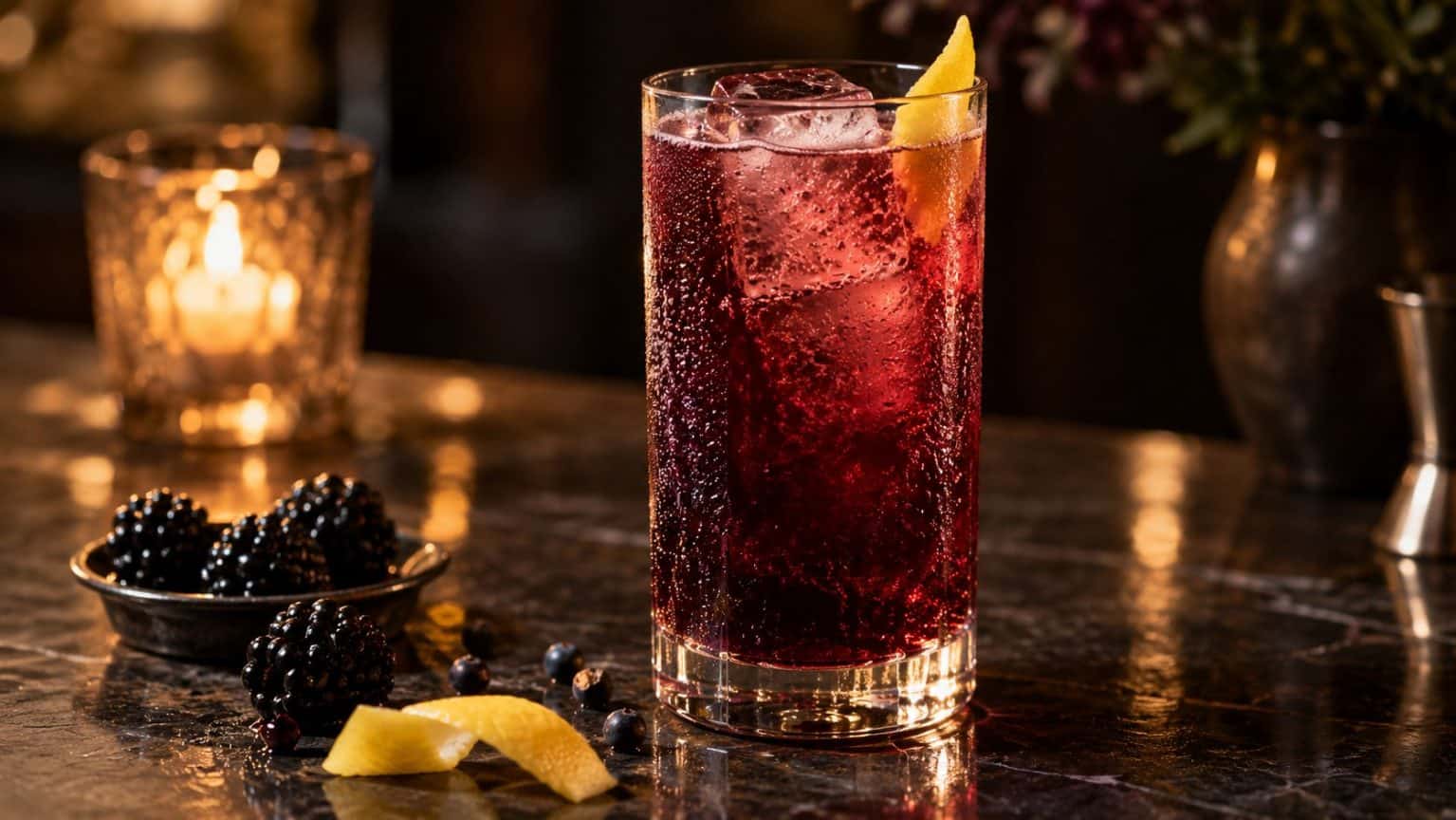
A dry highball of blended Scotch, a blackberry and juniper cordial, verjus and soda over big ice. The variable is the verjus, and if the glass tastes like a bramble off a cocktail menu, sugar crept in somewhere.
Serve alongside
The Welcome Crisp, oat and rye crisps with smoked trout and pickled shallot. The drink is kept dry so the smoke and the pickle stay the loudest things in the mouth.
Tools
A 12-ounce clear highball per guest, jigger, bar spoon, Y-peeler, small saucepan and fine sieve for the cordial, a bottle for the batch, a cooler of large cubes
Ingredients · swaps in parentheses
Blended Scotch, unpeated or barely smoky (not a peated single malt), blackberries, sugar, juniper berries, verjus (or lemon juice cut with water), soda water, lemons for peel
Magic
Toast the juniper berries in a dry pan for about 30 seconds before you crack them into the cordial. Raw juniper tastes of pine needles and gin, and toasted it turns resinous and peppery, much closer to the grain of the Scotch. Exit: off the heat the moment they smell like a Christmas tree, and if any berries blacken, start with fresh ones.
Before you begin
Taste the base before any soda goes in. If it is sweeter than a tart blackberry, add verjus and build it again, because soda will not dry it out. Small ice melts into the drink within minutes, so use large cubes or a spear. Make the cordial up to 5 days ahead.
The parts that change whether this works tonight.
- Yield
- 1 drink
- Time
- Prep 5 minutes per glass, once the cordial is…
- Equipment
- A 12-ounce clear highball per guest, jigger, bar spoon, Y-peeler, small saucepan and fine sieve for the cordial, a bottle for the batch, a…
- Make-ahead
- Make the cordial up to 5 days ahead
- The method
- 4 ingredients · 6 steps
From this recipe’s own recipe card, yield and timing lines and Kitchen Kit. Nothing here is a guess.
Field Note is poured about two minutes after the coat comes off, and it has to be dry. Blackberry makes people expect something sweet, and a sweet drink at a formal door, with a smoked-trout crisp in the other hand, is the wrong first taste of the evening. The Scotch is a component here, not the headline. It brings grain and a little warmth, and the fruit and juniper do the talking.
Reading the verjus
Not kitchen-tested. The build is reasoned from how these ingredients behave, not poured and adjusted in this kitchen, so taste the base before any soda goes near it.
Verjus is the pressed juice of unripe grapes, and bottles vary a lot. Some are as sharp as lemon, some are soft and nearly sweet. Taste yours on its own. If it is soft, add a quarter ounce more to each drink. Never add sugar to make up the difference.
The second thing to read is the Scotch. It should be a blend, unpeated or barely smoky. A heavily peated single malt turns this into a drink about smoke, and the blackberry disappears.
Drink details
Prep: 5 minutes per glass, once the cordial is made
Makes: 1 drink, and scales to 8
Glass: a 12-ounce clear highball
Equipment: jigger, bar spoon, Y-peeler, a small saucepan and fine sieve for the cordial
Ingredients
- 1½ ounces blended Scotch, unpeated or barely smoky
- ½ ounce blackberry-juniper cordial (below)
- ½ ounce verjus (or ¼ ounce lemon juice plus ¼ ounce water)
- 3½ ounces cold soda water
Garnish: one narrow strip of lemon peel, expressed.
The rim: bare. Salt or sugar on a highball rim makes it a different drink.
For the cordial (enough for 8 drinks, with a little over): 1 cup blackberries, ⅓ cup sugar, ¼ cup water and 8 juniper berries, cracked.
Building it
- Make the cordial (15 minutes, up to 5 days ahead). Simmer the blackberries, sugar, water and juniper for 5 minutes, crush the berries with a spoon, and strain through a fine sieve, pressing lightly. Cool and refrigerate.
- Ice. Fill the highball with large cubes or one long spear. Small ice melts into juice.
- Build. Scotch, cordial, verjus. Stir three times.
- Taste. Before the soda. It should taste tart first, like an underripe blackberry, and not like jam.
- Top. Pour the soda down the side of the glass and stir once, lifting from the bottom.
- Garnish. Express the peel over the glass and lay it in. No berries in the glass, nothing muddled, no sugar.
The order the flavors should arrive in
Blackberry, then the grain of the Scotch, then juniper, dry, at the finish. If the fruit shouts, cut the cordial, not the Scotch, because the cordial is where all the sugar is. If the Scotch leads and burns, the ice was small or the soda was warm.
Why blended Scotch
A blend has malted grain and a little oak without much smoke, which gives a fruit highball something solid to stand on. A peated malt drowns the blackberry, and bourbon, with its corn and new oak, pushes the whole glass toward sweet.
Ice and glass
Large cubes or a spear in a clear 12-ounce highball. Big ice melts slowly, so the drink stays at its strength while it is being carried around a room. If all you have is small ice, fill the glass to the top with it and stir once less. Any tall, straight glass works.
Batching for eight
On the day, mix 12 ounces of Scotch, 4 ounces of cordial and 4 ounces of verjus in a bottle and chill it. Pour 2½ ounces over ice per glass and top with 3½ ounces of soda. Soda and peel go in at the glass, never in the bottle. The cordial keeps 5 days, and one person can keep up with a room of eight.
Without the spirit
Take the Scotch out and what is left is blackberry soda, which is pleasant and is not this drink. The better glass is Found Indoors, rosehip, green apple and tonic, which was built from scratch for the guest who is not drinking. If someone wants this build anyway, use 1½ ounces of cold, strong black tea in place of the Scotch and tonic in place of the soda, for the tannin and bitterness the spirit was bringing. It is the lesser drink, and it is fair to say so.
What to eat with it
The Welcome Crisp, oat and rye with smoked trout and pickled shallot, which it was built to stand next to. After that, anything salty and a little smoky: aged cheddar, smoked almonds, a sharp pickle.
When it goes wrong
Too sweet. The base was sweeter than a tart blackberry. Add verjus and build it again. Soda will not dry it out.
Too sharp. Top this one with a little more soda, and use ¼ ounce less verjus in the next.
Too smoky. Wrong Scotch. Start over with a blend.
Flat or thin. The soda was opened too early or the ice was small. Fresh soda, big ice, start again.
The final pour
Blackberry, then grain, then juniper, and dry enough that you want the crisp.
The pour, in proportion
1½ ounces of Scotch, ½ ounce of cordial, ½ ounce of verjus and 3½ ounces of soda, or 3 to 1 to 1 to 7. The peel and the ice are named above and left out of the arithmetic.
Allergens. Alcohol. Scotch is distilled from malted barley. Most celiac guidance treats distilled spirits as gluten-free, but some guests avoid them, so ask. Verjus may contain sulfites.
Where it sits in the night
This is the arrival drink of Thistle and Bone, a Tangled Thistle World about a formal winter dinner that starts exact and lets the wild back in. It is poured at the door with The Welcome Crisp, on the same tray and in the same glass as Found Indoors, its zero-proof equal. A cool Gamay takes over later, when The Shared Braise goes round. Not kitchen-tested, and Salty & Clever’s standing note on how we write and check recipes applies.
Part of Drinks & Zero-Proof.
Where this goes next
