One Brisket, Three Dinners Before Everybody Gets Tired of Brisket
Brisket only earns the big-cook effort if the second and third meals stop behaving like leftover brisket. Weigh the cooked meat, reserve it before service, and change its job each time.
THE 64-OUNCE BRISKET ARC
Slice it once. Then stop asking it to be Sunday dinner.
24 oz
Sliced brisket with sharp sides.
16 oz
Crispy brisket fried rice.
12 oz
Potato-skin canoes or hash.
12 oz
Freeze before anyone gets ambitious.
The 64 ounces are an example cooked checkpoint. Brisket yield varies by cut, trim and cooking method. Weigh what you actually have.
Brisket is where leftover optimism goes to get tested.
You spend hours cooking it. Sometimes most of a day. The first plate is excellent, the second plate is still excellent, and then somebody says, “We can just make sandwiches tomorrow,” as though that sentence has not started three thousand refrigerator problems.
The problem is not brisket. The problem is asking brisket to stay brisket for too long.
A large brisket can absolutely earn its cost and time across several dinners. But the later meals need to inherit the smoke and the hard work without inheriting the same plate, the same sauce and the same emotional obligation to admire the bark.
This is a cooked-weight plan. I am not going to tell you that a raw brisket of a certain size will always become a certain number of edible ounces because it will not. Trim varies. Fat varies. The flat and point behave differently. Cooking method matters. The Big-Cut Economics explains why the useful checkpoint happens after cooking.
Start with the brisket you actually cooked
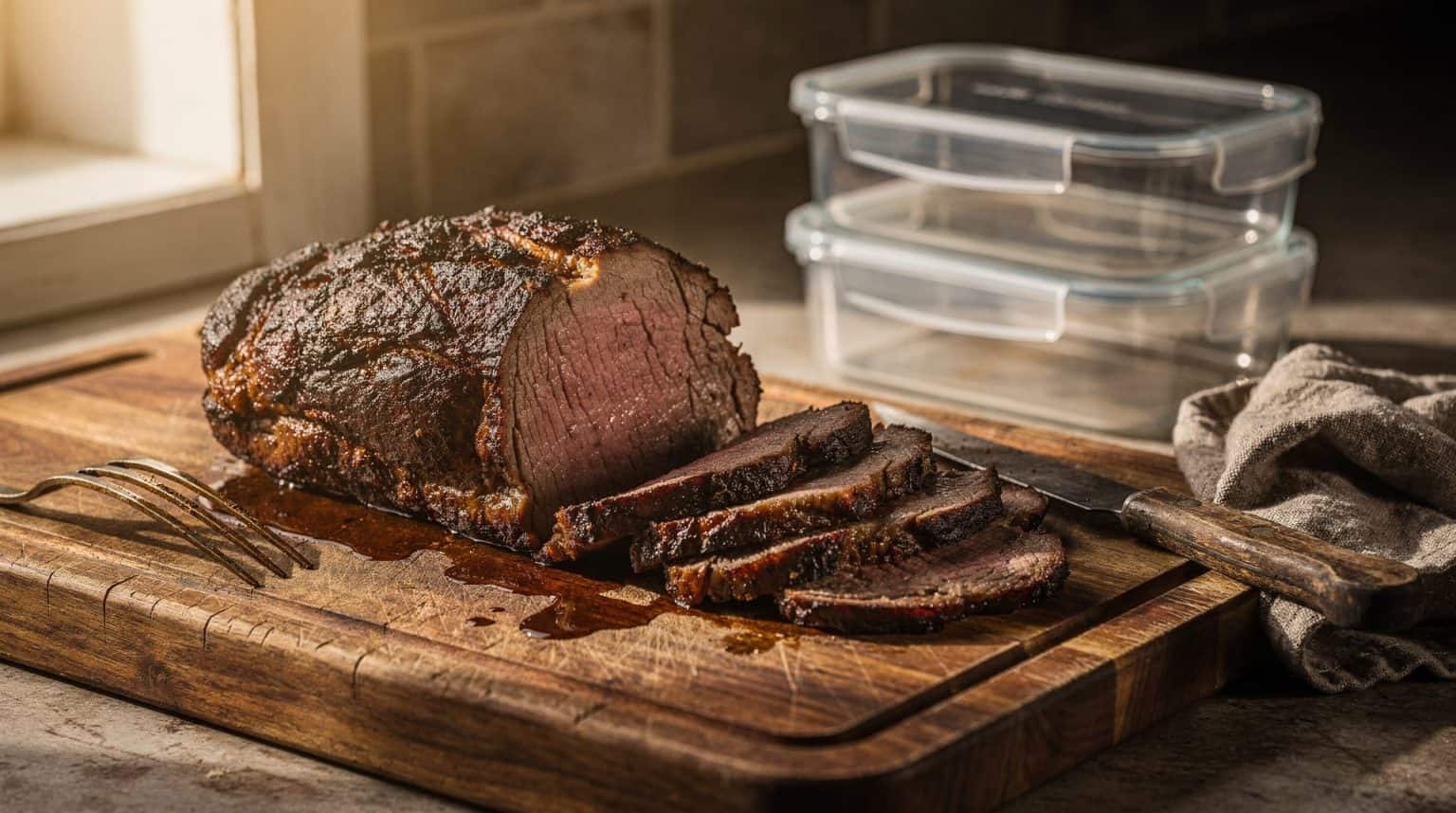
Once the brisket has rested, trim away anything you truly will not eat and weigh the edible cooked meat. If you have 64 ounces, use 64. If you have 51, do not force a 64-ounce content strategy onto dinner.
For the example here, I am using 64 ounces for four people. That gives the first dinner 24 ounces, the second 16, the third 12, and leaves 12 ounces for the freezer. You can move those numbers based on appetite and sides.
The sequence matters more than the percentages: weigh, reserve, then serve.
If the entire brisket goes to the table, dinner one gets veto power over dinner three. People will keep shaving off one more slice because it is there. That is pleasant hosting and terrible inventory control.
Dinner one: let brisket be brisket
The first meal is the reason you cooked the thing. Give it the good treatment.
For four people, 24 ounces works out to six ounces each before sides. Add beans, slaw, greens, pickles, corn, potatoes or whatever belongs with your version. I would bias the plate toward acid and crunch because brisket brings enough softness, smoke and fat without assistance.
This is not the night to be clever with leftovers. Slice it. Eat it hot. Enjoy the bark while the bark is bark.
What matters happens before the platter leaves the kitchen: set the 16-ounce, 12-ounce and freezer portions aside first. If there is sauce, keep at least the later portions relatively plain unless you already know where the sauce is going next.
A sweet barbecue glaze is delicious on dinner one. It can become an unwanted roommate in fried rice.
Dinner two: crispy brisket fried rice
Fried rice works because the brisket stops being the centerpiece and becomes the seasoning engine.
Sixteen ounces across four people is four ounces per person, which is generous once the rice, egg and vegetables are doing their share. The transformation is also useful: cold rice wants a hot pan, brisket wants crisp edges, and the whole meal moves away from barbecue-platter territory.
For four: 16 ounces cooked brisket, chopped into small pieces; 5 cups cold cooked rice; 4 eggs; 1 tablespoon neutral oil if the brisket is lean; 1 small onion or 4 scallions; 2 cups chopped vegetables such as peas, cabbage, carrots or green beans; 2 to 3 tablespoons soy sauce or tamari; 1 tablespoon rice vinegar; and chile crisp or hot sauce if wanted.
Start with the brisket in a wide skillet or wok over medium-high heat. Let the fatty edges render and darken. Remove it when crisp in spots. Add a little neutral oil only if the pan needs it.
Cook the onion and vegetables quickly, push them aside, scramble the eggs, then add the cold rice. Break it up and leave it alone in stretches long enough to develop texture. Return the brisket near the end. Season with soy and finish with rice vinegar.
The vinegar is not decorative. Brisket has already spent one night being rich. The second dinner needs a cleaner ending.
If your brisket was heavily sauced, pull back on the soy until you taste the rice. Sweet or salty barbecue sauce can change the balance fast. This is one of the reasons reserving some meat before saucing dinner one gives you more room later.
The second meal should not need a second weekend
This is my objection to a lot of leftover-content theater. It tells you to transform the meat, then hands you a project that requires twelve ingredients, homemade flatbread and the emotional stability to deep-fry on a Tuesday.
No.
The hard part already happened. Dinner two should cash that check.
Cold rice, eggs, vegetables, brisket, acid. The meal gets a new texture and a new format without pretending the leftover is a blank canvas requiring artistic reinvention.
The point of planned leftovers is not to prove you are imaginative. It is to avoid starting from raw protein again.
Dinner three: use twelve ounces where twelve ounces is actually enough
By the third meal, brisket should stop standing alone on a plate.
This is exactly where the existing Trail Boss Brisket Potato-Skin Canoes earn their keep. That recipe uses 12 ounces of cooked smoked brisket for 16 potato skins. The quantity already lines up with this arc.
That is not a coincidence I am going to waste.
The recipe turns the brisket into one layer of a crisp potato structure with cheddar, pickled jalapeño and coffee-barbecue glaze. Texture changes. Proportion changes. Service changes. Nobody is sitting down to “brisket again.”
If you do not want a party-food project on night three, use the same 12 ounces for a skillet hash: potatoes, onion, brisket, something green and a fried egg. The point is the same. A smaller amount of meat can carry dinner when it is distributed through a starch and given a fresh texture.
Do not make the last portion pretend it is still a roast.
The freezer portion is not defeat
The remaining 12 ounces go to the freezer unless you already have a credible use for them inside the safe refrigerator window.
That sentence is doing more work than it appears to.
The freezer portion prevents the arc from turning into a dare. Maybe you will want another brisket meal this week. Maybe you will not. Freezing it on day one preserves choice instead of creating Thursday guilt.
Package the cooked brisket tightly, label it with both the date and quantity, and freeze it while you still know what it is. “Brisket — 12 oz” is a future dinner. “Brown foil package” is a freezer mystery.
USDA guidance says most cooked leftovers should be refrigerated within two hours, used within three to four days, and reheated to 165°F. The full safety framework is linked in The Leftover Plan Starts Before Dinner. Safety is not the place to improvise because the brisket was expensive.
If your brisket total is smaller, keep the sequence and lose a meal
Suppose you finish with 44 ounces of edible cooked brisket. That may be two dinners plus one freezer packet, not three complete dinners.
Fine.
You could put 24 ounces into dinner one, 12 ounces into the potato skins, and freeze eight. Or use 20 ounces first, 16 in fried rice and eight in a two-person lunch. There is no prize for forcing three dinners out of a brisket that does not contain three dinners.
Planning is supposed to make the food easier to use, not turn portioning into an ideological commitment.
What changes from one dinner to the next
When I look at a three-meal arc, I want the eating experience to move in at least three directions.
Format: sliced plate → rice bowl → crisp potato skin.
Texture: tender slices → crisp-edged chopped meat → smaller pieces under cheese and pickle.
Protein role: centerpiece → integrated ingredient → accent.
That is enough change to keep repetition from feeling punitive while still preserving the thing that made the big cook useful: you already did the slow part.
The economics only work if dinner three still sounds good
This is the part price-per-pound math cannot see.
A brisket may be inexpensive per raw pound compared with another cut and still be a bad purchase for your household if nobody wants to eat it twice. Conversely, a more expensive brisket can make sense when it removes several future cooking jobs and every reserved portion has an actual destination.
That is why I would rather have 44 ounces with a plan than 80 ounces with optimism.
Use the big-cut framework before buying. Use the leftover plan before serving. Then use the scale after cooking.
The brisket does not need to become seven clever things. It only needs to stop being the same dinner before everybody starts resenting how economical you were.
Part of Kitchen Systems.
Recipe provenance: Salty & Clever editorial formulation, built from established culinary technique and the traditions identified in the article. No chef, restaurant, family, or firsthand cultural provenance is claimed unless it is explicitly named and sourced. How we write and check recipes
Where this goes next

