Salty & Clever
Cook Without a Recipe: A Free Six-Lesson Course
Six lessons, each one taking down a crutch: the measuring spoon, the timer, the perfect moment, the recipe, the equipment assumption and the plan. Free, with a test you can fail at the end of each.
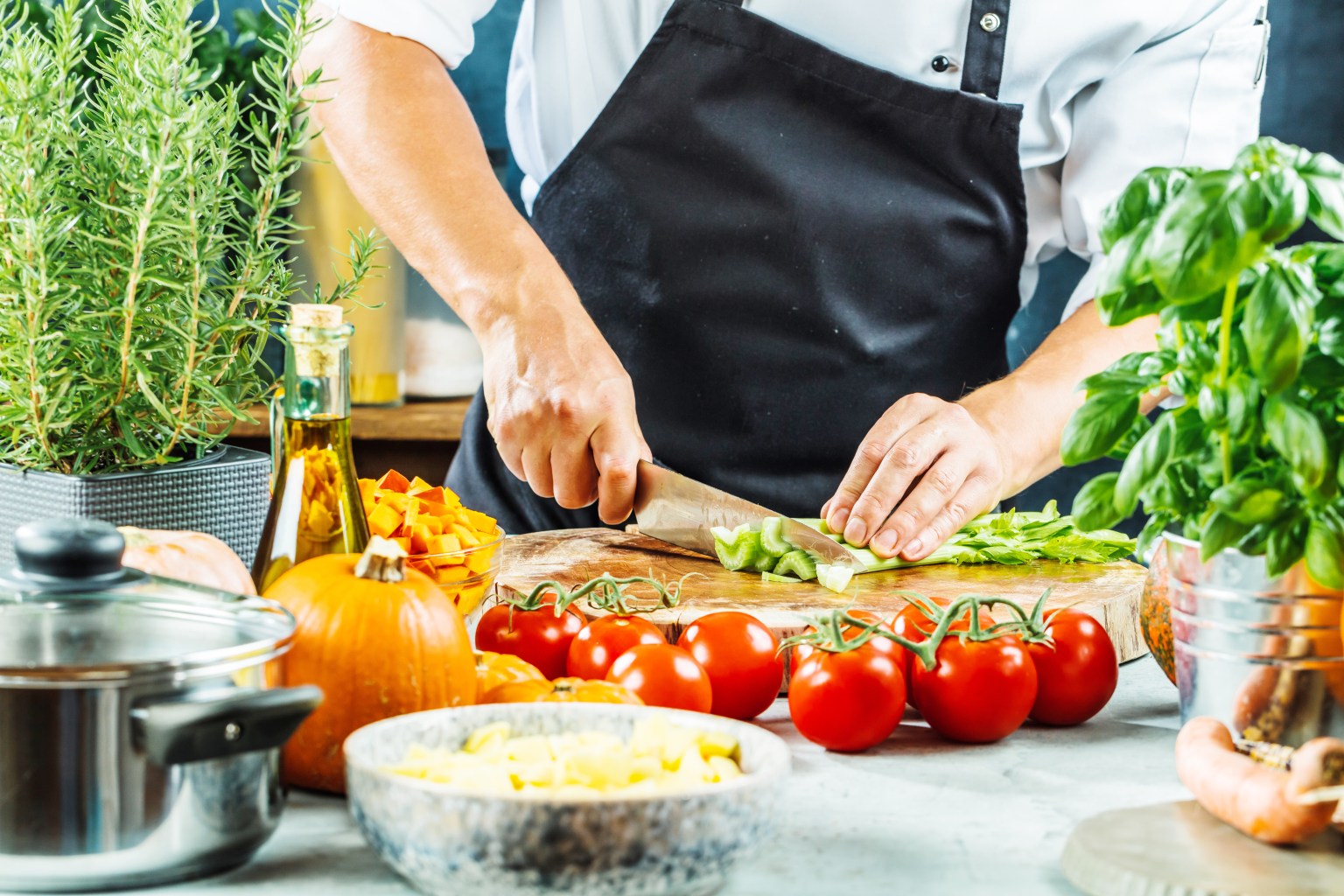
The reason you cannot cook without a recipe is not that you do not know enough recipes. It is that six specific things are being decided for you, every time, by somebody who has never seen your kitchen, and you have never had to make any of them yourself.
This is a course that takes those six decisions back, one at a time. It is free, there is nothing to buy at the end of it, and the only person who finds out whether you passed is you.
How it works
Six lessons. Each one identifies a crutch, explains the mechanism underneath it, gives you something to go and cook, and ends with a test you can fail. The tests matter more than the reading. A lesson you have only read is a lesson you have not had.
Read them here in order, at whatever pace suits you, or subscribe and have new work arrive as it is published. Either way the material is the same and none of it is behind anything.
Lesson one: put down the measuring spoon
The crutch: a number of teaspoons, written by somebody who does not know which salt you own.
Season to taste is the most common instruction in cooking and nobody is ever taught the procedure it assumes. Here it is.
Seasoning is not one dial, it is four, and they are almost always confused for each other. Salt makes things taste more like themselves and suppresses bitterness. Acid makes things taste lifted and cuts richness. Fat carries aroma and softens edges. Heat, meaning chile, adds a sensation rather than a taste. A dish that tastes flat is usually short of salt. A dish that tastes heavy is usually short of acid. A dish that tastes thin is usually short of fat. Diagnosing which one is missing is the whole skill, and it is a different skill from adding more of whatever you added last.
Salt is also a percentage of weight rather than a number of spoons, and this is the part that changes everything. Meat dry-brined wants one percent of its raw weight. Pasta water wants one percent of the weight of the water, which is about a third of what people who have heard the phrase about the sea put in. Bread dough wants two percent of the weight of the flour, not the dough. And because a teaspoon of Diamond Crystal kosher weighs 2.8 grams while a teaspoon of table salt weighs 6.0, the same spoon from two boxes is a difference of more than two to one.
So the most useful object in this lesson is a scale, and the second most useful is the side of the salt box. Two cooks can follow the same recipe with the same spoon and land a factor of two apart on salt, and one of them will quietly conclude they cannot cook.
Taste in layers, not at the end. Taste the fat after the aromatics. Taste the liquid before it reduces. Taste at serving temperature, because cold suppresses both sweetness and bitterness and a sauce that tastes right warm in the pan will taste sharp cold on the plate.
Go and cook: the same simple soup twice in one week. The first time, salt it at the end, once. The second time, salt it three times, in small amounts, at three different stages, and use no more salt in total. Notice that the second one tastes more seasoned with the same amount of salt.
The test you can fail: take something you have made that tastes slightly wrong, and before adding anything, say out loud which of the four dials is low. Then add only that. If you were right, it fixes in one move. If you were wrong, you will know immediately, and being wrong here is more instructive than being right.
Read further: season to taste assumes a procedure, what salt does in ten seconds and overnight, the salt calculator.
Lesson two: put down the timer
The crutch: a duration, written for an oven that is not yours.
Time is a proxy for temperature and it is a bad one. Most domestic ovens are off by more than people expect, meat comes out of refrigerators at different temperatures, pans conduct differently, and a recipe’s forty minutes was measured in a kitchen you have never been in.
What is actually happening is heat moving into food by three different routes at once. Conduction, from direct contact with a hot surface, which is fast and is why a pan sears and air does not. Convection, from moving hot air or liquid, which is slower and more even. Radiation, from a hot element or flame, which is what a broiler and a grill are doing. An oven uses all three and your recipe names none of them.
Two rules carry most of the weight. The first: nothing browns while there is liquid water on the surface, because the water pins the surface at boiling and browning needs considerably more than that. That single fact explains patting things dry, not crowding a pan, and why an oven browns worse than a skillet at the same number.
The second: food keeps cooking after it leaves the heat. Carryover runs about five degrees on a small cut out of a hot oven and six to eight on a large bird, and it is larger the steeper the temperature gradient, which is why a gentle oven is so much easier to hit a target in. Pull poultry at 158 degrees and let it climb to 165.
Go and cook: a chicken thigh, twice. Once by the recipe’s time. Once with a probe thermometer and no clock at all. Write down what the clock said when the probe said done.
The test you can fail: buy an oven thermometer, put it in, set the oven to 350, wait half an hour, and read it. Most people are surprised. If yours is off by more than fifteen degrees, every recipe you have ever failed at was probably not your fault, and every one you succeed at from now on is a calibration rather than a skill.
An oven thermometer is the only tool in this course that audits the others. It improves nothing by itself, which is precisely why it gets skipped, and why the same cook goes on blaming the recipe for a fault that is sitting in the wall.
Read further: your oven is lying to you, heat arrives three different ways, your thermometer is telling you the wrong number.
Lesson three: put down the idea of a perfect moment
The crutch: the belief that a dish is done, and then stays done.
Nothing stays done. Every dish has a service window, the window has a length, and the lengths differ by more than an order of magnitude. A braise holds for an hour and improves for part of it. A roast holds for thirty or forty minutes. Roast potatoes hold for about ten. A dressed salad holds for four or five minutes and then it is over. Anything fried is at its best in the first two.
Once you know the windows, the order of a meal writes itself, because you cook backwards from the shortest one. The dish with the four-minute window is the last thing that happens and everything else has to already be finished when it starts.
The mechanisms are worth knowing because they tell you which failures can be delayed. Crispness is moisture migrating out of the interior into the crust, so anything you cover, stack or sauce is on a much shorter clock. Dressed greens collapse because salt and acid are drawing water out of the leaf cells. Cooked starch going cold retrogrades, which is why yesterday’s potatoes reheat worse than yesterday’s stew.
Go and cook: one meal where you write the windows down first, on paper, shortest at the bottom, and then read the list upwards as the order of operations.
The test you can fail: serve a meal where the last thing to leave the kitchen is the thing with the shortest window, and nothing is waiting on it. Most people discover on the first attempt that three things had short windows and they had only planned around one.
Read further: crisp is a deadline, the salad has a service window, every dish has a different correct temperature.
Lesson four: put down the recipe
The crutch: a list of ingredients somebody else chose, standing in for a decision about what a plate is for.
A plate is not a set of dishes. It is a set of contrasts, and there are four that matter: something rich, something sharp, something with crunch, and something soft. Most disappointing meals are disappointing because two of the four are missing, and the cook, having followed three good recipes, cannot work out why the result is dull.
Run the check on anything before you cook it. Where is the fat. Where is the acid. Where is the texture that resists a tooth. Where is the thing that yields. If the answer to any of those is nowhere, the fix is usually one ingredient rather than another dish: a squeeze of lemon, a handful of toasted nuts, a spoon of yogurt, a scatter of herbs.
The same logic runs the drink, which is the half almost every cooking course ignores. A drink beside a plate has to be doing a job, and the job is one of four: cutting the fat, refreshing the palate, extending a flavor already there, or contrasting with one. A drink that is doing none of those is not a pairing, it is two things on the same table.
Go and cook: a plate with only three of the four contrasts on purpose, eat it, and then add the missing one at the table and eat it again. The difference is larger than it sounds in writing.
The test you can fail: build a full plate from what is in your kitchen right now, without looking anything up, using only the four-contrast check. Then say in one sentence what the drink beside it is doing.
Read further: a pairing has to have a job, pair from the plate, not the bottle, the order you put things in the pan.
Lesson five: put down the assumption that your kitchen is the one in the recipe
The crutch: the idea that a recipe for four, multiplied, is a recipe for twelve.
Nothing scales linearly, and each thing fails differently. Main ingredients and aromatics scale one to one. Salt and dry seasoning want about ninety percent of the multiple between two and four times, and eighty percent past four, because a larger volume has less surface per unit of mass. Chilli heat compounds rather than adding. Braising liquid wants about ninety percent, then eighty-two, because a deep pot evaporates far less than a shallow one.
Then the equipment runs out before the arithmetic does, which is the part nobody warns you about. A seared portion needs about 26 square inches of hot pan with air around it, and a twelve-inch skillet gives about 90 usable square inches, so three portions a batch. A sheet pan holds five portions of vegetables in one layer. An oven takes two pans. Multiply a recipe by four and a half and you have not made a bigger dinner, you have made a sequencing problem.
This is the failure that looks like bad cooking and is really arithmetic. Nine portions crowded into a twelve-inch skillet do not sear, they steam, and the grey surface gets read as a verdict on the cook. Count the pans before you count the guests.
Halving is a separate problem with different arithmetic, because the pan stays the same size and the evaporation does not halve with the food.
The move that resolves most of it: sear in the afternoon, hold cold, finish in the oven. The crust survives it and the hour does not have to happen while people are in the house.
Go and cook: something you normally make for two, for six, having first written down how many pans and how many oven slots it needs. Notice whether you own them.
The test you can fail: plan a three-dish meal on paper, with oven temperatures and durations, and find the collision before you cook it. There is almost always one.
Read further: every recipe assumes a pan diameter, a recipe for four, halved, is not a recipe for two, the oven traffic calculator.
Lesson six: put down the plan
The crutch: the belief that hosting well means executing a schedule flawlessly.
It does not. Hosting anxiety is almost always a symptom of unresolved decisions, and the cure is to resolve them earlier rather than to execute harder.
Most of them get resolved in the invitation. A start time and an end time. Whether there is a meal. What to wear. Where to park. Whether to bring anything, and if so, what specifically. Kids, pets, drinks, dietary constraints and by when to say. People do not fail to reply because they are rude, they fail to reply because they cannot answer yet.
The rest get resolved in the room, before anyone arrives. Somewhere for coats. A clear surface for bags. An empty tray for glasses, so nobody carries one into the kitchen you are working in. A drink station laid out in the order a drink gets built: glass, ice, liquid, garnish.
And then the part that is not planning at all. Once the food is out, the job becomes reading the room, and the room tells you plainly if you look. Glass levels show you whether everyone is on the same clock. Volume only ever rises on its own. The shape of the clusters tells you whether the party has a center or has fragmented. And the moment the standing people sit down is the moment the evening chooses its final configuration.
Every response to those signals is physical. Move the food, move the light, move the music, move yourself. None of it requires being charming, which is the good news, because at nine o’clock at your own party you probably are not.
Go and cook: a dinner for six where you write the invitation properly first, and count how many logistics questions you are asked afterwards. The number should be zero.
The test you can fail: sit down at your own table, with your guests, for the whole main course, without getting up. If you cannot, the menu was the problem and not your willpower.
Read further: everything a guest needs before they can say yes, reading the room at nine, the last forty minutes decide how it is remembered.
What happens after lesson six
Nothing. There is no advanced course, there is no certificate, and there is nothing to buy.
What there is, is a large body of work on this site organised the same way, and the full path page keeps a curated reading list for each of the six stages if you want to go deeper on one of them. Every number any of it depends on is written out in one place on Every Number This Site Runs On, so you can check the arithmetic rather than trust it.
And if something has already gone wrong in the pan while you were reading this, The Rescue covers 57 specific failures, three of which cannot be saved and say so.