How to Host a Cocktail Party Without Becoming the Bartender
A cocktail party needs one good drink system, food that survives standing guests, and a host who is not trapped behind a shaker. Here is the plan that keeps the party moving.
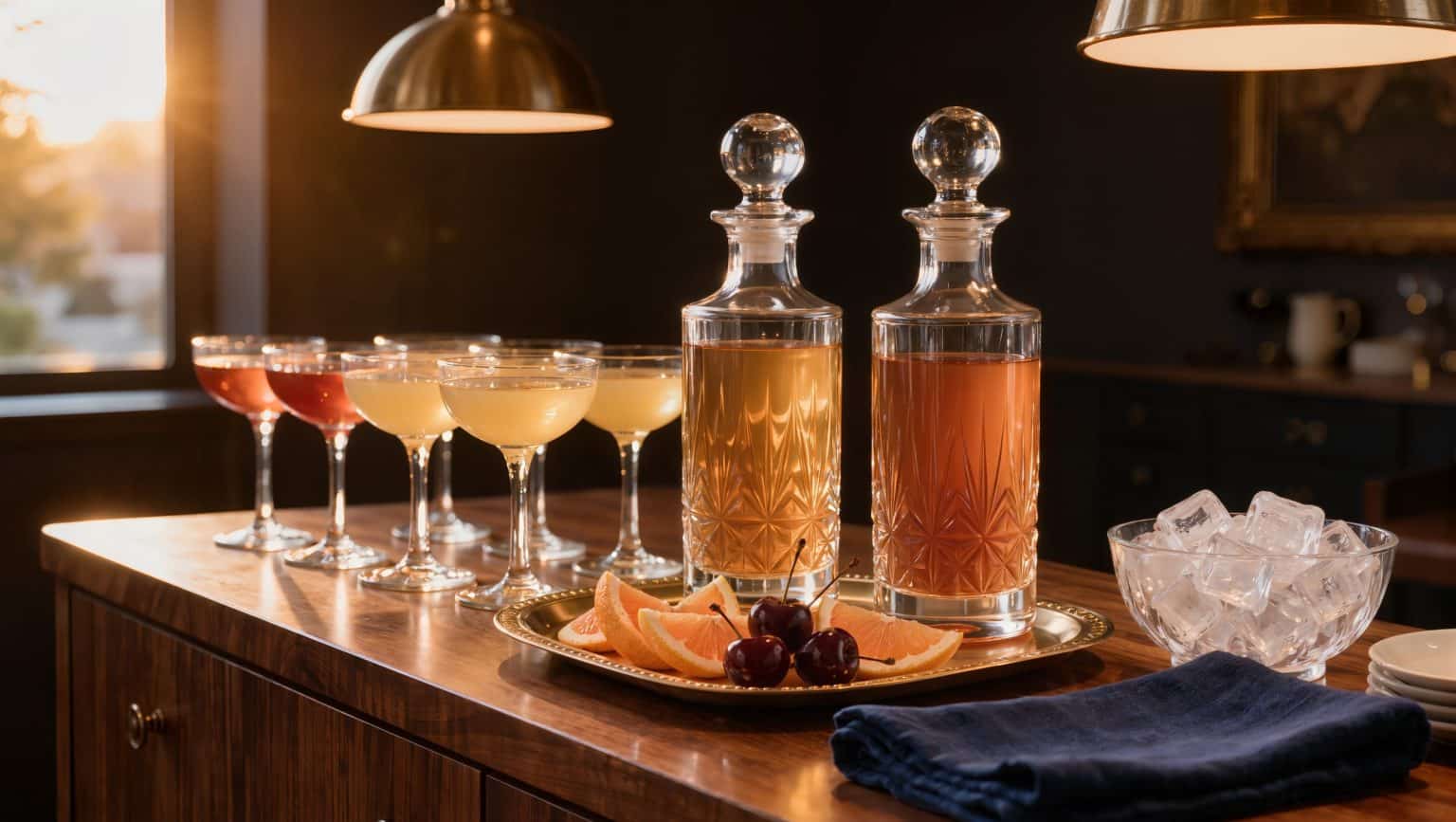
A cocktail party looks effortless in photographs because photographs are very good at hiding labor. Nobody sees the host squeezing the nineteenth lime, discovering that the ice is gone, washing the same six coupes, or trying to remember whether the person by the bookshelf asked for gin or no gin while something in the oven quietly becomes charcoal.
I like a proper cocktail. I do not like a party that turns the person hosting it into unpaid bar staff. Those are allowed to be two separate conclusions.
The useful way to plan this kind of evening is to stop thinking of it as a miniature bar and start thinking of it as a standing dinner with a glass already occupying one hand. That one fact changes the drinks, the food, the furniture, the timing, and what counts as a good idea.
Decide what happens in the first five minutes
The first drink should not require a committee meeting. Guests arrive at irregular intervals, usually while the host is answering the door, taking coats, moving a tray, and pretending not to notice that three people have parked in the same place.
Have one alcoholic welcome drink ready to pour and one zero-proof drink with equal flavor and intention. A batched martini variation, a spritz base, a punch, a chilled aperitif, or a simple sparkling drink can all work. The zero-proof option should have acid, bitterness, herbs, tea, spice, saline, fruit, or some other reason to exist beyond being the drink without alcohol.
Wine and beer can sit nearby for people who prefer them. What I would not do is hand every guest an imaginary cocktail menu and then spend the next two hours making individual drinks to order. That is a bar. Bars are lovely. They also employ bartenders for a reason.
Ice is an ingredient, not a decorative afterthought
A cocktail party can recover from a missing garnish. It does not recover gracefully from warm drinks and an empty ice bin.
Separate the ice used for drinks from the ice keeping bottles cold. Put a scoop where guests can actually find it. Give the zero-proof drink its own obvious place. Keep water visible rather than making people ask for it. And if a drink needs a very specific cube, glass, mist, rim, skewer, and whispered blessing before it becomes drinkable, it may be a terrific cocktail and a bad party cocktail.
This is the same logic behind building the menu around the last thirty minutes: protect the work that changes the result and remove the work that merely makes the host busier.
The food has to pass the one-hand test
Standing guests already have a drink. Some have a phone, a bag, or a coat they have not surrendered yet. This is not the moment for a six-inch fork, a sliding tomato, and something that requires sawing.
The best cocktail-party food is substantial enough that nobody leaves hungry but structurally simple enough to eat without creating a second furniture problem. Think crisp things that stay crisp, skewers that do not drip down a sleeve, small sandwiches with enough filling to matter, tartlets that can be bitten cleanly, meatballs that do not require chasing around a bowl, good cheese already cut, and one warm item that can be replenished in batches.
I would build contrast rather than volume: something salty and rich, something bright and acidic, something warm and more substantial, something crisp, and a small sweet finish. Not every platter needs a thesis. The room gets exhausting when every bite is trying to be the main character.
And be suspicious of anything whose quality expires in six minutes. A beautiful fried bite that becomes soft under a lid is not make-ahead food just because somebody arranged it on a tray before the guests arrived. Party food fails in service, not in the hero photograph.
Move drinks away from the kitchen
People gather where the first useful thing is. Put the bar in the kitchen doorway and you have built a human dam exactly where hot trays, refrigerator doors, and the host need to move.
Give drinks their own wall, console, cart, sideboard, or end of the room. Put water there too. Keep napkins and a place for used glasses nearby. If you have enough space, separate the first food from the drinks so the crowd has a reason to spread out rather than forming one polite, beautifully dressed traffic jam.
The arrangement does not have to look like a venue. In fact, I prefer when it does not. It only has to answer the questions a guest should not need to ask: Where is the drink? Where do I put this glass? Is that food ready to eat? Where can I stand without being in the way?
Use the expensive glassware if you want. Just have enough of something.
I am not interested in pretending every party needs matching crystal. If you have it and enjoy it, wonderful. Use it. If you have ten good wineglasses, six coupes, four rocks glasses, and a stack of sturdy tumblers that have somehow survived adulthood, that can also be a system.
What matters is not matching. It is whether the glassware supports the drinks without creating constant washing. A single versatile shape is often more useful than three specialized glasses in quantities too small for the guest count. Value is what the object does for the evening, not whether it looks expensive while doing it.
Give the party one point of view
Salty & Clever already has plenty of evidence that a cocktail party can have atmosphere. Sun-Warmed Terrace has mezcal, chile, golden-hour food, and an actual service plan. The useful part is not simply that the colors match. The food and drinks belong to the same evening.
Choose one governing idea and let it make decisions. Maybe the drinks are cold, bitter, and citrusy, so the food leans salty, smoky, and crisp. Maybe the party is late and dark, so there is one serious snack, one strong drink, one no-drink, and dessert at midnight. Maybe it is a summer room with every window open, and nothing on the menu requires the oven.
Extra is welcome. Extra with no job is just inventory.
The host needs an exit from production
Set a point before the party when active preparation ends. Garnishes go out. The first warm tray is ready. The batched drinks are cold. The kitchen counter has enough clear space to receive what comes back. Then stop inventing improvements.
That point is easier to hold when it is written down somewhere other than your own optimism. Occasion puts the batching, the ice, and the last warm tray on a clock and tells you when production is over, which is a more reliable authority than a host still holding a paring knife.
Ambitious hosts get themselves into trouble in exactly this window. Fifteen minutes before arrival is suddenly the perfect time to make another dip, change the citrus wheels, toast a different nut, or decide that the bathroom needs a vase. It does not. The party needs its host.
A cocktail party works when the food survives conversation, the drinks do not require a line, and the room makes sense after actual bodies enter it. The best sign is not that every glass matches. It is that forty minutes in, nobody can tell who did all the work because that person is standing with everyone else.
Part of Hosting & Service.
Where this goes next
