Most of What a Spice Smells Like Is Oil-Soluble, Which Is Why Shaking It Over the Finished Dish Does Almost Nothing
The paprika went in and the dish does not taste of paprika. The spice was not weak and the quantity was not wrong. It was added to the one place in the recipe where it could not dissolve.
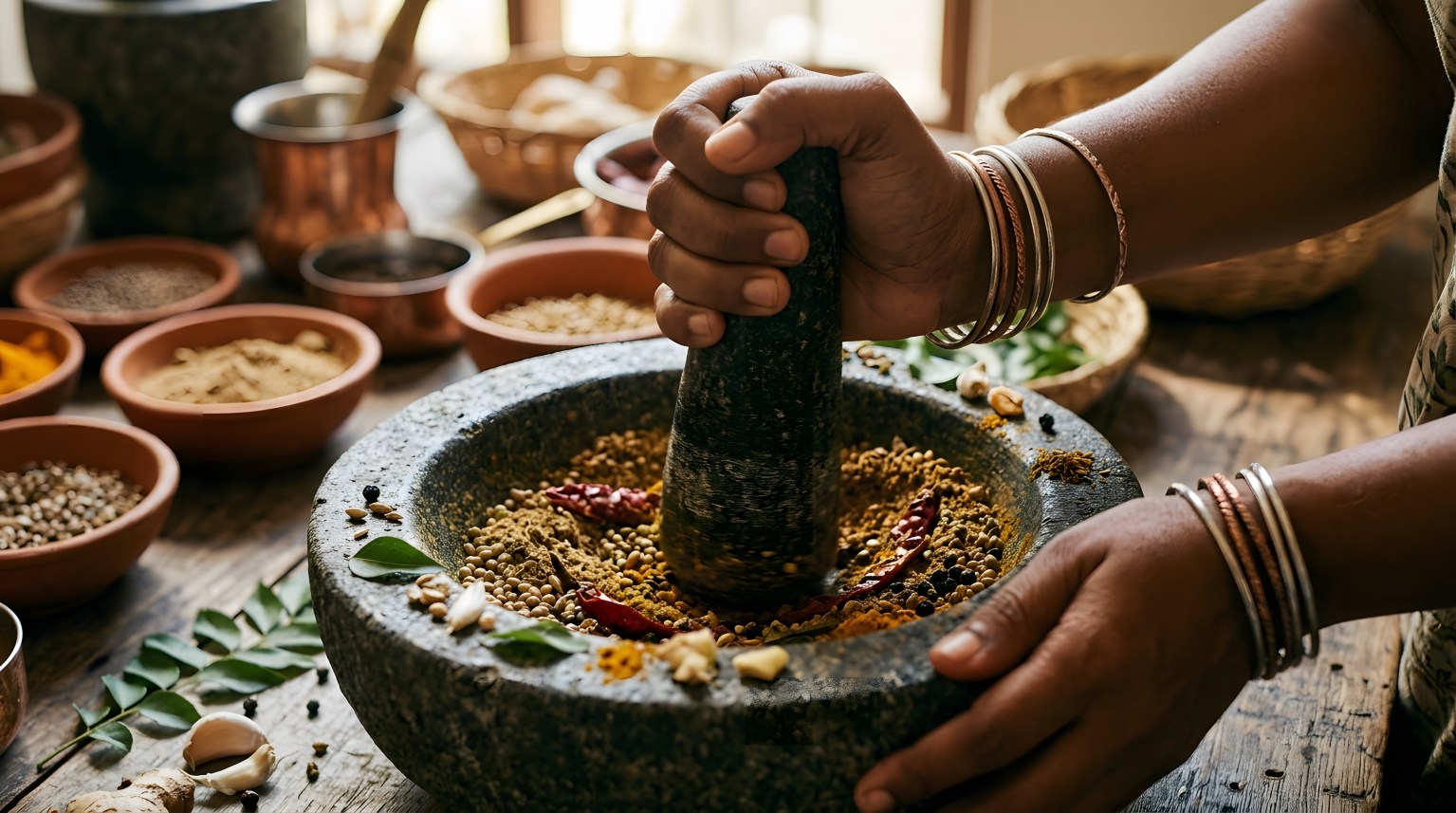
You added a tablespoon of paprika and the dish does not taste of paprika. The jar is not old, the quantity was not timid, and adding more only makes the food look redder.
What went wrong is a solvent problem. Most of the aromatic compounds in most spices are far more soluble in fat than in water, and a spice stirred into a watery dish at the end is a spice that never entered the food at all. It is sitting there as suspended powder, doing very little except contributing color and a faint dustiness.
Bloom means dissolve
Blooming is the instruction to cook ground spices briefly in hot fat before the liquid goes in, and it is usually presented as a flourish that serious cooks do. It is not a flourish. It is the step where the flavor leaves the powder and enters the dish.
Thirty to sixty seconds in warm oil or butter, stirred constantly, until the smell changes and gets louder. That is the whole technique, and the difference between a curry, a chili or a spiced braise that has had it and one that has not is not subtle.
The same logic explains a practice that looks like the opposite: the tempered oil poured over a finished dish at the table. The spices there were bloomed in hot fat seconds earlier, and the fat is the delivery vehicle, not a garnish. Chili crisp is the same idea sold in a jar.
And it explains what to do when there is no fat to bloom into. Stir the spice into a spoonful of oil or a spoonful of yogurt first, then add that to the pot. Thirty seconds of extra work and the dish arrives at a different place.
There is a short window before bloom becomes burn
Ground spice is fine powder with enormous surface area, and in hot fat it goes from fragrant to scorched fast — the whole window is under a minute, and for delicate things well under.
Burnt spice is not a diminished version of the good thing. It is an acrid, bitter flavor that cannot be removed and will run through everything built on top of it, which is the most common way a large pot of something gets ruined at the two-minute mark.
Two safeguards. Take the pan off the heat before the spice goes in, so residual heat does the work rather than a live flame. And have the next liquid ready at the stove, so the moment the smell arrives you can stop the cooking by adding it. Blooming is a step you cannot walk away from.
Some things are more forgiving. Turmeric and paprika want gentle heat and burn early. Cumin, coriander and mustard seed take more. Anything with sugar in it — a spice blend containing dried fruit or sugar, most barbecue rubs — scorches first and should go in late or not at all.
Whole spices are a slower, different tool
A whole seed has its aromatics locked inside intact plant tissue. It releases them slowly, which makes it wrong for a fifteen-minute dish and right for a two-hour braise, a pickling liquid or a pot of beans.
Toasting whole spices dry, in a pan until they smell, is doing something different from blooming. It drives internal moisture off and pushes the oils toward the surface, which is why a toasted cumin seed smells like more than an untoasted one before you have done anything else to it. Then grind.
The freshness argument is real but often overstated as a moral position. What actually happens is that grinding exposes all that surface to air, and volatile compounds leave. A jar of ground spice a year old has not gone bad; it has gone quiet. Whole seeds hold their aromatics for years because the packaging is the seed.
The practical middle ground for most households: buy whole what you use often and can grind quickly — cumin, coriander, peppercorns, fennel. Buy ground what is miserable to grind — turmeric, cinnamon, paprika, dried ginger. Replace the ground ones on a schedule you will actually keep.
The ones that break the rule
Not everything is oil-soluble, and the exceptions have their own handling.
Saffron gives up its color and flavor to warm water, not oil. Steep it in a little warm liquid for ten or fifteen minutes and add the whole infusion. Dropped dry into a pot, most of it goes nowhere.
Fresh green herbs are volatile rather than oil-soluble, and heat drives their aromatics off. They go in at the end, off the heat. Hardy herbs are the reverse and want the long cook.
Vanilla, most extracts and many floral aromatics are alcohol-soluble, which is what the extract bottle is: the solvent doing the same job fat does for cumin.
Fresh ginger, garlic and chilies are somewhere in between and change character depending on when they go in. Early they become sweet and round. Late they stay sharp. That is a decision, not a step.
Layering is why restaurant food tastes of more than yours
The habit worth taking from professional kitchens is not more spice. It is the same spice at two or three points in the cooking.
Some bloomed at the start, where it goes deep and sweet and becomes the background. Some added midway, where it keeps its middle. A little raw or freshly toasted at the end, where it is still sharp and volatile and arrives at the nose before anything else does.
Black pepper is the clearest demonstration and the easiest to test. Pepper cooked for an hour is a warm, resinous background note. Pepper cracked over the plate is a bright, almost citrusy hit that is gone in twenty minutes. They are not the same seasoning, and a dish that only has one of them is missing the other — which is the argument behind cracking the pepper twice.
Fat is the carrier for more than spice
Once you see spices this way, a few unrelated pieces of kitchen advice turn out to be the same piece of advice.
Tomato paste fried in oil before the liquid goes in. Chili powder cooked in the rendered fat before the beans. Garlic softened in butter rather than dropped into the broth. Dried mushroom powder stirred into a roux. The vinaigrette that tastes of the herb rather than of the vinegar, because the herb met the oil first.
All of it is the same mechanism, and it is the same reason a fat is a flavor carrier before it is a cooking medium. It is also why a low-fat version of a spiced dish tastes thin in a way that has nothing to do with richness: there is less solvent, so less of the seasoning is in solution, and the dish is quieter in a way more spice will not fix.
The diagnostic
A dish that tastes of nothing in particular, where you can see the spice but not taste it, has a solvent problem rather than a quantity problem. Adding more will make it dusty.
Pull a spoonful of fat from the pot, or add a fresh one, bloom a small amount of the same spice in it, and stir that back in. Two minutes, and it is the difference between a dish that has spices in it and a dish that tastes spiced.
Part of Recipes & Technique.


