The One Drink and the No-Drink
Nobody Selling You a Calm Drink Will Tell You How Many Milligrams Are in the Can
The actives in functional beverages have real literature behind them. The literature is entirely about dose. The cans do not state dose, and once you know the trial numbers you can work out why.
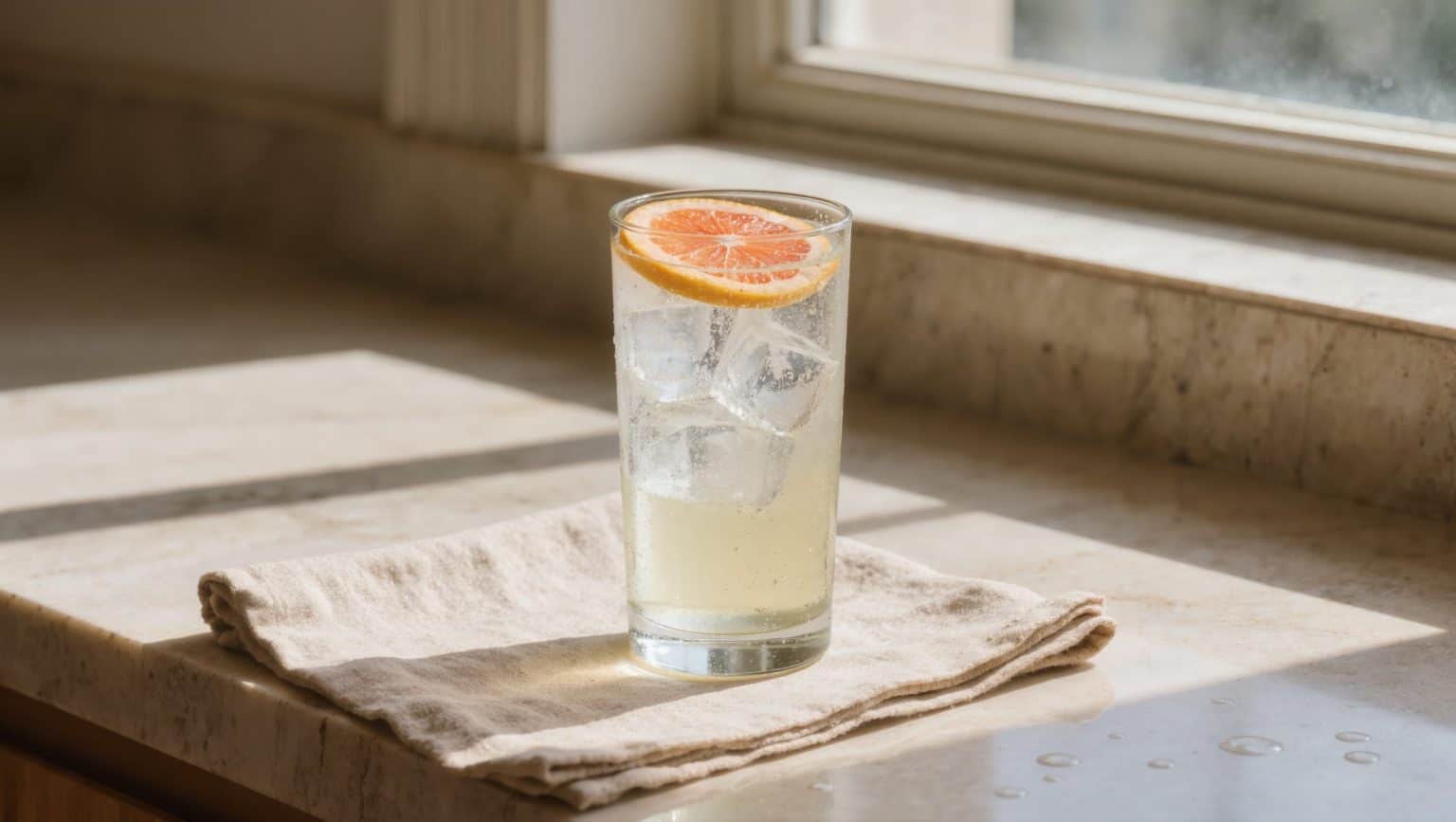
Pick up a can of one of the calm drinks. It will name three or four ingredients you have heard of: ashwagandha, lion’s mane, L-theanine, maybe rhodiola or GABA. These are not invented. Every one of them has a genuine research literature.
That literature is almost entirely about dose. Which quantity, taken how often, for how many weeks.
Now look for a milligram figure on the can.
One of the best-known brands in the category publishes an ingredient education page that gives no milligram amount for any active it uses. The only number that reaches the front of the pack is the magnesium. Another discloses 200 milligrams of L-theanine and 180 of passion flower — for its powder. For the canned drinks, the same company states the hemp, the caffeine and the magnesium, and not the theanine.
The missing number is the product.
The one with real evidence is the one being sold for the wrong effect
L-theanine is the strongest case in the category and it deserves credit. A meta-analysis pooling 31 randomized controlled trials across 1,168 people found a single 200 milligram dose significantly improved choice reaction time. That is a real, replicated, moderately sized effect, and the safety record across those trials was clean.
Read the rest of the same analysis and the picture narrows sharply. The effect on depressive symptoms was present but modest. The effect on stress was modest and, in the authors’ own accounting, largely influenced by studies at high risk of bias. The effect on anxiety was inconsistent and not statistically significant. On fatigue there was nothing.
So the evidence supports L-theanine for attention. The cans are sold for calm. The compound that works is being marketed for the outcome it did not demonstrate, and the outcome it did demonstrate would make a much stranger advertisement.
And even then: 200 milligrams is the tested dose. If the can does not say, you do not know whether you are getting 200 or 25.
Ashwagandha is a course of treatment, not a beverage
The trials that produced ashwagandha’s reputation used 300 to 600 milligrams a day of root extract standardized to a stated withanolide content, taken every day, for eight weeks or longer. The sleep meta-analysis found its effect concentrated in the studies at 600 milligrams daily running at least eight weeks. Lower doses and shorter courses did worse.
A can on a Thursday is not a smaller version of that protocol. It is a different thing entirely, and there is no dose-response curve anywhere in the literature that extends down to “occasionally.”
The safety notes deserve the same plainness. The National Institutes of Health describes the studies as fairly small and of short duration, with preparations varying enough that recommendations are difficult, and states that long-term safety is not known. There are multiple published case reports of acute liver injury in people taking 450 to 1,350 milligrams a day, with onset from one week to four months. There are thyroid effects on record, including three cases of thyrotoxicosis. Denmark banned it in 2023.
That does not make it dangerous in a can. It makes it an ingredient whose known risks were observed at the doses that also produced the benefits, which is precisely the tension a product declining to state its dose is declining to let you evaluate.
Lion’s mane has a trial where it performed worse than nothing
The encouraging studies used around 3 grams a day for 12 to 16 weeks. In the best-known of them, on older adults with mild cognitive impairment, scores improved during treatment and declined again after it stopped.
Then there is the trial nobody quotes. Forty-one healthy adults, four weeks, and the lion’s mane group had worse delayed word recall than placebo. Two further trials found no cognitive improvement. A 49-week study in Alzheimer’s patients found gains in daily living and no significant cognitive improvement.
The Alzheimer’s Drug Discovery Foundation’s assessment is that well-designed larger and longer clinical trials are needed, which is the polite form of saying we do not know yet.
Three grams a day for three months is the dose that has ever shown anything. Put that beside a fraction of a gram, sometimes, in a flavored sparkling water.
Two more, quickly, because the pattern is the point
Rhodiola. A systematic review found eleven studies at doses from 100 to 680 milligrams daily. Two of six physical-fatigue trials showed an effect; three of five mental-fatigue trials did. The reviewers’ summing-up is the sentence that matters: all of the included studies exhibit either a high risk of bias or reporting flaws, and the research is contradictory.
GABA. This one is interesting for a reason that has nothing to do with dose. A systematic review of fourteen studies found limited evidence for stress and very limited evidence for sleep, and noted that there are no data showing GABA crosses the human blood-brain barrier at all. Whatever is happening, if anything is, may be happening through the gut rather than the brain. Eleven of the fourteen studies had authors employed by industry, and several enrolled fewer than twenty people.
Kava and CBD are separate cases and both are worth knowing
Kava has modest published efficacy at 105 to 210 milligrams of kavalactones daily for a few weeks. It also has 50 to 100 published cases of liver injury, some progressing to acute liver failure requiring transplant, with jaundice appearing anywhere from two to 24 weeks after starting. The FDA issued a consumer advisory in 2002. Several countries have banned or restricted it.
CBD’s problem is regulatory rather than pharmacological. Because CBD is the active ingredient in an approved drug, it is excluded from the definition of a dietary supplement under federal law, and introducing food into interstate commerce with CBD added to it is a prohibited act. In January 2023 the FDA concluded that the existing frameworks for foods and supplements are not appropriate for CBD and asked Congress for a new pathway.
Which means every CBD beverage on an American shelf is sitting in an enforcement gap rather than standing on a permission. That is not a warning about drinking one. It is a caution about the inference people draw from availability — a thing being on a shelf in a lit store is not the same as a thing having been evaluated.
And damiana, which turns up in the more romantic end of the category, has no clinical trial data supporting any indication, no standardization, and therefore no basis on which a dose could even be proposed.
Why the milligrams are missing, stated as plainly as I can
If you print 50 milligrams of ashwagandha on a can, a reader who spends four minutes online finds that the trials used 600, daily, for two months. The number argues against the product.
A proprietary blend is not a formulation secret worth protecting from competitors who can pay a lab 200 dollars to analyze the can. It is a way of not printing a number. Those are different things and only one of them is a business reason.
The industry’s own research is quietly honest about what these drinks are for. Asked why they buy them, only about a quarter of buyers of this category cite health at all. Seventeen percent say they want effects similar to alcohol through functional ingredients, and a fifth say curiosity. The non-alcoholic beer and wine buyers, by contrast, mostly cite a healthy lifestyle choice. These are not the same product and the people buying them know it better than the marketing does.
The part that does work, and it is not the mushroom
Here is what I actually think, having read all of this.
Something cold, bitter and carbonated, in a real glass, at six o’clock, instead of a drink, is doing genuine work. It occupies the hand and the ritual. Carbonation is a trigeminal sensation the body responds to whether or not anything is dissolved in it. Bitterness is the axis that makes a non-alcoholic drink read as adult rather than as juice. Temperature and texture are structure. None of that is placebo in any dismissive sense, and none of it requires an adaptogen.
If you want L-theanine at a dose the evidence supports, it is 200 milligrams, it costs very little as a plain supplement, and it is also sitting in a pot of good tea. If you want the drink, buy the drink because it tastes good, which several of them do.
What I would not do is buy one for the ingredient list and then be disappointed that nothing happened. Nothing was ever going to happen at an undisclosed fraction of a trial dose, and the fact that you cannot tell how far below it you are is a decision somebody made on purpose.
The rule is short. Look for a number. If there is no number, you are buying a flavor and a ritual — which is a perfectly good thing to buy, at the price of a flavor and a ritual, and you can build a better one yourself for less.
Anyone taking medication, pregnant, or managing a thyroid or liver condition should treat any of these as something to raise with a clinician rather than something to work out from a label — particularly given that the label, as established, is not telling you the one thing you would need.
Doses and effect sizes here come from published human trials and systematic reviews: the 31-trial meta-analysis on L-theanine, the National Institutes of Health professional fact sheet on ashwagandha, the Alzheimer’s Drug Discovery Foundation’s review of the lion’s mane trials, the systematic reviews on rhodiola and GABA, and the NIH LiverTox record for kava. The regulatory positions on CBD are the FDA’s own, read directly. The per-can amounts, or their absence, were taken from the manufacturers’ current public ingredient pages in September 2026 and are the kind of thing a company can change on a Tuesday — check the can in your hand rather than trusting this paragraph. I have no commercial relationship with any brand named or unnamed here, and I have not had any of these products tested.
Part of Drinks & Zero-Proof.


