The One Drink and the No-Drink
The Aroma They Put Back Into Non-Alcoholic Wine Is Dissolved in Alcohol
Good producers catch the aroma before they strip the alcohol, then pour it back. That recovered fraction is 55 percent alcohol by volume, and the legal ceiling on how much they may return is the ceiling on how good the category gets.
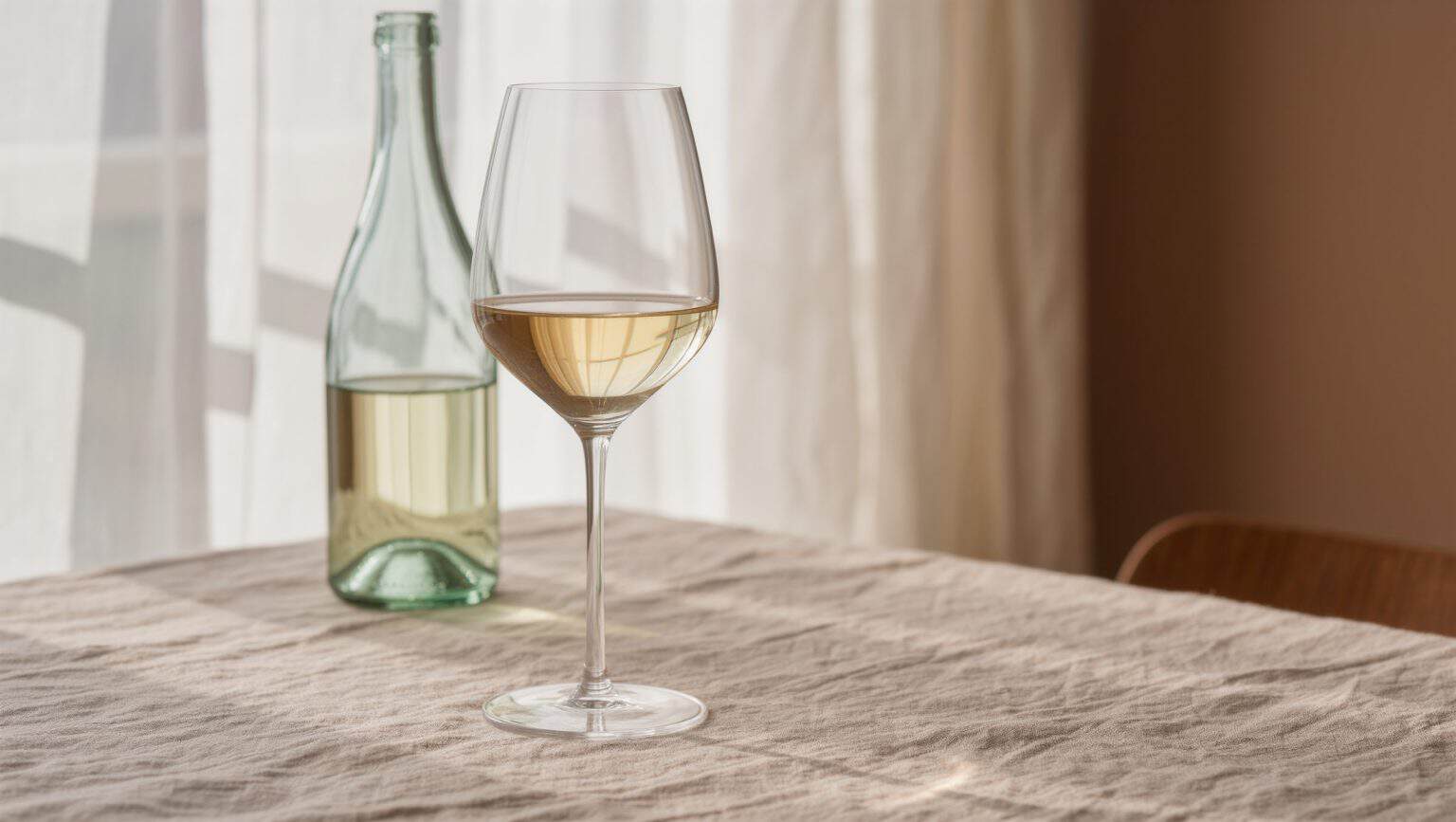
The better producers of non-alcoholic wine do not simply take the alcohol out. They run the wine twice. The first pass, at very low pressure and low heat, catches the aroma and sets it aside. The second pass strips the alcohol. Then the saved aroma goes back in at the end.
That recovered aroma fraction is about 55 percent alcohol by volume.
Which is the joke sitting at the center of this entire category, and it is not a joke anyone selling you the bottle is going to tell. The most valuable thing they rescued from the wine is dissolved in the one substance they are legally obliged to remove, and the law caps how much of it they are allowed to pour back.
This piece is the second half of a mechanism. The removal half is here. This is what happens afterward, what the regulations permit, and why beer survives the process in a way wine mostly does not.
Taking the alcohol out has a price list, and it is paid in esters
Vacuum distillation runs cold — around 15 to 20 degrees Celsius, under less than a tenth of an atmosphere — precisely so the wine is not cooked. It still strips aroma, and the reason is thermodynamic rather than careless.
Esters partition into vapor more readily than ethanol does. They have higher Henry’s law constants, which is a technical way of saying they are more eager to leave the liquid than the alcohol you are trying to evict. You cannot pull the ethanol out without pulling them out first.
The measured cost, at partial dealcoholization: short and medium-chain esters lose 80 to 100 percent. Ethyl acetate, 80 to 90 percent. Acetaldehyde, 60. Higher alcohols, 20 to 40 percent. Methanol loses about 2 percent, which is to say the one compound nobody wants stays exactly where it is.
Across the published work on all the techniques together, the ranges are wider and worse: esters 81 to 99 percent, terpenes and the compounds that give a Riesling its kerosene and a Muscat its grape 18 to 96 percent, organic acids 15 to 91. One aroma compound in both wines tested did not deplete at all, 2-phenylethanol, which smells of roses. It is not enough to build a wine on.
Pressure is the dial. Dropping from 150 millibar to 50 retains more esters. The spinning cone column, the equipment most of the serious producers use, captures the aroma pass at 0.04 atmospheres and 28 degrees Celsius and recovers a volume equal to roughly one percent of the wine, then removes the alcohol at 38 degrees. Reverse osmosis is gentler still and runs at 1 to 5 degrees, and osmotic distillation is gentlest of all, holding esters above 82 percent — but it only removes a few percentage points of alcohol per pass, which is why nobody gets to zero with it alone.
The one thing that does not leave is the tannin, and that is why dealcoholized red tastes mean
Here is the inversion that explains the whole red-wine problem.
Volatiles leave. Phenolics do not. Concentrations of flavonoids and anthocyanins either hold steady or rise — increases of 11 to 84 percent have been measured — for the unremarkable reason that you removed volume and left the phenolics behind.
So a dealcoholized red is simultaneously more tannic than the wine it came from and stripped of the ethanol that was softening those tannins. Both hands move against you at once. It is not that the wine is weaker. It is that the structure got louder while the thing that buffered it walked out.
Producers say this plainly when asked. One German winemaker describes red tannins after dealcoholization as coming out green, sometimes really harsh. A New Zealand winemaker puts the acid problem in one sentence: when you lose the sweetness of alcohol, the acidity therefore becomes more pronounced. A French producer, whose business depends on the category working, says you are still losing 60 percent of the aroma and also the backbone of the wine.
None of those people are critics. They are the ones making it.
The carrier story is half right, and the wrong half is the half everybody repeats
The usual explanation goes: alcohol carries aroma to your nose, so take it away and the smell cannot get out.
In a glass sitting still, that is backwards. Higher ethanol decreases the volatile headspace above a static liquid, because ethanol is a good solvent for those compounds and holds them in solution. The carrier effect appears in dynamic conditions — air moving, liquid in your mouth, a swallow — where ethanol improves mass transfer out. Both effects are real and they point in opposite directions depending on whether anybody is drinking.
Which matters because it relocates the blame. The aroma missing from a dealcoholized wine was overwhelmingly removed in a factory, mechanically, during the strip. It is not mostly sitting in the glass unable to reach you. That distinction changes what a producer can do about it, and it is why aroma recovery is the only intervention in this whole process that adds anything back.
Ethanol also works as a threshold dial, and this is the part that complicates any simple story. Tested across forty aroma compounds between 20 and 60 percent alcohol, detection thresholds shifted by anywhere from two-fold to nearly seven-hundred-fold. Thirty of the forty had higher thresholds at higher alcohol, meaning ethanol was masking them. Take the alcohol out and some compounds get easier to smell, not harder.
I have written the carrier version of this myself, in the piece on what alcohol was doing in a pairing, and the three-jobs frame there still holds for the drinking case. The precision worth adding is that job one is a mass-transfer effect while you drink, not a lift that happens in a motionless glass.
Below a certain alcohol, wine is not a weaker version of itself. It is a different shape.
Alcohol contributes measurably to body — about 0.3 points on a nine-point scale per percentage point of alcohol, in trained-panel work on Riesling — and it produces a robust warmth on the palate that nothing else in the wine supplies.
More usefully, there are thresholds where the whole thing stops balancing. In model wines, below about 10 percent alcohol in reds and 7.5 percent in whites, profiles turn unbalanced with excessive sourness. Bitterness in whites climbs as alcohol falls. And a review across the dealcoholization literature puts the sensory cliff bluntly: quality is poor once ethanol drops below 3 percent by volume, while a reduction of one to four points preserves it far better.
Read that again with a shop shelf in mind. Every zero-alcohol wine you can buy sits on the far side of that cliff by definition. The band where this technology works well — knock a ripe 15 percent Zinfandel down to 12 and a half — produces a wine that is still wine, still taxed and labeled as wine, and useless to anybody who is not drinking.
The legal ceiling on alcohol is also the ceiling on aroma
Now the part that makes the whole category legible.
In a trial on dealcoholized Tempranillo rosé, the recovered aroma distillate — the 55 percent alcohol fraction — was added back at 0.5, 1.0 and 1.5 percent by volume. One percent was the sensory optimum: 57 volatile compounds restored, including linalool, geraniol, vanillin, isoamyl acetate and the green-leaf alcohols, with real measured gains in raspberry, strawberry and fresh-fruit character.
The 1.5 percent addition was better still on some axes and it exceeded the legal alcohol limit for dealcoholized wine.
So the half-percent rule is not an administrative footnote. It is a hard cap on the only step in the process that puts anything back. A producer who wants more aroma in the bottle has to buy it with alcohol they are not allowed to spend. That is the constraint, it is structural, and no amount of better equipment removes it.
What gets added instead, and glycerin is the weakest of it
With aroma capped, the additions turn to texture and sweetness, and the most commonly claimed one does not do what the claim says.
Glycerin gets described as a body-builder. The foundational sensory work says otherwise: at the concentrations glycerol naturally occupies in wine, roughly 1 to 9 grams per liter, its primary contribution is to sweetness, not viscosity. A just-noticeable increase in perceived viscosity required 25.8 grams per liter — several times more than wine contains, and far past the point where you would notice it had gone sweet. A wine described as having glycerin added for mouthfeel has, in most plausible cases, been made sweeter.
It is also worth knowing that in the United States glycerin does not appear among the materials authorized for treating wine under the federal regulations, while gum arabic does — at up to about 1.9 grams per liter, which is roughly six times the international limit of 0.3. Tannin additions are permitted, as are acid corrections with tartaric, malic, citric and lactic acid, which matters here because dealcoholization drives perceived acidity up rather than down.
The rest of the toolkit is grape juice concentrate, rectified must, inactivated yeast preparations and mannoproteins to mimic lees contact, and a set of decisions made before the strip — extended barrel time, extra stirring — to over-extract a wine that is about to lose most of what it had.
Three labels, and only one of them means zero
These words are not synonyms and the difference is regulated.
Dealcoholized and alcohol-removed require under 0.5 percent alcohol by volume. Those words have to appear in letters the same size as the word “wine”, alongside a declaration that the product contains less than 0.5 percent alcohol.
Non-alcoholic means under 0.5 percent as well. For malt beverages the federal guidance allows no tolerance on that figure at all.
Alcohol-free is the only one that means what a plain reader thinks it means: no detectable alcohol. For a malt beverage that is 0.0 percent, with no tolerance permitted.
In Europe the categories arrived in 2021: de-alcoholised at or under 0.5 percent, partially de-alcoholised in between, and full dealcoholization prohibited outright for protected-origin wines.
Half a percent is a trivial amount of alcohol by most measures — a ripe banana and a bottle of kombucha are in the same neighborhood. For somebody driving home it is nothing. For somebody in recovery, or on a medication with a real interaction, it is not nothing, and “non-alcoholic” is not the same word as “alcohol-free.” That is a different brief entirely and it deserves the precise word.
Beer starts four points from the target. Wine starts fourteen.
This is the structural reason the beer aisle is better than the wine aisle, and it survives scrutiny.
Beer can be built low rather than stripped low. Certain yeasts cannot ferment maltose, wort’s dominant sugar, because they lack the transporter and the enzyme for it. Saccharomycodes ludwigii finishes somewhere between 0.15 and 1.36 percent alcohol and simply stops. Cold contact fermentation — 24 to 100 hours at near-freezing temperatures — does something similar while keeping enough enzymatic activity to clean up raw-tasting aldehydes.
And when beer is stripped, the distance is short. Thin-film evaporation takes a 5 percent beer to 0.01 or 0.03 percent in one pass. Wine has to shed up to fourteen points, through a band where, as above, the whole thing stops balancing.
Beer also has hops. There is no experimental work I could find that actually tests bitterness and carbonation as a replacement for ethanol’s structure, so treat that as a reasonable inference rather than a finding — but beer at 4 to 5 percent was never leaning on its alcohol the way a 14 percent red is.
Non-alcoholic beer has a real defect of its own, and it is not the missing alcohol
If the beer tastes like raw wort — grainy, cereal, faintly of cooked vegetable — that is Strecker aldehydes, principally methional and the methylbutanals, which normal fermentation would have reduced and short fermentation leaves in place.
Worse, aldehyde retention in non-alcoholic beer runs 8 to 12 percent against 32 to 39 percent in ordinary beer, so there is less around them to hide behind. The off-note is not larger; it is more exposed. Arrested fermentation also raises dimethyl sulfide, the creamed-corn compound, to the point that it works as a marker for how the beer was made.
One more correction to the clean version of this argument: brewing it low is what craft producers mostly do. At industrial scale, vacuum distillation and reverse osmosis dominate, because they scale better. A great deal of large-brand non-alcoholic beer is stripped, exactly like the wine.
What the market says, which is less tidy than the argument
Non-alcoholic beer reached 2.5 percent of United States beer volume in 2025, up from 1.1 percent in 2021 — volume up 111 percent and dollars up 159 percent across those four years, with the number of brands up 180 percent. Non-alcoholic off-premise sales overall ran around 925 million dollars, up 22 percent. And 92 percent of the people buying it also buy alcohol, which tells you this is an addition to a repertoire rather than a replacement for one.
Then the inconvenient number. In a consumer survey of people who drink non-alcoholic products, non-alcoholic wine and non-alcoholic beer had each been consumed by 50 percent of them in the previous three months. Tied. The wine skewed younger — 61 percent of 21-to-29-year-olds against 42 percent of the over-65s.
So the chemistry says wine is much the harder problem and the purchase data declines to confirm that people have noticed. Both are true. I would rather leave the second one in than let the first one land harder than it has earned.
What to do with all of this in a shop
Buy the beer without much anxiety, and prefer one brewed short over one stripped, which the better producers will tell you on the label. If it tastes of raw grain, that is the process, not the batch.
Buy sparkling and white with reasonable confidence, because carbonation and acid do some of the work alcohol was doing and neither depends on it.
Treat red as the hard case it genuinely is, and when you buy one, look for language about aroma recovery or returned aroma. That is the only step in the process that adds rather than subtracts, and it is capped by law at a level you can taste the edge of.
And then treat the bottle as an ingredient rather than a finished drink, which is the same advice that ends the removal piece and is still the most useful sentence in this whole subject. The thing in your hand is missing its length, its warmth and most of its esters, and it is carrying more tannin and more apparent acid than it was designed to. Bitterness, salt, texture and temperature buy some of that back. A wine glass and good intentions do not.
The figures here are from the peer-reviewed dealcoholization literature — loss ranges from a scoping review across techniques, the aroma add-back trial on Tempranillo rosé, the ethanol threshold work across forty compounds, and Noble and Bursick’s 1984 sensory study on glycerol — plus United States and European labeling regulations read directly, trade-technical reporting on production at scale, and producer statements made on the record. Where a claim is an inference rather than a measurement, as with hops standing in for structure, it says so in the sentence. Nothing here is a tasting note; I have not tasted these bottles against a control and would not ask you to take my word for the ones I have. This is what the process does, and what the law permits, both of which you can check.
Part of Drinks & Zero-Proof.


