The One Drink and the No-Drink
Pairing Without Alcohol Means Replacing an Aroma Carrier, a Body and a Burn
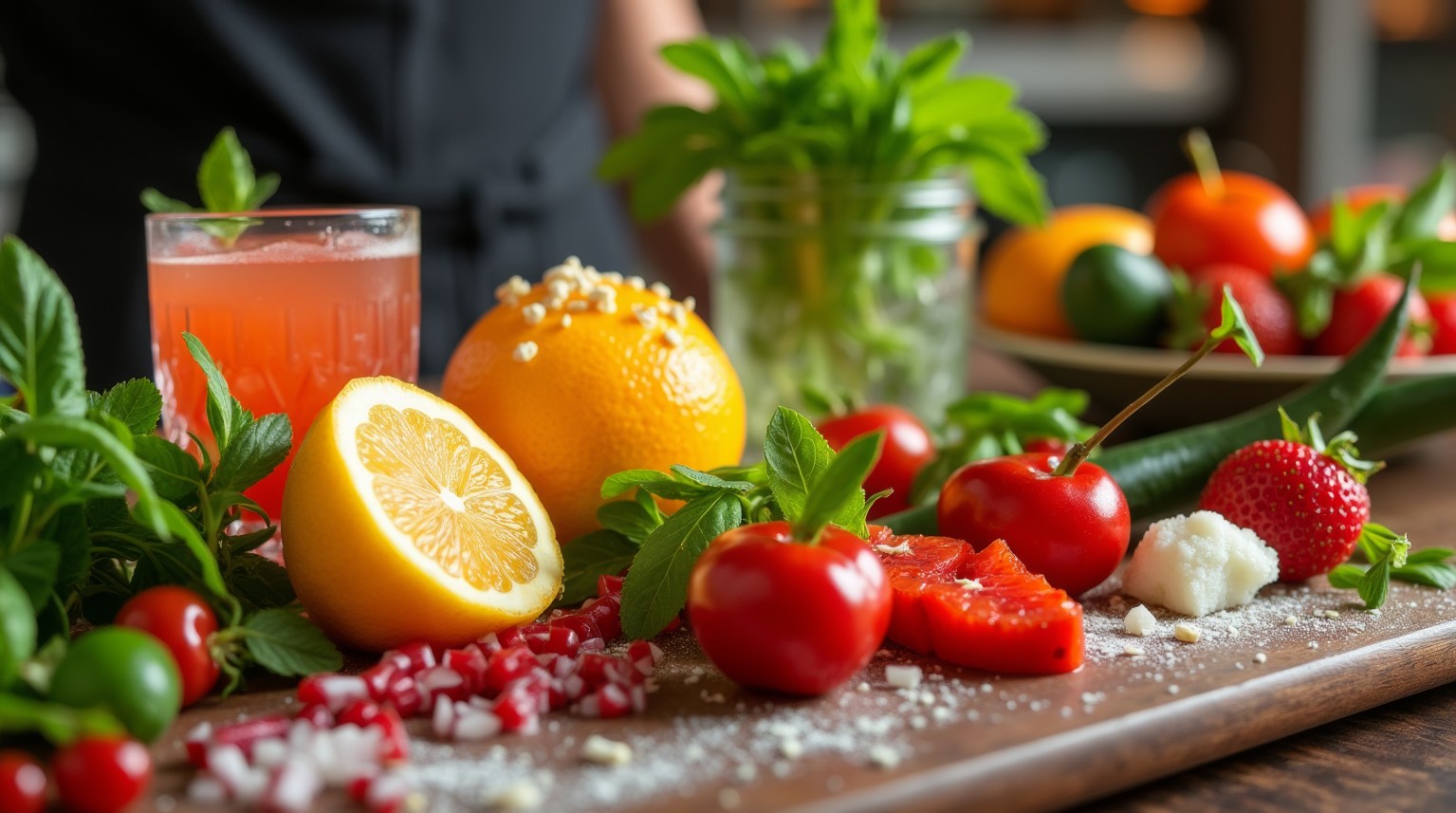
Every piece of advice about pairing food with non-alcoholic drinks that you can find in ten seconds is a product list. Four bottles, a sentence each, the word acidity used once, and nothing whatsoever about why a glass sits well beside a plate or fails to. It is a shopping list wearing a pairing’s clothes.
The useful version starts one step earlier, with a question nobody asks: what was the alcohol actually contributing to that pairing? Not the flavor. Flavor is easy to replace. Alcohol was doing three physical jobs at the table, and if you do not replace them individually, you have not made a pairing, you have put a nice juice next to some food.
Job one: it was carrying the smell
Most of what you think you taste, you smell, and most of what you smell from a glass is riding on ethanol.
Ethanol evaporates readily at room temperature and carries aroma compounds with it into the air above the drink. It is also amphiphilic, which means it holds both water-loving and oil-loving molecules in solution, so a spirit or a wine carries a far wider spectrum of aromatics than water possibly can. Warmth accelerates it, which is why a wine opens up in a warm room and a chilled soda does not.
Take the alcohol out and you lose the carrier and half the cargo at once. A zero-proof drink can taste good and still read as inert at the table, because nothing is arriving before the sip. And a pairing is largely an aroma event. The reason a wine and a dish seem to complete each other is that their volatiles mix in your nose, retronasally, on the same breath.
So aroma in a no-alcohol pairing has to be applied, not extracted. Expressed citrus oil on the surface. A slapped herb across the ice. A drop of an infused oil that sits on the top and releases as you tilt the glass. A wider glass, not a narrower one, because you need surface area. And serve it a little less brutally cold than instinct says, because cold suppresses volatility exactly when you cannot afford it.
Job two: it was the body
Richness in a glass has to roughly meet richness on a plate, or the plate erases the glass. A light, thin drink next to braised short rib is not a contrast, it is an absence. You take a sip and nothing happens.
Alcohol contributes genuine viscosity. A drink at twenty-two percent alcohol by volume has measurable thickness and a warm, coating finish. Water-based drinks have neither by default, and that is why so many of them read as refreshing but weightless.
There are four ways to put weight back and the reflex one is the worst. Sugar works but has a low ceiling before it cloys. Hydrocolloids work brilliantly and taste like nothing: two percent gum arabic in a syrup buys you real texture with no sweetness penalty. Fat and protein work and commit you to a style, which is fine if the plate is going that way anyway. And tannin works differently, adding grip rather than thickness, which the mouth reads as substance because it takes longer to leave.
Job three: it was the burn that cleared the palate
This is the one people miss entirely.
Ethanol activates TRPV1, the same receptor that responds to capsaicin and to heat above about 109°F. That is a trigeminal sensation, not a taste, and it registers as warmth and a mild sting. Functionally it scrubs. It cuts through fat sitting on the tongue and resets the palate so the next bite lands clean. That is a large part of what people mean when they say a spirit cuts richness.
Three things can take over the job, and each does a fraction of it. Acid triggers salivation, and saliva physically rinses fat away. Carbonation converts to carbonic acid on the tongue via an enzyme in the taste tissue and registers as a low-grade irritant plus mechanical agitation. Tannin binds salivary proteins and pulls them out of solution, leaving the mouth drier and more sensitive to the next thing. Actual pungency from ginger, black pepper or chile hits the same TRPV1 pathway directly and is the most literal substitution available.
No single one of those is enough on its own against a rich dish. Two of them together is. Acid and carbonation is the default pairing, and it is the one commercial products lean on hardest. Tannin and pungency is the more interesting one and almost nobody sells it.
So the pairing question has three answers, not one
Put a plate in front of you and ask the three questions in order. What is going to carry aroma across, given that nothing in this glass volatilizes on its own? What is going to give this drink enough weight to survive the dish? And what combination of acid, bubbles, tannin and pungency is going to clear the fat between bites?
Answer those and the drink almost designs itself, and you will notice that the answer is frequently not a bottle you can buy. It is strong tea with citrus oil on top. It is a bitter shrub long over ice with black pepper in the syrup. It is a salted grapefruit tonic with a lot of ice and an expressed peel.
That is the whole difference between this and the product lists. A pairing has to have a job, as I have argued at length, and when you remove alcohol you have removed three of the tools that were doing the job invisibly. Name them, replace them one at a time, and the pairing works. Skip the step and you get a nice juice next to some food, which is exactly what everybody has been getting.
Part of Drinks & Zero-Proof.


