Pasta water is not supposed to taste like the sea
The sea is 3.5 percent salt. A pot of pasta water at that strength is not seasoned, it is ruined — and the arithmetic showing why is short enough to check on a napkin.
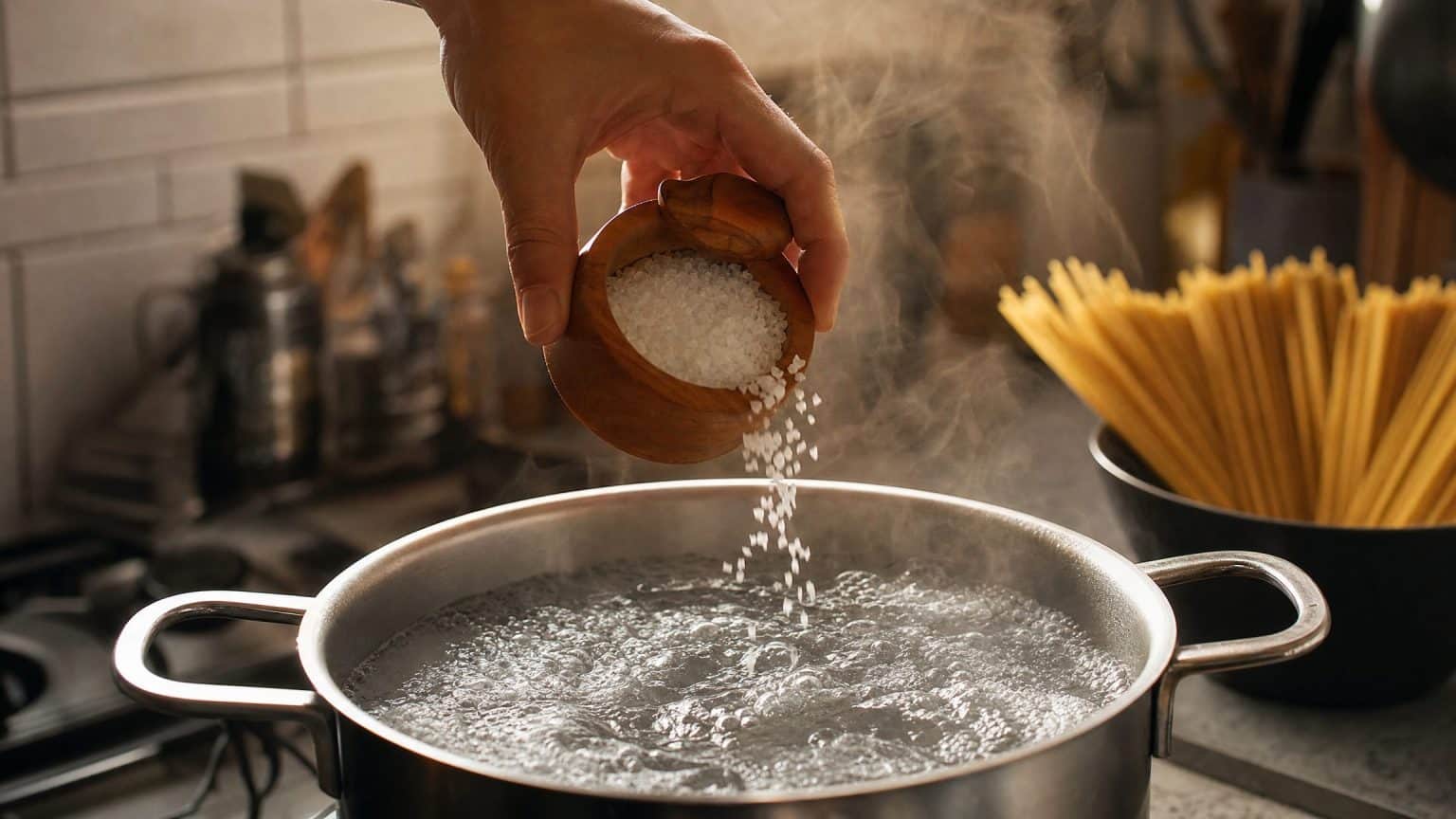
Somewhere between an Italian grandmother and a line cook with a podcast, the instruction became fixed: salt the pasta water until it tastes like the sea. It is repeated in cookbooks, on packets, and in the first thirty seconds of roughly every pasta video ever filmed.
It is wrong by a factor of about three and a half, and unlike most kitchen folklore, this one is easy to check.
Seawater is a real number
Ocean water is about 3.5 percent salt by weight. That is not a poetic figure, it is a measurement. Four quarts of water weigh about 3.8 kilograms, so a pot of pasta water at genuine seawater strength needs roughly 130 grams of salt — nearly half a cup of table salt, or a very large fistful of anything else.
Nobody does this. The people who repeat the instruction do not do it either. What they actually do is throw in a couple of tablespoons, which is somewhere between a quarter and a third of what they just told you, and the dish comes out fine — which is why the instruction survives. It is protected from correction by the fact that no one follows it.
The number that works
One percent of the weight of the water. About ten grams a liter. For a normal four-quart pot, that is roughly 38 grams:
- Diamond Crystal kosher — about 4 1/2 tablespoons
- Morton kosher — about 2 5/8 tablespoons
- Fine sea salt — about 2 1/4 tablespoons
- Table salt — about 2 tablespoons
Four different volumes, one weight. That is not a rounding problem, it is the reason a recipe that worked for the person who wrote it can fail in your kitchen for no visible reason. The salt calculator will do that conversion for any pot size, and for the six other things in a kitchen that want salting by percentage rather than by spoon.
Why one percent lands correctly on the plate
This is the part that makes the whole thing make sense, and it is the reason a pot that tastes mild in the water produces pasta that tastes seasoned.
Pasta does not carry the pot with it. It absorbs a fraction of the water and leaves the rest behind. A hundred grams of dry pasta comes out of the pot at around 220 grams, which means it took on about 120 grams of water — and only the salt dissolved in that water ends up in your bowl.
At one percent, those 120 grams of water carry 1.2 grams of salt into 220 grams of cooked pasta. That is a shade over half a percent by weight, which sits precisely in the band where food tastes seasoned rather than salty. It is the same percentage you would season a piece of meat or a tray of vegetables to.
Now run it at seawater strength. The same 120 grams of water carries 4.2 grams of salt, and the pasta arrives at nearly two percent — about three and a half times a normal seasoning level, and comfortably past the point where the only thing you can taste is salt. There is no sauce that rescues it.
Two things salt in the water does not do
It does not make the water boil faster. Dissolved salt slightly raises the boiling point, which if anything makes it take marginally longer. At one percent the effect is about a fifth of a degree Celsius — far below what any pot or any cook could notice.
It does not season the pasta from the outside. Salt on the surface of cooked pasta rinses off with the sauce and lands in the bowl unevenly. The pot is the only moment the interior of the noodle is open to seasoning, and once it comes out, that moment is gone. This is why salting the water is not optional and why salting the finished dish is not a substitute — they are two different jobs and only one of them can be done late.
The reserved water problem
Every good pasta recipe now tells you to save a cup of the starchy cooking water and use it to bring the sauce together. That advice and the seawater advice are incompatible, and almost nobody says so.
A cup of water at one percent carries about 2.4 grams of salt into the pan — noticeable, correct, and easy to account for. The same cup at seawater strength carries over eight grams, which will take a finished sauce past the edge in one pour. If you have ever added pasta water to a pan and watched a good sauce turn suddenly, aggressively salty, this is what happened.
What else the one percent rule covers
Potatoes, green beans, corn, any vegetable boiled in water it will be lifted out of: one percent, for the same reason. The food takes on a fraction of the water and you are seasoning the inside of it.
The exception is anything where the water becomes the dish. A stock, a soup, a risotto, a pot of beans you intend to serve in their liquid — those get seasoned at the end, against what is actually on the plate, because the volume changes as it cooks and any salt you put in at the start concentrates as the pot reduces.
The general form
Salt by weight, not by spoon, and by a percentage of the thing you are salting rather than a fixed amount. That single habit removes the brand problem, the country problem and the crystal-shape problem all at once, and it is the reason professional kitchens rarely use teaspoons for this.
The salt calculator does the arithmetic for meat, ground meat, vegetables, pasta water, wet brine, bread dough and sauce, and converts every answer into whichever box is actually sitting on your counter. The scaling calculator handles what happens to those numbers when a recipe for four has to feed eighteen — salt is one of the few things that scales cleanly, and it is worth knowing which things do not.
Part of Kitchen Systems.
Where this goes next

