Red-Sky Escovitch Fish with Carrot, Pepper, and Allspice
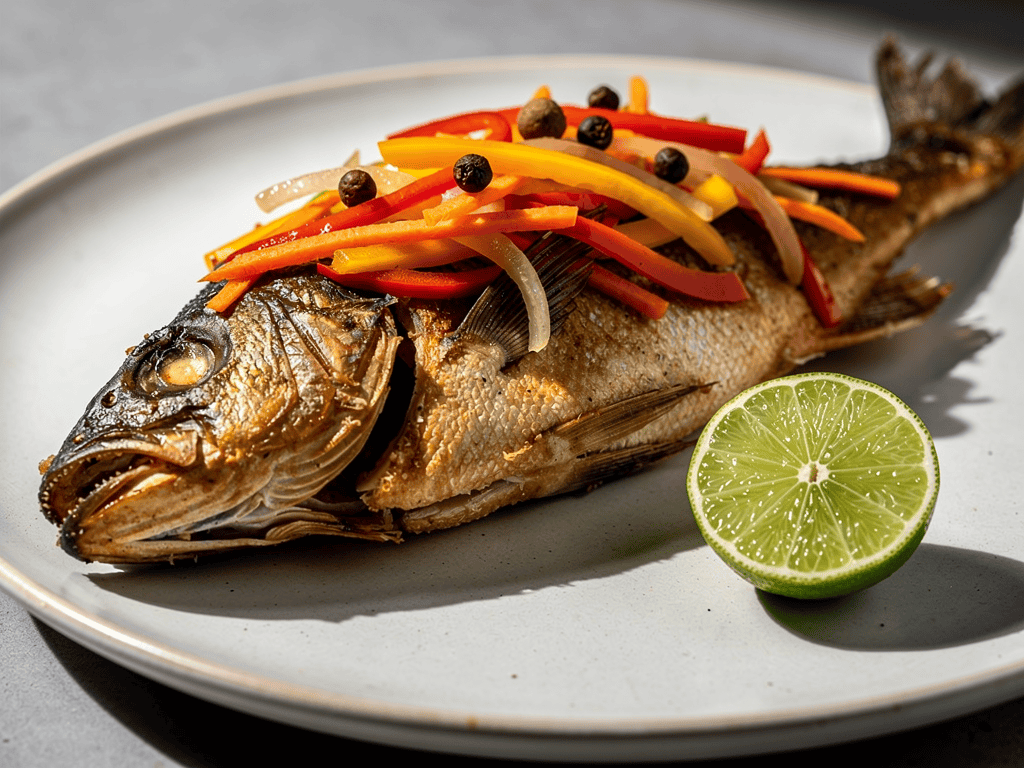
Fish fried to a real crust, then doused hot with a Scotch bonnet and allspice pickle that does the arguing. The Jamaican classic, scaled to weeknight fillets.
The parts that change whether this works tonight.
- Yield
- 4
- Time
- 45 minutes
- Equipment
- A heavy skillet for shallow frying, a fish spatula or confident tongs, a platter with a lip to hold the pickling liquid, and a…
- The method
- 14 ingredients · 5 steps
From this recipe’s own recipe card. Nothing here is a guess.
Pairing
Wine — Dry Riesling, or a very cold lager. Mixed drink — Rum swizzle with lime and allspice dram, kept short. It should taste like the pickle, not a beach menu. Teetotaler — Ginger beer with lime and a crack of allspice. The Scotch bonnet pickle is already a pairing. Match the vinegar and spice; do not try to soothe it with oak.
Tools
A heavy skillet for shallow frying, a fish spatula or confident tongs, a platter with a lip to hold the pickling liquid, and a sharp knife for matchstick carrots.
Ingredients · swaps in parentheses
Snapper or sea-bass fillets (any firm white fish that can hold a crust), kosher salt, ground allspice, flour, neutral oil, carrot, red bell pepper, onion, Scotch bonnet (habanero), allspice berries, white vinegar, water, sugar, thyme.
Magic
Send the allspice berries and the thyme through the frying oil before the fish goes anywhere near it. Thirty seconds in, then lift them out with a spider and let them carry on into the pickle exactly as written — nothing is lost and nothing is added. What changes is that every fillet now fries in oil that smells of allspice and thyme, so the crust arrives already seasoned from the inside rather than waiting for the pickle to season it from the outside. Not feeling brave? Give the oil half the berries and a single sprig and see whether you can find them in the crust.
Gotcha
Get the oil properly hot and fry in batches if you must. A crowded pan gives you pale, steamed fillets, and a soft crust dissolves entirely under the hot pickle — the tension the dish depends on is gone before it reaches the table.
Escovitch is Jamaican. The name drifted over from Spanish escabeche centuries ago, but the dish stopped taking instructions from Spain a long time back: fish fried hard, then buried while still hot under a ferocious vinegar pickle of carrot, onion, sweet pepper, and Scotch bonnet, with allspice — pimento, on the island — running through all of it. It shows up at Easter, at beach shacks, on Friday nights, classically as whole snapper on the bone with the head very much attached. Fillets are the weeknight concession here. The logic is not negotiable: crisp fish, hot sharp pickle, and the ten quiet minutes where they work each other out.
Serves: 4
Time: 45 minutes
Buying the fish
Snapper is traditional and worth asking for by name; sea bass behaves almost identically in the pan. What you want is a firm white fillet thick enough to stay juicy through a real fry. Grouper works. So does porgy, if your fishmonger has it and you can live with a few extra pin bones. At the counter, press the flesh — it should spring back — and smell it. Clean seawater, yes. Anything louder than that will not be rescued by vinegar, whatever anyone at the counter tells you.
Skin on or off is your call. Skin-on crisps beautifully and holds the fillet together under the pickle; if it starts to curl in the pan, a few shallow scores through the skin before flouring settles the argument.
Ingredients
- 4 snapper or sea-bass fillets, 5 to 6 ounces each
- 1 teaspoon kosher salt
- 1/2 teaspoon ground allspice
- 1/2 cup flour
- Neutral oil, for shallow frying
- 1 carrot, cut into matchsticks
- 1 red bell pepper, thinly sliced
- 1 small onion, thinly sliced
- 1 Scotch bonnet pepper, left whole and pierced once, or sliced to taste
- 6 allspice berries
- 1/2 cup white vinegar
- 1/2 cup water
- 1 teaspoon sugar
- 4 thyme sprigs
Method
Where the time goes
- Season and dust
- 3–5 minFry hard, in batches if needed
- 2 minBuild the pickle in the same pan
- 3 minSharpen it
- 10 minPour and wait
- Season and dust. Season fish with salt and ground allspice on both sides. Dust lightly with flour and slap off the excess — a whisper of coating, not a jacket. Do this just before frying so the flour stays dry and fries instead of gumming.
- Fry hard, in batches if needed. Fry in a thin layer of oil over medium-high heat until crisp and cooked through, 3 to 5 minutes per side. The oil should hiss the instant the fish lands; if it doesn’t, wait. Done looks like this: crust a deep amber, edges lacy, and the flesh at the thickest point flaking under a knife tip — opaque all the way through but still glossy, never dry and stringy. Transfer to a platter with a lip. For the magic version, drop the allspice berries and thyme into the hot oil here for thirty seconds and lift them out before the first fillet goes in.
- Build the pickle in the same pan. Pour off all but 1 tablespoon oil. Add carrot, bell pepper, onion, Scotch bonnet, allspice berries, and thyme. Cook 2 minutes, stirring — the vegetables should barely bend.
- Sharpen it. Add vinegar, water, and sugar. Simmer 3 minutes; the vegetables should remain crisp. Taste the liquid now, while it can still be fixed. Sharp enough to make you blink, faintly sweet underneath, humming with allspice.
- Pour and wait. Spoon the hot vegetables and pickling liquid over the fish. Let stand 10 minutes before serving. This rest is where escovitch actually happens — the pickle seasons the crust without fully dissolving it.
“Should the vegetables be soft?” “No. Their job is to interrupt the fish, not lie down beside it.”
The pickle is the point
The vegetables are not garnish. They are the second half of the dish — acid, heat, crunch, and the reason you keep going back to the fish. Which is why the Scotch bonnet matters more than its heat rating suggests. A bonnet is floral, almost apricot-like under the burn, and that fruitiness is part of the dish’s signature. Habanero is the honest substitute; generic chile flakes are not. Left whole and pierced, the pepper perfumes the pickle and keeps the heat conversational. Sliced, it stops being conversational. Both are correct. Know which dinner you are making before the knife decides for you.
Serve it well
Warm or at room temperature, with rice, fried plantain, or simple greens — and if you can get bammy or make festival, you are eating it the way it was designed to be eaten. The fish softens slightly under the hot pickle. It should still have enough crust to push back; that tension is the dish. Leftovers, eaten cold the next day straight off the platter, are quietly better than they have any right to be. The pickle has had all night to think.
Part of Recipes & Technique.
Recipe provenance: Salty & Clever editorial formulation, built from established culinary technique and the traditions identified in the article. No chef, restaurant, family, or firsthand cultural provenance is claimed unless it is explicitly named and sourced. How we write and check recipes
Where this goes next

