Two Roast Chickens, Three Dinners, and No Rotisserie-Chicken Déjà Vu
Roast enough chicken to create a real cooked-meat reserve, then stop asking the same chicken to be the same dinner. This three-meal arc changes texture, format, and effort every time.
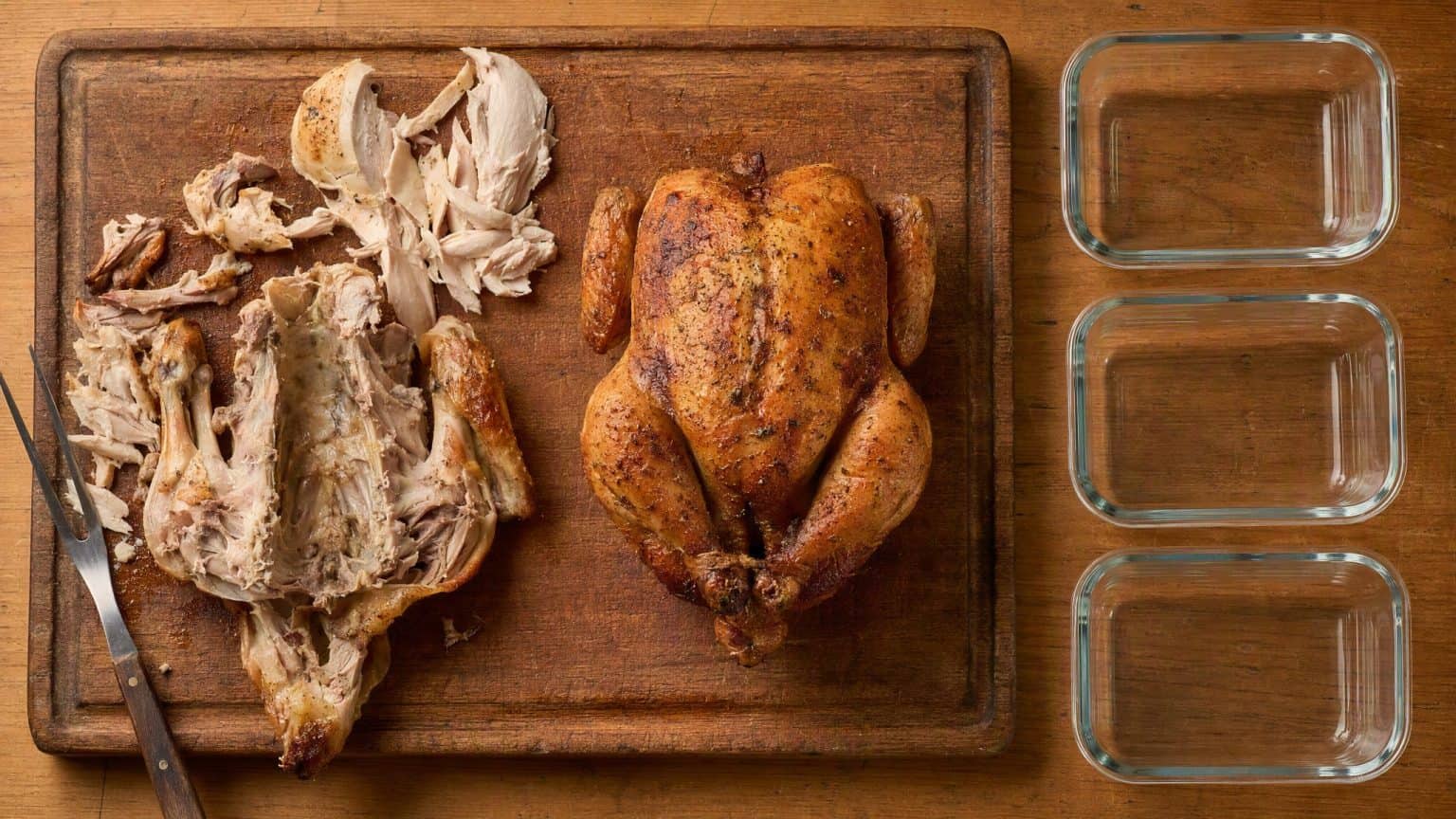
THE CHICKEN CHECKPOINT
Do not plan from raw bird weight. Plan from the carved meat you actually have.
24 oz cooked chicken
Roast chicken as itself.
20 oz cooked chicken
Cold-hot sesame chicken noodles.
16 oz reserve
Pot-pie puffs or another contained third meal.
Sixty ounces is an example cooked checkpoint for the planning math, not a promised yield from two specific birds.
Roast chicken is the food version of buying beige trousers because they go with everything. Sensible. Useful. Also, if you are not careful, suddenly your whole week is beige.
The reason to roast two chickens at once is not that everyone needs to admire your efficiency. It is that the oven, preheating, seasoning, resting, carving, and cleanup have already happened. If there is enough cooked meat left after dinner one, the next two dinners can start halfway finished.
The catch is that chicken is very good at tasting like leftover chicken. It goes from Sunday centerpiece to Tuesday punishment with almost no resistance if the only plan is to reheat slices and add another side.
So this arc is built around one rule: the chicken stays; the meal changes.
First, make enough chicken for the plan you actually want
One average whole chicken is a dinner with leftovers. It is not automatically three dinners for four people. If your goal is a genuine three-meal arc, you may need two birds, a larger household-size package, or a mix of whole chicken and extra bone-in pieces.
I am not going to give you a fake conversion that says two raw chickens always equal sixty ounces of edible cooked meat. Bone, skin, trimming, bird size, and cooking loss all move that number.
Instead, carve the birds after they rest, remove the meat you plan to eat, and weigh it. If you have 60 ounces of usable cooked chicken, the allocation plate above works cleanly. If you have 48, change the plan. If you have 72, freeze more.
This is the same cooked-weight discipline used in The Big-Cut Economics. The package got you through the checkout line. The carved edible weight is what plans dinner.
Dinner one gets the best skin and gets to be chicken
Allocate about 24 ounces for the first meal, or roughly six ounces per person for four people when there are real sides on the table.
Serve the pieces that benefit most from being eaten now: crisp skin, well-browned thighs, breast meat while it is still at its best. This is the dinner where the bird gets to be the centerpiece. Add roast vegetables, a sharp salad, potatoes, bread, whatever belongs to the night.
What you should not do is put the entire carved yield on the platter just because it looks generous. That turns dinner one into a public referendum on the inventory you intended for Thursday.
Reserve the later portions before the platter leaves the kitchen. The parallel draft The Leftover Allocation Rule already owns the general argument for doing that, so this article is about what happens next.
Dinner two should be colder, sharper, and less roast-like
For meal two, use 20 ounces of cooked chicken for four people. That is five ounces per person before noodles, cabbage, and vegetables, which is enough for a substantial dinner without pretending the chicken is still the star.
I like a sesame-chile noodle situation here because it changes almost every sensory cue at once: the chicken is sliced or shredded smaller, the meal is mostly cool, the vegetables are crisp, and the sauce is sharp enough to make Sunday feel far away.
For four people, use: 20 ounces cooked chicken; 12 ounces dried noodles such as soba, ramen-style wheat noodles, or spaghetti; about 4 cups shredded cabbage; 1 cucumber, sliced thin; 4 scallions; 1/3 cup chopped peanuts or sesame seeds; and fresh cilantro if you want it.
For the dressing: 3 tablespoons soy sauce; 2 tablespoons rice vinegar; 1 tablespoon toasted sesame oil; 1 tablespoon neutral oil; 1 tablespoon chile crisp or another chile sauce; 1 teaspoon honey or brown sugar; and the juice of half a lime.
Cook the noodles, rinse them cool if the noodle style allows it, and drain them aggressively. Whisk the dressing. Toss the cabbage and cucumber with half of it first, then add noodles, chicken, scallions, and enough of the remaining dressing to coat rather than drown.
Finish with peanuts or sesame and lime.
The point is not that this exact noodle bowl is the only answer. The point is structural. Dinner one was hot, carved, roasty, and plated. Dinner two is cool-hot, slippery-crisp, acidic, and built in a bowl. Same protein, different experience.
The easiest way to ruin dinner two is to carry too much dinner one into it
If you roasted the chicken with a strongly flavored glaze, save the least-coated meat for later. If dinner one involved a heavy cream sauce, do not store all the chicken submerged in it. If there are crisp crumbs, keep them away from the reserved meat.
This does not mean chicken has to be bland on night one. It means some of the later meat should remain flexible enough to go somewhere else.
The published Leftover Plan Starts Before Dinner already covers component storage, refrigerator space, and food-safety timing. That is the operating manual. This is what the food is for once it gets there.
Dinner three should use less chicken and more structure
By the third meal, I do not want another bowl where chicken is visibly doing all the work. I want the meat inside something, distributed through something, or converted into a filling.
That is why the existing Mini Chicken Pot-Pie Puffs with Tarragon Gravy are such a useful handoff. The recipe calls for 2 cups finely chopped cooked chicken, not a weight target, and that distinction matters.
If your third-meal reserve is 16 ounces, do not dump all sixteen ounces into the puffs because this article assigned the packet that number. Measure the two cups the actual recipe calls for. Whatever remains can become lunch, freeze separately, or move into another small use.
This is a good example of why planned leftovers should connect to real recipes rather than force every piece of food into the editorial math. The allocation gets you the reserve. The recipe decides how much it actually needs.
The third meal should not be a heroic act
The pot-pie puffs are an excellent option if you want something fun, especially for a weekend, game night, or a freezer project. They are not the only option.
For a much easier third meal, use the same reserved chicken in a skillet with two cans of white beans, broth, greens, lemon, and black pepper. Or fold it into a quesadilla with sharp cheese and pickled jalapeños. Or make chicken salad with enough celery, herbs, and acid that it tastes intentional rather than beige.
The rule is not “meal three must be impressive.” The rule is “meal three must still be wanted.”
What about the carcasses?
If you roast whole chickens, the bones can create another useful kitchen asset, but treat that as a separate job rather than pretending stock is dinner four.
Reserve the clean carcasses in the kitchen before the birds go to the table, refrigerate or freeze them promptly, and use them for stock when it makes sense. Do not rebuild a stockpot from bones that have traveled around individual plates.
The whole-fish article in this cluster uses the same distinction because thrift is not improved by becoming weird about table scraps.
The bridge shopping should stay small
For this three-dinner arc, the fresh bridge groceries are not a second weekly shop disguised as efficiency.
Dinner two needs noodles, cabbage, cucumber, scallions, lime, and perhaps peanuts. Dinner three uses what its recipe calls for. Most of the dressing ingredients should already live in a reasonably stocked pantry.
If the transformation meal requires twelve specialty ingredients that will themselves become leftovers, the system has created a smaller system underneath itself. I am not interested in nesting dolls of obligation.
Roast two chickens when the week can actually absorb them
This plan makes sense when you know you have several home dinners ahead, when the freezer has room, and when your household is willing to eat chicken in different forms.
It makes less sense before a travel week, a run of restaurant nights, or a week where everybody has opposite schedules and no one will eat the food at the same time.
Planned leftovers work because they remove decisions. They stop working when they become another calendar commitment.
The question is not whether chicken is versatile. It is whether the meals are.
Every leftover list on the internet can tell you chicken goes in tacos, soup, pasta, sandwiches, fried rice, casseroles, and salad. That information is not scarce.
The useful part is deciding the allocation before dinner one, changing the structure each time, and making meal two and meal three cheaper in attention than the original roast.
That is how two birds become three dinners without the house feeling like it joined a chicken subscription.
Read The Big-Cut Economics for the cooked-weight method, The Leftover Plan Starts Before Dinner for storage, and Mini Chicken Pot-Pie Puffs when the third meal wants to turn into something considerably more charming.
Part of Kitchen Systems.
Where this goes next

