The One Drink and the No-Drink
Salt Belongs in the Glass, Four Drops Is the Whole Dose, and You Will Not Taste It
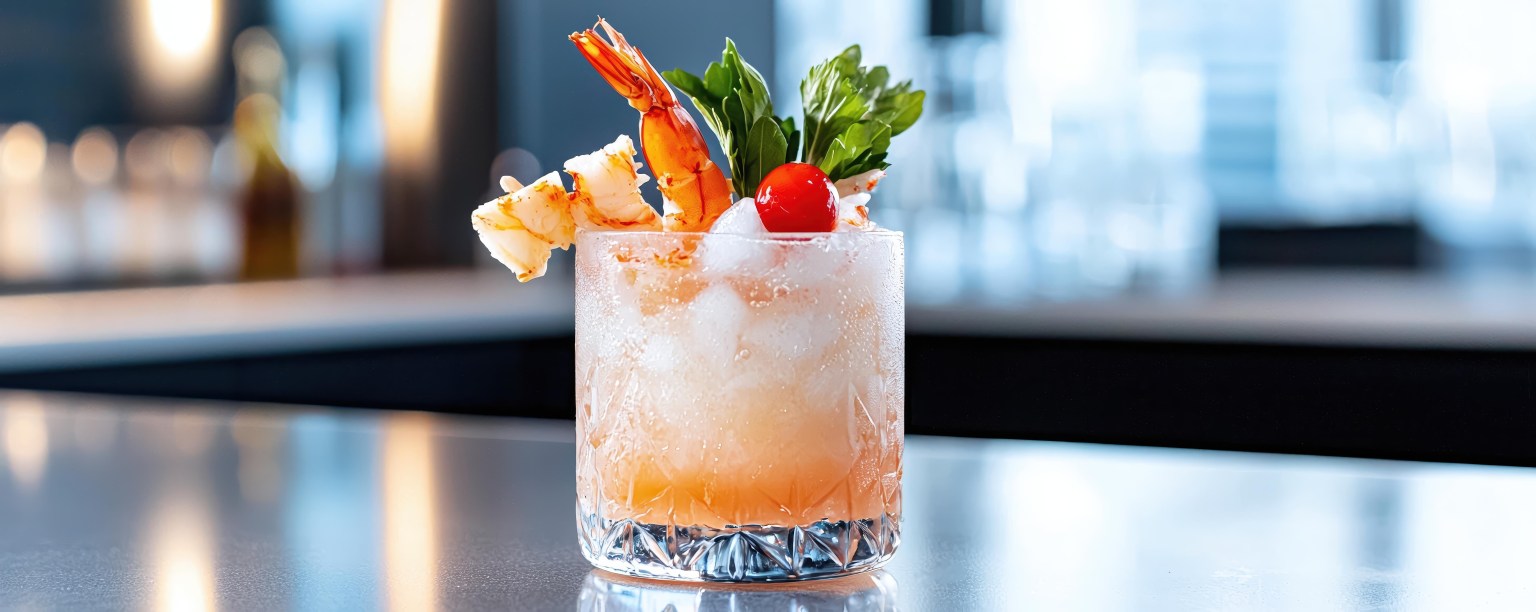
Nobody salts a drink. Salt is for food, the reasoning goes, and a salty drink is a mistake you make once. Meanwhile every bar that takes itself seriously has a small dropper bottle behind the rail and uses it in about half of what it serves, and nobody drinking there has ever once said the drink tasted salty.
That gap is worth closing, because it is the highest-return fifteen minutes available to anyone who makes drinks at home, and the mechanism is specific enough to explain exactly which drinks it will save.
Three things sodium does, none of which is making something salty
The first and largest is bitterness suppression. Sodium ions interfere with the way bitter compounds register, and the effect is strong and fast. A drink carrying quinine, or grapefruit pith, or an over-extracted tea, or a gentian syrup gets noticeably less bitter with a few drops of saline, and everything the bitterness was covering comes forward.
The second is a modest lift in perceived sweetness. Not enough to replace sugar, but enough that a drink you were about to sweeten frequently does not need it, which matters given how much sugar is already going into anything without alcohol in it.
The third is the one that surprises people. Dissolved salt reduces the solubility of volatile aromatic compounds, which pushes more of them out of the liquid and into the air above the glass. Chemists call it salting out. In practical terms, the drink smells more. Given that nothing in a no-alcohol drink is carrying aroma upward on its own, that is not a small gift.
The dose is far smaller than you would guess
Make a solution rather than reaching for a pinch, because you cannot dose crystals accurately at this scale and undissolved salt in a cold drink stays undissolved at the bottom of the glass.
Twenty grams of fine salt in eighty grams of warm water, stirred until clear, in a dropper bottle. That is a twenty percent saline and it keeps essentially forever at room temperature.
Three to five drops in a four or five ounce drink. That is the whole dose, and it puts the sodium concentration well below the threshold at which anyone perceives salt as a taste. If you can taste salt, you have used roughly five times too much.
Start at three drops, taste, and add one more if the drink is still hiding something. Do it at the very end, after the dilution, the acid, the sugar and the bitter are all where you want them, because salt changes the perception of every one of those and correcting after it is added means correcting against a moving target.
Where it transforms a drink and where it is wrong
Grapefruit is the headline case. Grapefruit juice carries a bitterness that most people manage by drowning it in sugar. Three drops of saline instead, and the bitterness drops away and the fruit arrives. Anybody who has salted a grapefruit half at breakfast already knows this works and has probably never connected it to the glass.
Anything with tonic in it benefits, because quinine is a bitter and saline is the direct counter. Anything built on strong tea benefits, for the same reason. Anything with no alcohol benefits twice over, once for the bitterness and once for the aroma lift.
Where it is wrong: anything you want to taste bitter on purpose. A drink built to function as an aperitif is using bitterness as its entire structure, and removing it leaves a sweet fruit drink with nothing holding it up. The same goes for anything already savory, where you are adding sodium to something that has some.
A salted rim is a completely different tool
Worth separating, because people conflate them. Saline in the drink is a uniform, sub-threshold adjustment to the whole glass. A salted rim is a large, above-threshold dose delivered per sip, at the lip, before the liquid arrives.
That is a texture and a punctuation rather than a correction. It works on drinks that are cold, sour and simple, and it works badly on anything complicated, because a burst of salt on every sip flattens nuance.
Rim half the glass. It costs nothing and it hands the drinker a choice, which is a small piece of hospitality that the full rim removes.
The same principle, three rooms over
None of this is a bar trick, which is the part that makes it stick. It is the same mechanism as a pinch of salt in a fruit syrup, the same mechanism as salt on melon, the same mechanism as the salt in a caramel, and the same reason a soup with no salt tastes not merely bland but somehow smaller.
Sodium is a contrast control. It suppresses one thing so everything else can be heard. A dropper bottle behind your own kitchen tap costs about four cents to make, lasts a year, and rescues roughly half the drinks that come out slightly disappointing for reasons nobody can name.
Part of Drinks & Zero-Proof.


