Spring Vegetable Lasagna with Pea-Pistachio Pesto
A spring lasagna layered with asparagus, peas, spinach, ricotta, lemon, and pea-pistachio pesto.
Tools
Large pasta pot, wide skillet, sheet pans or clean towels, blender or food processor, mixing bowls, 9-by-13-inch baking dish, foil, sharp knife, serving spatula
Ingredients · swaps in parentheses
Lasagna noodles, asparagus, peas, spinach, ricotta, egg, Parmesan, lemon, pistachios, basil, mint, garlic, olive oil, béchamel, mozzarella, salt, black pepper
Magic
Control moisture in every component keep pesto thick layer evenly bake covered before browning rest fully before cutting.
Before you begin
Drain ricotta, prepare béchamel, cook and dry vegetables, make pesto, cook noodles only until flexible, and clear space for layering.
The parts that change whether this works tonight.
- Yield
- 8 generous servings or 10 buffet servings
- Time
- About 2 hours 25 minutes
- Equipment
- Large pasta pot, wide skillet, sheet pans or clean towels, blender or food processor, mixing bowls, 9-by-13-inch baking dish, foil, sharp knife, serving spatula
- Make-ahead
- One day ahead: Assemble completely, cover, and refrigerate. · To bake from cold: Add about 10 to 15 minutes to the covered baking time and confirm the center is hot…
- Holding
- Warm, 25 to 60 minutes after baking
- Leftovers
- Refrigerate within two hours and use within four days. Reheat individual portions covered at 325°F with a spoonful of water or béchamel until hot, then uncover briefly
- The method
- 24 ingredients · 11 steps
From this recipe’s own recipe card. Nothing here is a guess.
Most vegetarian lasagna is an apology with cheese on it. This one is green, layered, and substantial enough to hold the middle of a buffet, and it gets there without asking tomato sauce to do the structural work. Asparagus, peas, spinach, ricotta, lemon, pistachio.
The only real discipline is that the vegetables get cooked and dried separately before they go anywhere near a noodle. Water is the thing that turns a good lasagna into a casserole with ambitions, and it gets in through the vegetables almost every time.
Yield and timing
- Yield: 8 generous servings or 10 buffet servings
- Prep: 1 hour
- Bake: 50 to 60 minutes
- Rest: 25 minutes
- Total: About 2 hours 25 minutes
- Best service window: Warm, 25 to 60 minutes after baking
Ingredients
For the vegetables and pasta
- 12 standard lasagna noodles
- 1 pound asparagus, woody ends removed, cut into 1-inch pieces
- 2 cups frozen peas, divided
- 5 ounces baby spinach
- 1 tablespoon olive oil
- Kosher salt
For the ricotta layer
- 2 cups whole-milk ricotta, drained if watery
- 1 large egg
- 3/4 cup finely grated Parmesan
- Finely grated zest of 1 lemon
- 1/2 teaspoon kosher salt
- 1/4 teaspoon black pepper
For the pea-pistachio pesto
- 1 cup thawed peas
- 1/2 cup roasted unsalted pistachios
- 3/4 cup basil leaves
- 1/4 cup mint leaves
- 2 tablespoons fresh lemon juice
- 1 small garlic clove
- 1/2 cup olive oil, plus more as needed
- 1/2 teaspoon kosher salt
For the white sauce and assembly
- 3 cups medium-thick béchamel sauce
- 2 cups low-moisture whole-milk mozzarella, shredded
- 1/2 cup grated Parmesan
- Butter or olive oil for the baking dish
Method
Where the time goes
- Prepare the noodles
- 4–5 minCook the vegetables
- Make the pesto
- Mix the ricotta
- Prepare the dish375°F
- Layer one
- Repeat
- Finish
- 35 minBake covered
- 15–25 minBrown
- 25 minRest
- Prepare the noodles: Cook the lasagna noodles in well-salted water until flexible but still firmer than al dente. Drain and lay flat on lightly oiled sheet pans or clean towels.
- Cook the vegetables: Heat olive oil in a wide skillet. Add asparagus with a pinch of salt and cook for 4 to 5 minutes, until bright and barely tender. Add spinach and cook just until wilted. Transfer to a tray to cool. Stir in 1 cup peas, then blot away visible moisture.
- Make the pesto: Blend the remaining 1 cup peas, pistachios, basil, mint, lemon juice, garlic, salt, and olive oil until thick but spoonable. Add oil one tablespoon at a time only if needed.
- Mix the ricotta: Combine ricotta, egg, 3/4 cup Parmesan, lemon zest, salt, and black pepper.
- Prepare the dish: Heat the oven to 375°F. Butter or oil a 9-by-13-inch baking dish.
- Layer one: Spread 3/4 cup béchamel across the bottom. Add 3 noodles. Spread with one-third of the ricotta mixture, one-third of the vegetables, 1/4 cup pesto, and 1/2 cup mozzarella.
- Repeat: Build two more layers in the same order.
- Finish: Add the final 3 noodles. Spread with the remaining béchamel and mozzarella, then scatter with the remaining 1/2 cup Parmesan.
- Bake covered: Cover loosely with foil, keeping it from touching the cheese. Bake for 35 minutes.
- Brown: Remove the foil and bake for 15 to 25 minutes more, until bubbling at the edges and golden on top.
- Rest: Let stand for at least 25 minutes before cutting. Serve with the remaining pesto spooned lightly over or alongside each portion.
Layering and texture standard
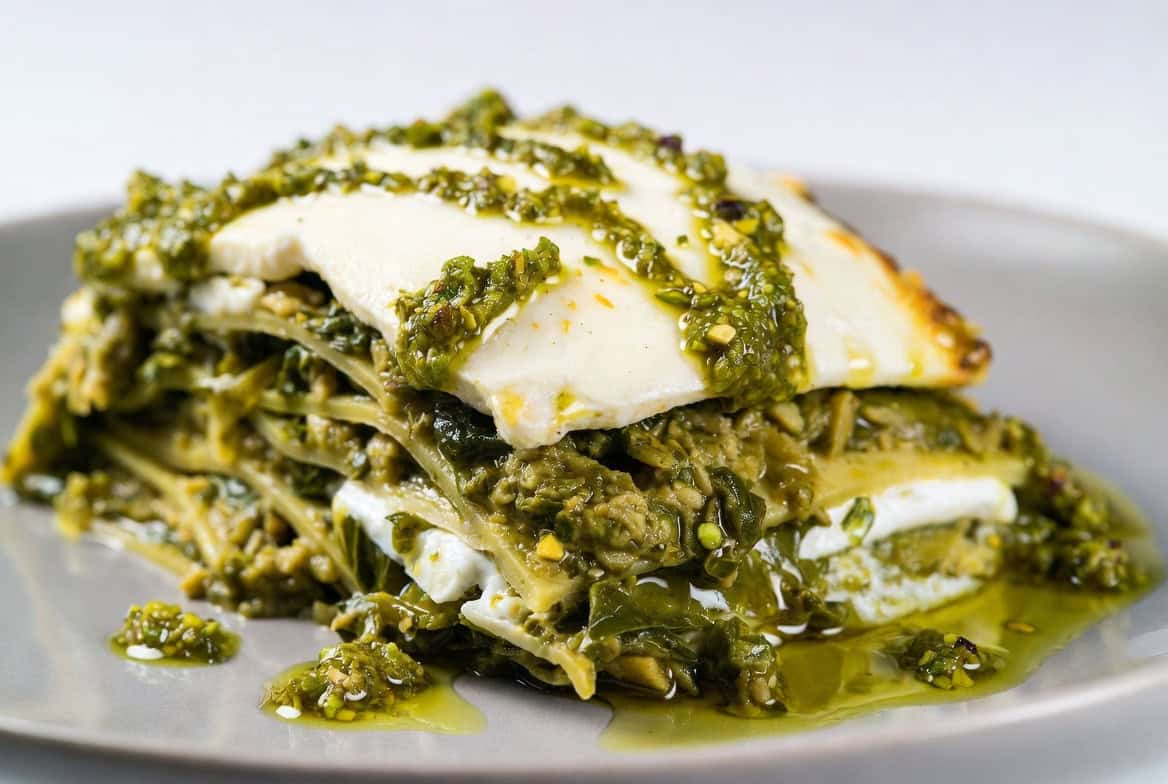
The béchamel should be thick enough to coat a spoon, the ricotta should not release liquid, and the vegetables should be dry before assembly. The pesto should appear in defined green ribbons rather than replacing the white sauce. Resting is not optional; it allows the layers to set so the first slice does not leave the dish as a spring vegetable landslide.
Portioning and plating
Cut clean rectangular portions with visible pale layers, green vegetables, and pesto. Wipe the knife between cuts. Place a small spoonful of pesto beside or over one corner rather than flooding the plate.
Make-ahead and service plan
One day ahead: Assemble completely, cover, and refrigerate.
To bake from cold: Add about 10 to 15 minutes to the covered baking time and confirm the center is hot before uncovering.
After baking: Rest for 25 minutes. Hold loosely covered in a 170°F to 200°F oven for up to 45 minutes.
For buffet service: Cut smaller portions and replenish the platter in waves rather than exposing the entire pan for an extended period.
A whole pan set out at once looks generous for about nine minutes and then looks like the end of a party. I would cut half, keep the rest covered and warm, and bring it out when the first tray is visibly going.
Substitutions that work
- No-boil noodles: Use only with a slightly looser béchamel and follow the package liquid guidance.
- Broccoli: Replace asparagus with small blanched florets.
- Arugula: Replace spinach for a more peppery layer.
- Walnuts: Replace pistachios in the pesto.
- Goat cheese: Replace up to one-fourth of the ricotta for more tang.
- Gluten-free noodles: Use a brand that holds its shape and avoid overcooking before assembly.
Likely failure points
The lasagna is watery: The vegetables, ricotta, or béchamel contained too much moisture. Drain and cool each component before layering.
The noodles tear: They were overcooked or piled while hot. Cook only until flexible and lay them flat.
The center is cold: The lasagna went into the oven directly from the refrigerator without extra covered time. Check the center before browning.
The pesto turns dull: It was baked throughout every exposed surface. Keep most of it within the layers and reserve some fresh for serving.
The slices collapse: The lasagna was cut too soon. Rest at least 25 minutes.
The dish tastes heavy: Add lemon juice to the pesto and serve with a bitter green salad rather than adding more cheese.
Storage and reheating
Refrigerate within two hours and use within four days. Reheat individual portions covered at 325°F with a spoonful of water or béchamel until hot, then uncover briefly. Freeze fully cooled portions for up to two months; thaw overnight before reheating for the best texture.
Kitchen Kit
Pairing: Vermentino or a dry Provençal rosé. Teetotaler: pea-lemon soda with mint. Spring vegetables and pesto want something herbal and cold, not a heavy red.
Goods: Lasagna noodles, asparagus, peas, spinach, ricotta, egg, Parmesan, lemon, pistachios, basil, mint, garlic, olive oil, béchamel, mozzarella, salt, and black pepper.
Gear: Large pasta pot, wide skillet, sheet pans or clean towels, blender or food processor, mixing bowls, 9-by-13-inch baking dish, foil, sharp knife, and serving spatula.
Before: Drain the ricotta, prepare the béchamel, cook and dry the vegetables, make the pesto, cook the noodles only until flexible, and clear enough space for orderly layering.
Magic: Control moisture in every component, keep the pesto thick, layer evenly, bake covered before browning, and allow the full rest before cutting.
The final lasagna should feel green and generous, not virtuous. Vegetarian mains are allowed to arrive with actual architecture.
Part of Recipes & Technique.
Recipe provenance: Salty & Clever editorial formulation, built from established culinary technique and the traditions identified in the article. No chef, restaurant, family, or firsthand cultural provenance is claimed unless it is explicitly named and sourced. How we write and check recipes
Where this goes next
The next thing you will need.
Make it with
 Recipe
Brown-Butter Caramel-Pecan Sundae with Chocolate and Vanilla Ice Cream
Also for the sheet panPour alongside
 Drink