Store the Parts, Not the Plate: Why Component Leftovers Have a Better Second Life
A leftover is easier to use when it still has choices. Store the durable parts of dinner separately, protect texture and sauce flexibility, and give tomorrow something better than a fully assembled plate to reheat.
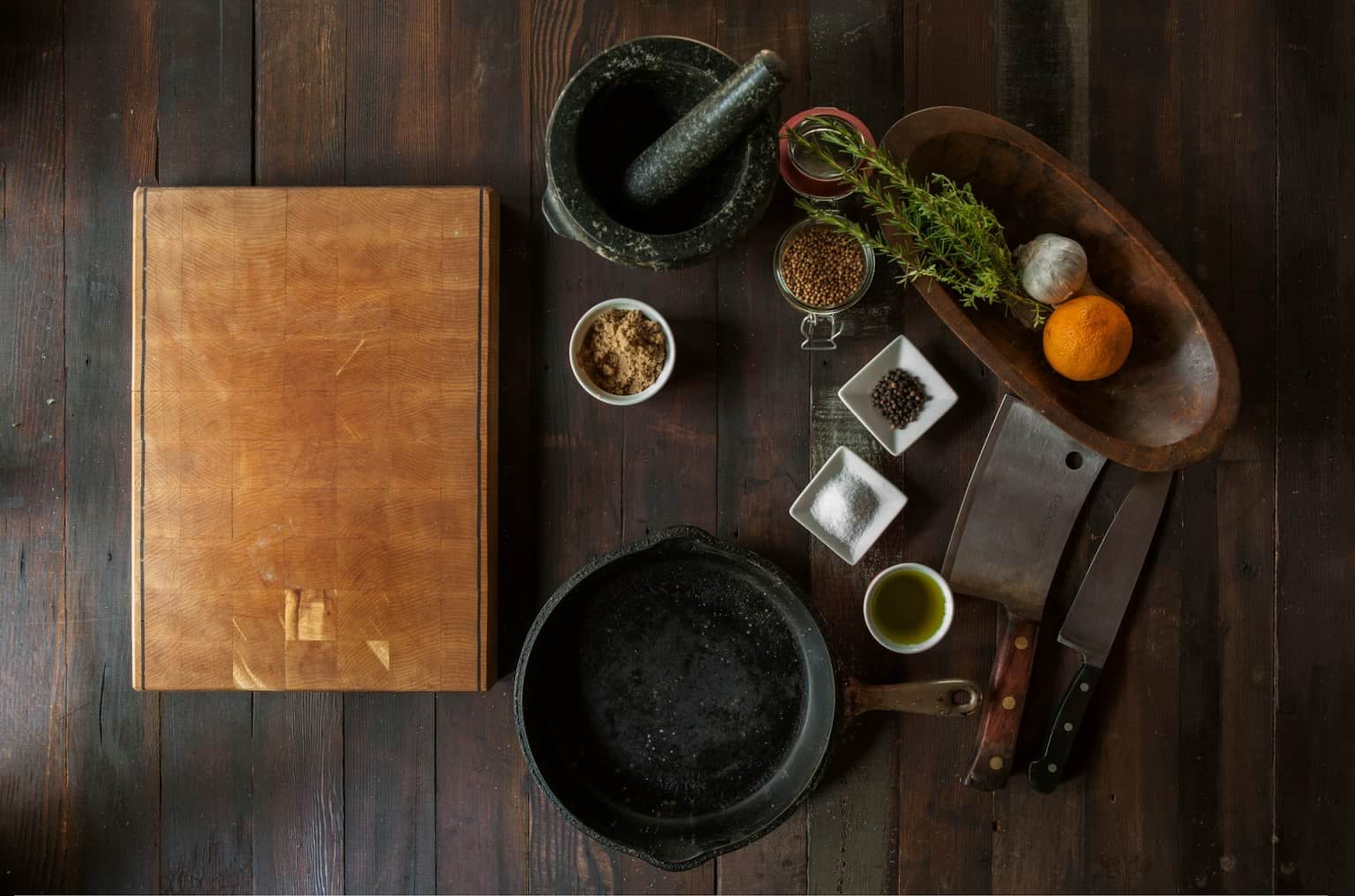
The refrigerator is full. Dinner is technically handled. And somehow every container already looks like a commitment.
Chicken under sauce. Rice under chicken. Roasted vegetables under rice. A few crisp onions pressed into the damp corner where crisp onions go to reconsider their life choices.
It is all edible. It is also now one thing.
That is the problem.
When I want a cooked dinner to buy me another easier dinner, I would rather save the useful parts than preserve the original plate in amber. A finished plate can usually do one job tomorrow: become a slightly softer version of itself. A cooked component can still negotiate.
That difference is the quiet center of planned leftovers.
A dinner and a leftover are not the same object
Dinner wants completion. It wants sauce, garnish, contrast, the crunchy thing on top, the dressed greens, the last squeeze of lemon. It wants to arrive at the table looking like somebody meant it.
Tomorrow’s food wants options.
Those goals occasionally disagree.
If the extra chicken has already been covered in tonight’s creamy mustard sauce, tomorrow’s chicken is now a creamy-mustard-chicken problem. If half the rice has already been mixed with herbs, vinaigrette, and soft roasted tomatoes, it has a narrower future than plain cooked rice. If every roasted potato is sitting under gravy, the path back to crispness has become mostly theoretical.
This does not mean serving a joyless dinner in separate laboratory compartments. It means noticing which parts need to stay flexible until the next meal is decided.
The best component is the one with more than one credible next job
A useful carry-forward component does not have to be bland. It just needs enough range.
Roast chicken can be tonight’s centerpiece, tomorrow’s chopped noodle filling, or Friday’s soup protein.
Cooked rice can sit beside a braise, then become fried rice, a crisp rice cake, or the base of a bowl.
Roasted carrots can stay a side dish, get chopped into a grain salad, or be blended into soup.
A pot of beans can move from stew to toast to a smashed filling without anyone pretending those are the same dinner.
A good sauce can travel too, but only if it was kept clean, refrigerated promptly, and makes sense with the next food. Sauce is not automatically the villain. Sauce with no future plan is.
THE DISASSEMBLY TEST
Before the extra food gets packed, ask one question: Which parts become less useful if I store them together?
If moisture ruins crispness, separate them. If acid will keep changing a delicate vegetable, separate them. If tomorrow may want a different sauce, protect an unsauced portion. If the components only make sense together, keep the dish intact.
Component storage is not about owning more containers. It is about preserving the decisions that matter.
The dishes that refuse to be taken apart
| Dish | Store it as | Why |
|---|---|---|
| Lasagna | Lasagna | It should remain what it already is |
| A braise | The meat sitting in its cooking liquid | It may well improve that way overnight |
| Chili | Chili | It does not need dividing back into beans, beef and tomato |
| Soup | Soup | It is already the thing it wants to be |
| Curry | With its sauce | It usually benefits from staying together |
| Rice, beside that curry | Separately | Rice has its own reheating life and deserves to keep it |
Moisture is usually the first argument
Most disappointing leftovers are not suffering from a lack of creativity. They are suffering from a moisture problem.
Crisp food stored against wet food stops being crisp. Bread pressed into sauce becomes a sponge. Fried toppings sealed over steam lose the point of being fried. Dressed greens continue to soften while nobody is watching.
So I separate by texture before I separate by recipe.
If one component must stay dry to remain useful, it gets its own container or bag.
If a sauce will protect a braised meat and the meat is supposed to remain braised, wonderful. Store them together.
If the same sauce would trap a roast chicken inside tonight’s flavor direction, reserve part of the chicken before saucing the rest.
The rule is not “always store sauce separately.” The rule is “do not let tonight’s moisture decision make tomorrow’s dinner for you.”
Store for the next heating method
Component planning and reheating are finally the same conversation.
A container that holds rice, sliced steak, roasted broccoli, creamy sauce, and toasted nuts has five different reheating needs and one lid.
The rice may want a little steam. The steak may want gentle heat or almost none. The broccoli may survive dry heat. The sauce may need low heat. The nuts should not be reheated at all unless you enjoy paying full price for damp nuts.
Put everything together and the microwave has to negotiate a treaty.
Keep the parts separate and you can heat each one the way it deserves, then put dinner back together in a new form.
This is the same logic behind The Reheat Problem: food quality survives when the heating method matches what the food actually needs.
Portion by the future job, not by identical rectangles
There is another meal-prep habit I would quietly retire: the stack of identical containers, each holding the same amount of everything.
That works if the goal is to eat the same meal several times.
It works less well if dinner two and dinner three are supposed to be different.
A sandwich may need less meat than tonight’s plated roast.
Soup may need even less because the protein is distributed through broth, noodles, and vegetables.
A grain bowl may need more roasted vegetables and less starch.
A taco dinner may want the meat reserved without tonight’s sauce and the cabbage kept entirely fresh.
Those are different quantities because they are different jobs.
The portion should be measured after cooking, once you know what edible food actually exists. That is the logic behind The Leftover Allocation Rule: reserve dinner two before dinner one has a chance to consume it.
Do not modularize food that gets better by staying together
There is a point where “store the components separately” becomes kitchen cosplay.
Some dishes are complete by nature.
Lasagna should remain lasagna.
A braise may improve when the meat sits in its cooking liquid.
Chili does not need to be divided back into beans, beef, tomato, and existential regret.
Soup is already the thing it wants to be.
Curry often benefits from remaining with its sauce, while rice is stored separately because rice has its own reheating life.
The useful distinction is not finished versus unfinished. It is flexible versus dependent.
If the parts depend on one another for flavor, moisture, or structure, keep them together.
If storing them together destroys texture or eliminates a credible second use, split them.
A few dinners are especially good candidates
Roast dinners are obvious. Keep the extra meat unsauced if a different second meal is planned. Store gravy or pan sauce separately. Let roasted vegetables travel on their own. Crisp garnishes do not belong in the container with anything steaming.
Taco bars and build-your-own dinners are even easier because the meal already arrives as components. The mistake is recombining all of it into finished plates before storage. Keep the protein, beans, rice, salsa, crunchy elements, and fresh vegetables in the condition that gives each one the best chance tomorrow.
Grain bowls benefit for the same reason. Cooked grain can be one component, roasted vegetables another, protein another, dressing another. Tonight they become a bowl. Tomorrow they do not have to.
Dinner-party food deserves the same treatment. The host has already done the expensive work. What Occasion Should Remember About Tomorrow’s Dinner takes that one step further by reconciling what the menu planned with what actually remains after service.
Storage still has a clock
Modular food is not magically safer because it is organized.
Current USDA guidance says cooked leftovers should be refrigerated or frozen promptly and not left out more than two hours, or more than one hour when exposed to temperatures above 90°F. Large amounts should be divided into shallow containers so they cool faster. Refrigerated leftovers are generally used within three to four days or frozen for longer storage. The current guidance is available from USDA FSIS.
That safety window is an outer boundary, not a meal schedule.
If Wednesday’s portion will not be eaten until next week, freeze it while it is still good rather than making the refrigerator carry the whole arc. Freeze It Tonight, Not Friday covers that decision in detail.
Labels should describe the food you need, not the food you remember
“Chicken” is technically accurate and not very helpful.
“12 oz roast chicken — unsauced — tacos Tuesday” is a dinner plan.
“2 cups rice — fried rice Wednesday” tells you both quantity and job.
“Braised beef + liquid — freeze for noodles” keeps the reason for saving it attached to the food.
You do not need a database on the refrigerator door. A piece of tape and a marker are fully qualified for this position.
The label only needs to prevent the most common refrigerator failure: opening a container, recognizing the food, and still having no idea what dinner is supposed to become.
The second dinner should inherit ingredients, not instructions
This is the part I care about most.
A planned leftover should reduce work without dictating the entire next meal.
If dinner two has to reproduce dinner one exactly, the leftover has become an instruction.
If dinner two inherits cooked chicken, rice, roasted vegetables, or a useful sauce in flexible condition, it has inherited ingredients.
Ingredients leave room for appetite.
Maybe Tuesday wants tacos instead of bowls.
Maybe the weather turns cold and the chicken belongs in soup.
Maybe the rice becomes crisp and gets topped with an egg.
That is not failure to follow the plan. That is the plan working.
Store enough structure that dinner is easier.
Leave enough flexibility that it can still be dinner.
Part of Planned Leftovers and Kitchen Method. If quantity is the problem, start with The Leftover Allocation Rule. If repetition is the problem, continue to Cooking for Two Without Eating the Same Dinner Four Nights.
Part of Kitchen Systems.
Where this goes next

