The One Drink and the No-Drink
Teak at Midnight: Black Tea, Roasted Plum, Coffee Cherry, and Tonic
The zero-proof drink for the hour when nobody wants to be handed something pink with a straw in it.
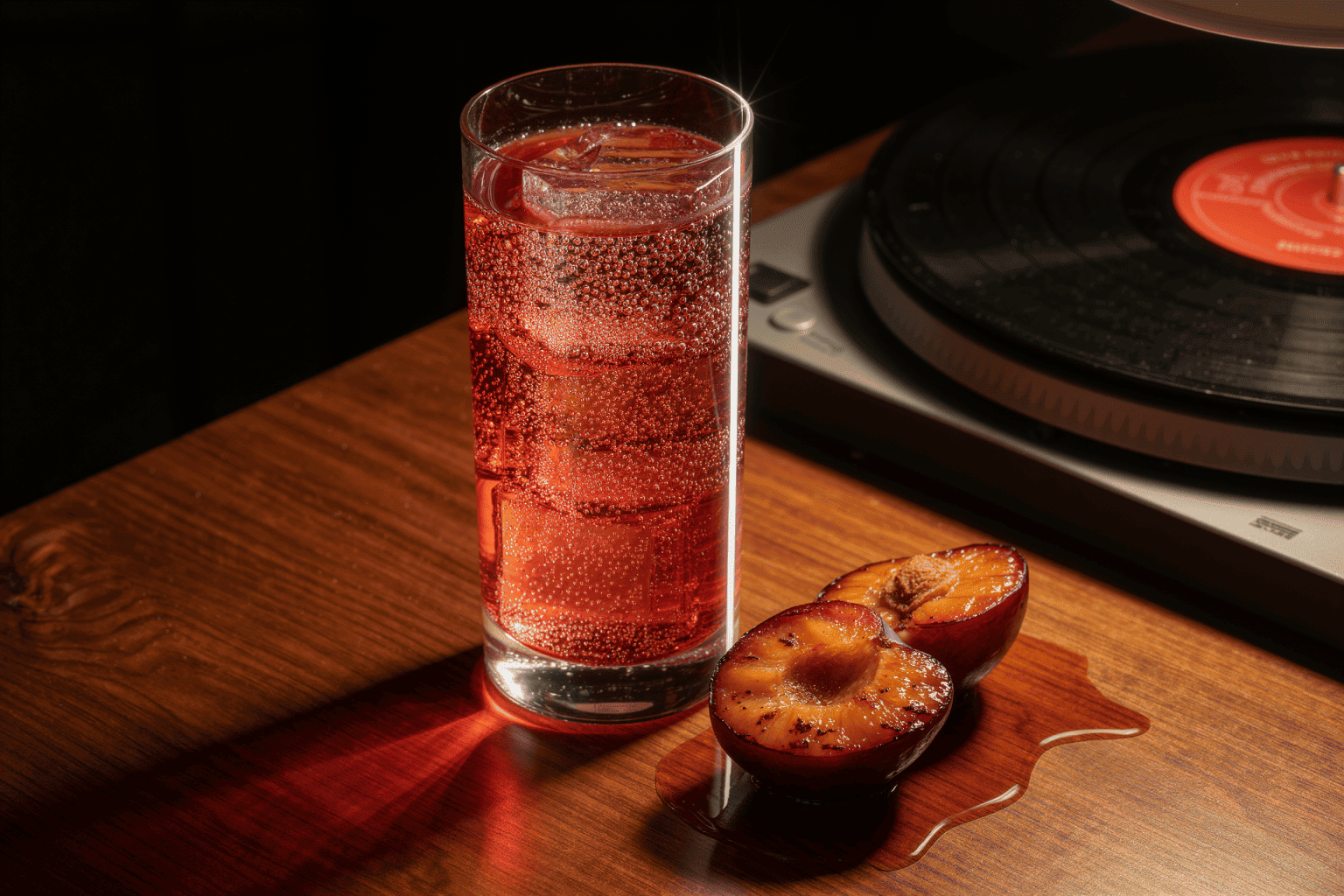
Serve alongside
Dark chocolate with salted almonds, or a wedge of aged Gouda. Cascara is tart and tea-like on top of actual tea, so the drink is all tannin — and fat is the only thing that softens tannin.
Tools
Sheet pan, blender or food mill, fine sieve, a 750ml bottle with a cap, shaker or a lidded jar, highball glasses. Nothing here needs buying.
Ingredients · swaps in parentheses
Assam or another strong black tea, dark plums, cascara (dried coffee cherry — any decent roaster sells it), sugar, lemon, alcohol-free aromatic bitters, dry tonic water
Magic
Keep the blistered plum skins when you purée, and let them ride in the bottled base for exactly 24 hours before you strain them out. The purée alone is sweet and soft; the skins put tannin and a burnt-sugar edge back in, which is the difference between fruit juice and a drink. Pull them at 24 hours. Not feeling brave? Six hours gives you a gentler version and no chance of overshooting.
Gotcha
Roast the plums at 375°F, not hotter. At 425°F the sugars that leak out hit the pan and burn rather than caramelize, and burnt fruit sugar is not smoky — it is flatly, chemically bitter, and it will be the only thing anyone tastes. Same failure if you crowd the pan and the fruit steams for fifteen minutes and then scorches all at once.
Cascara is the fruit that grows around a coffee bean, and for most of the history of coffee the answer to it was to throw it away. Dried, it steeps like a tea and tastes like hibiscus and dried cherry with a faint raisin weight behind it. It is also, usefully, bitter in a way that has nothing to do with tannin — a different bitterness from the black tea, arriving at a different point.
That is the architecture. Tea holds the front, cascara holds the finish, the plum sits between them, and tonic ties a bow around all of it with quinine. Three separate bitternesses and no alcohol anywhere, which is more structure than most cocktails have.
Build
One drink, five minutes, once the base is made.
- 2 ounces strong black tea
- 1 ounce roasted plum purée
- 1/2 ounce cascara syrup
- 1/2 ounce lemon juice
- 2 dashes alcohol-free aromatic bitters
- 2 ounces dry tonic
- Plum slice
The pour, drawn to scale
- strong black tea2 ounces33%
- roasted plum purée1 ounce17%
- cascara syrup1/2 ounce8%
- lemon juice1/2 ounce8%
- dry tonic2 ounces33%
Shake tea, plum, cascara, lemon, and bitters with ice. Briefly — eight seconds.
Strain over fresh ice.
Top with tonic and stir once. One turn, from the bottom up.
Garnish with plum.
Roasting the plums
Halve them, pit them, cut side up on a sheet pan with room between them, 375°F for 25 minutes. They should collapse and blister and go slightly dark at the edges. Cool completely.
Peel the skins off — after roasting they slide — and set them aside. Blend or mill the flesh, push it through a fine sieve, and you have the purée. Roasting rather than using raw fruit is doing two things: driving off water so the purée is concentrated instead of watery, and caramelizing enough sugar that the plum reads as cooked, which is what lets it stand next to tea and coffee cherry instead of sitting on top of them like jam.
The bottle sits for twenty-four hours
Combine tea, purée, cascara syrup, lemon, and bitters in a bottle, drop the reserved skins in, cap it, refrigerate. Give it a shake when you think of it. At twenty-four hours, strain the skins out and discard them — they have given everything they have.
Past thirty-six hours they start handing back astringency instead of flavor, and the drink dries out into something papery. It is a slow enough slide that you can miss it happening and only notice you no longer like the drink.
Cascara syrup
Steep a quarter cup of cascara in a cup of water just off the boil for six minutes, strain, then dissolve an equal weight of sugar into the hot liquid. It keeps two weeks. It is also excellent over ice with lime and nothing else, which is worth knowing, because a bag of cascara is much larger than this recipe requires and it will otherwise sit in the cupboard being an interesting decision you made once.
Glass and ice
Highball, filled. Fresh ice for the glass rather than the ice you shook with — shaken ice is already half-melted and pitted, and it will take the last two ounces of this drink down to nothing.
The tonic goes in second-to-last and the stir is a single pass. Every additional stir costs carbonation, and dry tonic has less to spare than sweet tonic does.
Six of them
The base holds one day past the skin strain, so make it the morning before. For six: 12 ounces tea, 6 ounces purée, 3 ounces cascara syrup, 3 ounces lemon, 12 dashes bitters, and the skins from six plums. That fills a 750ml bottle almost exactly, which is a satisfying thing about this recipe and entirely an accident.
Tonic only at service. Individual small bottles rather than one large one — the fourth drink from a big bottle is noticeably flatter than the first, and the fourth drink is usually the one you are handing to someone you want to impress.
Food
Steak toasts, mushroom vol-au-vents, espresso truffles. The cascara and the espresso are close relatives and they get along.
Tea goes bitter the moment impatience enters the room. This one pays back the extra four minutes more reliably than almost anything else on the site.
If the record-room mood is becoming an actual gathering, Teak at Midnight’s occasion plan handles the food quantities, bottle math, pacing, and what comes out when.
Part of Drinks & Zero-Proof.
Where this goes next
