Onset Time Is a Scheduling Problem, Which Makes It the Host’s Problem
Everything difficult about serving THC drinks at a party is a clock problem, and clocks are what a host already does. Logistics and consent only — no dosing, and the federal rules change on December 11, 2026.
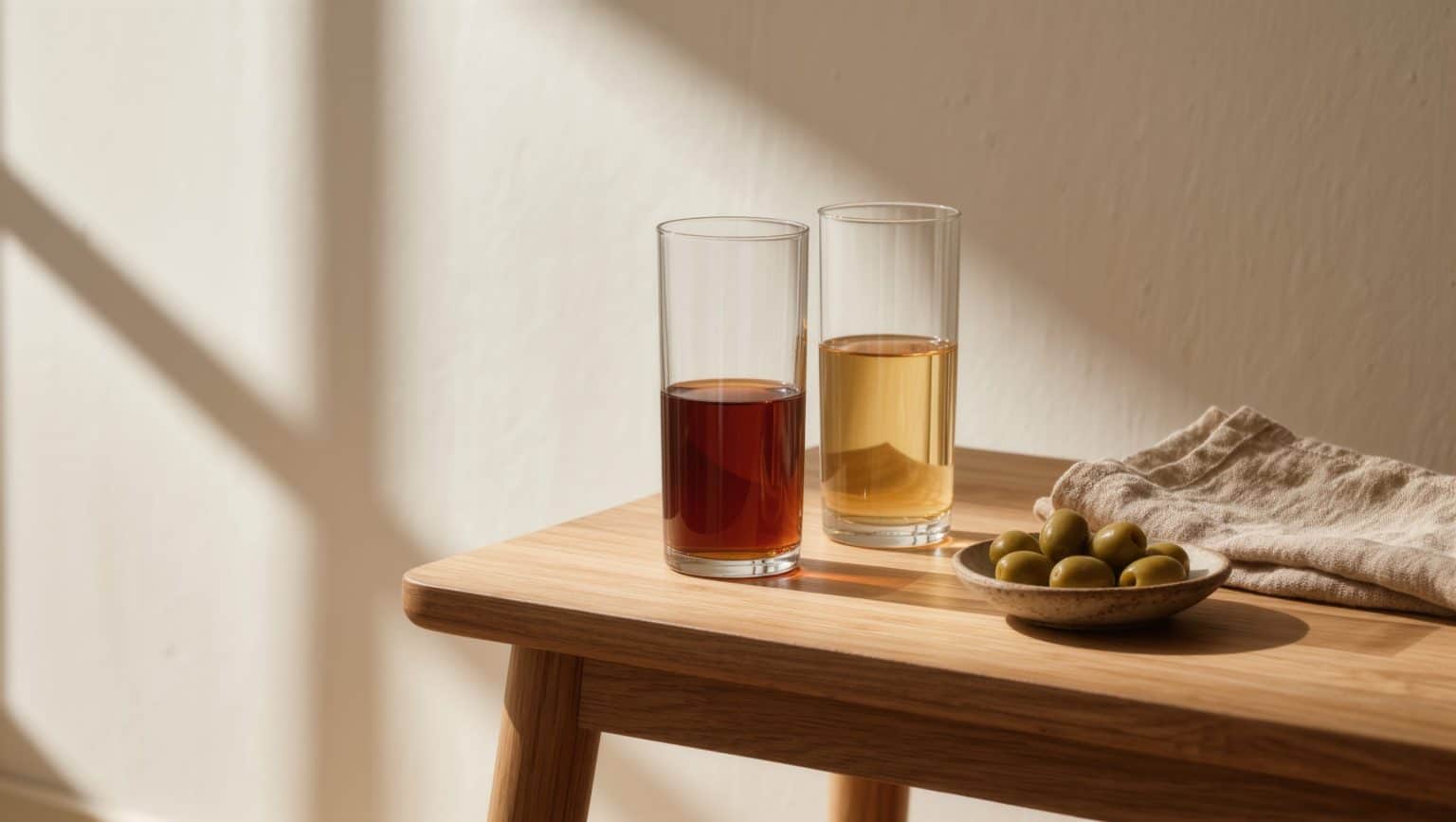
A glass of wine tells somebody how they feel in about fifteen minutes. A drink with THC in it tells them in an hour, sometimes ninety minutes, by which point they have made three more decisions about what to drink.
That gap is the entire difficulty. It is not a moral problem or a taste problem. It is a scheduling problem, and scheduling is a thing a host already does — the same skill as knowing that roast potatoes hold for ten minutes and a braise holds all afternoon.
So this is a piece about timing and consent. Not about dosing, not about what to buy, and not about whether anyone should. Two things it will not do: tell you a number to hand somebody, or pretend the law is the same where you live as it is where I live.
Dated, and it has a short shelf life. Written 12 September 2026. The federal rules that made most of these drinks widely available are about ninety days from changing: the spending bill signed at the start of this month set 11 December 2026 as the date a new definition takes effect, capping final consumable hemp products at 0.4 milligrams of total THC per container. Typical products on shelves now run 2 to 10 milligrams. Analysts reading the statute expect it to remove essentially the whole hemp beverage category from ordinary retail. State law varies enormously on top of that and moves monthly. Check what is true where you are before you shop, and treat every legal sentence below as a starting point rather than an answer.
The two numbers a host actually needs
Not potency. Onset and duration.
Across human studies of ingested cannabis, effects do not begin to appear for 30 to 60 minutes, and peak somewhere between 90 minutes and 3 hours after swallowing. Researchers tracking it keep measuring for eight hours. Inhaled cannabis peaks in minutes, which is why every intuition anybody has about this is calibrated wrong.
Translate that into an evening. Somebody who has one at seven o’clock is at their peak between half past eight and ten, and may still be somewhere on the curve at midnight. If your dinner is at eight and you wanted the table lively rather than horizontal, seven was already late.
There is also a real asymmetry in how long the feeling outlasts anything measurable. Blood concentrations after inhalation typically return toward baseline well before the subjective effects subside, so even a clinical measurement is a poor proxy for how somebody is doing. A look across the room is worse.
Fast-acting is real and it is much smaller than the advertising
The nanoemulsion claim is the one worth knowing properly, because the marketing numbers and the published numbers are not close.
A 2026 within-subjects study compared a microencapsulated fast-acting product against a standard one in the same twenty people. The fast-acting format did reach peak blood concentration faster — around 30 minutes against roughly 60. That is a genuine, statistically significant difference. There was no significant difference in peak concentration, in half-life, or in total exposure.
Then the companion paper, same twenty participants, looked at whether that faster blood onset produced earlier impairment. The researchers expected it would. It did not. Their conclusion, and this is the sentence to keep: faster blood onset may not translate into measurably earlier or distinct impairment on the usual cognitive and self-report measures. Time-perception effects followed essentially identical trajectories for both products.
Meanwhile the category advertises onset in seven to fifteen minutes. No peer-reviewed human study supports those figures. There is also no standard governing the word “nano” — no uniform requirement across states for what it has to mean.
The host’s version: plan on 30 to 60 minutes before anything at all, whatever the can says. If you build the evening around the label you will build it around a number nobody has demonstrated.
The delay is the mechanism behind the thing that actually goes wrong
Everyone has heard the story. The research literature describes it in unglamorous terms: the most prominent difference between ingesting and inhaling is the delayed onset, consumers often do not understand this, and they consume a greater amount than intended before the first has taken effect.
The scale of the consequence has been measured once, well. In a study of nearly ten thousand emergency department records in Colorado between 2012 and 2016, edibles accounted for 0.32 percent of cannabis sold by weight of THC and 10.7 percent of cannabis-attributable emergency visits — a disproportion of roughly thirty-three to one against what route-neutral toxicity would predict. The presentations differed too: acute psychiatric symptoms showed up in 18 percent of edible-related visits against 10.9 percent of inhaled.
Two honest caveats, because the number gets thrown around without them. That study covers one hospital system, a decade ago, and it entirely predates the hemp beverage channel most people now encounter. The direction is robust and widely replicated; the thirty-three-fold multiplier is not a current national figure. And no dataset I could find separates beverages from other edibles at all — drinks are lumped in with gummies everywhere.
What survives all the caveats is the mechanism, and the mechanism is a clock.
You cannot tell a guest what you are handing them, and that is the consent problem
This is the finding that reorganized how I think about the whole subject.
In July 2026 an independent foundation bought 21 hemp-derived delta-9 beverages at retail and online and sent matched batches to three separately accredited laboratories. Four products — 19 percent — came back within 90 to 110 percent of their labeled potency. Twelve, well over half, delivered less than 80 percent of the labeled dose. The most extreme case was labeled 5 milligrams and measured 0.19: under four percent of the claim. Results held across all three labs.
Note which direction that runs. The dominant failure was under-delivery, which is its own hosting problem — a guest who feels nothing from the first one and reasonably concludes it was weak.
Separately, the research on whether cannabis labels communicate at all is discouraging. In an experiment embedded in a survey of more than 45,000 people, with packages clearly displaying 10 milligrams per serving and 100 per package, only 14.6 percent of edible consumers said they knew the standard serving size, and improved packaging formats produced no significant comprehension gain among people who already used edibles.
So the honest sentence to say out loud when somebody picks one up is not “that one’s ten milligrams.” It is closer to: these say ten, the independent testing on this category is poor in both directions, and it will take an hour. That is less smooth and it is the truth.
Alcohol alongside, and one claim that keeps getting repeated wrong
You will read that alcohol increases your blood THC. That finding comes from a 2015 study on vaporized cannabis, and it did not replicate for the ingested route: a 2026 Johns Hopkins crossover trial using cannabis brownies and controlled breath alcohol found no pharmacokinetic interaction between the two. A piece about drinks should not be citing the inhaled study, so I am not.
What does hold, and holds hard, is the combined impairment. In that same 2026 trial, 25 milligrams of THC plus a breath alcohol concentration of 0.05 percent produced significantly worse simulated driving than 0.08 percent alcohol alone. The authors’ conclusion is the one worth repeating at a dinner table: the legal alcohol limit in most of the United States may be too liberal if a driver has co-used cannabis and alcohol.
And standardized field sobriety tests largely failed to detect the cannabis-related impairment, alone or in combination. Which means the informal version of that test — looking at somebody and deciding they seem fine — is worse than the one that already does not work.
The host’s version is not a lecture. It is that the heuristic you have spent your adult life building, the one where you know roughly what three drinks does to a particular friend, does not transfer, and neither does theirs.
The legal picture, briefly, and why it varies so much
There have been two separate channels. State-licensed dispensary beverages, tested and labeled under state cannabis rules. And hemp-derived delta-9 drinks sold in liquor stores, grocery aisles and online under the 2018 Farm Bill’s dry-weight definition, with no federal potency, labeling or age requirement at all. Almost everything most people have encountered is the second kind, which is the one the December change targets.
Where hemp drinks are permitted, the per-serving caps give a sense of the spread: Alabama 10 milligrams per serving and 40 per package, Georgia 10, Tennessee 15 with a two-serving maximum per container, Kentucky and Louisiana 5, and Virginia 2 milligrams per package. Several states regulate them through their alcoholic beverage control boards. Others have moved to restrict or ban them outright, and Texas has been in active litigation.
On sharing rather than selling, Virginia’s statute is the clearest model in the country and its carve-outs are the instructive part. Adult sharing means transferring between people 21 and over without remuneration, and carries no penalty under an ounce — but it is not adult sharing if the gift happens alongside another transaction between the same parties, if it is advertised in conjunction with a sale, or if it is contingent on a reciprocal transaction. In plain terms: handing a guest a free drink is one thing, and a cover charge, a ticket price or a bundled anything is a different thing that can turn a party into an unlicensed sale.
On liability, the accurate answer is that there is no established body of American law here. Dram shop statutes are alcohol statutes and generally do not reach cannabis; Colorado’s does not mention marijuana at all, and Nevada went the other way and legislated immunity for its licensed lounges. Social host statutes overwhelmingly address alcohol and minors. That absence is not a reassurance — ordinary negligence still exists, and furnishing anything to somebody underage is its own criminal exposure entirely — but anybody telling you that hosts get sued under dram shop laws for cannabis is describing a thing that has not happened.
One detail sits underneath all of this and explains why the guidance you are looking for does not exist. In nearly every state that licenses on-site cannabis consumption, alcohol is prohibited at those venues. The exact situation this article is about — both on the same table — is disallowed in essentially every regulated room in the country. The private home is the only place it routinely happens, which is precisely why every page that ranks for this question is owned by somebody selling the drinks.
The rules, which are all scheduling and consent
They go out first and they stop early. If they are on the table at all, put them out at the beginning and take them away two hours before you want the evening to end. Not last call. Two hours before last call. This is the single highest-value line in this article and it is pure hold-time reasoning.
Separate table, separate everything. Not the same tub of ice, not the same shelf of the refrigerator, not a can that looks like the other cans. An evening where somebody has to ask which one is which has already failed.
Nobody gets handed one. Guests take them. The difference between something being available and something being offered to you by your host is the difference between a choice and a small social obligation, and here that distinction carries eight hours of consequence.
Say the number and say you cannot vouch for it. See above. Approximate in both directions.
Never in the food. No infused anything on a passed tray, in a punch, in a dessert. Food is the one format where a person consumes something without having decided to, and a punch bowl is a consent failure with a ladle in it.
Ask about driving at the start, not at eleven. Before anything is opened. And plan as though your read on somebody’s state will not work, because the evidence says trained observers using a standardized test could not do it either.
Feed people and make the non-drinking table good. Real food, and a zero-proof option that is not an apology. Anybody opting out of both other tables should not be standing there with a lemonade.
One person stays entirely clear. Ordinary advice for any evening. More load-bearing on this one, because the timeline runs past the point where most hosts stop paying attention.
The thing to take away
You already know how to do this. It is the same reasoning as the turkey and the roast potatoes: some things hold and some things have a window, and a menu is a set of windows that have to be compatible with each other.
A THC drink has a window that opens an hour after you serve it and closes some time after you have gone to bed. Build the evening around that and most of what people worry about stops being a worry. Ignore it and no amount of good will fixes a curve that was set in motion at seven o’clock.
And if this is a thing you were planning to do at all, the window for buying these at a grocery store is a specific and short number of days long. After 11 December the question becomes a dispensary question, in the states that have dispensaries, under rules that are considerably clearer than the ones this article had to describe.
Pharmacokinetics here come from published human trials — the 2026 within-subjects study on fast-acting versus standard edibles and its companion pharmacodynamics paper, the Johns Hopkins co-use crossover trial, and the Colorado emergency department study — with potency-testing results from the independent three-laboratory analysis published in July 2026 and labeling comprehension from a 45,000-person experimental survey. Legal points are read from statute, federal legislation and law-firm analysis of it, current as of 12 September 2026; the federal date in particular has already moved once. This is not legal advice and it is not medical advice, and I am not a lawyer in your state or any other. One claim I found repeated widely and could not verify at all, so it does not appear above: that nearly 40 percent of drinkers also use cannabis. The real figures point several different directions and none of them is that one.
Part of Hosting & Service.


