The Holiday That Got Haunted — Menu, Drinks, Dessert, and Kitchen Kit
The Holiday That Got Haunted — Menu, Drinks, Dessert, and Kitchen Kit A haunted holiday dinner should feel as though the house has remembered one more guest…
The Holiday That Got Haunted — Menu, Drinks, Dessert, and Kitchen Kit
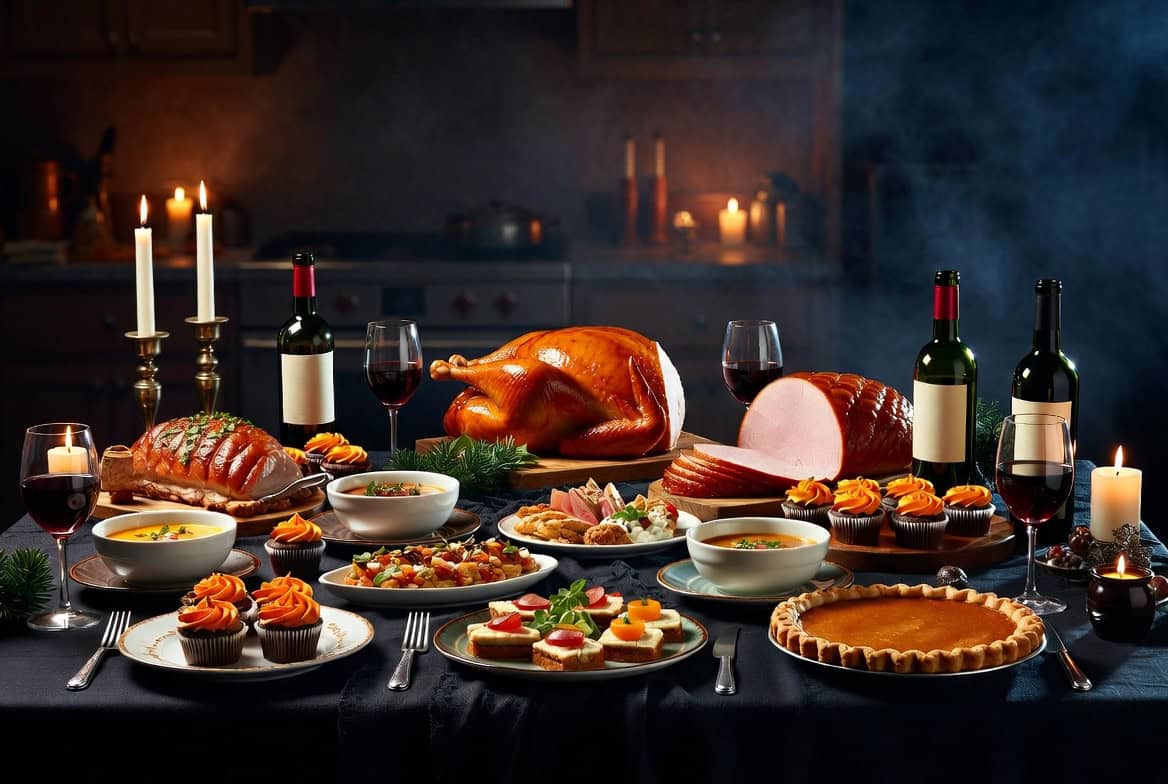
A haunted holiday dinner should feel as though the house has remembered one more guest than anyone invited. The effect is not fake cobwebs on every chair or a plastic skeleton guarding the butter. It is warmth with a draft running through it: candlelight caught in old glass, winter fruit, black tea, dark chocolate, cider, orange peel, mushrooms, bitter greens, and one or two details that suggest the previous host may still have opinions.
This build is designed for eight guests. It is a real event manual, so the quantities, production order, equipment, timing, service levels, dietary routes, and recovery notes remain. The manual should still read like the evening it creates. Technical detail belongs here because it protects the experience; it should not sound as though the dinner is applying for a municipal permit.
The governing idea
The holiday begins familiar and becomes faintly uncanny. Guests arrive to rye, cherry, black tea, orange, and a name that sounds inherited. The meal moves through mushrooms, cider-braised beef, winter roots, bitter pear salad, and dark chocolate. Nothing is shaped like a severed finger. The haunting comes from atmosphere, repetition, and suggestion rather than novelty food.
The recurring flavor language is dark fruit, browned edges, pepper, cider, orange, thyme, mustard, walnut, cultured butter, and restrained sweetness. Visually, use warm amber light, black or oxblood accents, cloudy glass, tarnished metal, winter branches, deep green, and one pale element that catches the light. The room should feel inhabited, not abandoned.
The guest journey
Arrival: drinks and mushroom tartlets in a room that is warm enough to relax in but dim enough to make every reflective surface interesting. Keep the arrival period to roughly thirty to forty-five minutes. The point is to let the room gather people before dinner, not to trap the host in an endless appetizer shift.
Dinner: cider-braised beef, roasted roots with brown-butter crumbs, and bitter greens with pear. Serve family-style for the most generous version of the evening. The platters should look abundant without being crowded with decorative evidence of the theme.
Dessert: dark chocolate-orange tart, cut cleanly and served with coffee, tea, or a small second pour. A narrow card beside the tart may read, “The previous host preferred thinner slices.” One sentence is enough. The tart does not require a séance.
Essential menu
Cider-braised beef with black pepper and orange
Use 4 pounds boneless beef chuck cut into 3-inch pieces, 2 teaspoons kosher salt, 1 teaspoon black pepper, 2 tablespoons neutral oil, 2 sliced yellow onions, 5 garlic cloves, 2 tablespoons tomato paste, 2 cups dry hard cider, 2 cups beef stock, 4 thyme sprigs, 2 bay leaves, the zest of 1 orange, and 1 tablespoon sherry vinegar.
Brown the beef in batches until the surfaces are genuinely dark; gray meat produces a gray evening. Cook the onions for about 10 minutes, add garlic and tomato paste, then deglaze with cider. Add stock and herbs, return the beef, cover, and braise at 325°F for about 3 hours, until the meat yields easily to a fork. Chill in its liquid for up to two days. Reheat covered at 300°F, then finish with fresh orange zest and sherry vinegar.
The cider gives the sauce fruit without making it sugary. Orange should arrive as fragrance at the end, not as marmalade. Black pepper is the dry edge that keeps the dish from becoming soft and sentimental. Expect eight generous portions, though actual yield depends on trimming and cooking loss.
Winter roots with brown-butter crumbs
Use 2 pounds carrots, 1 pound parsnips, 1 pound small potatoes, 3 tablespoons olive oil, 1 1/2 teaspoons kosher salt, 4 tablespoons butter, 1 cup coarse breadcrumbs, and 2 tablespoons chopped parsley.
Cut the vegetables according to how quickly they cook rather than forcing them into identical shapes. Roast at 425°F for 35 to 45 minutes, using enough pan space for browned edges. Brown the butter, toast the crumbs in it, and add parsley. Scatter the crumbs only after the vegetables reach the serving platter. Their job is crispness and nutty depth; if added early and trapped under a cover, they become expensive damp sand.
Bitter greens, pear, and sharp mustard dressing
Combine 10 ounces radicchio and other sturdy greens, 3 ripe pears cut shortly before service, and 1 cup toasted walnuts. For the dressing, whisk 1/3 cup olive oil, 3 tablespoons cider vinegar, 1 tablespoon Dijon mustard, 2 teaspoons honey, 1/2 teaspoon salt, and black pepper.
This salad is not a polite side note. It is the bitter, cold, acidic interruption the menu needs. Toss lightly, taste a complete bite, and add more dressing only when necessary. Pear brings perfume and softness; mustard and radicchio keep the plate awake beside the beef.
Enhanced menu additions
Mushroom and caramelized-onion tartlets
Prepare 24 small tartlets, allowing three per guest during arrival. Use deeply browned mushrooms, caramelized onion, thyme, and a small amount of sharp cheese or cultured cream. The filling should taste earthy and concentrated rather than wet. Prepare them the day before and reheat at 375°F for 8 to 10 minutes.
Serve the tartlets warm, not sealed inside a covered warmer. Pastry wants air. Bring out one complete tray and, if needed, one planned refill. The host should not spend the first hour appearing from the kitchen every seven minutes with four additional tartlets and a deteriorating expression.
Warm bread and cultured butter
Two loaves and 8 ounces of cultured butter are enough for eight guests. Choose bread with a dark crust and a crumb sturdy enough for the braising sauce. The bread course makes the table feel generous and gives the meal a useful pause, but it should not arrive before the tartlets have cleared or the evening begins to resemble a carbohydrate ambush.
Premium four-course translation
The same menu can become four controlled courses: mushroom tartlet; bitter greens with pear; cider-braised beef with roots; and dark chocolate-orange tart. The premium distinction is pacing, plate composition, temperature, and service—not extra gold leaf, microscopic herbs, or ingredients that have flown farther than the guests.
For eight people, the plated version needs at least two active service roles once dinner begins. One person finishes and portions; another carries, clears, and resets. A solo host can produce the family-style version with advance work. A solo host attempting four plated courses is volunteering to haunt the kitchen personally.
Dessert: dark chocolate-orange tart
For one 9-inch tart serving 10 to 12, use one fully baked tart shell, 10 ounces finely chopped dark chocolate, 1 cup heavy cream, 2 tablespoons butter, 1 teaspoon orange zest, and 1/4 teaspoon salt.
Bring the cream just to a simmer, pour it over the chocolate, wait 2 minutes, then stir until smooth. Add butter, zest, and salt. Pour into the shell and chill for at least 4 hours. The tart should be firm enough to slice cleanly but not served so cold that the chocolate tastes mute.
Cut with a warm, dry knife. Wipe between slices. Stage plates and forks before dinner. Serve modest pieces because the filling is dense, though “modest” should not be confused with the previous host’s alleged preference for transparent dessert.
Cocktail batch: The Previous Host
For 8 drinks, combine 12 ounces rye whiskey, 4 ounces tart cherry concentrate, 4 ounces strong black tea, 3 ounces fresh lemon juice, 2 ounces spiced syrup, 8 dashes aromatic bitters, and 4 ounces cold water. Chill for at least 3 hours and up to 24 hours. Serve 3 1/2 ounces over one large cube with expressed orange peel.
Rye gives the drink grain, pepper, and enough authority to hold cherry and spice in place. Black tea adds tannin and makes the drink feel longer and drier. Tart cherry concentrates vary widely, so taste the finished batch cold. The drink should open with orange and rye, move through cherry, and finish with tea and spice.
Use measured pours. This is a spirit-forward cocktail disguised by dark fruit and a good name. Put water where guests can reach it without making a special request, and serve food early.
Zero-proof batch: Still Here
For 8 drinks, combine 16 ounces strong black tea, 8 ounces tart cherry juice, 4 ounces fresh lemon juice, 3 ounces spiced syrup, 4 ounces cold water, and 8 ounces chilled sparkling water added at service. Serve 4 1/2 ounces over ice with orange peel.
The tea must be strong enough to provide structure after dilution. The zero-proof drink should use glassware and garnish with the same visual care as the rye cocktail. It is not the children’s table wearing a citrus peel. Add sparkling water in smaller batches so the final glasses retain lift.
The room and table
Begin with readable darkness. Guests need to see steps, food, faces, and labels. Use pools of light rather than one dim overhead wash: a warm table source, lower side light, candles in stable holders, and one cooler or paler light beyond the dining area to create depth.
The table should feel collected across time. Mix dark wood, cloudy glass, white or parchment napkins, tarnished silver or brass, and one deep color such as oxblood, black cherry, bottle green, or ink. Use winter branches, pears, citrus, dried seed heads, or restrained flowers. Avoid blocking sightlines with a centerpiece that forces guests to converse through a decorative forest.
Place one uncanny detail where it will be discovered rather than announced: a place card for “The Previous Host,” a portrait turned slightly toward the table, a bell that is never explained, or a note under the dessert plate. One good disturbance is memorable. Twelve disturbances become a store display.
Choose the service level
Essential: one drink route, cider-braised beef, roasted roots, bitter salad, and chocolate-orange tart. This is the strongest solo-host version. The beef and tart are completed ahead, and the day-of work is concentrated but reasonable.
Enhanced: add both drink routes, mushroom tartlets, and warm bread. Assign one helper to arrival drinks and the tartlet tray. The host retains control of the beef, roots, salad, and table transition.
Premium: serve four plated courses with both beverage routes and a designed transition between rooms or lighting states. Use a kitchen lead and a runner/server for eight guests. Add a beverage owner when the arrival period includes active refills.
Premium is not a better dinner. It is the same dinner with two more people working, and the only real question is who those two people are. If they are hired, that is a budget line. If they are guests who offered, the evening has quietly converted the best-dressed person at the table into staff, and they will be carrying plates during the part they came for.
Quantities and scaling
For eight guests, 4 pounds of raw beef allows a generous main after trimming and cooking loss. For twelve, use about 6 pounds and a vessel large enough to keep the meat in no more than two layers. For twenty-four, use multiple braising vessels or separate weighed batches. One crowded pan is not efficiency; it is a steam room for beef.
Allow roughly 6 to 8 ounces of raw root vegetables per guest when they are the primary side. Increase sheet-pan capacity as the guest count rises. Crowded vegetables steam instead of roast, and no amount of brown-butter crumbs can create edges that never formed.
For more than ten guests, prepare salad in two bowls. Dress the first immediately before service and keep the second dry for a refill. One 9-inch tart can serve twelve slender portions, but twelve committed dessert eaters require a second tart or another simple sweet.
Scale drinks by measured volume, not by optimism. For twelve guests, multiply each batch by 1.5. For twenty-four, make two or three smaller cold batches rather than one vat that warms, flattens, and becomes increasingly mysterious for the wrong reasons.
Kitchen kit
The essential equipment is a Dutch oven or covered roasting pan, two sheet pans, a salad bowl, saucepan, tart pan, fine strainer, citrus peeler, instant-read thermometer, cutting board, carving or serving tools, eight matching drink glasses, a ladle or measured pour bottle, shallow serving platters, and enough refrigerator space for the beef, tart, and beverage batches.
The last item on that list is the one that gets skipped, because it is not a purchase. Braised beef sitting in its liquid, a nine-inch tart that cannot be stacked, and two beverage batches take a shelf and a half between them. If that shelf is currently holding condiments, the plan fails two days out rather than on the night, which is the only good news in this paragraph.
For the enhanced version, add tartlet pans or sheet pans, a cooling rack, bread basket, butter dish, and a second serving tray. For the premium version, add warm plates, a clear landing area for completed courses, and enough matching service ware that the runner is not washing forks between apparitions.
Two-day production plan
Two days ahead: braise the beef, cool it in its liquid, and refrigerate. Bake the tart shell. Make the spiced syrup. Confirm the serving vessels and table lighting.
One day ahead: finish the tart, make the cocktail base and zero-proof base without sparkling water, toast walnuts, prepare brown-butter crumbs, make tartlets, wash sturdy greens, and set the table foundation.
Event morning: check the beef and remove excess fat, prepare root vegetables, confirm drink balance while cold, stage glassware, and arrange the room. Cut pears only near dinner. Add sparkling water only at service.
The final ninety minutes
Ninety minutes before arrival: begin gentle beef reheating, clear the beverage station, set water, check the tart, and light-test the room. The beef should warm slowly in its sauce rather than boil while everyone waits.
Sixty minutes before: begin roasting roots. Set salad components separately. Warm tartlets if using them, then hold them briefly in a way that protects the pastry. Chill serving glasses if the room is warm.
Thirty minutes before: taste both drinks cold, finish the appetizer tray, check beef tenderness and sauce consistency, set bread and butter, and move dessert tools into place. This is the moment to solve a missing spoon, not after the guests have formed a semicircle around the kitchen door.
At arrival: pour measured drinks, serve tartlets, and keep the kitchen route clear. Twenty minutes before dinner, finish the roots, adjust the beef sauce, and cut pears. Five minutes before dinner, dress the salad, add crumbs to the vegetables, finish the beef with vinegar and orange zest, and move everything to the table.
Staffing and ownership
For the essential version, one organized host can manage eight guests. A helper improves the arrival period but is not mandatory. For the enhanced version, assign one person to drinks, water, tartlets, and the transition to dinner.
For the premium version, use a kitchen lead and a runner/server. Write the handoff in useful language. “Help with salad” is vague. “At 7:15, toss the greens with half the dressing, taste, add pear and walnuts, and carry the bowl to the table” is a job.
Dietary routes and ingredient visibility
The standard menu may include dairy, wheat, walnuts, mustard, alcohol, eggs, and packaged ingredients with additional contents. Keep the recipes and product labels available so guests can make informed decisions. For a nut-free salad, omit walnuts and use crisp breadcrumbs or a suitable seed when appropriate. A dairy-free root dish can use olive oil crumbs, but the standard tart requires a separately developed dessert route.
Keeping the labels is the least atmospheric instruction on this page, and it is the one that has to survive contact with the theme. A guest asking what is in the crumbs at a dim table is asking a medical question, and the answer cannot be a shrug and a good story. Put the packets in a drawer in the kitchen rather than in the recycling, and the question takes thirty seconds.
The essential menu does not include a vegetarian main. When one is needed, add an equal-status anchor such as a mushroom and root-vegetable pastry, braised lentils with roasted squash and cider, or a substantial butter-bean dish. Extra salad and potatoes do not become a main merely because they occupy a larger plate.
When something goes wrong
The beef is still firm: return it to gentle heat with sufficient liquid and delay dinner. Harder heat will not frighten it into tenderness. The sauce is thin: remove the meat and reduce the liquid separately. The roots are pale: spread them across additional hot pans and give them space.
The salad is overdressed: add dry greens from the reserve bowl. The tart cracks: serve clean slices where possible and spoon the remainder intentionally with cream or fruit. The drinks are too sweet: correct with tea and lemon in measured increments while cold.
When the schedule begins to slide, remove a flourish before damaging an anchor. Skip tableside jus, simplify garnish, put bread directly on the table, or serve dessert after a longer pause. The evening should degrade gracefully, like an old house with excellent manners.
Closeout
Reserve shallow containers and refrigerator space before guests arrive. After dinner, store beef, vegetables, salad components, tart, and beverage bases separately. Clear the dining room in two deliberate passes rather than spending the final hour carrying one haunted fork at a time.
Leave one candle or lamp burning while coffee is served. Let the room soften rather than snapping back to full work light. The final image should be the table after use: orange peel, crumbs, cloudy glasses, the last narrow slice of tart, and perhaps one place setting that no one remembers clearing.
The final effect
The manual remains detailed because detail protects the story. Quantities prevent scarcity, timing protects texture, staffing protects the host, and the room plan protects the mood. The objective is not to remove the machinery. It is to make the machinery feel like part of the spell.
The Holiday That Got Haunted works when the food is satisfying without costume, the room is theatrical without becoming unsafe or unreadable, and the technical plan disappears into hospitality. Guests should remember the cider and orange, the bitter pear salad, the dark tart, the flattering light, and the feeling that the house participated.
Part of Menus & Kitchen Systems.


