The Three-Temperature Menu Rule
A memorable menu needs contrast, but a manageable menu needs temperature discipline. Three service temperatures are usually plenty.
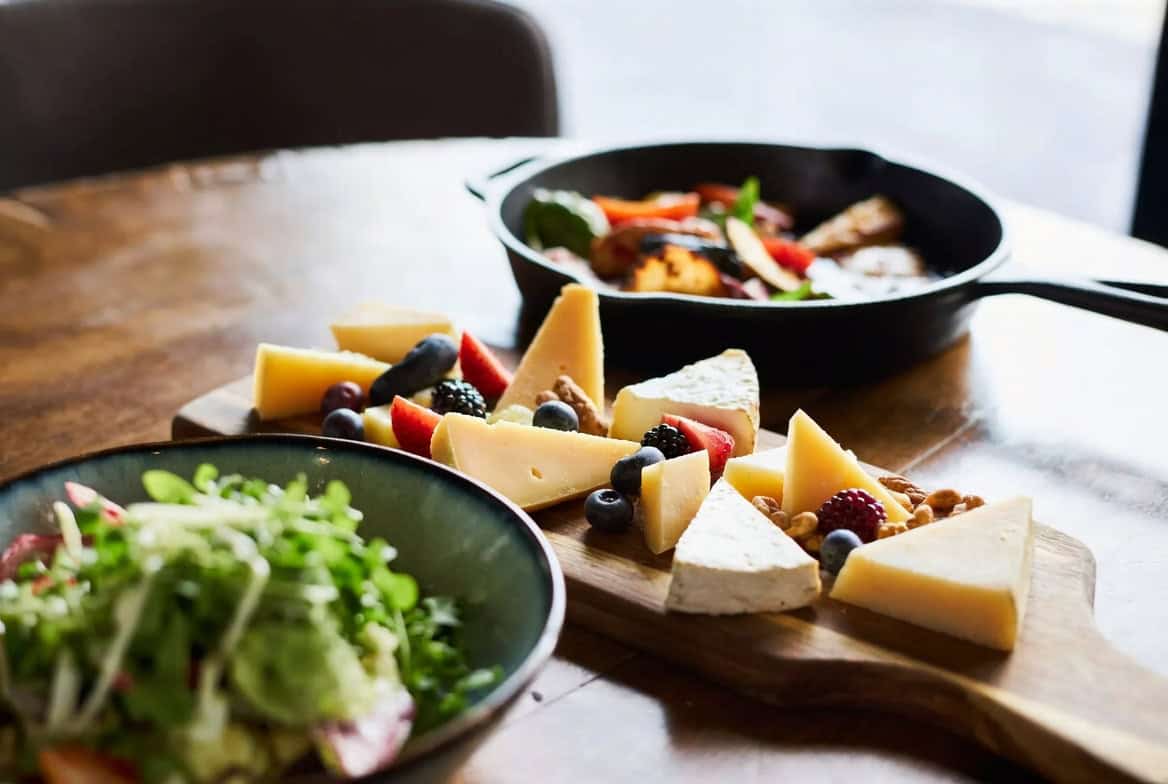
Hosts often mistake temperature variety for sophistication and accidentally create a service plan in which everything is cooling too fast or waiting for scarce heat.
A calmer menu usually needs one temperature anchor, one contrasting temperature, and one stable temperature that can absorb real-life timing.
This is not a law. It is a pressure test. If the dinner needs four urgent temperature states and three of them depend on the same oven, the menu may be interesting on paper and completely unreasonable in the kitchen.
Choose the temperature anchor first
Decide what the meal is really built around. A hot roast? Chilled seafood? A room-temperature spread? A big baked pasta? That anchor gets the narrowest service window and the clearest equipment priority.
If the main is a hot roast, the rest of the menu should not behave as though every dish is also the main. If the centerpiece is chilled, the kitchen may have room for one warm element that brings comfort without creating a full hot-service system.
The anchor is the dish whose temperature you protect when something else has to bend.
Add temperature contrast because it changes the eating
Hot and cold together can make a meal feel much more alive. A hot, rich main with a chilled sharp salad gives the palate relief. Warm bread next to a cold seafood spread creates comfort without taking over. A room-temperature vegetable beside a hot braise keeps the plate from becoming one continuous warm, soft register.
The contrast has to improve the food. It should not exist because “three temperatures” sounds like a restaurant technique.
If the cold thing brings no freshness, crunch, acidity, or other useful change, it may just be another dish to store. If the hot thing requires another pan, burner, and five-minute window but adds little, it is not sophistication. It is labor.
Room temperature can be a strategy, not a failure
Room-temperature food is not failed hot food. That distinction is everything.
Grain salads, sturdy roasted vegetables dressed with vinaigrette, breads, relishes, some cheeses, certain desserts, and other foods can be designed to taste good without arriving steaming.
That makes them powerful for hosting because they create slack in the system. They can land on the table while the main is still resting. They do not occupy oven space. They do not become a crisis if a guest is ten minutes late.
A grain salad dressed an hour early is better than a grain salad dressed at the table. So is a roasted carrot that has had time to sit in its vinaigrette. That makes them the rare dishes where the convenient version and the correct version are the same version, and a host who does not take that offer is doing extra work to make the food slightly worse.
But “room temperature by design” is not permission to ignore food safety. Perishable food still has time and temperature limits. Use current authoritative guidance for the specific food and service conditions.
Separate “Hot Now” from “Warm Is Fine”
One of the easiest ways to overbuild a dinner is treating every warm dish as urgent.
A steak or delicate fish may truly need to move. Mashed potatoes may hold reasonably with the right method. A braised vegetable may be excellent warm rather than piping. Bread may be perfectly good at room temperature even though warm bread has better public relations.
Those differences matter.
Labeling a dish “Warm Is Fine” gives the host options when the schedule moves. Labeling everything “Hot Now” creates a kitchen where every minute is a failure state.
And the cost of that is not paid by the food. It is paid by the person who spends the first twenty minutes of their own dinner standing up, and then by the guests, who eat faster than they want to because somebody is visibly waiting on them to finish.
Keep cold food genuinely cold until it is supposed to move
Chilled dishes can be useful because they are finished early, but they consume refrigerator space and can become unsafe if treated casually.
FDA guidance recommends keeping the refrigerator at 40°F or below and refrigerating perishables promptly. The familiar two-hour rule for perishable food at room temperature matters during service too, with a shorter one-hour limit in temperatures above 90°F. See current FDA refrigeration guidance.
This is why a cold course needs a real staging plan. Do not set seafood, dairy, or another perishable centerpiece on the table an hour early because the candles look nice.
Count active heat demands
A roast-centered dinner might use the roast as the hot anchor, a chilled bright salad, and a room-temperature vegetable or grain dish. That is genuine temperature variety without an oven hostage situation.
A menu with roast chicken, hot potatoes, baked gratin, warm rolls, and a hot fruit dessert technically has temperature consistency. Operationally, it has five items making claims on the same heat system.
Five claims on one oven is not a menu. It is a queue. And the dish at the back of the queue is reliably the one that was described most enthusiastically when people were invited.
The problem is not temperature variety or lack of it. The problem is how many dishes require active temperature management at the same moment.
Count the urgent ones.
Test the ten-minute table
Imagine every dish ten minutes after it reaches the table.
Does the fish remain worth eating? Does steam soften the crisp element? Does the chilled salad become watery? Does the sauce set into a skin? Does the ice cream become a dairy event? Does the room-temperature vegetable actually improve as the dressing settles?
This is the table the guests will eat from, not the instant the food was plated.
If a dish is wonderful for ninety seconds and disappointing at minute ten, its service window belongs in the menu plan.
Temperature should also create sensory rhythm
A meal that moves from chilled to warm to hot to chilled can feel intentional when the flavors support it. A cold appetizer can wake up the palate before a rich main. A room-temperature side can keep the main from feeling relentless. A cool dessert after a hot braise can be exactly the reset the meal wants.
But a sequence of temperature changes is not inherently more sophisticated. Sometimes the best dinner is hot main, room-temperature sides, room-temperature dessert. The guests do not award points for thermal range.
Protect appetite, not novelty.
Use a temperature map
For each dish, label it Hot Now, Warm Is Fine, Room Temperature by Design, or Keep Cold.
Then look for concentration. If five dishes are Hot Now, the menu is fragile. If four are Keep Cold, the refrigerator may be the real constraint. If everything is Room Temperature by Design, decide whether the meal still has enough comfort and sensory contrast.
The map should expose the pressure, not create another perfect spreadsheet nobody uses.
A three-temperature dinner in practice
Think roast chicken as the hot anchor. A bitter greens and citrus salad stays chilled until close to service. Roasted carrots with cumin yogurt are prepared to be excellent at room temperature. Dessert is a cake that does not need chilling or reheating.
The chicken gets the oven. The salad gets the refrigerator. The carrots get time. Dessert gets ignored until people want it.
That is a temperature plan that can survive conversation.
What to change when the map is too urgent
Move one hot side to room-temperature service with a vinaigrette. Change a chilled appetizer to something shelf-stable or quickly assembled if refrigerator space is the problem. Replace a last-minute warm dessert with one that is already done. Serve bread at room temperature. Put sauce in a warm pitcher instead of individually plating it.
You are not making the menu less ambitious. You are moving ambition into the food instead of the logistics.
A temperature plan that survives on paper and dies in the kitchen has usually collided with something in Menus and Kitchen Systems or Hosting and Service. Occasion will run it against the actual clock and tell you which.
The rule is really about resilience
The best menu is not the one with the most temperature changes. It is the one whose temperature plan survives late seating, slow passing, an ordinary refrigerator, one oven, and a host who is supposed to sit down too.
One protected hot item. One useful contrast. One stable temperature that can absorb the delay.
Three temperatures are usually plenty. The fourth should have a very good reason.
Part of Hosting & Service.
Where this goes next

