Tidepool Soba Salad with Seared Mushrooms and Sesame
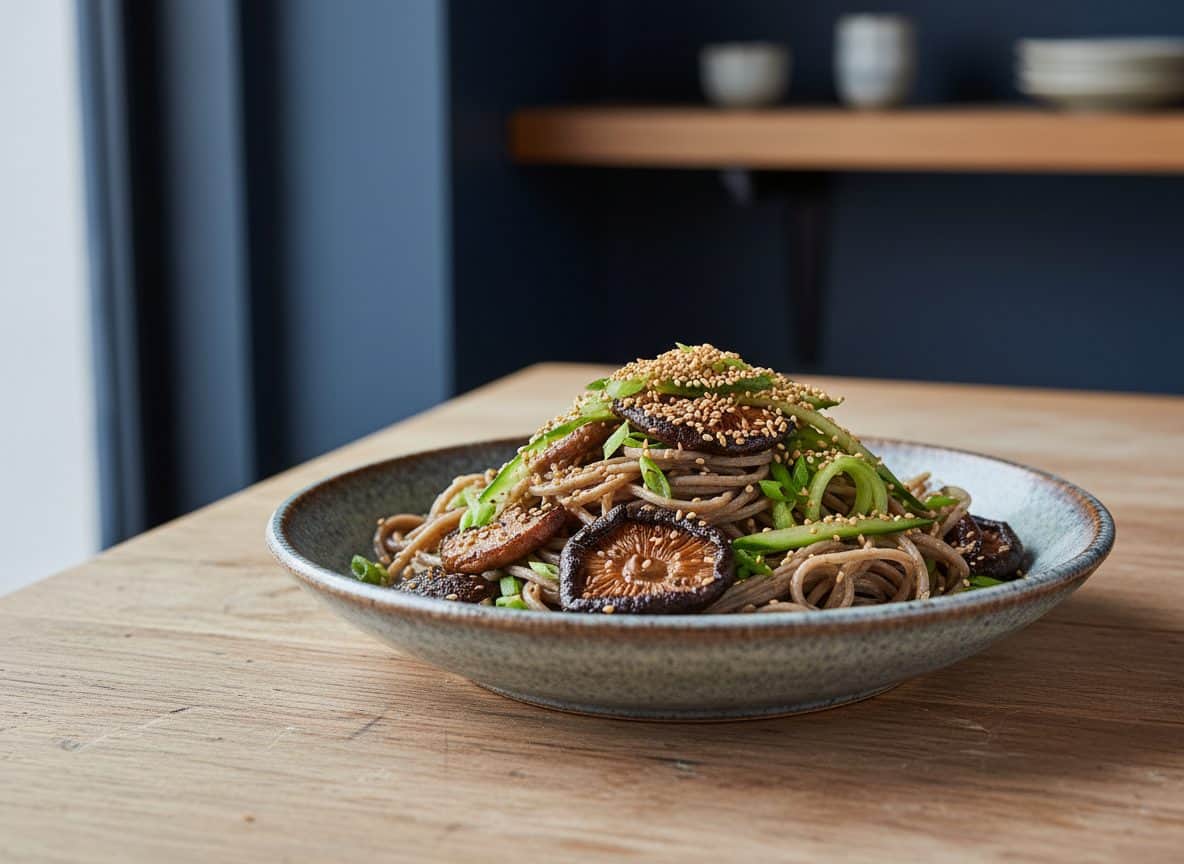
Cold buckwheat soba with deeply seared mushrooms, crisp cucumber, scallions and sesame, built to hold as a savory make-ahead side without turning soggy.
Tools
Large pot, colander, wide skillet, whisk, serving bowl
Ingredients · swaps in parentheses
Buckwheat soba, mixed mushrooms, cucumber, scallions, soy sauce, rice vinegar, toasted sesame oil, lime, honey, sesame seeds
Magic
Rinse soba thoroughly. Drain very well. Sear mushrooms in batches. Dress within four hours of service.
Before you begin
Make dressing two days ahead and sear mushrooms one day ahead. Cook noodles within four hours of serving.
The parts that change whether this works tonight.
These fields come from the published recipe itself. If a recipe has not separately declared an operating fact, the gap stays visible instead of being filled with a guess.
- Servings
- 6 side servings or 4 light-main servings
- Timing
- About 1 hour
- Equipment
- Not separately declared
- Make-ahead
- Two days ahead: Make the dressing. · One day ahead: Sear the mushrooms and refrigerate them. Slice the scallions. · Up to four hours before service: Cook, rinse,…
- Holding
- Not separately declared
- Leftovers
- Refrigerate leftovers promptly. Refresh the next day with cucumber, scallions, vinegar, and a small splash of water. Do not automatically add more sesame oil; the noodles usually need…
- Dietary notes
- Not separately declared
- Method map
- 13 ingredient lines · 6 method steps
Soba is particularly good at looking composed while carrying a serious amount of savory dressing. Seared mushrooms add depth, cucumber provides the necessary snap, and sesame keeps the noodles glossy rather than heavy.
The recipe succeeds or fails in three places: the noodles must be rinsed thoroughly, the mushrooms must sear rather than steam, and the final bowl must not drown in dressing. Those are separate jobs. Combining them into one large, hopeful skillet is how a cool noodle salad becomes a warm gray meeting.
Recipe brief
- Menu job: Cold savory side or light main that brings chew, acid, and mushroom depth beside grilled or fried food.
- Yield: 6 side servings or 4 light-main servings.
- Host difficulty: Easy to moderate.
- Kitchen intensity: Medium while the mushrooms sear; low after that.
- Make-ahead value: High for dressing and mushrooms; noodles are best made within 4 hours of service.
- Service window: Up to 4 hours chilled after dressing, with cucumber and crisp finishes held back.
- Transport / buffet: Travels well cold in a wide container; toss and refresh before it hits the table.
- Scaling: Double cleanly, but cook noodles and sear mushrooms in batches.
- Likely failure: Watery noodles, steamed mushrooms, or too much sesame oil. Drain harder, re-sear in smaller batches, and correct with acid before more fat.
- Leftovers: Best the next day refreshed with cucumber, scallion, vinegar, and a spoonful of cold water.
What this salad is for
Serve it as a substantial cold side, a light main dish, or the stable noodle component in a menu built around grilled seafood, chicken, tofu, skewers, or vegetable appetizers. It works especially well when the rest of the meal contains heat, frying, smoke, or rich sauces because the cucumber and vinegar keep the bowl alert.
The recipe serves six as a side or four as a light main. It travels better than a leafy salad, but it still needs chilling and a small refresh before service.
Host difficulty: Easy to moderate.
Make-ahead rating: Medium-high.
Kitchen intensity: Medium during mushroom searing; low afterward.
Yield and timing
- Yield: Serves 6 as a side
- Prep: 25 minutes
- Cook: 20 minutes
- Cool and assemble: 15 minutes
- Total: About 1 hour
- Best hold: Up to 4 hours after dressing, with a small refresh before serving
Ingredients
- 12 ounces buckwheat soba noodles
- 12 ounces mixed mushrooms, sliced into pieces of similar thickness
- 2 tablespoons neutral oil, divided
- 1 English cucumber, thinly sliced
- 4 scallions, thinly sliced, white and green parts separated if desired
- 3 tablespoons soy sauce or tamari
- 2 tablespoons unseasoned rice vinegar
- 1 tablespoon toasted sesame oil
- 1 tablespoon fresh lime juice
- 1 teaspoon honey or maple syrup
- 1 tablespoon toasted sesame seeds
- Freshly ground black pepper
- Optional: chili crisp, grated ginger, nori strips, cilantro, or a soft-boiled egg for main-dish service
Make the dressing before the noodles need it
Whisk the soy sauce, rice vinegar, sesame oil, lime juice, and honey until combined. Taste the dressing with a cucumber slice. It should be salty, sharp, lightly nutty, and not noticeably sweet.
If using a very salty soy sauce, begin with 2 1/2 tablespoons and add more after the noodles are dressed. If the mixture tastes heavy, add vinegar or lime rather than more sesame oil. Sesame oil is powerful and excellent; it is not a general-purpose liquid requirement.
The dressing can be made two days ahead and refrigerated. Bring it toward room temperature and whisk again before using.
Sear mushrooms in batches
Pat the mushrooms dry. Heat a wide skillet over medium-high heat until hot, then add 1 tablespoon neutral oil. Add only enough mushrooms to cover the pan in a loose single layer.
Let them cook without constant stirring until the first side is deeply browned. Turn and continue cooking until the pieces are tender and their released moisture has evaporated. Season lightly with black pepper and, only if needed, a small amount of soy sauce.
Transfer to a plate and repeat with the remaining oil and mushrooms. Crowding the pan traps steam. Steam is not searing in a thoughtful disguise.
Twelve ounces is two batches in a twelve-inch skillet and three in a ten-inch, which costs about six extra minutes. The alternative is gray mushrooms that taste of the pan they did not touch, sitting in the noodles and wetting them from underneath.
Cool the mushrooms before adding them to the cold noodles. Warm mushrooms soften cucumber and increase condensation in the bowl.
Cook soba according to the noodle, not a generic clock
Bring a large pot of water to a boil. Add the soba and stir immediately to prevent clumping. Cook according to the package directions, tasting early. Many soba noodles cook quickly and move from tender to soft without sending a calendar invitation.
The noodles should be tender with a slight chew, not hard at the center and not beginning to fray. Do not add oil to the cooking water. It does not solve sticking and can interfere with dressing.
Rinse until the water runs clear
Drain the noodles into a colander and rinse immediately under cold running water. Lift and gently rub the noodles with clean hands to remove surface starch. Continue until the water runs clear and the noodles are fully cold.
This is not a quick ceremonial rinse. Surface starch makes the noodles gluey and causes the dressing to sit in patches. Soba benefits from being washed thoroughly after cooking.
Shake the colander well, then spread the noodles on a clean towel or a wide tray for several minutes. Excess water dilutes the dressing and creates a puddle at the bottom of the bowl.
This is the step that gets skipped, because drained noodles already look dry. They are not. A wide tray and a few minutes of air cost nothing, and they are the whole difference between dressing that clings and dressing that pools.
Prepare the crisp components
Slice the cucumber thinly but not transparently. If it contains a wet seed core, scrape out part of it first. Blot the slices gently.
Slice the scallions and keep some green tops for the finish. Toast the sesame seeds if they are not already toasted, then cool them. Prepare only one or two optional garnishes. A cold noodle salad can carry complexity, but it does not need the entire refrigerator introduced by name.
Dress in stages
Place the well-drained noodles in a large bowl. Add about two-thirds of the dressing and toss with tongs or clean hands, lifting rather than compressing.
Add the cooled mushrooms, cucumber, and most of the scallions. Toss again. Let the bowl stand for five minutes, then taste a complete bite. Add more dressing only if the noodles need it.
Finish with sesame seeds, scallion greens, and optional chili crisp. If using chili crisp, spoon it over individual portions or in small streaks rather than stirring enough oil through the entire bowl to make every flavor taste like the same condiment.
The texture and flavor cues
The noodles should remain separate and glossy. The mushrooms should taste browned and savory rather than wet. The cucumber should snap. The dressing should be present in every bite without collecting heavily underneath.
If the noodles taste bland after resting, add soy sauce and vinegar in equal small increments before adding sesame oil. If they taste salty, add cucumber, a splash of cold water, or more plain noodles rather than attempting to hide the salt with sweetness.
Make-ahead sequence
Two days ahead: Make the dressing.
One day ahead: Sear the mushrooms and refrigerate them. Slice the scallions.
Up to four hours before service: Cook, rinse, drain, and dress the noodles. Fold in the cooled mushrooms and scallions; keep the cucumber and crisp garnishes separate until service.
At service: Loosen with a tablespoon or two of cold water if needed, then add cucumber, sesame seeds, scallion greens, and any crisp garnish that was held back.
Do not cook the noodles a full day ahead. They absorb dressing, dry at the edges, and become harder to refresh. The components can wait; the complete bowl has a shorter useful life.
Transport and buffet service
Pack the salad in a wide covered container so the noodles are not compressed into a dense block. Carry cucumber, sesame seeds, and chili crisp separately. Keep the salad chilled during transport.
Before serving, toss from the bottom, assess the texture, and add a small splash of cold water or reserved dressing. Use a broad serving fork or tongs that can lift noodles cleanly. A tiny spoon is technically a utensil and practically a prank.
Scaling the recipe
For 12 people, double the ingredients but cook the noodles in two batches if the pot is not very large. Crowded noodles cook unevenly and are difficult to rinse. Sear mushrooms in multiple batches regardless.
Which makes the pot, not the recipe, the thing that decides how many people this feeds comfortably. One eight-quart pot and one skillet is two sittings of noodles and four or five of mushrooms. Work that out the day before rather than at five o’clock.
For four people, use 8 ounces noodles and 8 ounces mushrooms. Make the full dressing and reserve what remains for vegetables or another noodle bowl; precise fractional tablespoons of sesame oil are not worth making the recipe harder to read.
Substitutions and effects
- Udon noodles: Softer, thicker, and more substantial. Rinse and drain well, but expect a different texture and a heavier bowl.
- Rice noodles: Lighter and less nutty. Follow the package method and reduce the dressing slightly at first.
- 100% buckwheat soba: More fragile and assertive. Handle gently and follow its specific cooking instructions. If gluten matters, verify the noodles are actually 100% buckwheat; many soba contain wheat even when tamari replaces soy sauce.
- Shiitake mushrooms: Deeply savory and ideal; slice stems according to tenderness.
- Tofu: Add crisp seared tofu for protein, but keep it separate until the noodles are cool.
- Edamame: Adds substance and color with little extra work.
- No sesame: Use neutral oil and, if useful, toasted sunflower or pumpkin seeds. Do not substitute tahini; it is sesame. The bowl will be less nutty but still works.
What commonly goes wrong
The noodles clump: They were not stirred during cooking, rinsed thoroughly, or drained before dressing.
The bowl is watery: The noodles or cucumber retained excess water.
The mushrooms are pale and soft: The skillet was crowded or not hot enough.
The salad tastes greasy: Too much sesame oil or chili crisp was added.
The flavor disappears when cold: Add acid and soy gradually after the bowl reaches serving temperature.
The noodles are brittle: They were overcooked, handled roughly, or made too far ahead.
Make the rest of the menu do something different
Pair with grilled seafood, skewered chicken, rice-paper rolls, cold melon soup, or a sharp cabbage salad. Avoid serving another sesame noodle, a mushroom-heavy main, and a soy-forward sauce unless repetition is intentional.
A dry lager, sake-style pairing, or crisp white wine works with mushrooms and sesame. For a teetotaler drink, use chilled jasmine tea with lime, sparkling cucumber water with ginger, or unsweetened roasted barley tea. The drink should be aromatic and dry enough to clear the sesame finish.
Kitchen Kit
Goods: Soba noodles, mushrooms, cucumber, scallions, soy sauce, rice vinegar, sesame oil, lime, honey, sesame seeds, and optional chile.
Gear: Large pot, colander, wide skillet, plate for cooling mushrooms, whisk, large bowl, and tongs.
Magic: Rinse the noodles until the water runs clear, drain them completely, and sear mushrooms in batches. Each step removes a different kind of sogginess.
Next decision
If this is one side in a larger night, put the full menu through Occasion OS before adding another stove job. If the shelf is driving dinner, use Kitchen & Bar Intelligence. For the holding question, read Make-Ahead Is Not a Personality Trait.
Storage and final judgment
Refrigerate leftovers promptly. Refresh the next day with cucumber, scallions, vinegar, and a small splash of water. Do not automatically add more sesame oil; the noodles usually need moisture and acid, not additional weight.
This salad earns its place because it holds better than leaves, serves cleanly, and can carry a menu without making the host perform at the stove when guests arrive. Keep the noodles cold, the mushrooms browned, and the cucumber unmistakably cucumber.
Part of Recipes & Technique.
Recipe provenance: Salty & Clever editorial formulation, built from established culinary technique and the traditions identified in the article. No chef, restaurant, family, or firsthand cultural provenance is claimed unless it is explicitly named and sourced. How we write and check recipes


