Warm Citrus-Fennel Olives That Buy the Cook Fifteen Minutes
Warm olives with orange, fennel, garlic, chile and a sharp finish: eight minutes of work designed to absorb the doorbell without becoming another course.
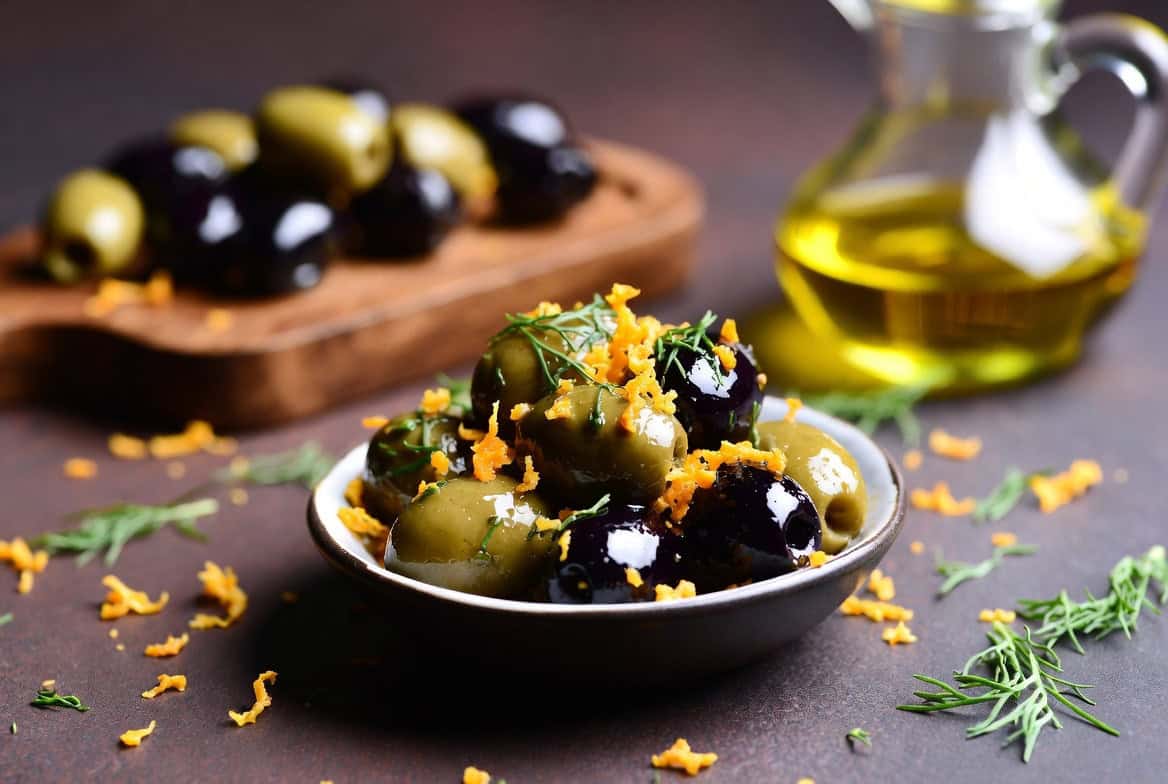
The parts that change whether this works tonight.
- Yield
- about 2 cups, serving 6 to 8
- Time
- Prep 5 minutes · Cook 8 minutes
- Equipment
- One small skillet, a vegetable peeler for wide strips of orange peel, a warm shallow bowl for serving, and cocktail picks so guests do…
- The method
- 10 ingredients · 4 steps
From this recipe’s own recipe card. Nothing here is a guess.
Tools
One small skillet, a vegetable peeler for wide strips of orange peel, a warm shallow bowl for serving, and cocktail picks so guests do not go in bare-handed.
Ingredients · swaps in parentheses
Mixed pitted olives (unpitted for better texture, plus a pit dish), olive oil, orange peel and juice (lemon peel for a sharper result), fennel seeds (rosemary, more wintry), garlic, red pepper flakes, dry vermouth (water), black pepper.
Magic
A half-teaspoon of sherry vinegar stirred in off the heat, right with the orange juice. Olives are all salt and fat; that one sour flash is what snaps the orange and fennel into focus and keeps people reaching back into the bowl. Not feeling brave? A second squeeze of orange juice leans the same direction, more quietly.
Gotcha
Medium-low means it. Browned garlic turns the oil bitter, and olives pushed to a boil come out rubbery and aggressively salty — warm enough to perfume the room is the ceiling.
Hosting arithmetic is unforgiving. Dinner falls fifteen minutes behind the moment the doorbell rings, and guests need something to do with their hands that is not hovering near the stove. The answer is not a miniature dinner requiring a piping bag. It is a small bowl of hot, glossy olives — eight minutes of work that perfumes the room and generates zero plates.
Yield: about 2 cups, serving 6 to 8
Prep: 5 minutes
Cook: 8 minutes
What goes in the pan
- 2 cups mixed pitted olives, drained
- 2 tablespoons extra-virgin olive oil
- 3 wide strips orange peel
- 1 teaspoon fennel seeds, lightly crushed
- 1 garlic clove, thinly sliced
- 1/4 teaspoon red pepper flakes
- 1 tablespoon dry vermouth or water
- 1 teaspoon orange juice
- Black pepper
- 1/2 teaspoon sherry vinegar, optional
Eight minutes, one skillet
Where the time goes
- Start everything cold
- 2 minBloom the aromatics
- 4–5 minWarm the olives
- Finish off the heat
- Start everything cold. Combine oil, orange peel, fennel seed, garlic, and chile in a small skillet over medium-low heat.
- Bloom the aromatics. Cook 2 minutes, just until the garlic smells sweet and the fennel wakes up. The garlic must not brown; bitter oil cannot be argued back.
- Warm the olives. Add olives and vermouth. Cook 4 to 5 minutes, tossing occasionally, until hot and glossy.
- Finish off the heat. Add orange juice and several grinds of black pepper. Stir in 1/2 teaspoon sherry vinegar here if you want a sharper finish. Spoon into a warm shallow bowl with cocktail picks and a small dish for pits if needed.
Medium-low is a promise
Gentle warmth is what coaxes the citrus oils and the fennel perfume out. A boil is what turns olives rubbery and pushes their salt into shouting range. The ceiling is hot enough to scent the room. Anything past that and you are cooking the charm out of them.
On the table
Set these out 10 to 20 minutes before dinner, next to sparkling wine, a dry martini, tonic with grapefruit peel, or cold black tea with lemon. Put out napkins — olive oil is hospitable but not discreet.
Swaps, with consequences
Lemon peel sharpens the whole pan. Grapefruit peel is agreeably bitter in small amounts. Rosemary can take over from fennel and drags the flavor toward winter, which some evenings deserve. Water substitutes for vermouth without complaint. Unpitted olives have the better texture, but then the pit dish becomes part of the service, so decide how formal you feel.
The second life
Cool promptly and refrigerate, covered, up to 4 days; rewarm gently in a skillet. Keep the oil left in the bowl. It will dress roasted vegetables or a pot of beans later in the week and taste like planning.
Troubleshooting: bitter garlic means the heat crept up on you. Flat flavor wants acid, not more salt. Rubbery olives were overheated — go lower and shorter next time.
The appetizer’s job is to absorb the doorbell
This is not supposed to become the first course. Its job is to buy the kitchen fifteen or twenty minutes without creating another service station. Guests arrive at different times. Somebody wants to see the house. Somebody is early. Somebody is late and apologizing with great detail. A bowl of warm olives gives all of that time somewhere to go.
The best arrival food is generous enough to feel intentional and restrained enough that people still want dinner. Olives are almost perfect for that because they are salty, aromatic, and self-limiting. You eat a few. You do not accidentally consume a casserole before the main course.
Quantity should match the waiting time
For six to eight people, two cups is plenty for a short arrival window. For twelve, I would move to about three cups rather than doubling automatically. For eighteen or twenty, use two bowls in different parts of the room instead of one enormous bowl that becomes a traffic circle.
The longer the pre-dinner window, the more likely you need one additional bite — nuts, a small cheese, or bread — rather than simply a mountain of olives. That changes the job from “buy fifteen minutes” to “feed people before dinner,” and the menu should admit when it has crossed that line.
Keep the aroma, lose the performance
Warm olives smell impressive because the citrus peel and fennel hit the oil and the room notices. That does not mean they need to be cooked in front of guests. Make them earlier, then rewarm gently for a few minutes when the first car pulls up.
This is exactly the kind of party food I like: the sensory effect is larger than the labor. Eight minutes in a skillet should smell like you planned something, not like you have started a catering company in the last ten minutes.
What not to put next to them
Do not build an arrival table entirely out of salt. Olives, cured meat, salted nuts, anchovies, hard cheese, and chips can all be wonderful, but stacked together they make everybody thirsty before dinner has begun. If the olives are the salty anchor, let the second item be milder or fresher.
A few radishes with butter, sliced fennel, grapes, or a plain bread can give the palate somewhere quieter to go. The table does not need five assertive snacks fighting for the same glass of wine.
For a larger party, think about the bowl
A deep bowl keeps the olives warm but hides the citrus and makes fishing with cocktail picks awkward. A shallow warmed bowl shows the peel, gives people access, and cools faster. For a short arrival window, I prefer the shallow bowl because access matters more than maximum heat retention.
If using unpitted olives, put the pit dish where the hand naturally goes next. Hospitality is often just refusing to make people wonder what to do with something they have already put in their mouth.
This is the small end of the same problem solved in The Two-Hour Host Timeline: protect the cook’s attention before dinner. The rest of that argument — arrival food, service, and who is allowed to still be standing up at eight — is in Hosting and Service.
Part of Recipes & Technique.
Recipe provenance: Salty & Clever editorial formulation, built from established culinary technique and the traditions identified in the article. No chef, restaurant, family, or firsthand cultural provenance is claimed unless it is explicitly named and sourced. How we write and check recipes
Where this goes next

